The bloody glove on Bundy Drive that matched a glove at O.J. Simpson’s estate

A white Akita was found wandering the neighborhood with blood on its paws on the night of June 12, 1994.
The dog led a neighbor to investigate.
Around midnight, the neighbor discovered the bodies.
Nicole Brown Simpson, 35, was found outside her condominium on Bundy Drive in Brentwood.
Her throat was slashed.
Ronald Goldman, 25, a waiter who had gone to return eyeglasses Nicole’s mother left at his restaurant, was stabbed multiple times.
The dog’s role in the discovery is documented.
What the dog saw that night is not in the record.
How the blood got on its paws is not in the record.
The Akita was Nicole’s dog.
It had been loose, wandering the dark streets of Brentwood, carrying something unseen on its fur.
It led a neighbor to a scene that would soon grip the nation.
But the animal was only a witness to the aftermath, not to the act itself.
That act — the knife, the slashing, the stabbing — remains undocumented in the dog’s testimony.
The dog could not testify.
No one could.
THE GLOVES AND THE BLOOD
Police found a bloody glove on the ground at Bundy Drive, near Nicole Brown Simpson's body.
A matching glove was found at Simpson's estate, along with blood drops and other evidence.

The prosecution argued that DNA testing of blood samples matched Simpson.
A pair of socks in his bedroom contained Nicole's blood, prosecutors said.
The defense argued the evidence was contaminated or planted.
The defense focused on Detective Mark Fuhrman, whose credibility they attacked.
Fuhrman later pleaded no contest to perjury for denying under oath that he had used racial slurs.
Simpson's hand was injured on the night of the murders.
The defense claimed the injury came from a phone incident, not the killings.
The prosecution saw it differently.
The gloves were documented evidence; they were photographed, logged, and tested.
Whether the glove was planted is not established.
The defense theory is not a documented fact.
It is a theory the jury heard.
It is a theory the jury apparently accepted.
The blood was real.
The DNA was argued.
The matching gloves were physical, measurable things.
Fuhrman's perjury made every piece of evidence he touched suspect.
That suspicion was the defense's bridge.
That bridge led to reasonable doubt.
:max_bytes(150000):strip_icc():focal(649x0:651x2)/Kim-Goldman-and-Fred-Goldman-sister-and-father-of-murder-victim-Ronald-Goldman-041124-db6578097eb34513927218d9fa960656.jpg)
The record shows the gloves existed.
The record does not show how they got there.
The weight of the physical evidence was heavy.
The weight of the doubt was heavier.
THE CHASE AND THE LETTER
He failed to surrender.
On June 17, 1994, Simpson was the subject of a slow-speed chase in his white Ford Bronco.
He was eventually arrested.
Simpson's friend Robert Kardashian read a letter from Simpson to the public during the chase.
The contents of the letter are not detailed in the source.
The letter's significance is not established.
Simpson was charged with two counts of first-degree murder.
The trial began in January 1995.
It was televised nationally.
Denise Brown, Nicole's sister, testified at trial.
She testified about Simpson's history of abusing Nicole.
She spoke of what her sister endured.
The spectacle was surreal: a celebrity fugitive, a slow chase, a letter read aloud.
The human cost was remembered by a sister's testimony.
:max_bytes(150000):strip_icc():focal(749x0:751x2)/PEOPLE_MAG_BROWN_SISTERS_nicole-tout-1067c705ba0c4ab7a7e648e3ffd95be0.jpg)
That testimony was part of the record.
The chase was watched live.
The letter was broadcast.
The charge was read.
The trial was a national event.
It is a timeline of celebrity and grief.
It is also a timeline of a family's testimony.
THE VERDICT AND THE CIVIL JUDGMENT
The jury deliberated for less than four hours.
On October 3, 1995, they returned a verdict of not guilty.
The acquittal was highly controversial.
The criminal jury's reasoning is not in the record.
The verdict speaks for itself.
Not because the evidence was simple.
But because the trial had run for months, and the verdict came in minutes.
Fred Goldman, Ron's father, spoke publicly.
Kim Goldman, his sister, spoke publicly.
They pursued civil litigation.
In 1997, a civil jury found Simpson liable for the wrongful deaths of Nicole Brown Simpson and Ronald Goldman.
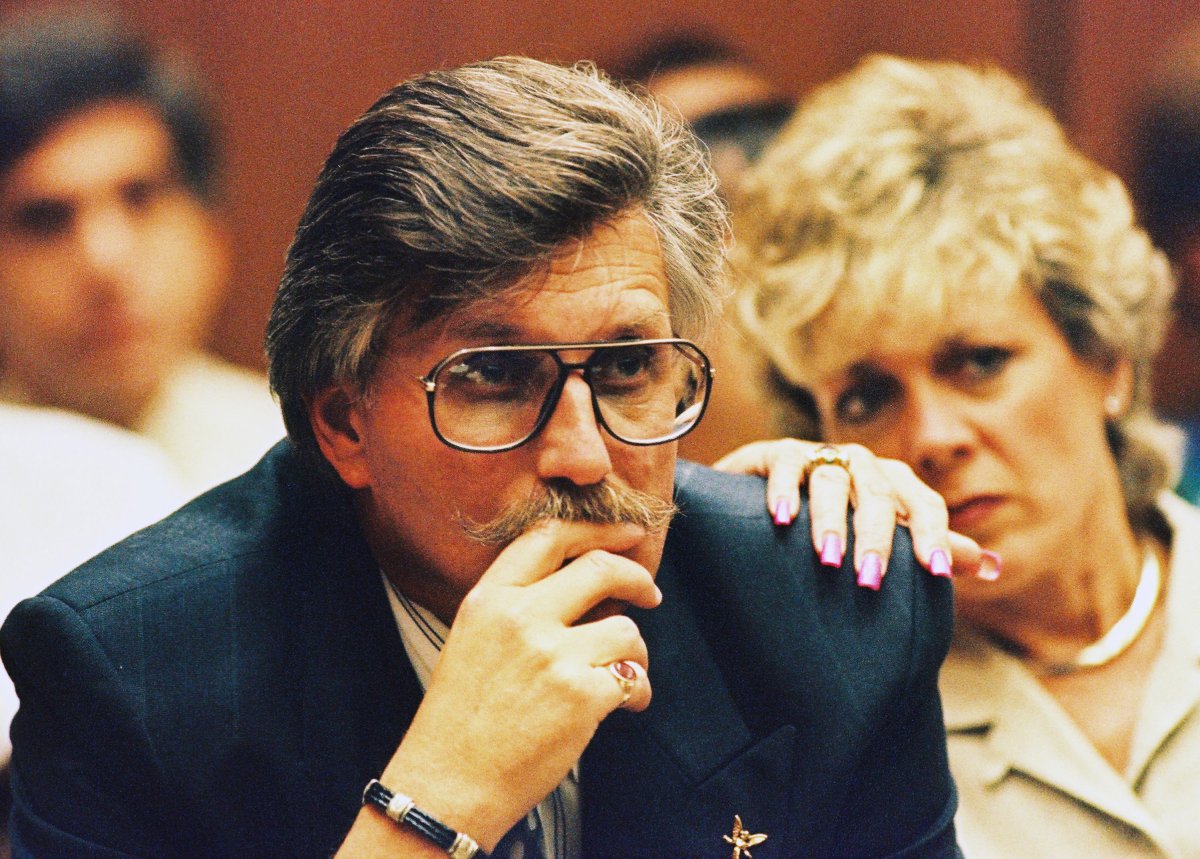
That jury ordered him to pay $33.5 million in damages to the victims' families.
The criminal acquittal did not end the case.
It did not end the families' pursuit of accountability.
Simpson was later convicted of armed robbery and kidnapping in 2008.
He served nine years.
He was released on parole in October 2017.
The civil judgment remained.
The Goldman family has continued to pursue it.
Fred Goldman has spoken publicly about the case for decades.
It is a timeline of a verdict.
It is also a timeline of a father's persistence.
A sister's persistence.
A family's refusal to let the record close.
AND THE STORY STILL ISN'T OVER
Simpson died on April 10, 2024, at age 76.
The criminal case was over. So was his life.
But the civil judgment was never paid in full, according to the record.
Whether it has been paid at all is not stated in the source.
The Goldman family has continued to pursue that judgment for decades.
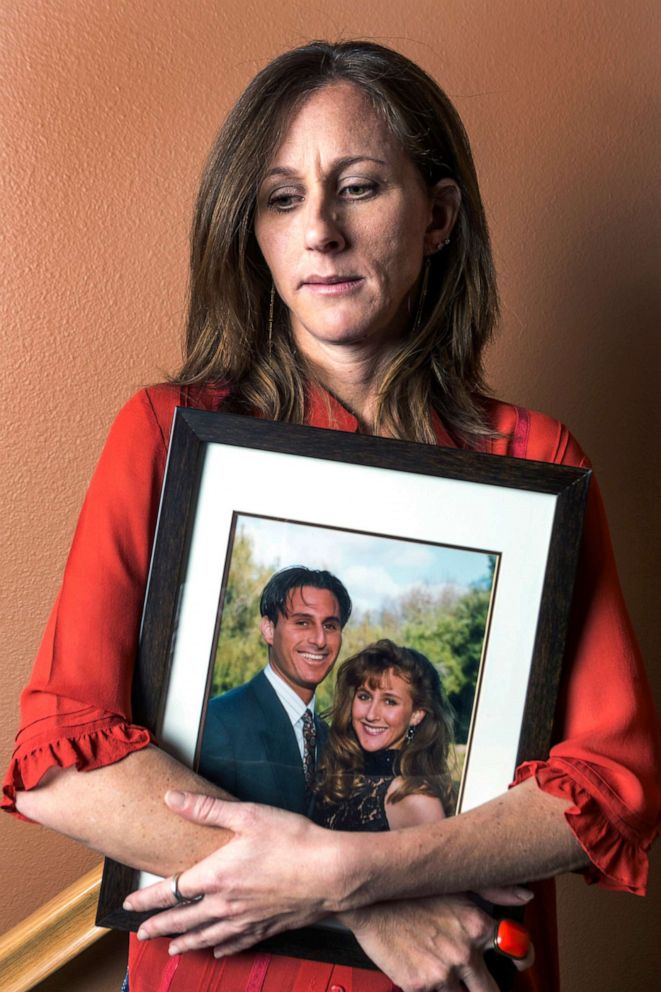
Fred Goldman has spoken publicly about his son's death for decades.
He has said the pursuit was never about the money, according to his public statements.
It was about the record.
It was about who Ronald Goldman was.
It was about a waiter who went to return a pair of eyeglasses and never came home.
Nicole's family has remained active in domestic violence awareness.
Denise Brown founded a foundation in her sister's memory.
She testified at trial about Simpson's history of abusing Nicole.
That testimony was part of the record.
The record also holds what the prosecution argued the DNA showed.
It holds what the defence argued about contamination and planting.
It holds the verdict of not guilty.
It holds the civil jury's finding of liability.
It does not hold the murder weapon.
The knife was never recovered.
That is where the record ends.
A father's persistence.
A sister's persistence.
A family's refusal to let the record close.
That would require the knife.
That would require a confession.
That would require evidence.
The record has none of those things.
So the story remains open.
Advertisement
You may also like
The Zodiac letter that detectives still cannot explain
A second cryptogram arrived in November 1969. It came to the newspapers, signed by the Zodiac. It was never definitively solved. The meaning of…
The knife sheath found beside a victim that led police to a PhD student
It was found on the bed beside Madison Mogen’s body. A fixed-blade knife sheath, made of leather, lying in the room where a young…
The bullet from Berardelli's body that prosecutors said matched Sacco's Colt — but defense experts disputed
April 15, 1920, in South Braintree, Massachusetts. A paymaster and a guard were walking along Pearl Street, carrying two boxes of payroll cash. About…
The handleless hatchet in the Borden cellar that never matched the wounds
The handleless hatchet sat in the cellar of 92 Second Street, Fall River, Massachusetts, and it never matched the wounds. The wounds on Andrew…
The winter flight that took Buddy Holly and two rising stars — and the question that still haunts their families
The cornfield was flat and frozen, and the wreckage was still burning when the farmer found it. He had gone out the morning of…
Three weeks, ten deaths: the 2002 sniper spree that terrorized DC
October 2, 2002, a Thursday, and a man walked out of a grocery store in Wheaton, Maryland. He was 55 years old. He was…