The knife sheath found beside a victim that led police to a PhD student
It was found on the bed beside Madison Mogen’s body.
A fixed-blade knife sheath, made of leather, lying in the room where a young woman was killed.
The knife itself was never recovered.
Investigators found DNA on the sheath.
Weeks passed with no named suspect.
Police appealed to the public for tips.
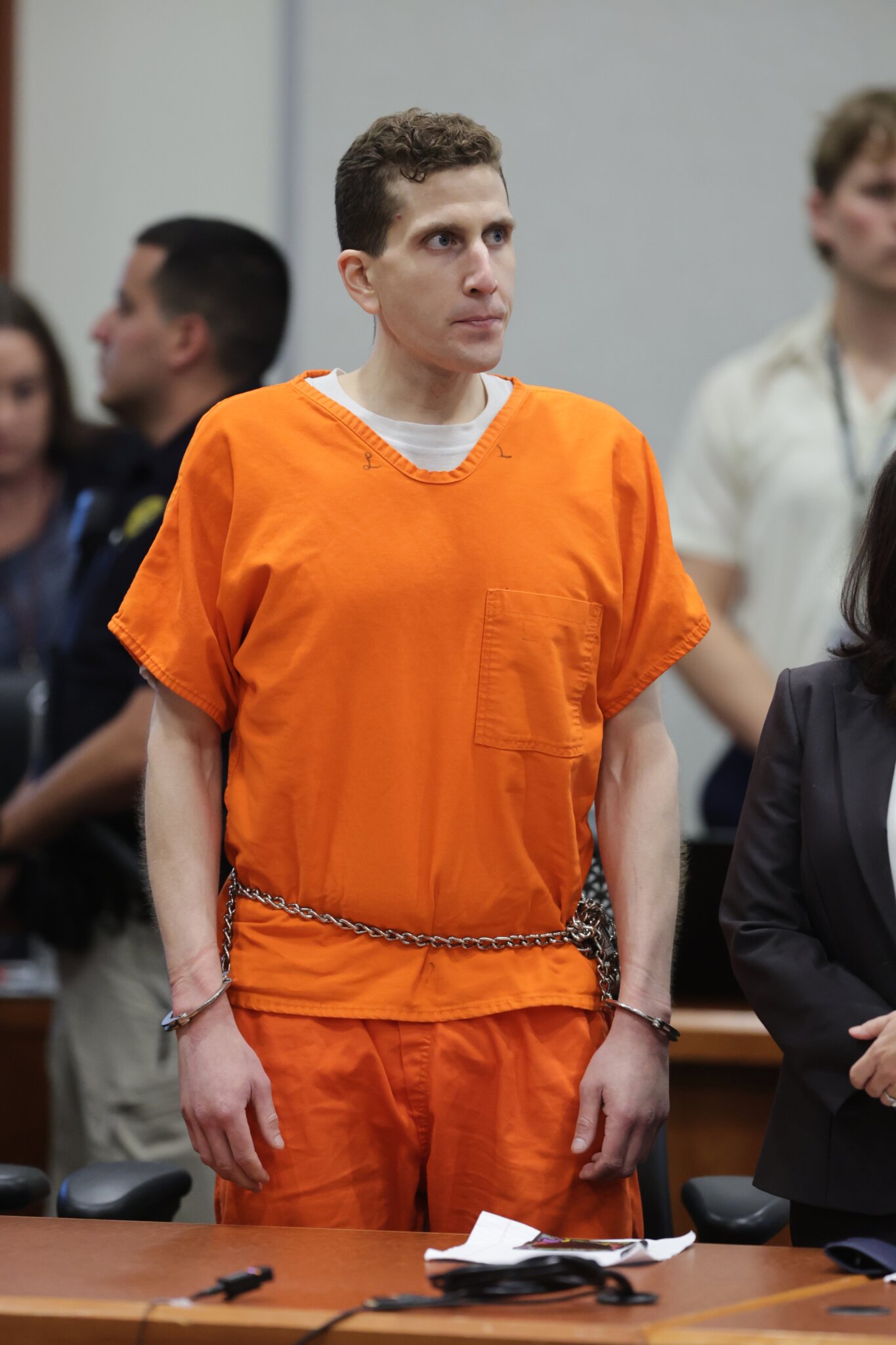
Then the DNA was matched to Bryan Kohberger, a 28-year-old criminology PhD student at Washington State University, just across the state line from Moscow, Idaho.
A single object had led them to a man in a classroom, not a fugitive.
It is a documented piece of evidence.
It is also a contested one.
The defense has challenged the DNA evidence and the search warrant used to collect it.
It is not established that the sheath belonged to the killer.
That would require evidence the trial has not yet weighed.
So the sheath sits at the center of a question: how much can one small piece of leather carry?
It carried a name, according to the investigation.
It carried a charge, according to the court.
It carried the weight of four deaths, according to the families who have spoken publicly.
But what it does not carry, yet, is a conviction.
The case remains unresolved.
Kohberger is in custody awaiting trial.
The sheath remains an object, silent and specific, on a bed that no longer exists — the King Road house was demolished in late 2023.
It is a detail.
It is also a hinge.
THE 911 CALL
The 911 call came at 11:58 a.m. on November 13, 2022.
The caller was a surviving roommate, identified in court records as B.F.
She told the dispatcher that her roommates were unresponsive.
Police arrived at the rental house on King Road in Moscow, Idaho, and found four University of Idaho students dead.
The victims were Kaylee Goncalves, Madison Mogen, Xana Kernodle, and Ethan Chapin.
The exact time of the killings is not established.
Police believe they occurred in the early morning hours, but they have not fixed a precise time.
B.F. told investigators she had heard noises in the house during those hours.
She also reported seeing a figure inside the house.
She did not call police until later that day.
The gap sits there: noises at night, a figure in the dark, a call at noon.
Why the hours between?
The record does not answer that.
The students had been stabbed multiple times with a large knife, according to the case record.
The knife itself was never recovered.
The sheath on the bed beside Madison Mogen's body held the DNA that would later lead to an arrest.

But that morning, before the DNA, before the white Elantra, before any suspect existed, there was only the call.
B.F. waited.
The police came.
The house on King Road held four bodies and one unanswered question about the delay.
That question remains open in the court record.
THE WHITE ELANTRA
The police came, and then they asked for help.
Police initially had no suspect and appealed to the public for tips.
The appeal went out through the case record, a request for anyone who saw anything.
Investigators worked the ground around the King Road house.
They pulled cellphone data from the towers that serve the neighborhood.
They pulled surveillance footage from cameras near the house.
The records showed a white Hyundai Elantra near King Road around the time of the killings.
The car was a detail, not a name.
It is not established that the Elantra was driven by Kohberger; the defense has challenged the cellphone and surveillance evidence.
That challenge sits in the court record, unanswered so far.
The investigation records show another layer: genetic genealogy.
Investigators used that method to help identify Kohberger as a suspect.
The DNA on the sheath had been matched to him, according to the case record.
The genealogy helped point the way.
The trail ran from a car on camera to a name.
In late December, police arrested Kohberger at his parents' home in Albrightsville, Pennsylvania.
A warrant for his arrest had been issued in Idaho.
He was extradited to face the charges.
The slow build had ended.
A vehicle on camera became a person in Pennsylvania.
How did the car become the man?
The record shows the steps: the tips, the data, the footage, the genealogy.
What it does not show is the car being driven by Kohberger.
That would require evidence the defense says is missing.
The name came first from the sheath, then from the car, then from the arrest.
The question of who drove the Elantra remains open.
THE TWO STORIES
Two stories run through the same evidence.
One story is the prosecution's: the sheath on the bed, the DNA on its snap, the white Elantra on camera, the arrest.
The other story is the defense's: the DNA was challenged, the search warrant was challenged, the investigation was flawed.
Bryan Kohberger was charged in January 2023 with four counts of first-degree murder and one count of burglary.
He has pleaded not guilty.
The prosecution has stated it will seek the death penalty.
The defense, led by public defender Anne Taylor, has challenged the DNA evidence and the search warrant used to collect it.
It is not established that Kohberger is guilty.
The case remains unresolved.
The trial was originally scheduled for October 2025.
It has been delayed multiple times due to pretrial motions and legal challenges.
As of the latest reports, no trial date has been set.
Kohberger remains in custody at the Latah County Jail without bail.
The sheath is documented.
The DNA match is contested.
The guilt is contested.
Is the evidence strong enough?
Is the investigation clean enough?
That would require a jury.
That would require a trial.
Neither has happened yet.
AND THE STORY STILL ISN'T OVER
He remains in custody at the Latah County Jail.
No bail. No trial date set as of this writing.
The case has moved through months of pretrial litigation over evidence, including DNA and cellphone data.
The defense challenged the DNA evidence and the search warrant used to collect it.
The prosecution has stated it will seek the death penalty.

Kohberger has pleaded not guilty.
That is where the record stands.
It is not established when the trial will begin.
It is not established what the outcome will be.
The victims' families have continued to advocate for justice.
They have spoken publicly about their grief.
Steve Goncalves has spoken publicly.
Kristi Goncalves has spoken publicly.
The King Road house was demolished in late 2023.
The families requested it be torn down.
The house is gone.
The story is not.
A jury has not heard the evidence.
A verdict has not been reached.
The sheath is documented.
The DNA match is contested.
The guilt is contested.
That would require a trial.
That would require a jury.
Neither has happened yet.
Advertisement
You may also like
The license plate stop that changed everything in Oklahoma City
At 9:02 a.m. on April 19, 1995, a truck bomb exploded outside the Alfred P. Murrah Federal Building in Oklahoma City, Oklahoma. The blast…
The DNA on a bra clasp left 46 days that decided a murder case
The door to Meredith Kercher's bedroom was locked. Her flatmate Filomena Romanelli found it that way on the morning of November 2, 2007, and…
The brother's tip that turned a 17-year manhunt into a cabin raid
In September 1995, The Washington Post and The New York Times published the Unabomber's manifesto, a 35,000-word essay. The FBI had offered to publish…
The torso victim's sister spoke once — and the one detail she revealed
She spoke once. That is all the record gives her. Among the dozen or more victims of the Cleveland Torso Murderer, most were transients…
The 1987 saliva sample that waited 14 years to name a killer
A truck painter from Auburn, Washington, gave the investigators his saliva in 1987. Gary Leon Ridgway was a suspect in the Green River murders,…
A boat bought weeks before Christmas, and the fishing trip that broke a timeline
The boat was new when Scott Peterson told police he had spent the morning fishing alone at the Berkeley Marina. He bought it weeks…