The bullet from Berardelli's body that prosecutors said matched Sacco's Colt — but defense experts disputed
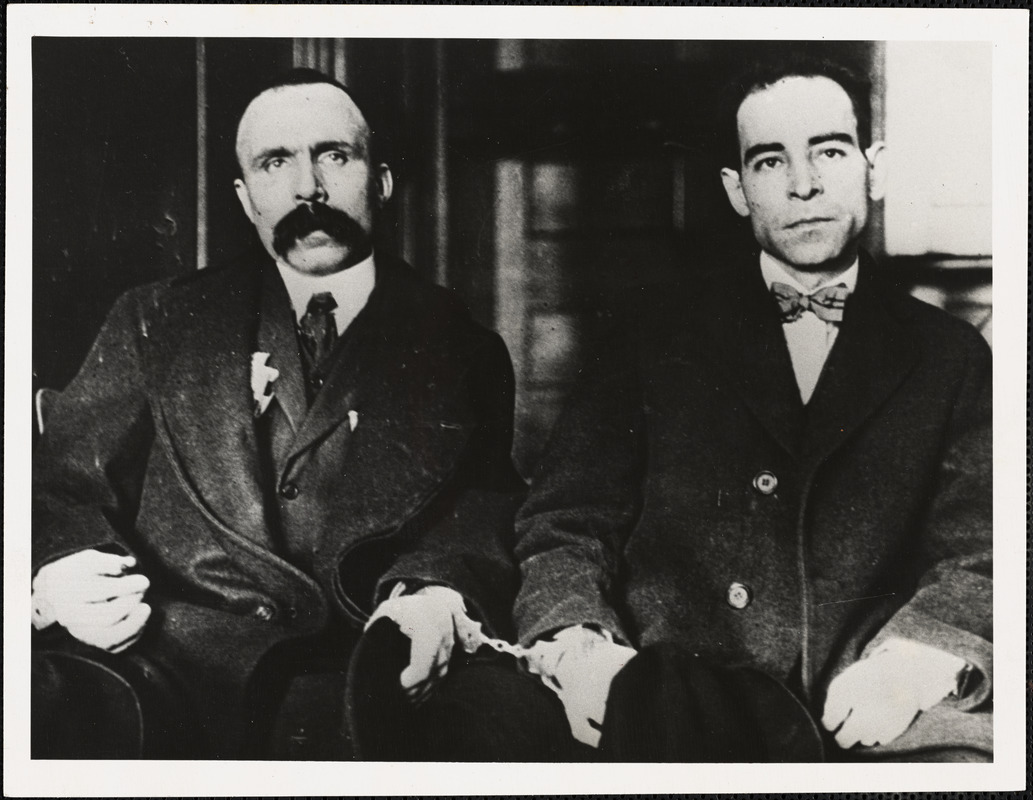
April 15, 1920, in South Braintree, Massachusetts.
A paymaster and a guard were walking along Pearl Street, carrying two boxes of payroll cash.
About $15,776.
Two men approached them and opened fire.
Both men were killed on the street.
The gunmen grabbed the boxes, jumped into a waiting Buick, and fled with several accomplices.
Witnesses described the shooters as Italian-looking men.
That is what the record shows.
Who those two shooters were is not established at this point.
The identities would become the whole case.
An ordinary errand — carrying a factory payroll — turned into a double murder.
The money was the point.
The men who took it were gone before the bodies settled.
The robbery itself was over in minutes.
But the case was just beginning.
It became one of the most famous criminal cases of the 1920s.
Not because of the violence alone, though the violence was sudden and complete.
Because of the political climate.
The two men eventually charged were Italian-born anarchists.
Their trial became a global cause célèbre.
But on that April morning, there was only the street, the boxes, and the gunfire.
Two dead men.
A Buick disappearing.
And a question that would take seven years to answer, and never fully settle.
Who were the shooters?
The record does not say.
Not yet.
THE ARREST ON THE STREETCAR
The police were looking for Italian anarchists.
The 1919 bombing campaign had left the country on edge, and the South Braintree murders fit a pattern they believed they understood.
On May 5, 1920, they stopped a streetcar in Brockton, Massachusetts.
Inside were Nicola Sacco and Bartolomeo Vanzetti.
Both men were armed.
Sacco carried a .32-caliber Colt automatic pistol; Vanzetti had a .38-caliber revolver.
The police said the two men lied about where they had been and what they had done.
They said the men lied about their anarchist activities.
That is a police claim.
The record does not establish that they lied.
Two armed anarchists, arrested weeks after the robbery.
The prosecution would build its case on that weight of circumstance.
They would also build it on eyewitnesses.
One witness claimed she saw Sacco in the fleeing car.
She said she saw him at a distance, in motion, for a matter of seconds.
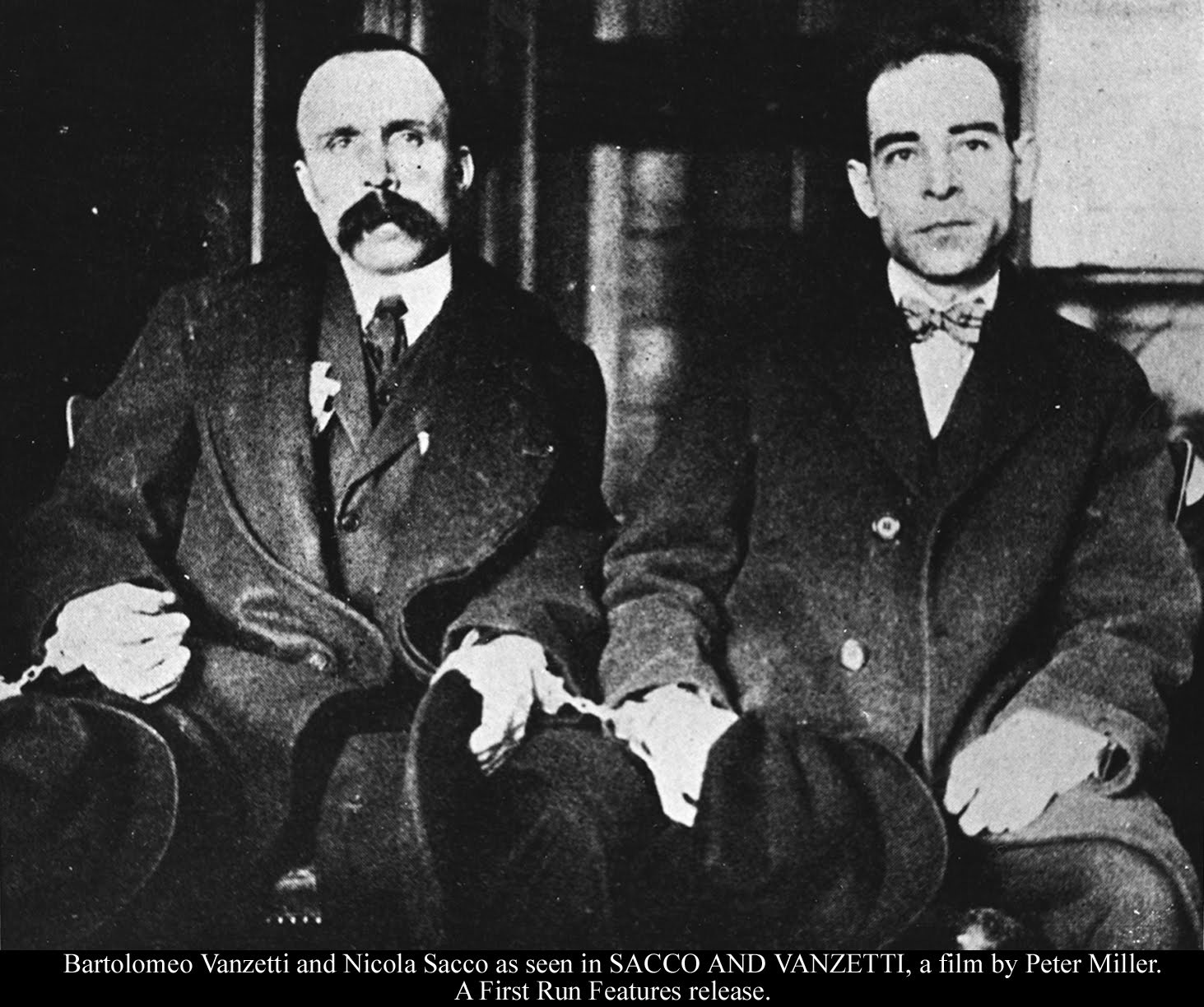
Her testimony became a pillar of the prosecution's case.
The defense would later call a witness who placed Sacco in Boston at the time of the murders.
Two witnesses, two cities, one man.
The arrest was not the evidence.
It was the beginning of the story the prosecution wanted to tell.
THE COLT AND THE BULLET
The bullet came from the guard’s body.
The prosecution argued it matched a .32-caliber Colt automatic pistol taken from Sacco at his arrest.
Defense experts disputed the match.
They said the markings on the bullet were not conclusive.
The record shows the prosecution argued it, and defense experts disputed it.
Whether the bullet actually matched Sacco’s Colt is not established.
The jury accepted the prosecution’s firearms testimony anyway.
Ballistics was central to the case.
It was not the only thing the prosecution put before the jury.
The prosecution also emphasized the defendants’ radical politics.
It pointed to their evasion of the draft during World War I.
The defense argued this was an attempt to prejudice the jury.
Not because the politics were irrelevant to the crime.
But because the crime was a robbery and a double murder.
The prosecution introduced a separate conviction of Vanzetti.
That conviction was for a December 1919 armed robbery in Bridgewater, Massachusetts.
It was offered to show a pattern of criminal behavior.
Vanzetti had been convicted in that case.
The jury heard it.
The jury weighed it.
The jury accepted the prosecution’s version of the evidence.
The bullet match was a claim.
The politics were a theme.
The Bridgewater conviction was a pattern.
What the record establishes is narrower.
It establishes what the prosecution argued.
It establishes what the defense disputed.
It does not establish that the bullet matched.
That question remains open.
THE VERDICT AND THE APPEALS
The trial began on May 31, 1921, in Dedham, Massachusetts, before a judge of the Massachusetts Superior Court.
The jury returned guilty verdicts on July 14, 1921.
The judge sentenced both men to death.
The defense filed numerous motions for a new trial.
One motion was based on newly discovered evidence.
Another alleged prosecutorial misconduct.
The judge denied them all.

The case went through years of appeals.
The Massachusetts Supreme Judicial Court upheld the convictions.
In 1927, Governor Alvan T. Fuller appointed a committee to review the case.
Its members were Harvard president A. Lawrence Lowell, MIT president Samuel W. Stratton, and Judge Robert Grant.
The committee found the trial fair.
That finding is on the record.
It is not unanimity.
Whether the trial was fair remains contested, and the record does not establish that everyone agreed.
Governor Fuller refused to commute the sentences.
Worldwide protests and a campaign for clemency did not change his decision.
The motions were denied.
The appeals were denied.
The committee found the trial fair.
The governor declined to act.
Each step closed a door.
The verdict stood.
AND THE STORY STILL ISN'T OVER
The switch was thrown at Charlestown State Prison on August 23, 1927.
Sacco and Vanzetti were dead.
Their deaths did not end the story. It became louder.
International demonstrations and protests followed the executions.
Crowds gathered in cities across the world. They carried signs. They shouted names now carved into stone.
The bodies were buried in Boston.
Their graves remain a site of remembrance. People still leave flowers.
Fifty years passed before an official word came.
In 1977, Massachusetts Governor Michael Dukakis issued a proclamation.
He stated that Sacco and Vanzetti had been treated unjustly. He said their names should be cleared of stigma.
It was a proclamation. It was not a pardon.
The distinction matters. A pardon is a legal act. A proclamation is a statement.
The record does not establish whether the men were guilty or innocent.
The trial was found fair by a governor's committee in 1927. The verdict stood. The executions were carried out.
The questions did not die with the men.
Historians still ask about the fairness of the trial. They still ask about the reliability of the ballistics evidence.
The bullet match was a prosecution claim. Defense experts disputed it. The jury accepted the prosecution's testimony.
That is what the record shows. Not more.
The case remains a subject of historical debate.
Two men are buried in Boston. Their graves are a site of remembrance.
The story is not over because the questions remain open.
Each generation reads the file. Each generation asks the same thing.
What did the bullet prove?
What did the trial prove?
What does a proclamation prove?
The record answers none of it. That is the answer.
Advertisement
You may also like
The license plate stop that changed everything in Oklahoma City
At 9:02 a.m. on April 19, 1995, a truck bomb exploded outside the Alfred P. Murrah Federal Building in Oklahoma City, Oklahoma. The blast…
The DNA on a bra clasp left 46 days that decided a murder case
The door to Meredith Kercher's bedroom was locked. Her flatmate Filomena Romanelli found it that way on the morning of November 2, 2007, and…
The brother's tip that turned a 17-year manhunt into a cabin raid
In September 1995, The Washington Post and The New York Times published the Unabomber's manifesto, a 35,000-word essay. The FBI had offered to publish…
The torso victim's sister spoke once — and the one detail she revealed
She spoke once. That is all the record gives her. Among the dozen or more victims of the Cleveland Torso Murderer, most were transients…
The 1987 saliva sample that waited 14 years to name a killer
A truck painter from Auburn, Washington, gave the investigators his saliva in 1987. Gary Leon Ridgway was a suspect in the Green River murders,…
A boat bought weeks before Christmas, and the fishing trip that broke a timeline
The boat was new when Scott Peterson told police he had spent the morning fishing alone at the Berkeley Marina. He bought it weeks…