The Zodiac letter that detectives still cannot explain
A second cryptogram arrived in November 1969.
It came to the newspapers, signed by the Zodiac.
It was never definitively solved.
The meaning of that second cryptogram is not established.
The first one, sent in August 1969, was different.
That one was solved.
A high school teacher, Donald Harden, and his wife Bettye Harden cracked it.
The plaintext read, in part, “I like killing people because it is so much fun.”
Those words were not the proof.
The proof was in the same mailing.
The letters included a piece of the taxi driver’s bloody shirt.
They included a partial description of the murder.
Only the killer would know those details.
The writer was the killer.
That is what the investigation evidence summary records.
The letters tied the cryptograms to the crimes.
The first cryptogram was decoded. The second was not.
No suspect was ever charged.
The case was never solved.
The record holds the shirt fragment, the description, the unsolved cipher.
It holds what was proven and what was not.
The second cryptogram sits in the file, still unexplained.
That is where the story begins.
FIVE ATTACKS, ONE TRAIL
The first attack came on December 20, 1968, on a lovers’ lane near Vallejo.
Two victims were shot with a .22-caliber pistol, according to the documented record of what happened.
They died there.
On July 4, 1969, two victims were shot at Blue Rock Springs Park in Vallejo.
One died. One survived.
A .22-caliber pistol was used again, the record states.
On September 27, 1969, two victims were stabbed at Lake Berryessa.
One died. One survived.
A knife was used.
On October 11, 1969, a taxi driver was shot in San Francisco’s Presidio Heights.
A 9mm pistol was used.
Four attacks. Three jurisdictions: Vallejo, Napa County, San Francisco.
Each one a separate county, a separate set of detectives, a separate file.
Then the letters arrived.
The killer sent cryptograms and letters to the San Francisco Chronicle, the San Francisco Examiner, and the Vallejo Times-Herald.
He signed himself “the Zodiac.”
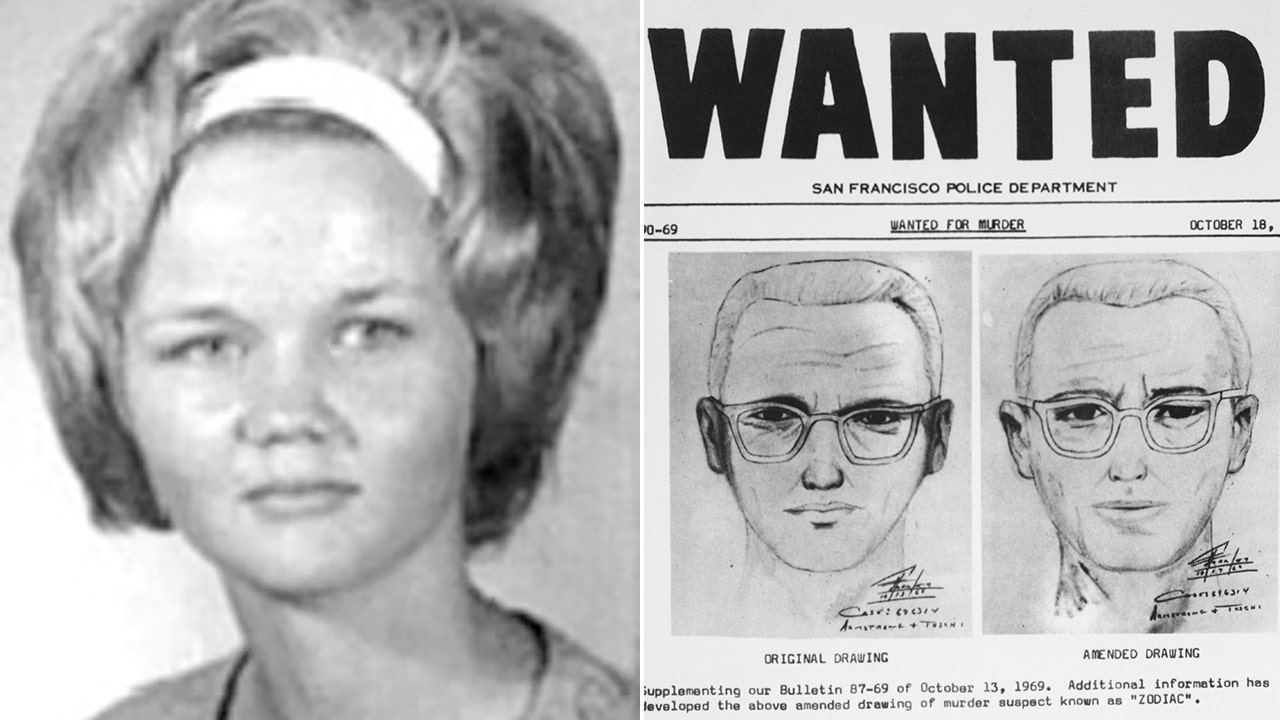
The letters carried details of the crimes that only the killer would know.
A partial description of the taxi driver’s murder. A piece of his bloody shirt.
That is what bound the attacks together.
Not the weapon — the first two shootings used a .22, the taxi driver was killed with a 9mm, the stabbing used a knife.
Not the vehicle — the killer’s car was never reliably identified, the record says.
The letters were the trail.
Five attacks, one trail.
Each attack scattered across different police departments.
Each letter sent to a different newspaper.
One trail, but it ran through many hands.
THE EVIDENCE THAT BINDS
The key evidence was the killer’s own communications.
Handwritten letters and cryptograms sent to newspapers carried details of the crimes that only the killer would know.
The first cryptogram arrived in August 1969.
A high school teacher, Donald Harden, and his wife Bettye Harden solved it.
The plaintext read, in part, “I like killing people because it is so much fun.”
The letters did more than taunt.
They included a partial description of the taxi driver’s murder.
They included a piece of his bloody shirt.
That shirt fragment proved the writer was the killer.
Eyewitness accounts were limited.
One survivor of the July 4 shooting described his attacker.
One survivor of the September 27 stabbing gave a detailed description.
A composite sketch was produced from those descriptions.
Police also investigated a man seen near the taxi driver’s murder scene.
A patrol officer had spotted him, but the suspect was not detained.
The identity of that man is not established.
He was not detained.
The physical trail was thin.
A shirt fragment, a sketch, two survivors’ words.
It is a narrow record.
It is also the record that binds the letters to the crimes.
THE SUSPECTS WHO CAME AND WENT
Arthur Leigh Allen was investigated in the 1970s and again in the 1990s.
He was a person of interest, a schoolteacher, a man whose name surfaced in the files.
He was never charged.
In 2002, DNA testing excluded him, according to the investigation evidence summary.
That was the end of one theory.
The case was formally reopened by the Vallejo Police Department in 2007.
The record reopened with it.

In 2021, a group of independent investigators claimed to have identified a suspect.
Law enforcement did not confirm the claim.
No charges were filed.
The claim remains a claim.
That would require evidence.
There was no trial.
No suspect was ever charged with the Zodiac murders, according to the trial and outcome section.
No suspect has been conclusively linked by law enforcement.
Not Allen, not the 2021 name, not any of the others who surfaced in books and documentaries.
The names come and go.
The frustration is the pattern.
Each suspect rises with a story, a sighting, a circumstantial thread.
Each one falls away on the record.
It is a case of accumulation without conclusion.
It is a case where the letters outlast the leads.
The surviving victims spoke publicly.
The composite sketch stayed the same.
The shirt fragment stayed physical.
The record never closes.
The record also never grows.
Detectives reopened the file in 2007 and kept reviewing evidence with the FBI.
They found nothing that moved a name into a charge.
That is where the case sits.
A suspect, a theory, a denial.
A claim, a silence, an open file.
The identity remains unknown.
AND THE STORY STILL ISN'T OVER
The case remains officially open and unsolved.
The San Francisco Police Department has stated the case remains active. The Vallejo Police Department has stated the same.
The FBI and other agencies have continued to review evidence. They have reviewed the letters, the cryptograms, the shirt fragment, the descriptions.
They have reviewed the claims of independent investigators who named a suspect in 2021. Law enforcement did not confirm that claim. No charges were filed.
The identity of the Zodiac remains unknown. No next hearing date is in the record. No motion is pending.
The second cryptogram, sent in November 1969, was never definitively solved. The first was solved by a high school teacher and his wife. The second still sits where it has sat for decades.
The surviving victims have spoken publicly about their experiences. They have described the attacks. They have described the man. They have described what remains.
A composite sketch was produced from their descriptions. A patrol officer saw a man near the murder scene. The man was not detained.
The shirt fragment proved the writer was the killer. The partial description of the taxi driver's murder proved the same. Those are the facts that bind the letters to the crimes.
What binds the identity to the letters does not exist. That would require evidence.
A suspect, a theory, a denial. A claim, a silence, an open file.
The case remains open. The file remains open. The question remains open.
She was on the ground below. That was one attack. There were others.
The identity remains unknown. That is not a theory. That is the record.
Advertisement
You may also like
The license plate stop that changed everything in Oklahoma City
At 9:02 a.m. on April 19, 1995, a truck bomb exploded outside the Alfred P. Murrah Federal Building in Oklahoma City, Oklahoma. The blast…
The DNA on a bra clasp left 46 days that decided a murder case
The door to Meredith Kercher's bedroom was locked. Her flatmate Filomena Romanelli found it that way on the morning of November 2, 2007, and…
The brother's tip that turned a 17-year manhunt into a cabin raid
In September 1995, The Washington Post and The New York Times published the Unabomber's manifesto, a 35,000-word essay. The FBI had offered to publish…
The torso victim's sister spoke once — and the one detail she revealed
She spoke once. That is all the record gives her. Among the dozen or more victims of the Cleveland Torso Murderer, most were transients…
The 1987 saliva sample that waited 14 years to name a killer
A truck painter from Auburn, Washington, gave the investigators his saliva in 1987. Gary Leon Ridgway was a suspect in the Green River murders,…
A boat bought weeks before Christmas, and the fishing trip that broke a timeline
The boat was new when Scott Peterson told police he had spent the morning fishing alone at the Berkeley Marina. He bought it weeks…