The bloody pajama top with neat, folded holes that sealed a Green Beret's fate
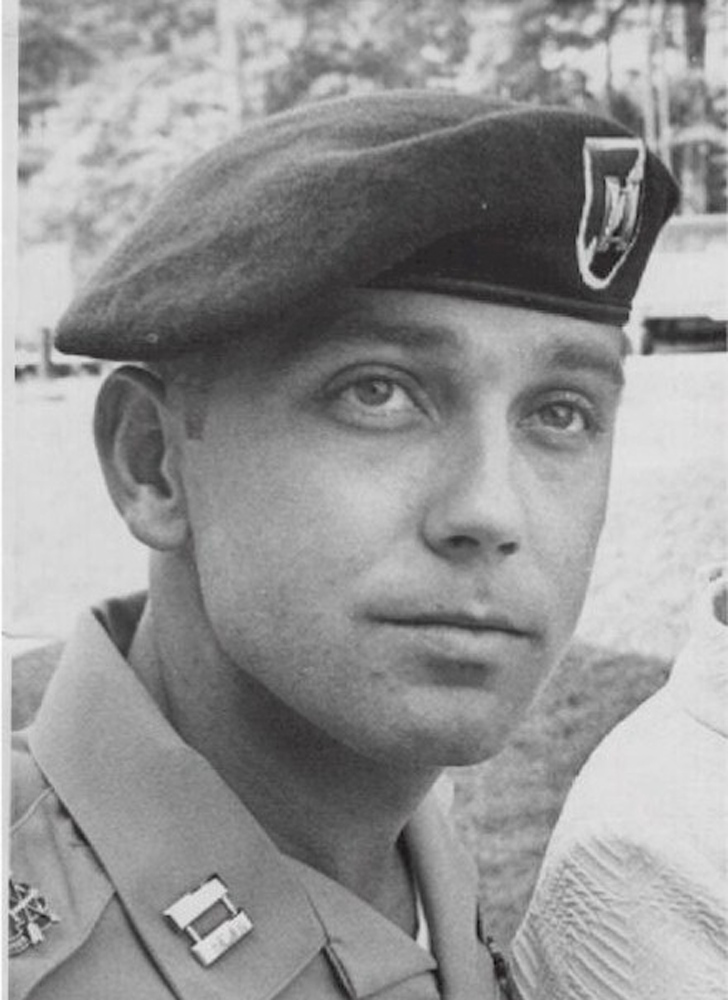
The pajama top had holes in it.
Not torn holes, not ripped holes. Folded holes.
Neat, deliberate folds, as if something had been pressed against the fabric with intention.
In the early hours of February 17, 1970, army captain Jeffrey MacDonald reported that four hippies chanting "acid is groovy" had attacked his family in their home on the base at Fort Bragg, North Carolina.
When military police arrived, they found his wife, Colette, and their two daughters, Kimberley, age 5, and Kristen, age 2, dead.
MacDonald had minor injuries.
His pajama top had those neat, folded holes.
Prosecutors later argued the holes were self-inflicted.
That is an argument, not established fact.
A weapon pressed against fabric leaves a different mark than a weapon swung in a struggle.
One is violent. The other is staged.
The holes demand an explanation.
They are too neat for a fight.
Too deliberate for an intruder's frenzy.
Too precise for the chaos of that room.
The record does not establish how the holes got there.
It only establishes that they were there.
THE SCENE
Military police entered the home and found Colette MacDonald beaten and stabbed repeatedly.
The children had been stabbed as well.
Kimberley was five. Kristen was two.
The scene held a bloody club and a paring knife.
Investigators found no signs of forced entry.
MacDonald himself had minor injuries — a scratch, a bruise, nothing that matched the room around him.
He was initially treated as a victim and survivor of the attack.
He told military police that four intruders — hippies, he said, one of them a woman with a candle — had done this.
They had chanted "acid is groovy," he said.
That is MacDonald's claim.
The record does not establish that any intruder entered the home.
It does not establish who they were, or whether they existed at all.
The case became known as the Green Beret murders because MacDonald was a Green Beret physician.
The name attached to the crime, not to the dead.
Colette was his wife. Kimberley and Kristen were his daughters.
In those first hours, the sympathy was his.
THE STEPFATHER'S CAMPAIGN
The Army charged him in July 1970.
After a hearing under Article 32 of the Uniform Code of Military Justice, the charges were dropped for lack of evidence.
MacDonald was discharged from the Army in 1971.
Colette's stepfather refused to let the case die.

He hired private investigators.
He pressured federal authorities to reopen the case.
The record does not detail his specific actions beyond those two things.
It does not say how many calls he made, or which offices he visited, or what he said to the men who answered.
That would require evidence, and the evidence is not there.
What is there is a timeline.
The Army walked away in 1970.
The stepfather did not.
In 1974, a federal grand jury indicted MacDonald.
The charges were back.
Not because the Army changed its mind. Because someone outside the system kept pushing.
He was not a detective. He was not a prosecutor. He was a grieving man who believed the official outcome was wrong.
The sympathy had once belonged to MacDonald, the survivor in the bloody house.
The stepfather spent years taking it back.
He was Colette's father, by marriage.
She was dead. Her daughters were dead.
MacDonald had walked out of the house with minor injuries and a pajama top with neat, folded holes.
The stepfather had a different name for the man who wore that top.
The record does not say what he called him.
It says only that he pushed, and that the push worked.
In 1974, the federal government agreed with him.
The case that had been dropped for lack of evidence was reopened.
MacDonald would stand trial.
THE TRIAL
The trial opened in 1979 in federal court in Raleigh, North Carolina.
It had been nine years since the bodies were found.
The prosecution put the pajama top before the jury.
Blood typing suggested Colette's blood was on it.
Fibers from that same pajama top were found under Kristen's fingernails.
The two-year-old had scratched at something.
The prosecutor argued the neat, folded holes were not made by an intruder's weapon.
They were made by MacDonald pressing the blade against his own chest.
He killed his family in a rage, the prosecution said.
Then he staged the scene — the hippies, the chanting, the candle — to look like an attack.
The defense argued its case over the two-month trial.
The specific arguments are not in the record provided.
What remains are the fibers and the blood.
The jury deliberated.
They convicted MacDonald of three counts of first-degree murder.
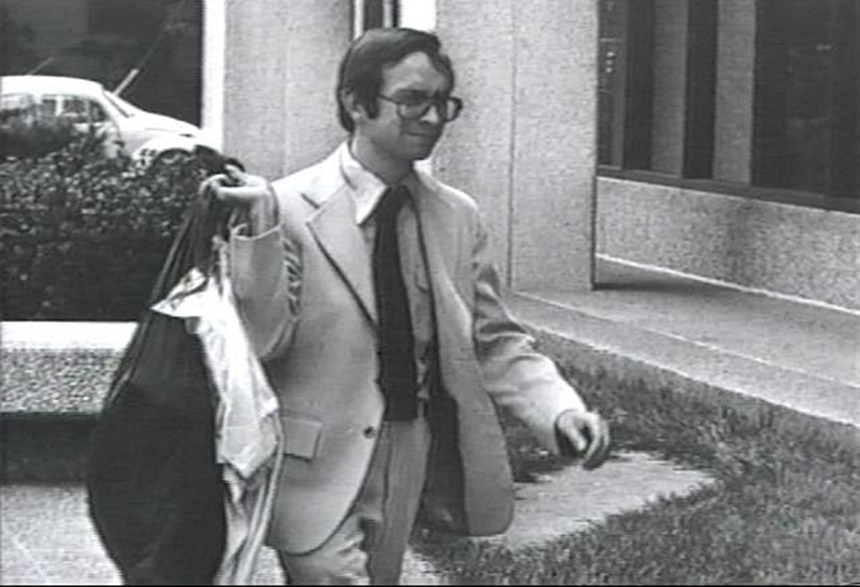
The judge sentenced him to three consecutive life terms.
It was a verdict, not an end.
The pajama top had sealed his fate.
But the story would keep asking the same question.
The question the folded holes could not answer.
Was it rage, or was it the four intruders?
That would require evidence.
The fibers pointed one way.
The conviction made it law.
The doubt never quite died.
AND THE STORY STILL ISN'T OVER
He has said it since the first night, and he has said it in every courtroom since.
Intruders came through the door.
He fought them.
He did not kill his wife.
He did not kill his daughters.
The Fourth Circuit upheld the conviction in 1980.
The U.S. Supreme Court declined to hear the appeal in 1990.
In 2006, the Fourth Circuit again rejected a habeas corpus petition.
He has asked for DNA testing of the evidence.
The courts have denied the requests.
Every request, denied.
He remains in federal prison, serving three consecutive life sentences.
Parole has been denied multiple times.
The story does not close.
It moves from a trial to an appeal, from an appeal to a book.
In 1983, Joe McGinniss published "Fatal Vision," concluding MacDonald was guilty.
In 1990, Janet Malcolm published "The Journalist and the Murderer," examining the relationship between the writer and the man he wrote about.
The books argue.
The courts rule.
The denials accumulate.
What would a DNA test show?
What would the pajama top reveal now?
What would the fibers say after all these years?
That would require evidence.
The record does not establish what any future testing would find.
It only shows that the requests have been consistently denied.
The doubt remains.
The conviction stands.
The case is not over.
It is simply waiting.
Advertisement
You may also like
The discarded .35 caliber Marlin that linked one survivor to six shots in Amityville
The call came in on November 13, 1974, after a neighbor reported a shooting at 112 Ocean Avenue in Amityville, New York. Inside, officers…
The pharmacy receipt that cracked a contractor's crawl-space secret
A paper receipt from the pharmacy where Robert Piest worked was found inside John Wayne Gacy's home. It is a mundane object. A slip…
The 3:32 p.m. cell call that placed a suspect near a body not yet found
At 3:32 p.m. on January 13, 1999, a call was made from Adnan Syed's cell phone to a friend named Nisha. The call was…
The notebook found beside a revolver in a Florida swamp
The notebook was found in a flooded area of the Carlton Reserve in Florida on October 20, 2021. Beside it lay a revolver. Beside…
Buried in a Sacramento backyard: the Social Security checks that told on Dorothea Puente
The last check arrived in November 1988. A social worker phoned the Sacramento police about a missing client, an elderly tenant of the boarding…
The bloody glove found on O.J. Simpson's estate that didn't fit — and the DNA that swayed the trial
A right-hand glove, bloodstained, lay on the ground at O.J. Simpson's Rockingham Avenue estate. Detectives found it during their walk-through of the property. It…