The bloody glove found on O.J. Simpson's estate that didn't fit — and the DNA that swayed the trial
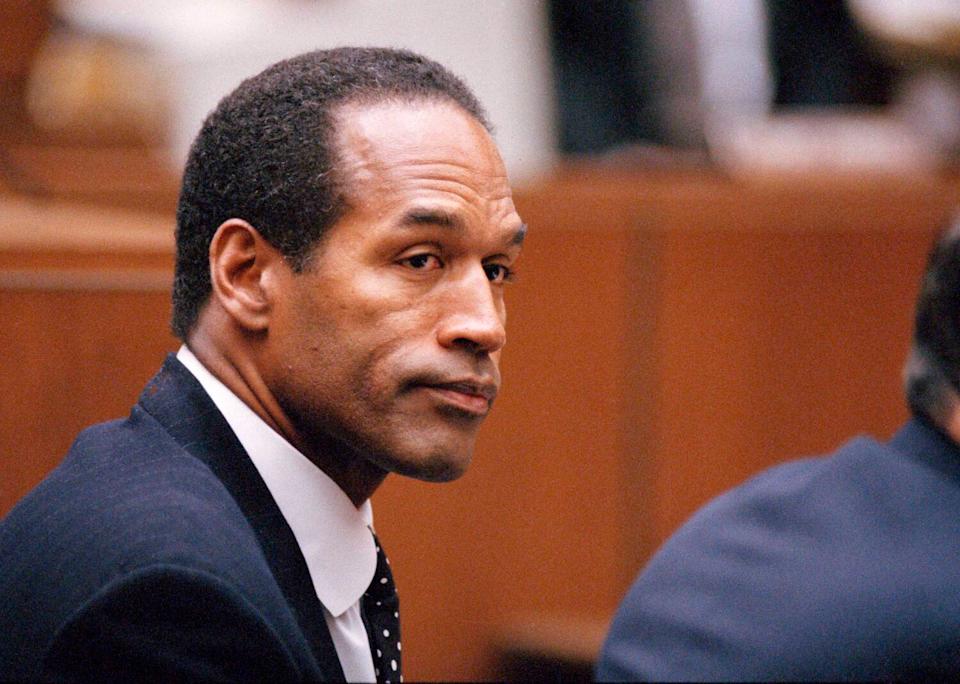
A right-hand glove, bloodstained, lay on the ground at O.J. Simpson's Rockingham Avenue estate.
Detectives found it during their walk-through of the property.
It became the object the whole country watched him try on.
In court, Simpson pulled the glove over his hand.
It did not fit.
The prosecution had asked him to try it on, and the glove stopped short of his fingers.
The defense called that proof of a frame.
The glove, they argued, was planted or mishandled by investigators.
Was it?
That is not established.
The record shows the glove was found where it was found, and the defense's claim of planting remains a claim.
But the glove was never the whole case.
The prosecution leaned on something smaller and harder to see: DNA.
Blood on the glove.
Blood at the scene.
Blood in the Bronco.
Each sample carried a signature, and the prosecution said that signature was Simpson's.
The glove was the symbol.
The DNA was the evidence.
How the evidence was collected, though, became its own question.
Criminalists handled the samples, bagged them, logged them.

The defense said they handled them badly.
Contamination, they argued.
Mishandling.
The glove sat in the record as a thing that did not fit a hand, yet tied a man to a scene.
That is the unease at the center of the case.
A glove that does not fit.
A story that does, barely, if you follow the blood.
THE BODIES ON BUNDY
The neighbor walking her dog found them around midnight.
Nicole Brown Simpson was on the ground outside her condominium on Bundy Drive. Ronald Goldman was near her. Both had been stabbed repeatedly.
Nicole had been stabbed multiple times in the head and neck. Goldman was also stabbed repeatedly. The case record states the killings occurred sometime after 10:00 PM.
What time exactly?
The case record does not specify the exact time of death. It only places the killings after 10:00 PM.
Nicole was the ex-wife of O.J. Simpson. Goldman was a waiter at a nearby restaurant. He had returned Nicole’s mother’s glasses that night.
The scene was in Brentwood, Los Angeles. The date was June 12, 1994.
Simpson was scheduled to fly to Chicago that night. He became the primary suspect within days.
Not because of the glove. Because of the bodies, and the timeline that followed them.
The horror of the scene is the fact of the record. The immediacy is the timeline. A neighbor, a dog, a midnight discovery.
THE EVIDENCE ON ROCKINGHAM
Detectives Philip Vannatter and Tom Lange went to Simpson’s estate on Rockingham Avenue that night.
They found a bloodstained glove, a right-hand glove, on the grounds.
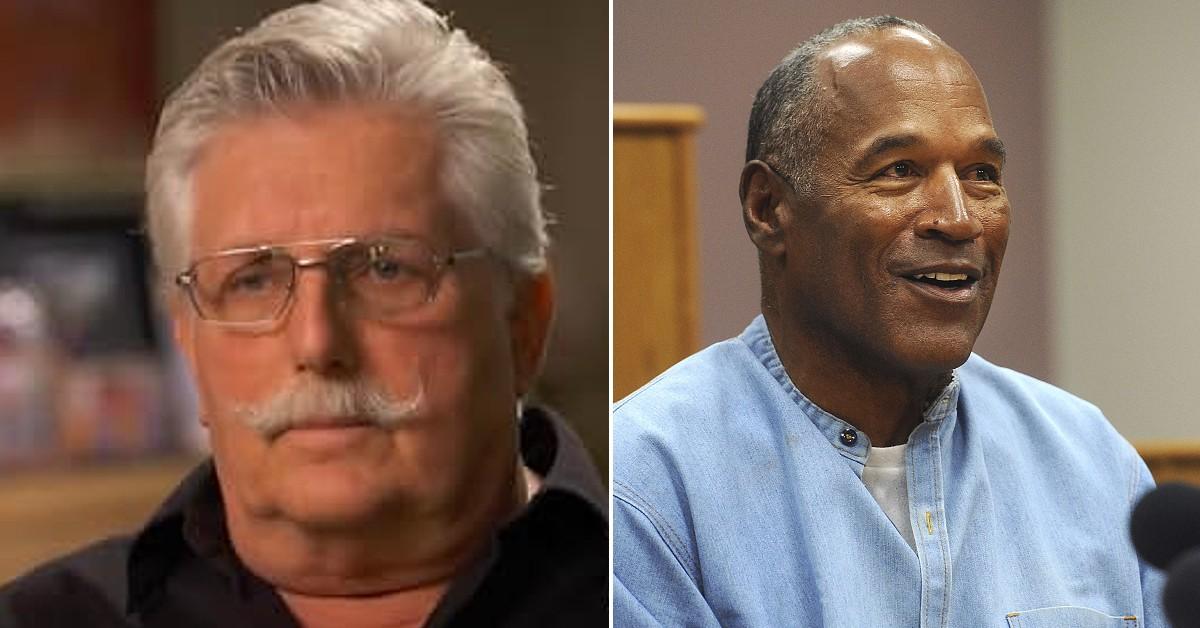
They found other evidence too, according to the investigation record.
Simpson had flown to Chicago that night.
He returned the next day and was questioned.
A blood sample was taken from him.
That sample became part of the prosecution’s case.
The case relied heavily on DNA.
Blood was found at the crime scene on Bundy.
Blood was found on the glove at Rockingham.
Blood was found in Simpson’s Bronco.
Each sample was tested, and each test pointed the same way, the prosecution argued at trial.
The LAPD criminalist collected that evidence.
The collection itself became the battleground.
Defense attorneys Barry Scheck and Peter Neufeld attacked the handling and testing of the samples.
They suggested contamination.
They suggested sloppy procedure.
They suggested the evidence could not be trusted.
Whether contamination actually occurred is not established.
It was a defense argument, not a finding of the record.
The glove was tried on in court.
It did not fit Simpson’s hand, according to trial testimony.
That moment became a symbol.
%2Fdmn3xkgw.JPG)
The DNA was the weight.
The lead detective’s testimony became a flashpoint too.
The defense played recordings of him using racial slurs.
His credibility was undermined, according to the trial record.
The glove did not fit.
The DNA was tested.
The doubt was cast.
Both things were true in that courtroom, and only one of them was ever resolved.
TWO STORIES, ONE GLOVE
The prosecution laid out its story with DNA: blood at the crime scene, blood on the glove, blood in the Bronco.
Each sample, the prosecution argued, tied Simpson to the murders.
The defense told a different story.
The glove did not fit Simpson's hand when he tried it on in court, they said.
The evidence was mishandled, they argued, and Simpson was framed.
The limousine driver Allan Park testified about Simpson's whereabouts that night.
The defense presented Rosa Lopez, a neighbor who claimed to have seen Simpson's Bronco at a certain time.
Her testimony was inconsistent.
The trial began in January 1995.
It lasted nearly nine months.
On October 3, 1995, the jury acquitted Simpson of both murder charges.
Which story was true?
Was it the DNA?
Was it the glove?
That would require evidence the record does not provide.
The acquittal is a legal outcome, not a factual finding.
The record does not establish which narrative is correct.
It only establishes what the jury decided.
The glove sat in the courtroom.
The DNA sat in the chain of custody.
The doubt sat in the jury box.
AND THE STORY STILL ISN'T OVER
The criminal trial ended with an acquittal in October 1995.
The civil trial did not end the same way.
In 1997, a separate jury found Simpson liable for the wrongful deaths of Nicole Brown Simpson and Ronald Goldman.
That jury ordered him to pay $33.5 million in damages, according to the case record.
Simpson moved to Florida, where his pension and other assets were largely protected.
The Goldman family has continued to pursue the civil judgment.
Whether that judgment has been fully paid is not stated in the record.
The story moved on, and then it moved again.
In 2007, Simpson was arrested in Las Vegas for armed robbery and kidnapping.
He was convicted in 2008 and sentenced to 9 to 33 years in prison, according to the case record.
He was granted parole in 2017 and released in October 2017.

Simpson died on April 10, 2024, of cancer at age 76.
The glove sat in the courtroom.
The DNA sat in the chain of custody.
The doubt sat in the jury box.
After the acquittal, the questions did not sit still.
They followed Simpson to Florida.
They followed him to Las Vegas.
They followed him to parole hearings and to the civil courts.
The Goldman family kept pursuing the judgment.
The record shows the verdicts, the sentences, the parole, the death.
What the record does not show is a resolution.
Not because one was reached.
But because the case was never that kind of story.
The glove did not fit, and the DNA did not settle it, and the civil judgment did not end it.
Simpson was acquitted of murder.
He was held liable for wrongful death.
He was convicted of armed robbery.
He was paroled.
He died.
Each verdict answered one question and left another open.
That would require evidence.
The evidence, such as it was, ran out on April 10, 2024.
The aftermath outlived the trial.
The questions remain.
Advertisement
You may also like
The cellphone confession found in the boat where Dzhokhar Tsarnaev hid
The boat sat in a Watertown backyard, under a tarp, on the morning of April 19, 2013. The city had been locked down. The…
The ladder plank in Hauptmann's attic that sealed his fate
The plank had a name, or at least a number, before it had a story. In September 1934, police searched Bruno Richard Hauptmann's home…
The love letters scattered beneath a crabapple tree that investigators could not trace
The crabapple tree stood in a secluded lane called Lovers' Lane, near St. John's Episcopal Church in New Brunswick, New Jersey. On the night…
The 2007 deal that let Epstein plead state charges — and the detective who kept digging
Palm Beach, 2005. A mother walked into a police station and reported that her 14-year-old stepdaughter had been recruited by an older girl. The…
The eyeglasses with a rare hinge that broke a perfect alibi
The eyeglasses sat in the culvert beside the body of Robert "Bobby" Franks, fourteen years old, found on May 22, 1924, near the Indiana…
The $5,800 in serial-matched ransom cash that a boy found by the Columbia River
The bundle was rotting when the boy found it. Brian Ingram was a child that day in 1980, playing along the Columbia River near…