The ladder plank in Hauptmann's attic that sealed his fate
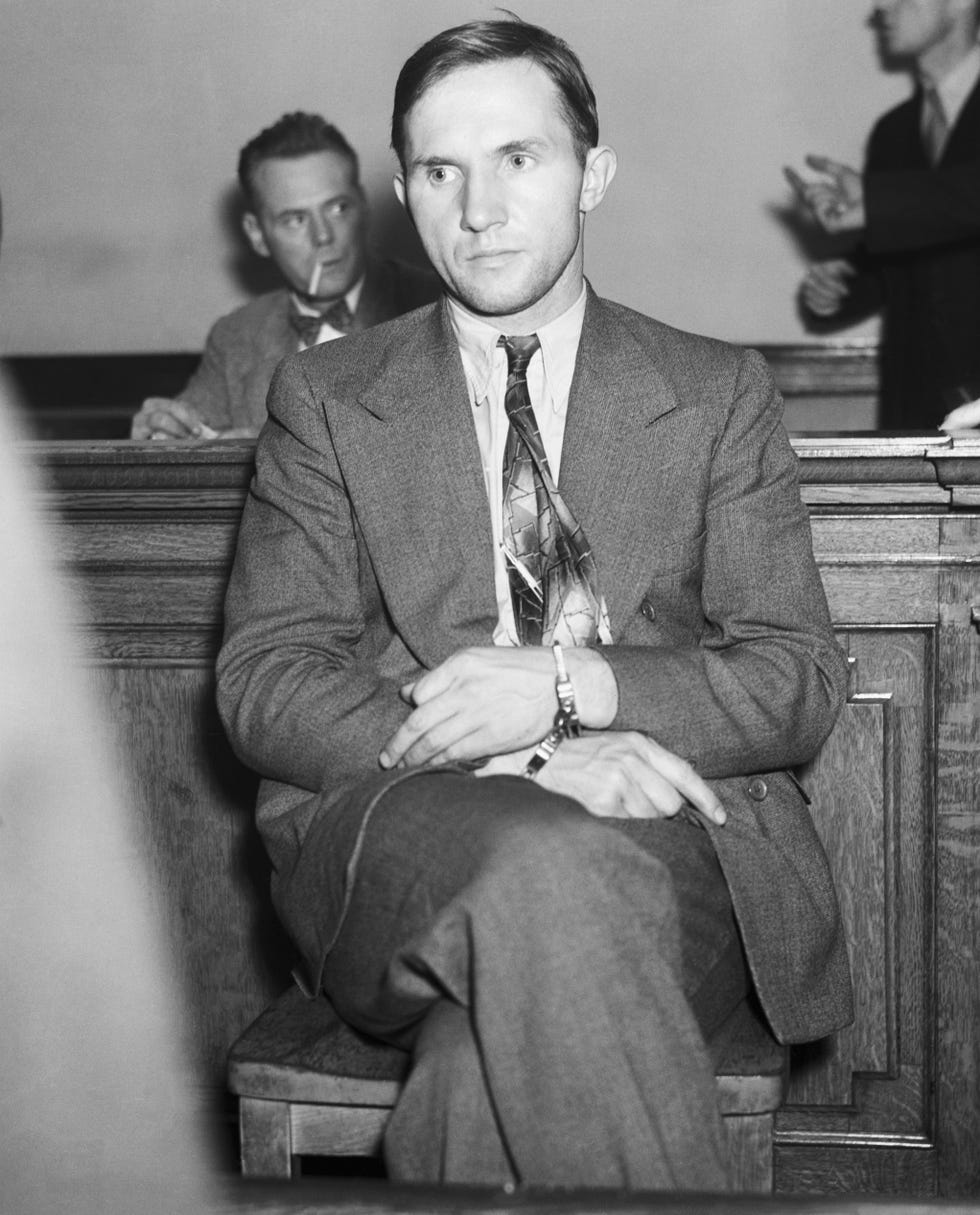
The plank had a name, or at least a number, before it had a story.
In September 1934, police searched Bruno Richard Hauptmann's home in the Bronx.
They found over $14,000 of the Lindbergh ransom money in his garage.
The money was marked; the serial numbers had been circulated for two years.
But the money was only the beginning.
A wood expert from the U.S. Forest Service had already spent months on the ladder left at the crime scene.
He testified at trial about how he traced the ladder's rails.
The rails led to a lumberyard in the Bronx.
The lumberyard led to a specific plank.
The plank matched Hauptmann's attic floorboards in grain patterns and tool marks.
The same expert identified a plane used to shape the wood.
That plane, he testified, was owned by Hauptmann.
One piece of wood, cut and measured and fitted, carried the weight of the case.
The grain ran one way; the marks ran another.
They lined up.
Online theories claim the wood was planted.
That is a claim.
The record does not establish planting.
The record shows a match.
It shows a man who worked with wood, a man who owned the tools.
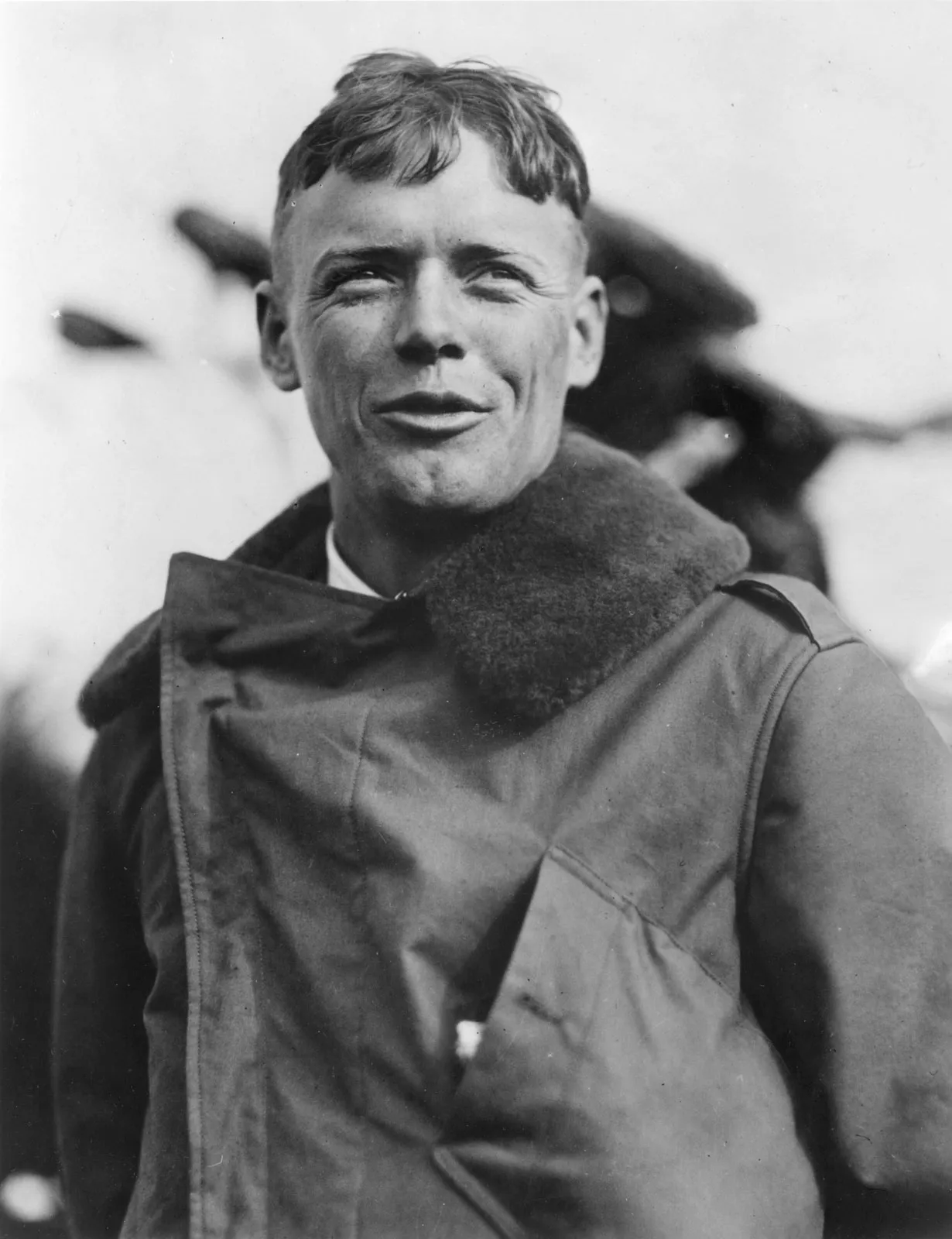
It shows a plank that fit where it was not supposed to fit.
The expert did not say the ladder was the only possible ladder.
He said the wood was the same wood.
That distinction mattered in 1935.
It still matters now.
The plank sat in an attic for years before anyone knew what it was.
Then it sat in a courtroom.
Then it sat in the record.
It never moved again.
THE NURSERY WINDOW
The family nurse found the crib empty around 10 p.m.
The room was the nursery on the second floor of the new house near Hopewell, New Jersey.
Charles Lindbergh Jr., the 20-month-old son of the aviator and Anne Morrow Lindbergh, was gone.
On the windowsill sat a ransom note demanding $50,000.
The exact time of the abduction is not in the record.
The night was cold, and the window was open.
The house was new, set back from the road, a home the family had barely settled into.
The child’s father, Charles Lindbergh, was home that evening.
He was famous, the first man to fly solo across the Atlantic, a hero to the country.
A hero’s child, taken from a hero’s house.
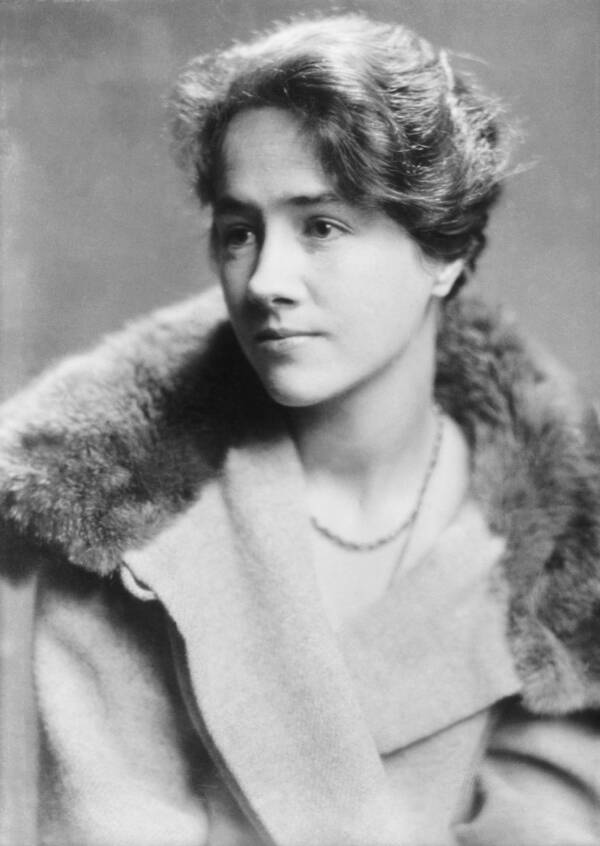
The first hours were confusion.
Multiple agencies arrived, and volunteers came too, and they interfered.
State police, local police, federal agents, reporters, neighbours — all of them moved through the grounds.
The crime scene was walked on before it was examined.
The ransom note was handled, passed from hand to hand.
The search began in the dark, lanterns moving through the woods, men calling the child’s name.
It was chaotic.
It was the first mistake of the investigation, and it would not be the last.
The note demanded $50,000.
It was signed with a distinctive mark, two interlocking circles in blue ink.
The family waited.
The country waited.
THE RANSOM AND THE ARREST
The ransom was paid on April 2, 1932.
Dr. John F. Condon, a retired Bronx schoolteacher, acted as the intermediary.
He delivered $50,000 in gold certificates to a man in a cemetery in the Bronx.
The money was marked.
The serial numbers were widely circulated to banks, shops, and gas stations across the country.
The family waited for the child to come home.
He did not come home.

On May 12, 1932, the child's body was found in a shallow grave about four and a half miles from the Lindbergh house, in woods off the Hopewell-Mount Rose road.
The state pathologist testified that the cause of death was a blow to the head, likely from a blunt instrument.
The weapon was never recovered.
The vehicle used by the kidnapper was not identified.
For more than two years, the marked bills moved through the economy, one by one.
Then, in September 1934, a gas station attendant noticed a gold certificate.
He wrote down the license plate of the car that offered it.
The plate led police to Bruno Richard Hauptmann.
At his home, police found over $14,000 of the ransom money.
It was hidden in a garage.
The money was the beginning.
The wood was the rest.
TWO STORIES OF THE SAME WOOD
The prosecution called a wood expert from the U.S. Forest Service.
He traced the ladder's rails to a lumberyard in the Bronx.
Then he traced a plank from that yard to Hauptmann's attic.
Grain patterns matched. Tool marks matched.
The expert also identified a plane used to shape the wood as one Hauptmann owned.
Attorney General David T. Wilentz presented this as the center of a circumstantial but overwhelming case.
Handwriting experts testified the ransom notes were written by Hauptmann.

A witness placed Hauptmann near the Lindbergh home on the day of the kidnapping.
The defense, led by Edward J. Reilly, told a different story of the same wood.
Reilly argued Hauptmann was innocent.
He argued the money was planted.
He argued the wood was planted too.
Whether the money was planted is not established; it is the defense's argument.
The defense did not effectively counter the wood evidence.
That failure is recorded in the case file as a major mistake.
Two readings of the same plank stood before the jury.
One said the wood built a ladder to a nursery window.
The other said the wood was a frame, placed to fit a story.
Which one was true?
Which one could be proven?
Which one would twelve jurors believe?
That would require evidence.
The prosecution had the grain. The defense had the claim.
The plank sat in the courtroom, and it did not change.
AND THE STORY STILL ISN'T OVER
The trial opened in Flemington, New Jersey, on January 2, 1935.
The jury deliberated about 11 hours.

On February 13, 1935, they returned a guilty verdict.
He was sentenced to death.
Appeals were rejected, including a final appeal to the U.S. Supreme Court.
On April 3, 1936, Hauptmann was executed in the electric chair at the New Jersey State Prison.
He maintained his innocence to the end.
The case outlived the man.
It changed the law: the federal "Lindbergh Law" made kidnapping across state lines a federal crime.
The Lindbergh home in Hopewell was eventually donated to the state.
It is now a historic site.
Visitors can stand where the nursery window was, and they can ask what the record cannot answer.
The debate is ongoing.
It is one of the most famous cases in American criminal history, with ongoing argument about his guilt.
No credible alternative suspect has been established.
That is not a mystery solved; it is a fact of the record.
The wood was traced, the grain was matched, the plane was identified.
The plank spoke in 1935.
It still speaks now, in a room where the man is gone.
The verdict stands.
The questions do not.
Not because the evidence was weak.
But because a story this large does not close with a switch.
It closes with a house, a law, and a piece of wood that will not be silent.
Advertisement
You may also like
The bloody glove behind O.J. Simpson’s guesthouse that split a trial in two
It was a left-handed glove, dark leather, stiff with dried blood, found behind the guesthouse at O.J. Simpson's estate. Detective Mark Fuhrman of the…
The 408-symbol cipher a schoolteacher solved — and what it said about the afterlife
The 408-symbol cipher sat in the newspaper office, a grid of letters and shapes that looked like a child's game. A Vallejo schoolteacher and…
The left-luggage ticket that cracked the Moors murders case
October 7, 1965. Police searched a house in Manchester and found a left-luggage ticket. Not a weapon. Not a confession. A ticket for Manchester…
The hatchet head in the cellar that never matched the timeline
The cellar was damp and close on the morning of August 4, 1892. In Fall River, Massachusetts, the bodies of Andrew Jackson Borden and…
The 2002 sniper shootings: a tip about a Caprice at a rest stop, and the rifle that changed everything
The caller reached the hotline on October 24, 2002. The caller gave a description of a Chevrolet Caprice. Police found the Caprice parked at…
The Thompson submachine gun found in Fred Burke's Michigan home that tied him to the massacre
The Thompson submachine gun sat in a Michigan home, miles from the Chicago garage. Investigators found it in the residence of a man named…