The pharmacy receipt that cracked a contractor's crawl-space secret
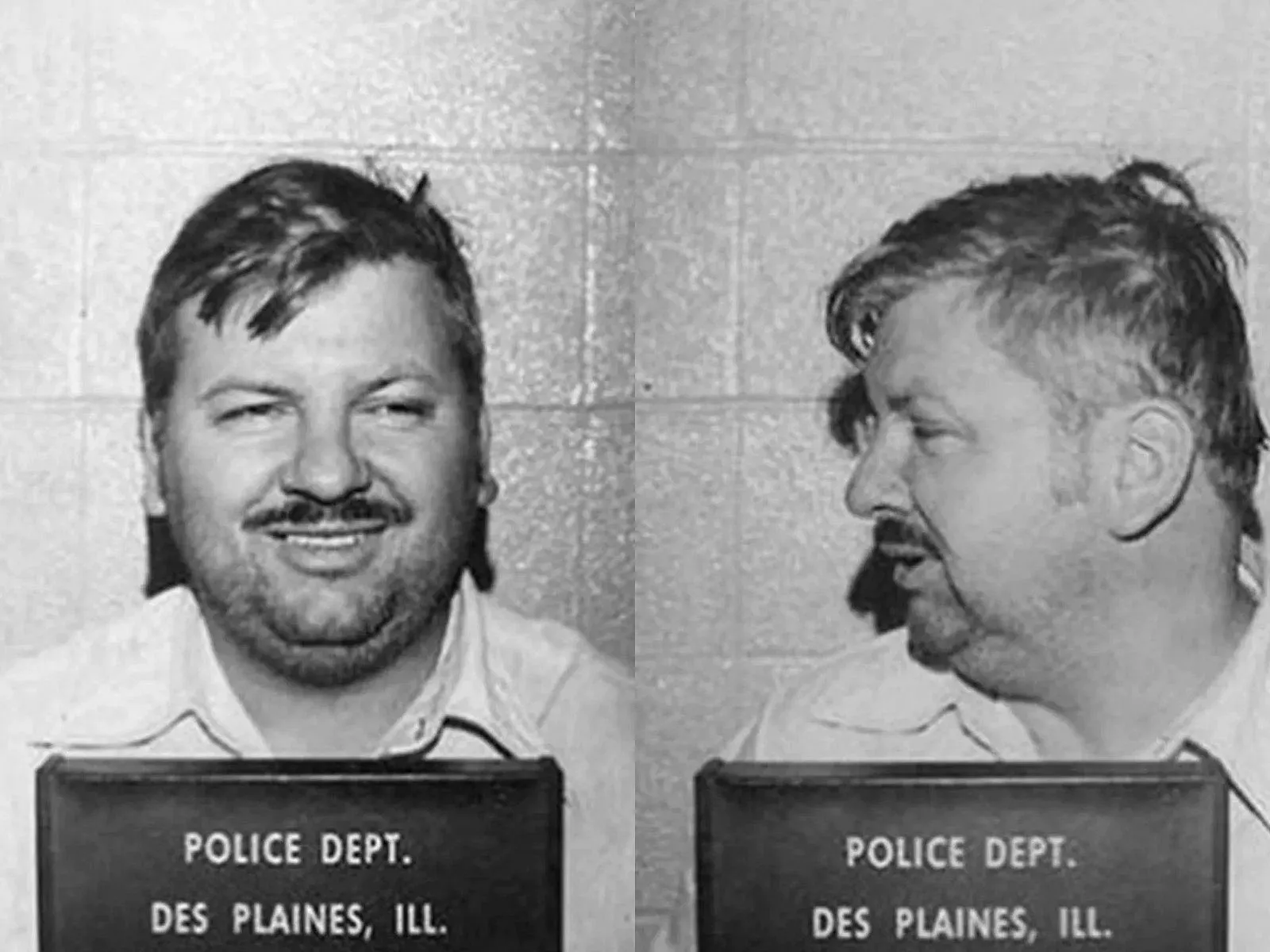
A paper receipt from the pharmacy where Robert Piest worked was found inside John Wayne Gacy's home.
It is a mundane object.
A slip of register tape, the kind a teenager would hand over with a purchase.
Investigators treated it as a key piece of evidence, a physical thread linking a missing boy to a contractor in Norwood Park Township.
Robert Piest was 15 years old.
On December 11, 1978, he vanished from the pharmacy where he worked, after telling his mother he was going to meet a contractor about a job.
That contractor was John Wayne Gacy, a building contractor and part-time clown performer.
The receipt was found in Gacy's home.
Witness statements also placed Piest with Gacy.
The receipt is one specific, unresolved detail.
How did it get there?
Did Piest carry it out of the store that night?
Did he drop it in the house?
Did someone else bring it?
The exact circumstances of how the receipt came to be in Gacy's home are not detailed in the record.
That would require evidence.
What the record does show is a small slip of paper, found in the wrong place, doing the work of a starting point.
A boy said he was going to meet a contractor.
A receipt from his pharmacy sat in that contractor's house.
The search of the property would come later.
The crawl space would come later.
But the receipt was the first hard thing.
The first thing that did not fit.
THE DISAPPEARANCE AND THE INTERVIEW
Robert Piest disappeared on December 11, 1978, from the pharmacy where he worked.
He had told his mother he was going to meet a contractor about a job.
That contractor was John Wayne Gacy.
The lead detective traced the lead to Gacy and interviewed him at his home.
Gacy denied involvement.
He agreed to accompany police to the station.
He was released for lack of evidence.
The near-miss is the thing to sit with.
A suspect walked free despite the connection.
Witness statements placed Piest with Gacy.
That is in the record.
The specific content of those statements is not.
What they saw, what they said, how they said it — that would require evidence the record does not contain.
The detective had a name, a link, a receipt found earlier in the house.
He had statements.
He did not have enough.
Not because the case was weak.

But because the law required more than a trail of breadcrumbs.
The suspect went home.
The crawl space would come later.
THE SEARCH WARRANT AND THE CRAWL SPACE
Police obtained a search warrant for Gacy's property.
Officers entered the house on Summerdale Avenue.
On December 22, 1978, they found human remains in the crawl space beneath the house.
The crawl space was narrow, dark, and dug into the earth.
They kept digging.
The search ultimately recovered 26 bodies from the crawl space.
Four more were pulled from the Des Plaines River.
Three other victims were never recovered.
That is 33 dead, and the record does not establish the exact sequence of discoveries during the search.
Not because the search was careless.
But because the record does not detail it.
What the record does show is method.
Investigators also recovered a rope and tourniquet-like devices consistent with strangulation.
The house on Summerdale Avenue was the primary crime scene.
It was also a home.
A contractor's home, with a crawl space that held what a contractor might bury.
The search was systematic.
It was also slow.
Each body had to be excavated, measured, photographed, removed.
Each one had to be identified.
Some were identified through dental records.
Some were never identified at all.
The remains were badly decomposed.
The work of naming them took time.
The work of counting them took time.
The crawl space gave up its dead one at a time.
Twenty-six times, officers found what was buried there.
The rope and the tourniquet-like devices were consistent with strangulation.
That is what the record says.
The scale is the horror.
One house.
Twenty-six bodies beneath it.
The crawl space would be emptied.
The house would be demolished.
But the count would stand.
THE CONFESSION AND THE TRIAL
After his arrest, Gacy confessed to the murders, giving detailed accounts of the killings.
The confession was specific. It was also later recanted, in part.
What he said, and what he took back, is not in the record. The specific details of the confession and the recantation are not established.
The state indicted him on 33 counts of first-degree murder.
The trial opened in February 1980.
Prosecutors built the case on what the crawl space held. Dental records linked the recovered remains to named victims. A rope and tourniquet-like devices were consistent with strangulation. The pharmacy receipt sat in Gacy's home, and witnesses placed Robert Piest with him.
The defense did not deny the bodies. The defense argued Gacy was insane at the time of the killings.
Was he insane? Or was he something else?
That question would require evidence. The jury heard the evidence.
On March 12, 1980, the jury found Gacy guilty of all 33 murders.
The judge imposed the death penalty.
The count stood.
AND THE STORY STILL ISN'T OVER
The execution was carried out by lethal injection on May 10, 1994, at Stateville Correctional Center in Joliet, Illinois.
The house on Summerdale Avenue was demolished in 1979.
The crawl space was filled in.
The address still appears in case files, in documentaries, in the margins of true-crime discussions.
Several victims' families have continued to advocate for improved missing-persons protocols.
They have pushed for faster alerts, for better data-sharing, for a system that treats a vanished teenager as an emergency from the first hour.
Some victims remain unidentified.
Their names are not on the list of 33.
In recent years, law enforcement has used DNA and genetic genealogy in attempts to identify them.
The specific outcomes of those efforts are not in the record.
What the record does establish is that some remains were never matched to a name.
Three other victims were never recovered at all.
The case remains a reference point in discussions of serial murder investigation and forensic identification.
It is cited in training manuals.
It is studied in criminology courses.
It is the standard against which later cases are measured.
Not because the investigation was flawless.
But because the evidence — the receipt, the witness statements, the dental records — held together long enough to convict.
The count stood at 33.
The death sentence stood.
The execution stood.
And still the case is not closed.
Somewhere, in a drawer or a database, there is a file marked unidentified.
A family waiting.
A name that DNA has not yet given back.
That would require evidence.
That would require a match.
That would require the record to say so.
It does not.
Advertisement
You may also like
The bite marks on Lisa Levy that tied Ted Bundy to the Chi Omega murders
The bite marks were on the buttocks of Lisa Levy. They were found at the Chi Omega crime scene, in the sorority house where…

The smiley-face confession letter that exposed a truck driver's killings
In March 1995, the body of a woman was found near a rest stop in Oregon. She had been strangled. Her body was left…

The discarded coffee cup that unmasked the Golden State Killer after 40 years
In April 2018, investigators picked up a coffee cup a man had thrown away. They took it, bagged it, and ran the DNA against…
The cellphone confession found in the boat where Dzhokhar Tsarnaev hid
The boat sat in a Watertown backyard, under a tarp, on the morning of April 19, 2013. The city had been locked down. The…
The ladder plank in Hauptmann's attic that sealed his fate
The plank had a name, or at least a number, before it had a story. In September 1934, police searched Bruno Richard Hauptmann's home…
The love letters scattered beneath a crabapple tree that investigators could not trace
The crabapple tree stood in a secluded lane called Lovers' Lane, near St. John's Episcopal Church in New Brunswick, New Jersey. On the night…