The discarded coffee cup that unmasked the Golden State Killer after 40 years
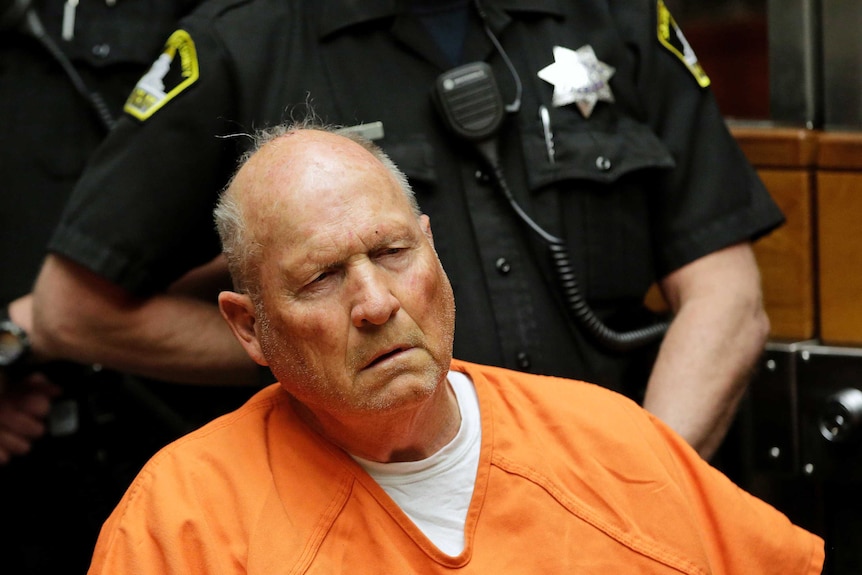
In April 2018, investigators picked up a coffee cup a man had thrown away.
They took it, bagged it, and ran the DNA against crime-scene evidence from a series of rapes and murders across California.
The sample matched.
The man was Joseph James DeAngelo Jr., a former police officer.
At that moment, his name was not yet public.
The cup carried the answer to a mystery that had run for more than four decades.
Between 1974 and 1986, one perpetrator was linked to at least 50 rapes and 12 murders.
The case had gone cold, waiting on a technology that did not exist in the 1970s and 1980s.
A single discarded object broke it open.
What was on the cup? Saliva, skin cells, the residue of a routine morning.
What did it prove? That the man who drank from it shared DNA with the evidence.
How did investigators get from that cup to a name? That would require the family tree.
The exact date of the cup's collection is not in the record.
The exact location of the cup's collection is not in the record.
The cup is documented as the source of the discarded DNA sample.
No further detail is established.
She was on the ground below, and the cup was the bridge back to her.
Not because the cup was rare. Because it was ordinary.
It was trash. It was also the turning point.
THE DECADES OF NIGHT
The nights began in Sacramento.
Between 1974 and 1986, a serial rapist and murderer terrorized California, committing at least 50 rapes and 12 murders across multiple counties.
The record states those numbers, but it does not establish an exact count of attacks or a full list of victims.
The crimes started in the Sacramento area, where he was dubbed the East Area Rapist.
Then the attacks moved to the San Francisco Bay Area, where he was called the Visalia Ransacker and later the Original Night Stalker.
The pattern was consistent, according to the record.
Home invasions at night.
The perpetrator binding male victims.
The perpetrator assaulting female victims.
Among the murdered were Katie Maggiore and her husband, and Charlene Smith and her husband.
The record names these victims.
For decades, investigators linked the rapes and murders through DNA evidence.
But they had no suspect.
The DNA was there.
The technology to use it was not, not in the 1970s and 1980s.
The number of jurisdictions involved hampered the effort.
Sacramento County detectives worked the case.
The FBI worked the case.
They compared evidence across counties, finding matches.
Matches that pointed to one unknown man.
Not a name.
Not a face.
Just a genetic profile waiting for a match.
The case went cold.
It stayed cold for decades.
Not because investigators stopped looking.
Because they had a key without a lock to fit it.
THE FAMILY TREE
The breakthrough came in 2018, and it did not begin at a crime scene.
It began with a public genealogy website called GEDmatch.
Investigators compared crime-scene DNA against profiles that relatives had uploaded there.
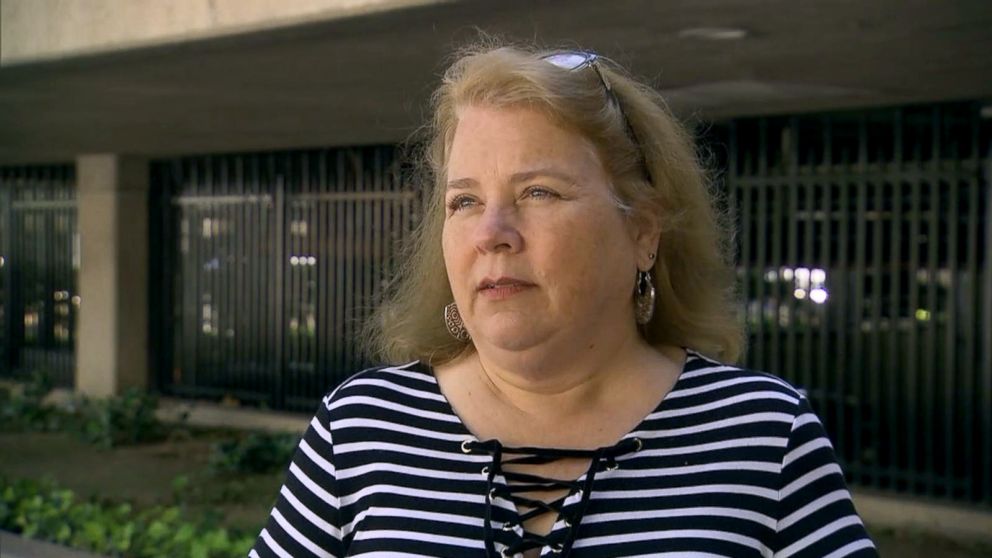
Barbara Rae-Venter, a genetic genealogist, built a family tree from those distant matches.
That tree led to DeAngelo.
The specific steps of how Rae-Venter built the tree are not detailed in the record.
Only that she used GEDmatch and relative profiles.
Earlier efforts had been hampered by the sheer number of jurisdictions involved.
And by the lack of DNA technology in the 1970s and 1980s.
Detectives from the Sacramento County Sheriff's Department worked the case for decades.
The FBI worked it too.
They linked the rapes and murders through DNA, but had no name to attach to the profile.
The genealogy work narrowed the suspect pool to DeAngelo.
But the tree alone was not the final proof.
The confirmation required the discarded DNA sample.
That sample matched the crime-scene evidence.
The tree pointed the way; the cup sealed it.
Not because the genealogy was weak.
Because a family tree is a map, not a verdict.
A map can show you the neighbourhood.
It cannot put a man in a room with a victim.
That required the discarded sample, obtained in April 2018.
It is a puzzle solved in two acts.
Act one was the public database, a tool that did not exist when the crimes were committed.

Act two was the physical discard, the oldest trick in policing.
The record does not establish that the website alone identified him.
The record establishes that the cup did.
THE ARREST AND THE PLEA
The arrest came in April 2018, after the discarded DNA sample matched the crime-scene evidence.
DeAngelo was charged that year with 13 counts of murder.
He was also charged with numerous rape and kidnapping counts across six counties.
The charges were filed in 2018, and the case moved slowly.
In June 2020, he pleaded guilty to all charges.
The plea agreement spared him the death penalty.
It was a deal, not a trial.
In August 2020, the judge sentenced him to life in prison without the possibility of parole.
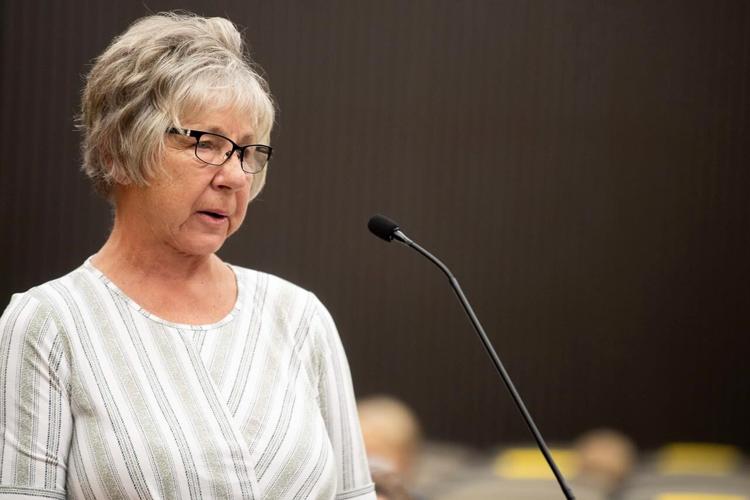
The sentencing hearing included victim impact statements.
Survivors spoke.
Family members of the murdered spoke.
The record does not establish the specific words they said.
It establishes only that the statements were emotional.
He will die in prison.
He is not eligible for parole.
The plea closed the case, but the hearing carried the weight of the decades.
Not because the evidence was new. Because the voices were finally heard.
AND THE STORY STILL ISN'T OVER
DeAngelo is incarcerated at a California state prison, serving life without parole.
He is not eligible for parole.

He will die in prison.
The plea closed the legal case in June 2020.
The sentence came down in August of that year, life without the possibility of parole.
That is what the record shows.
What the record does not show is any future legal motion or appeal.
The record states only that he is serving that sentence.
It is a closed case.
It is also an open chapter.
Documentaries have retold the decades of night.
Books have mapped the family tree that led to the front door.
The case is cited as a landmark example of forensic genealogy in criminal investigations.
That citation is documented.
The method is documented.
The discarded coffee cup is documented as the turning point.
It is the object that turned a family tree into a conviction.
Not because the cup was unusual.
Because it held the DNA that matched the crime-scene evidence.
The genealogy pointed to a name.
The cup confirmed it.
That is what the record establishes.
Everything else is a theory.
The theory that the suspect was identified by a genealogy website alone is not established by the record.
The cup is the line.
It is the line between a family tree and a guilty plea.
It is the line between a cold case and a closed one.
The case is closed.
The method continues.
The cup remains the documented why.
Advertisement
You may also like
The DNA match in 2001 that reopened the Green River case after a 1987 saliva sample stalled
In 1987, a man was questioned and gave a saliva sample. The DNA technology of the time could not link him to the murders.…
The affair that broke Scott Peterson's alibi: Amber Frey's testimony in court
December 24, 2002. A 27-year-old pregnant woman named Laci Peterson disappeared from her home in Modesto, California. That evening, her husband, Scott Peterson, reported…
The lipstick message near the Black Dahlia scene that police never linked to a killer
A woman walking with her young daughter saw something pale in the grass of the vacant lot on Norton Avenue. She thought it was…
A 2025 trial delay and the one admission Keffe D could not unsay
The 2009 interview was not a podcast, not a book tour, not a story told for money. It was a statement to police, given…
The bloody glove behind O.J. Simpson’s guesthouse that split a trial in two
It was a left-handed glove, dark leather, stiff with dried blood, found behind the guesthouse at O.J. Simpson's estate. Detective Mark Fuhrman of the…
The 408-symbol cipher a schoolteacher solved — and what it said about the afterlife
The 408-symbol cipher sat in the newspaper office, a grid of letters and shapes that looked like a child's game. A Vallejo schoolteacher and…