The blunt object that vanished after Marilyn Sheppard's 25 wounds — and the evidence police missed
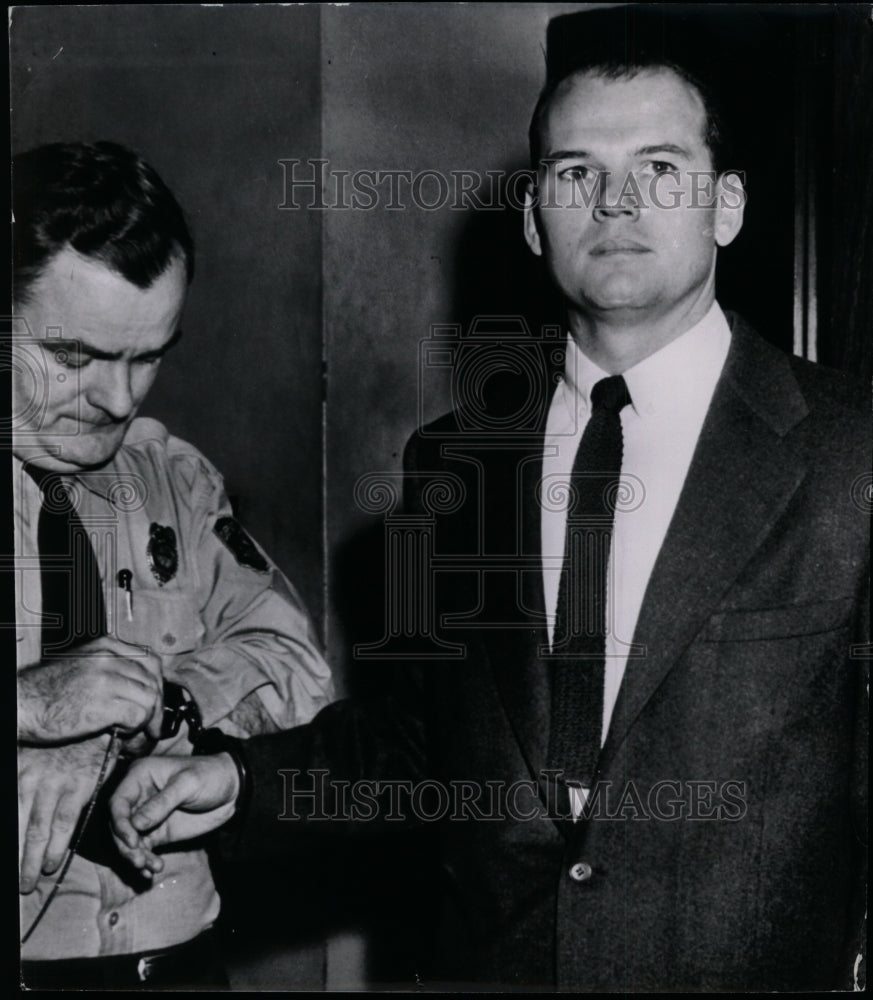
The coroner testified she had been struck more than 25 times with a blunt object.
Likely a flashlight, he said. Or something similar.
No weapon was ever found.
Marilyn Sheppard was found bludgeoned to death in her bedroom in Bay Village, Ohio, on July 4, 1954.
She was 31 years old.
Her husband, Dr. Sam Sheppard, a 30-year-old osteopathic physician, told police he had been asleep on a downstairs couch.
He said he was awakened by her screams.
He claimed he saw a "bushy-haired" intruder fleeing the house, struggled with him, and was knocked unconscious.
When he came to, he found his wife dead.
Police found no signs of forced entry.
That is a documented fact.
The weapon's absence is also a documented fact.
Not a theory.
The exact nature of the weapon is not established.
Neither is the identity of the killer.
Those questions remain open.
The record holds the blows, the count, and the empty space where the object should be.
It does not hold the object itself.
It does not hold a name for the hand that swung it.
The coroner's testimony placed the number at more than 25.
The bedroom held the body.
The house held no sign of a break-in.
The husband's account held a fleeing figure with bushy hair.
What it did not hold was the weapon.
That would require evidence.
That would require the object itself.
That would require the case to close.
It did not.
THE NIGHT OF JULY 4
He said he had been asleep on a downstairs couch.
He said his wife’s screams woke him.
He said he saw a "bushy-haired" intruder, struggled, and was knocked unconscious.
When he came to, he found his wife dead.
That was the story Sam Sheppard, a 30-year-old osteopathic physician, told police on the morning of July 4, 1954.
The couple’s 7-year-old son was asleep in another room.
The boy was not harmed.
Police found no signs of forced entry.
No broken lock.
No pried window.
No sign that anyone had come in from outside.
That absence pointed one way, and it pointed fast.
Suspicion focused on Sheppard almost immediately.
The investigation was criticized as sloppy and rushed.
The crime scene was not properly secured.
People moved through the house.

Evidence was disturbed.
What should have been preserved was not.
Whether an intruder actually existed is not established.
Whether Sheppard’s account is accurate is not established.
The record holds his words and the police findings.
It does not hold the answer.
He was not initially treated as a suspect.
That would change.
THE TRIAL AND THE EVIDENCE
In August 1954, Sam Sheppard was indicted for first-degree murder.
The trial began in October 1954.
The prosecution argued he killed his wife in a fit of rage over an affair.
The defense claimed an intruder committed the murder.
The defense pointed to the absence of blood on Sheppard's clothing.
The defense pointed to his lack of serious injury.
A man who claims he was knocked unconscious fighting an intruder should have bruises, the defense argued.
The coroner testified Marilyn had been struck more than 25 times with a blunt object, likely a flashlight.
No weapon was ever found.
The exact nature of the weapon is not established.
Whether Sheppard's injuries were consistent with his story is not established.
The trial judge allowed cameras and reporters into the courtroom.
It was a spectacle.
It was also a process the judge was supposed to control.
The jury found Sheppard guilty of second-degree murder.
He was sentenced to life in prison.
Not first-degree, as charged.
Second-degree.
The distinction mattered to no one in the Sheppard family.
It mattered to the appeals.
The courtroom had been open to the press.
The judge had let it happen.
That would become the central question later.
For now, a jury had spoken.
For now, the evidence pointed one way.
It also pointed another.
No forced entry.
No weapon.
No blood on his clothes.
No serious injury on his body.
The prosecution called it a rage killing.
The defense called it a frame.
The evidence called it neither.
It called it a question.
That would require more than a trial to answer.
THE APPEAL AND THE ACQUITTAL

The Ohio Supreme Court upheld the conviction.
The case went up and up, past the state courts, until it reached the U.S. Supreme Court.
In 1966, the Court overturned it.
The ruling was specific: the trial had been compromised by excessive publicity and the judge’s failure to control the courtroom.
Cameras had been allowed in. Reporters had filled the benches.
The Court said the atmosphere made a fair trial impossible.
Sheppard was retried in 1966.
A different judge sat on the bench. A different defense team argued the case.
The evidence was the same. The absence of blood on his clothing. The lack of serious injury. The missing weapon.
The second trial ended in acquittal.
Sheppard was released after serving about ten years in prison.
Ten years is a long time to hold a man for a question.
The record does not definitively establish his guilt or his innocence.
It establishes only that the first trial was unfair, and that the second jury found him not guilty.
After the acquittal, his life did not recover.
He divorced his second wife. He struggled with alcoholism. He returned to medicine briefly.
He died in 1970 at age 46 of liver failure.
The acquittal came too late to salvage anything.
It was a legal victory. It was also a wreck.
The evidence that freed him was the same evidence that had been there all along: the absence, the gaps, the questions.
The blunt object never appeared. No weapon was ever found.
The Court did not decide who killed Marilyn Sheppard.
It decided only that the trial had been a circus.
That was enough to let him walk. It was not enough to give him back his life.
AND THE STORY STILL ISN'T OVER
The Sheppard family pushed for a new investigation in the 1990s.
In 2002, DNA testing was done on evidence from the crime scene.
The testing excluded Sam Sheppard as the source of blood found there.
It did not identify another person.
That is the limit of what the science established.
The testing cast further doubt on the original conviction. It did not name a killer.
No other suspect has ever been charged.
The identity of the actual perpetrator remains unknown. That is not a gap in the record; it is the record.
The case has been the subject of books, documentaries, and a television series.
Each retelling circles the same questions. Who struck more than 25 times with a blunt object that was never found? Who left no forced entry and no weapon? Who walked out of the house that night?
That would require evidence.
The Sheppard family continues to maintain that Sam was innocent.
They point to the DNA exclusion. They point to the missing weapon. They point to a trial the U.S. Supreme Court called compromised.
It is a documented gap. It is also an open wound.
Sam Sheppard died in 1970 at age 46 of liver failure.
He walked free in 1966. He did not get his life back.
The case still haunts because it was never closed, not really.
A conviction was overturned. An acquittal was returned. A family kept asking.
In 2002, the science answered one question and raised another.
It cleared the man. It did not clear the room.
Advertisement
You may also like
The pharmacy receipt that cracked a contractor's crawl-space secret
A paper receipt from the pharmacy where Robert Piest worked was found inside John Wayne Gacy's home. It is a mundane object. A slip…
The 3:32 p.m. cell call that placed a suspect near a body not yet found
At 3:32 p.m. on January 13, 1999, a call was made from Adnan Syed's cell phone to a friend named Nisha. The call was…
The notebook found beside a revolver in a Florida swamp
The notebook was found in a flooded area of the Carlton Reserve in Florida on October 20, 2021. Beside it lay a revolver. Beside…
Buried in a Sacramento backyard: the Social Security checks that told on Dorothea Puente
The last check arrived in November 1988. A social worker phoned the Sacramento police about a missing client, an elderly tenant of the boarding…
The bloody glove found on O.J. Simpson's estate that didn't fit — and the DNA that swayed the trial
A right-hand glove, bloodstained, lay on the ground at O.J. Simpson's Rockingham Avenue estate. Detectives found it during their walk-through of the property. It…
The Avia shoe print that tied a serial killer to his final crime scene
The sole of an Avia athletic shoe left a pattern in the dark. That pattern turned up at more than one crime scene linked…