The breakfast left on the table when the McStay family vanished
The breakfast was still on the table.
The television was on.
On February 4, 2010, the McStay family was reported missing from their home in Fallbrook, California.
Joseph McStay, his wife Summer, and their two young sons were gone.
The dogs were in the backyard.
The vehicles were in the driveway.
There was no sign of a struggle.
Inside, the scene looked paused mid-morning.
A meal half-started. A screen still glowing.
No forced entry. No overturned chair. No message.
The family had simply vanished, leaving an ordinary moment frozen behind them.
What could make a family leave their breakfast untouched?
What could pull them away before the eggs went cold?
What silence follows a television left on for no one?
The record does not say.
It is not established why the family left, or whether they left voluntarily.
Theories would come later — whispered, typed, shared.
But the documented facts are only these: the table, the screen, the dogs in the yard, the cars in the drive.
The morning was interrupted.
The family did not return to finish it.
THE SEARCH AND THE COLD CASE
The San Diego County Sheriff’s Department began the search with the house itself.
They found no signs of forced entry, no signs of struggle.
The dogs were in the backyard, the cars in the drive, and the table still set.
That led to theories of voluntary disappearance, investigators told reporters at the time.
The family had simply walked away, the theory went.
The record does not establish that, and the record does not establish the exact date or circumstances of the deaths.
For nearly four years, the case went cold.
No arrests were made.
Joseph’s father, Patrick McStay, spoke to reporters during those years, describing the ache of not knowing.
Summer’s mother spoke too, her grief public, her frustration growing with the slow progress.
They asked for answers that did not come.
On November 11, 2013, a motorcyclist was riding in the Mojave Desert near Victorville, California.
He found human remains in two shallow graves.
The remains were later identified through dental records and DNA.
They were the McStay family: Joseph, Summer, and their two young sons.
The relief of an identification was not relief.
It was horror, and it was the beginning of a new wait.
Patrick McStay stood before cameras again, this time with the weight of confirmation.
Summer’s mother spoke of the long years stolen from them.
The discovery did not end the questions.
It sharpened them, and it turned the investigation toward who had written checks after the family was gone.
THE CHECKS AND THE PHONE DATA
The checks were the hinge.
After the remains were found, the investigation turned to Joseph McStay’s business account.
Checks had been written and cashed after the family disappeared.
The record shows that.
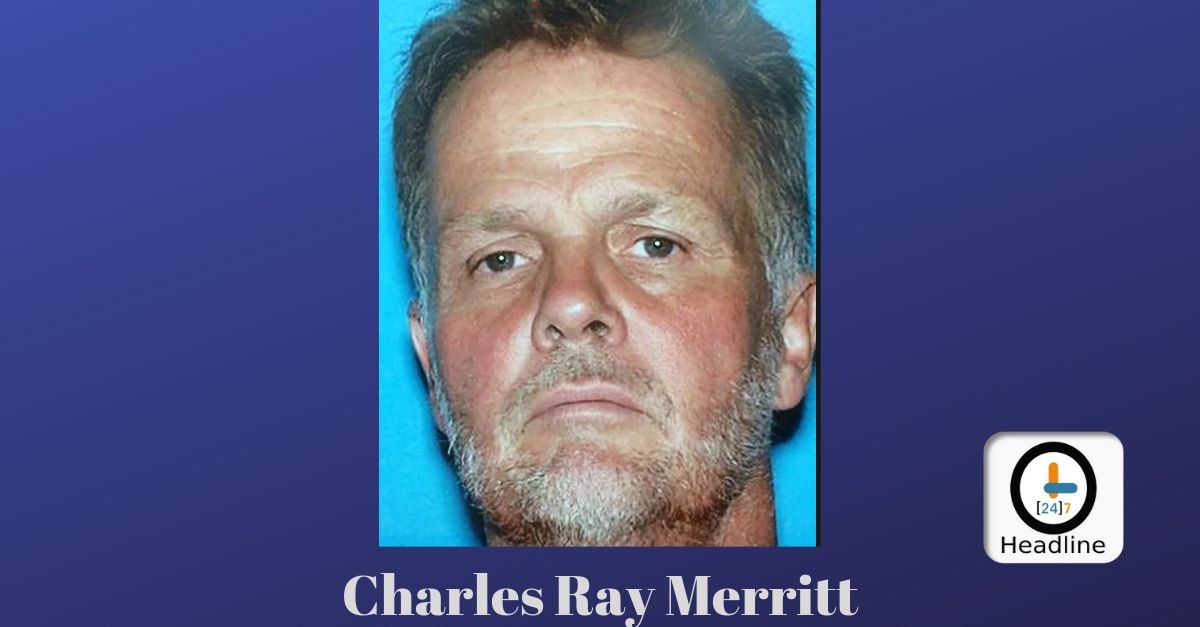
One of those checks was linked to Charles "Chase" Merritt, a business associate and friend of Joseph.
Prosecutors said Merritt wrote it.
The defense said that was not proof of murder.
Cell phone tower data placed Merritt in the area of the graves at the time of the murders.
The defense challenged the reliability of that data.
The dispute over that data is not settled in the record.
Forensic experts testified about the condition of the remains.
They determined the likely cause of death to be blunt-force trauma.
They did not identify the weapon.
The weapon is not widely reported; that is not established.
The investigation had early missteps.
The McStay home was not secured promptly.
That failure is documented.
What it cost the case is not.
The evidence was circumstantial.
It was heavy, but it was circumstantial.
A check here.
A tower ping there.
A skull fractured by something unnamed.
Is that enough to convict?
That was the question the defense asked the jury.
That was the question the prosecution answered with a pattern.
The pattern was not a confession.
It was a trail of paper and signal and bone.
The weight of it built slowly.
The reader may ask: is this enough?
The record does not answer that.
The jury did.
THE TRIAL AND THE VERDICT
On November 11, 2014, Charles "Chase" Merritt was arrested and charged with four counts of first-degree murder.
Not because new evidence had surfaced overnight. Because the financial records had been there all along.
Checks from Joseph McStay's business account, written and cashed after the family disappeared. One of them linked to Merritt, a friend and business associate who had worked with Joseph on various projects.
The trial began in January 2019 in San Bernardino County.
The prosecution argued that Merritt killed the family to cover up his theft from Joseph's business. Forensic experts testified about the condition of the remains and the likely cause of death, blunt-force trauma. Cell phone tower data placed Merritt in the area of the graves at the time of the murders.
The defense, led by attorney James McGrath, argued that the evidence was circumstantial. McGrath said Merritt was innocent. He challenged the reliability of the phone data and called the investigation flawed.
Was it enough?
The record does not answer that.
The jury did.
In June 2019, the jury found Merritt guilty on all four counts of first-degree murder. He was sentenced to death in January 2020.
Joseph's father, Patrick McStay, spoke publicly about the loss. Summer's mother spoke publicly too, about the long wait for justice. The victims' families had been vocal throughout the investigation, expressing their grief and their frustration with the slow progress of the case.
The trial judge was not widely named in coverage. No other suspects have been named or charged.
The families had waited more than nine years for a verdict. They got one.
The evidence, the jury decided, was enough.
AND THE STORY STILL ISN'T OVER
The breakfast is still on the table.
Not in the house—the house has been emptied, sold, lived in by other people.
The breakfast is in the telling.
Documentaries and news specials return to it, the half-eaten meal, the television left on.
It is the image that refuses to leave.
Chase Merritt remains on death row in California.
The state has not carried out an execution in years, and it is not established whether one will ever be carried out.
He was convicted in 2019 and sentenced to death in January 2020.
He is there, and the families are still waiting.
Joseph’s father, Patrick McStay, spoke publicly through the investigation and the trial.
He described the long wait, the years between the disappearance and the graves, the years between the graves and the verdict.
Summer’s mother also spoke publicly of her loss.
They got a verdict.
They got a sentence.
What they did not get was an end.
No other suspects have been named or charged.
The investigation was criticized for early missteps, including a failure to secure the home promptly.
The breakfast sat there for days before anyone thought to preserve it.
It is a haunting symbol, the coverage says.
It is also a fact.
A family sat down to eat.
They did not finish.
The television stayed on.
The dogs stayed in the backyard.
The vehicles stayed in the driveway.
The story stays too.
It stays in the documentaries and the news specials and the photographs of a table that was never cleared.
Patrick McStay said the family waited more than nine years for a verdict.
They got one.
The evidence, the jury decided, was enough.
The breakfast was not part of the evidence.
It was just left there.
Advertisement
You may also like
The tarot card left at the first D.C. sniper shooting — and the trunk hole that cracked the case
The first shooting happened on October 2, 2002, outside a Michael's craft store in Aspen Hill, Maryland. Not in a parking lot. Not at…
The radio and boots that broke the Clutter case — but the shotgun never surfaced
The radio sat on a table in a Las Vegas apartment, months after four people were bound and shot in a Kansas farmhouse. It…
Two men in police uniforms, one Thompson submachine gun, and a garage wall that gave way to silence
Seven men were dead against the garage wall by the time the echo of the guns stopped. It was February 14, 1929, a little…
The typewriter in a Montana cabin that matched the Unabomber's 35,000-word manifesto
Agents found the typewriter inside a 10-by-14-foot cabin near Lincoln, Montana, in 1996. The machine matched the one used to produce a 35,000-word manifesto.…
The cotton gin fan that pulled a body from the Tallahatchie — and the DNA test that settled it
A cotton gin fan came up with the body on August 31, 1955. It was tied to the neck with barbed wire, and it…
The bullet that tied Sacco to the crime — and the expert who couldn't agree
The bullet came out of a guard's body on a stretcher, passed from hand to hand, and ended up in a courtroom as the…