The bullet that linked a pharmacy tech to the Delphi deaths — and the timeline that followed
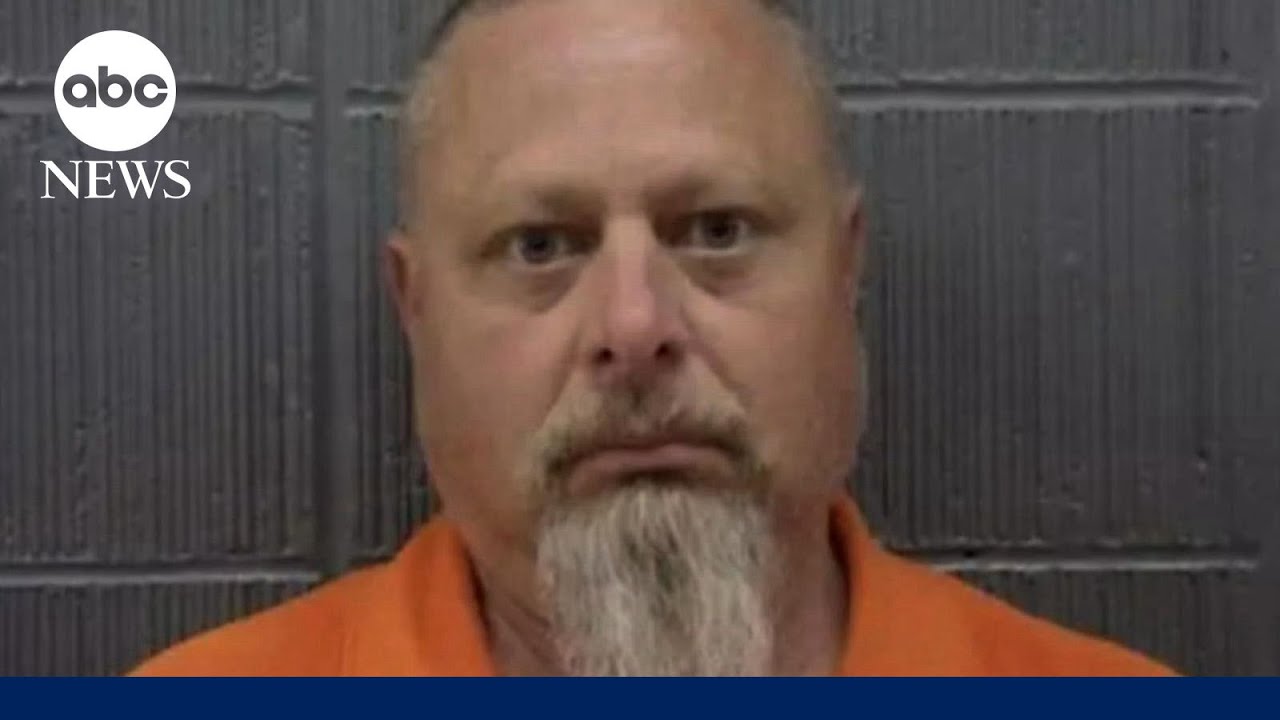
🚨 THE BULLET THAT WAITED FIVE YEARS…
A single bullet, found at the Delphi crime scene, waited more than five years to speak.
It was a .40-caliber round, unspent, lying near the bodies of Abigail Williams and Liberty German.
For years, it sat in an evidence file while the case went cold.
Then, in October 2022, Richard Allen, a local pharmacy technician, was arrested and charged with two counts of murder.
The probable cause affidavit, unsealed in November 2022, revealed the link: the bullet was tied to a gun owned by Allen.
That single piece of metal became the hinge on which a long-frozen investigation finally turned.
Not because it was the weapon that killed the girls.
The cause of death was multiple sharp-force injuries; the bullet was never the murder weapon.
The exact role of that bullet in the crime is not established by the record.
It is a link to Allen's gun. It is not proof of what happened on the trail.
What is documented: the round was found at the scene, and the round came from his firearm.
What remains a matter of trial testimony: what, if anything, that bullet meant.
Five years and eight months passed between the discovery of the bodies and the arrest.
Five years of a photograph, an audio clip, a voice saying "down the hill."
Five years of suspects investigated and cleared, of leads that led nowhere.
Then a bullet, matched to a gun, matched to a man from Delphi.
The case had seemed frozen. It was not.
FEBRUARY 13, 2017 — THE DROP-OFF
They were dropped off near the Monon High Bridge in Delphi, Indiana, for a hike.
Two teenage girls, Abigail Williams, 13, and Liberty German, 14, had set out on the trails that afternoon.
The exact time of the drop-off is not in the source.
The day was ordinary in the way such days are: a ride, a trail, a plan to be picked up later.
They failed to be picked up at the designated drop-off point.
That point, a place where a parent or relative expected to meet them, was empty.
They were reported missing on February 13, 2017.
The report went out that same day, according to the source material.
What followed was a search, then a discovery, then a case that would wait years.
Not because the trail was empty. Because the trail led nowhere for a long time.
The girls had been seen on the bridge, according to later accounts.
The bridge was the landmark, the Monon High Bridge, a place locals knew.
They were due back, and they were not back.
That is the fact the record holds: two girls, a hike, a missed pickup, a missing-person report.
Everything after that — the audio, the photograph, the bullet — came later.
But on February 13, the story was still a missing-person case.
It was a Monday. It was cold. The details beyond that are not established.
What is established is the report itself, filed on that date.
And the ordinary beginning of a day that would become a national tragedy.
FEBRUARY 14 — THE BODIES
The bodies were found on February 14, 2017, in a wooded area about half a mile from the bridge.
It was the day after the report, the day after the search began.
The worst fear was confirmed.
The cause of death was later determined to be homicide by multiple sharp-force injuries.
Not a gunshot, not an accident.
The specific weapon was not publicly identified.
A sharp-edged instrument, the source material says, but the exact object remains unnamed.
What is established is the finding itself.
What is established is the location: a wooded area, half a mile from the bridge.
What is not established is anything more precise about that spot relative to the trail.
The trail itself is not detailed beyond that half-mile.
The record does not place the bodies at a specific landmark.
It places them in the trees, near the bridge, on a cold February morning.
The girls had been dropped off for a hike.
They were not picked up.
The searchers found them where the day had ended.
She was on the ground below the bridge.
That is the grim arithmetic of the timeline.
February 13: the drop-off, the missed pickup, the missing persons report.
February 14: the recovery.
Two dates.
One outcome.
The cause of death would take time to determine.
The weapon would never be named.
The case would go cold for more than five years.
But on that day, the fact was simple.
They were gone.
THE PHONE AND THE VOICE
The photograph police released showed a man on the bridge.
The audio clip they released carried a voice saying "down the hill."
That voice was attributed to the suspect.
The image and the sound both came from Liberty German's cellphone.
She was widely reported to have captured them herself.
That phone made her a witness to what happened next.
It is a haunting thing, to hear a victim's own recording become the center of a manhunt.
Investigators treated the photograph as their best lead.
They treated the voice as their clearest link to the suspect.
They released both to the public, hoping someone would recognize them.
For years, no one did.
The case went cold.
Multiple suspects were investigated.
Multiple suspects were cleared.
The exact content of the video beyond the still image and the audio is not described in the source.
What the phone shows in full remains a matter of trial testimony, not settled fact.
What the voice says is brief.
What the image shows is a man walking.
What the record establishes is that the phone held evidence.
What the record does not establish is everything the camera may have seen.
The image became a poster.
The voice became a clip.
The trail became a crime scene.
And Liberty German's own device carried the last pieces of that day.
It would take more than five years for anyone to be charged.
But the phone and the voice never left the investigation.
They waited, as the case did.
OCTOBER 2022 — THE ARREST
October 2022.
Richard Allen was a pharmacy technician in Delphi.
He worked at the local CVS.
He lived in the town.
He was, by every public account, a familiar figure.
On October 26, 2022, he was arrested.
He was charged with two counts of murder in the deaths of Abigail Williams and Liberty German.
The arrest came more than five years after the bodies were found.
The probable cause affidavit was unsealed in November 2022.
It revealed the bullet.
A bullet found at the crime scene was linked to a gun owned by Allen, prosecutors said.
The affidavit also stated that Allen had told a prison inmate and a family member he had been on the trail that day.
The exact nature of those statements is not detailed in the public record.
What he said, and in what context, that would require the affidavit itself.
The bullet was not the murder weapon.
The cause of death was multiple sharp-force injuries.
But the bullet was evidence, documented and physical.
The audio of a voice saying "down the hill" was evidence, recorded and played.
The photograph of a man on the bridge was evidence, released and studied.
The man in the photograph, the voice on the recording, the bullet in the woods — the state would tie them to Allen.
The defense would later argue the ties were circumstantial.
But in October 2022, the case moved from cold to charged.
A familiar local figure, accused.
Not convicted — not yet.
THE AFFIDAVIT'S REVELATIONS
The probable cause affidavit was unsealed in November 2022.
It revealed the bullet link to Allen's gun, prosecutors said.
It also stated that Allen had told a prison inmate and a family member he was on the trail that day.
The exact wording of those admissions is not in the source.
Not the context, not the length, not the tone.
What he said, and how he said it, that would require the affidavit itself.
The defense later alleged that Allen was coerced into making incriminating statements.
Coerced by investigators, they argued.
Coerced during interrogations that were not fully recorded, they said.
The state presented the admissions as confessions.
The defense presented them as the product of pressure.
It is one man's word against the state's process.
The bullet was physical.
The bullet was linked.
The admissions were words, spoken and repeated.
Words are easier to bend than metal.
The affidavit held both, side by side, in the same public file.
The weight of the evidence was real.
The questions about its reliability were real too.
A bullet does not explain a voice.
A statement does not explain a bullet.
The case had moved forward, but the record had gaps.
Gaps the trial would have to fill.
THE LEGAL TANGLE
The procedural problems began almost as soon as the arrest was made.
The original defense team withdrew.
The case saw multiple changes in judges.
It saw multiple changes in prosecutors as well.
The state admitted it had failed to turn over some evidence.
That evidence is not named in the record.
The defense argued the investigation had been sloppy.
They pointed to the loss of a key recording from a witness.
Not because the recording was proven decisive.
But because its absence raised a question the state never answered.
The trial was repeatedly delayed.
Each delay pushed the proceedings further from the February 2017 deaths.
Each delay added another layer of unease about the process.
Was the system struggling with the case's weight?
Was it struggling with its own errors?
That would require evidence the record does not provide.
The gaps in the disclosure were acknowledged.
The gaps in the investigation were argued.
The gaps in the timeline remained open.
A statement does not explain a bullet.
A lost recording does not explain a verdict.
The case had moved forward, but the record had gaps.
Gaps the trial would have to fill.
Gaps that made the fairness of the process a question in itself.
THE PROSECUTION AND DEFENSE
The prosecution built its case on three pillars: the bullet, the cellphone audio and video, and Allen’s own admissions.
The bullet, the prosecution argued, placed Allen at the scene with a gun he owned.
The audio and video, captured by Liberty German, showed a man walking and a voice saying "down the hill."
The admissions, the state said, were Allen telling a prison inmate and a family member he had been on the trail that day.
The defense answered with a different reading of the same record.
The evidence was circumstantial, they argued.
The bullet proved only that a gun existed, not that it was used.
The audio was a voice without a face.
The statements were unreliable, the defense said, the product of coercion and a broken man.
Allen did not plead guilty.
He sat through the trial and let the state prove its case.
Two narratives, built from the same facts, pointing in opposite directions.
Was the bullet a silent witness or a stray object?
Was the voice a confession or a coincidence?
Was the admission a truth or a pressure-cooked artifact?
That would require evidence, and the evidence was what the jury had to weigh.
The defense’s full alternative theory, however, is not in the public record.
What remains is the clash itself.
THE VERDICT AND SENTENCE
The trial began in October 2024 in Carroll County, Indiana.
That would require evidence and the evidence was what the jury had to weigh.
On November 11, 2024, the jury found Richard Allen guilty on both counts of murder.
Two counts. Two girls. Two verdicts.
On December 20, 2024, he was sentenced to 130 years in prison, with 65 years for each count, to be served consecutively.
The sentence landed like the verdict landed: in full.
Allen has maintained his innocence.
His attorneys have said they will appeal.
The appeal is pending.
What the jury weighed is documented: the bullet, the audio, the admissions.
What the jury weighed is also contested: the defense called it circumstantial, the statements unreliable.
The jury's deliberation time is not in the source.
It is not established how long they took.
It is established what they returned.
Not because the evidence was simple.
But because the evidence was theirs to judge.
The verdict is final.
The doubt is not.
Richard Allen is incarcerated in an Indiana state prison.
His appeal is pending.
That is where the record stands.
AND THE STORY STILL ISN'T OVER
He is housed in an Indiana state prison, and the appeal he has promised is pending.
That is all the record says: pending.
Not the grounds, not the schedule, not the arguments.
It is a word that holds the case open.
The victims' families have spoken publicly since the verdict.
They expressed relief.
They expressed a desire for closure.
Closure, after a trial, is a different thing than the end of a case.
The appeal moves.
The scrutiny does not stop.
Questions about evidence handling remain in the public record.
Questions about the conduct of the original investigation remain there too.
Those questions were raised at trial, and the defense argued them.
The state admitted it had failed to turn over some evidence.
The loss of a key recording from a witness was argued in court.
None of that is resolved by a verdict.
A verdict resolves a charge, not an investigation.
The community of Delphi still lives with the aftermath.
The bridge, the trail, the drop-off point — they are places now, not just names.
The legal saga continues because the appeal is pending.
What the appeal will say, the record does not yet establish.
That would require filings, rulings, a decision.
The families want closure.
The case wants an ending.
Neither has arrived.
Richard Allen is incarcerated.
His appeal is pending.
That is where the record stands, and it is not standing still.
Advertisement
You may also like
The DNA under her fingernails that cracked a 17-year cold case — but left one question open
🚨 THE NEIGHBOR'S CALL THAT OPENED A 17-YEAR WAIT… A neighbor in Bellaire, Texas, called police about a break-in at a home on June…
The 4-day gap between a 5-year-old's abduction and a suspect's arrest in her murder
🚨 THE 4-DAY GAP July 15, 2002, in Stanton, California: a man asks a five-year-old for help finding a lost dog. The friend runs…
The grandmother's 911 call that started it all — and the family story that never fit
🚨 THE 911 CALL THAT DIDN'T MATCH THE FAMILY'S STORY The 911 call came on July 15, 2008, from a grandmother named Cindy Anthony.…
The missing boy's ring found in a crawl space — 27 bodies later
🚨 THE RING IN THE CRAWL SPACE The ring was small, gold, and it belonged to a missing 15-year-old boy. Police found it on…
The 2005 Aruba nightclub exit that left three men with stories that never matched
🚨 THE EXIT THAT STARTED EVERYTHING The club was called Carlos'n Charlie's, a bar and nightclub in Oranjestad, Aruba. Natalee Holloway, 18, from Mountain…
The tarot card message that turned a random killing spree into a hunt for 'God'
🚨 THE TAROT CARD THAT READ 'CALL ME GOD' The card was a piece of evidence, found at a crime scene during the investigation…