Casino security footage that placed van der Sloot with Flores for hours — but what did it miss?
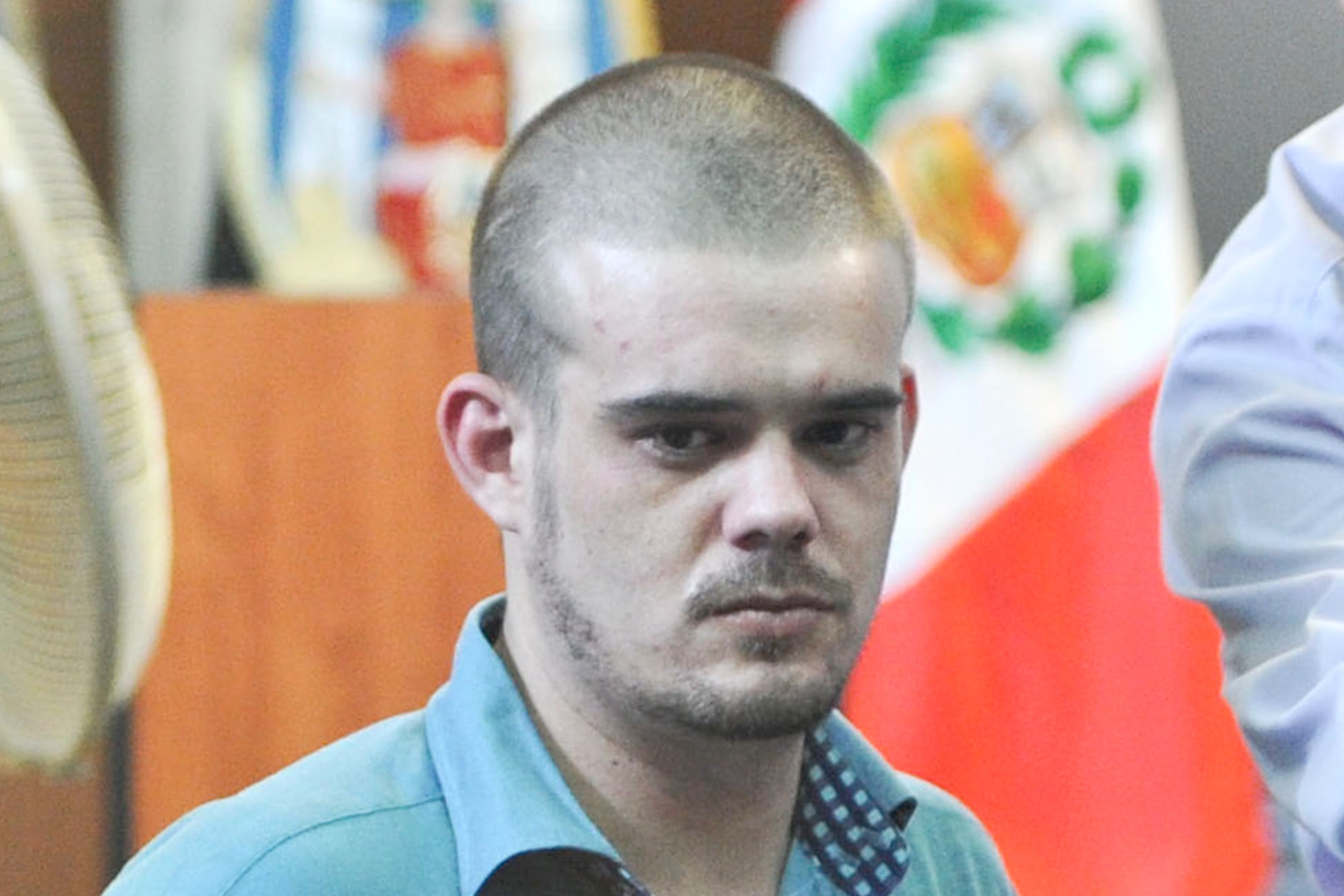
🚨 THE FOOTAGE THAT SHOWED EVERYTHING — EXCEPT THE MURDER
The casino’s cameras tracked Joran van der Sloot and Stephany Flores for hours.
They moved through the gaming floor together. They lingered.
Peruvian police reviewed that footage and it made him their suspect.
The investigation summary calls the surveillance video a key piece of evidence.
It placed the two of them together in the hours before her death.
It did not capture the murder itself.
What the footage missed is not established in the record.
The cameras saw them together. They did not see what happened next.
So the question hangs over every frame: what came after the last image?
What happened in the unseen moments between the footage and the discovery?
What did the tape leave out?
That would require evidence the record does not contain.
The footage is documented. The gap is not.
THE MEETING AT THE CASINO
She was 21, a Peruvian business student who liked the casino's tables.
He was 22, a Dutchman the world already knew as a suspect in the 2005 disappearance of Natalee Holloway.
They met at the casino in Lima.
Casino security footage placed them together for hours, according to the investigation summary.
The footage showed them at the tables, in the lobby, moving through the building.
What the footage did not show is the nature of their interaction that evening.
The exact nature of their interaction before the murder is not detailed in the record.
The tape documented the meeting.
The tape documented the hours.
The tape did not document what passed between them.
The man was Joran van der Sloot, who had been questioned repeatedly in the Holloway case but never charged.
The woman was Stephany Flores, who had been missing since the previous evening.
She was last seen with a Dutch man she had met at the casino.
The case summary records the meeting.
The investigation summary records the footage.
What the footage missed remains outside the record.
THE CHECK-IN AND THE CHECK-OUT
The case summary records the check-in.
Van der Sloot checked into the TAC Casino hotel with Flores on May 30, 2010.
The case summary records the check-out.
He checked out alone.
He left the country.
The exact time of the check-in is not in the record.
The exact time of the check-out is not in the record.
Hotel staff entered the room after he left.
They found Flores's body.
The case summary does not say what the staff saw first, or what they said.
It does not say how long he was gone before they opened the door.
That would require evidence.
He was gone.
She was not.
The room held what the footage had not shown.
The check-out was an ordinary act.
It was also the last thing the record places him doing before the body was found.
The case summary records the sequence.
It does not record the moment.
THE BODY IN THE ROOM
On the morning of May 30, 2010, the body of Stephany Flores Ramírez was found in her hotel room at the TAC Casino hotel in Lima, Peru.
The case summary records that she had been beaten and strangled.
The autopsy confirmed blunt-force trauma and strangulation, according to the investigation summary.
She was 21 years old, a Peruvian business student, missing since the previous evening.
The room was the same one van der Sloot had checked into with her.
He had checked out alone.
Hotel staff entered after he left.
What the footage showed ended at the casino floor.
What the autopsy confirmed ended at the cause of death.
The exact sequence of the attack is not in the record.
Not the moments between the last image and the discovery.
Not the order of the blows, or the duration, or the final act.
That would require evidence the record does not provide.
The room held blood evidence, investigators found.
It held a laptop and other items.
It held her body.
She was on the ground below.
The grief is in the facts, not in the telling.
The horror is in what the record states plainly: beaten, strangled, confirmed.
The timeline moves on from here.
THE CREDIT CARD AND THE FLIGHT
The credit card belonged to a dead woman.
Police established that van der Sloot used it after her death, according to the investigation summary.
The specific purchases are not in the record.
The card was a fact. The spending was a fact. The opportunism was the gap between them.
He did not stay in Lima.
He fled to Chile, where police arrested him on June 3, 2010, according to the investigation summary.
He was extradited to Peru.
The flight was the act of a man who knew the room had been found.
Or the flight was the act of a man who knew the room would be found.
The record does not say which.
It says he ran. It says he was caught. It says he was brought back.
She was on the ground below the window of the room he left behind.
The timeline moves on from here.
The card. The flight. The arrest.
The disgust is in the sequence, not in the telling.
THE SELF-DEFENSE CLAIM
In custody, van der Sloot initially claimed self-defense.
That was his first statement, according to the investigation summary.
He said Flores attacked him after she discovered his involvement in the Holloway case.
The Holloway case, the 2005 disappearance in Aruba, the one that had made him internationally infamous.
Police found blood evidence in the hotel room.
The autopsy confirmed blunt-force trauma and strangulation.
The self-defense claim required a story: that the 21-year-old business student, unarmed, attacked a man who had been questioned for years in a disappearance.
It required a sequence.
It required the blood to tell that sequence.
The investigation summary does not establish that the blood did.
The validity of the self-defense claim is not established.
He later pleaded guilty.
That came in January 2012, in a Peruvian courtroom, before a judge, with no jury.
The claim was his opening position in custody.
The plea was his closing position in court.
Between them sat the evidence: the footage, the card, the flight, the room.
Not because the record says his claim was false.
Because the record says he stopped making it.
THE GUILTY PLEA AND THE SENTENCE
In January 2012, Joran van der Sloot stood before a Peruvian judge.
He pleaded guilty to the murder of Stephany Flores Ramírez.
The judge convicted him.
The sentence was 28 years in prison, the maximum penalty under Peruvian law at the time.
He was ordered to pay restitution to Flores’s family.
The plea was part of a deal.
The deal reportedly reduced his potential sentence.
But the reports vary.
The exact terms of the plea deal are not consistently reported.
That is not in the record.
He did not appeal the conviction.
There was no jury; the case was decided by a judge.
The trial was over before it became a trial.
The evidence — the footage, the card, the flight, the room — never had to be tested in full.
Relief settles over the case.
Justice was served.
But the questions remain about the deal.
What was traded for the plea?
What was the potential sentence before the reduction?
What did the record lose when the defense stopped arguing?
That would require evidence.
The plea ended the need for a full trial.
The record holds the outcome.
It does not hold the terms.
THE TWO STORIES
The prosecution's story was direct: van der Sloot deliberately murdered Flores, and the beating and strangulation were the evidence.
The defense's story was different: van der Sloot acted in self-defense after Flores attacked him, allegedly upon discovering his involvement in the Holloway case.
The same hotel room. The same body. The same hands.
Two stories, each built from the same facts, each pointing in opposite directions.
The judge never had to choose between them.
In January 2012, van der Sloot pleaded guilty to the murder of Stephany Flores Ramírez.
The guilty plea ended the need for a full trial, and the judge accepted it.
No jury heard the self-defense claim tested. No witnesses were cross-examined on it.
The truth of the self-defense claim is not established.
It was superseded by the plea, left unresolved in the record.
So the two stories remain what they are: one accepted in court, one spoken in custody and never proven.
The prosecution's version became the conviction. The defense's version became a footnote.
Not because the judge weighed them. But because the plea made that weighing unnecessary.
The record holds the outcome.
It does not hold the answer to which story was true.
THE VIRAL IMAGE AND THE RECORD
The casino security footage is a key piece of evidence, placing van der Sloot with Flores for hours.
The investigation summary documents that footage.
It does not document the murder itself.
The footage shows them together; it does not show what happened in the room.
What the footage missed is not in the record.
Online theories about that gap are not part of the documented record.
They are theories.
The record establishes the hours together.
It establishes the check-in.
It establishes the check-out alone.
It does not establish what the camera did not see.
Did the footage show a struggle?
Did it show a moment of departure?
Did it show something the investigators overlooked?
That would require evidence.
The surveillance video is a fact.
The speculation around it is not.
Any specific claim about what the footage missed is not established in the record.
Not because the footage is complete.
But because the record says nothing beyond what it shows.
The record holds the hours.
It holds the credit card use.
It holds the flight to Chile.
It does not hold what the camera failed to capture.
That silence is part of the evidence, too.
THE ORDINARY MOMENT: THE CHECK-OUT
He checked out alone.
He paid, or he did not pay, and he walked out of the TAC Casino hotel.
He left the country.
Hotel staff entered the room after he left, and they found Stephany Flores’s body.
That is the sequence in the case summary: the check-out, the departure, the discovery.
What van der Sloot did between the murder and that check-out is not in the record.
The casino footage ends with them together; it does not show him leaving the room.
It does not show what he carried, what he wiped down, or what he thought.
That would require evidence the record does not provide.
The check-out itself was ordinary.
A man at a front desk, a key returned, a bill settled.
It is the kind of moment a hundred other guests performed that same morning.
It is also the moment the room became vacant.
It is the moment the staff could enter.
It is the moment they found her.
The case summary states it plainly: he checked out alone, and the body was found after.
Not because the act was sinister in itself.
But because of what it followed.
The flight to Chile was next, and the arrest came after that.
But the check-out sits in the middle, a mundane hinge.
A man leaving a hotel.
A woman left behind.
The weight of the crime lands on that small, ordinary action.
She was on the ground below.
AND THE STORY STILL ISN'T OVER
He is serving his 28-year sentence in a Peruvian prison.
In 2023, he was extradited to the United States to face extortion charges.
He pleaded guilty in federal court in Alabama.
He was sentenced to 20 years in U.S. federal prison.
That sentence is to be served after the Peruvian one is completed.
Reports vary on the exact sequence and timing of his return to Peru.
That timing is not consistently reported.
Not because the record is silent. But because the record is not one record.
The Holloway case remains officially unsolved.
Van der Sloot has never been charged in connection with her disappearance.
Not for Natalee Holloway. Not for anything in Aruba.
The Flores case is closed by his own plea.
The Holloway case is not closed at all.
Two countries hold him. Two sentences wait for him.
One conviction is behind him. One mystery is not.
She was on the ground below.
He is still in custody.
That is where the story stands, and that is where it does not end.
Advertisement
You may also like
The DNA under her fingernails that cracked a 17-year cold case — but left one question open
🚨 THE NEIGHBOR'S CALL THAT OPENED A 17-YEAR WAIT… A neighbor in Bellaire, Texas, called police about a break-in at a home on June…
The 4-day gap between a 5-year-old's abduction and a suspect's arrest in her murder
🚨 THE 4-DAY GAP July 15, 2002, in Stanton, California: a man asks a five-year-old for help finding a lost dog. The friend runs…
The grandmother's 911 call that started it all — and the family story that never fit
🚨 THE 911 CALL THAT DIDN'T MATCH THE FAMILY'S STORY The 911 call came on July 15, 2008, from a grandmother named Cindy Anthony.…
The missing boy's ring found in a crawl space — 27 bodies later
🚨 THE RING IN THE CRAWL SPACE The ring was small, gold, and it belonged to a missing 15-year-old boy. Police found it on…
The 2005 Aruba nightclub exit that left three men with stories that never matched
🚨 THE EXIT THAT STARTED EVERYTHING The club was called Carlos'n Charlie's, a bar and nightclub in Oranjestad, Aruba. Natalee Holloway, 18, from Mountain…
The tarot card message that turned a random killing spree into a hunt for 'God'
🚨 THE TAROT CARD THAT READ 'CALL ME GOD' The card was a piece of evidence, found at a crime scene during the investigation…