The contractor who dug a crawl space grave for 26 victims — what police missed before Robert Piest vanished
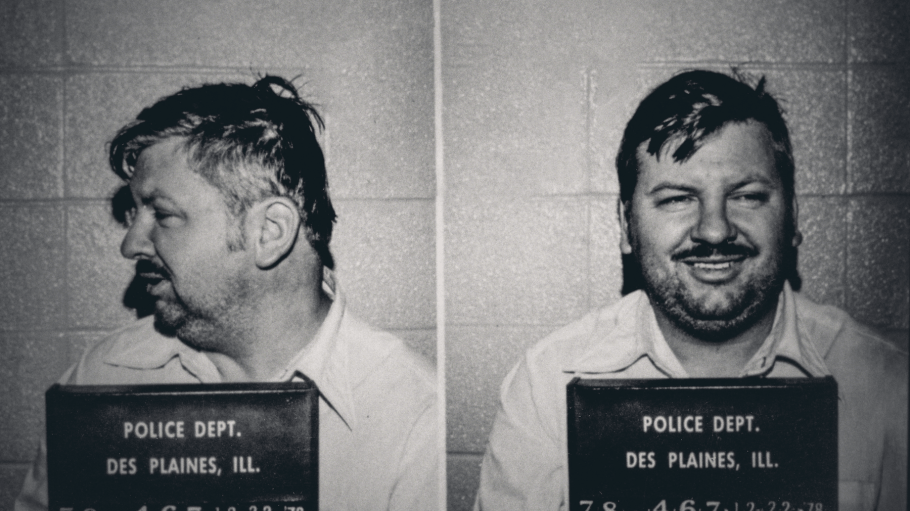
The pharmacy was closing for the night.
Robert Piest, 15, told his mother he was going to meet a contractor about a summer job.
The case record places him at that errand, nothing more.
He never came home.
His mother reported him missing on December 11, 1978.
The contractor was John Wayne Gacy.
Gacy ran a building company in the Chicago area.
He also performed as a part-time clown at children's parties.
The record shows a man with two lives: one of civic routine, one of buried horror.
What he said to Robert Piest that night is not in the record.
The exact wording of their conversation is not established.
A theory circulates online that police ignored early warnings about Gacy.
That theory is not a fact established by the record.
What is documented is the errand, the disappearance, and the name.
Robert told his mother he was going to meet a contractor.
He never came home.
How did no one see this coming?
The contractor was a neighbor, a precinct captain, a married man.
He was also a man with a crawl space.
The errand was ordinary.
The weight of it was not.
THE CONTRACTOR
He was a married man, a Democratic precinct captain, and a member of a local Jaycees chapter.
He was also a building contractor who performed as "Pogo the Clown" at children's parties.
Case background records this double life as fact.
His second wife, Carole Hoff, divorced him in 1976.
She later testified about his violent behavior at trial.
The testimony is part of the record.
So is the prior conviction.
Police investigation records show Gacy had a prior conviction for sodomy in Iowa.

That conviction predated the murders.
It did not stop him.
A young man who escaped from Gacy in 1977 reported him to police.
No charges were filed.
Police records confirm the report was made.
The exact nature of the escapee's report is not detailed in the record.
Why no charges were filed is also not detailed in the record.
That remains unexplained.
The report was made a year before Robert Piest vanished.
It went nowhere.
He was a precinct captain, a clown, a contractor.
He was also a man with a crawl space.
The errand was ordinary.
The weight of it was not.
THE SEARCH
The lead detective interviewed Gacy, who denied involvement but acted suspiciously, according to police interview notes.
He was a contractor, a clown, a man with a crawl space.
The detective found the denial thin.
On December 13, police searched Gacy's home, and the search warrant return lists what they found: a strong odor, a trapdoor to the crawl space, suspicious items.
A ring belonging to a missing person was among them.
That ring was a link.
It was a small link, but it held.
The next day, investigators found human remains in the crawl space, according to the forensic report.
Not the full count.
The exact number of remains found on that first day of excavation is not specified in the record.
The full count of twenty-six in the crawl space was established over time.
That took days.
It took shovels and careful hands and the sorting of what was buried.
Gacy was arrested on December 21, 1978, according to the arrest record.
Ten days after Robert Piest vanished.

Ten days after a mother reported her son missing.
During interrogation, he confessed to the murders, providing detailed accounts of each killing, according to the confession transcript.
He gave names.
He gave methods.
He gave the locations of the bodies, and the detectives dug where he pointed.
Was it the ring that broke him?
Was it the odor, the trapdoor, the weight of what sat beneath his floorboards?
The record does not say.
The record says he confessed, and that the confession was detailed.
It does not say which detail first loosened him.
It does not say what the detective said in that room, or how long the silence lasted before Gacy spoke.
That would require evidence.
THE TRIAL
The indictment named thirty-three counts of murder.
The trial opened in February 1980 in Cook County Circuit Court.
The prosecutor, Terry Sullivan, built the case on what had been pulled from the crawl space.
He presented dental records and called the county medical examiner to testify about the remains, according to the trial transcript.
The defense attorney argued that Gacy was insane at the time of the murders.
That was the argument.
The record does not detail what else the defense said beyond the insanity plea.
The jury heard the forensic evidence.
The jury heard the insanity argument.
The jury rejected it.
On March 12, 1980, they found Gacy guilty of all thirty-three murders.
He was sentenced to death.
He was executed by lethal injection on May 10, 1994, at Stateville Correctional Center.
It took fourteen years between the verdict and the execution.
It took one month between the discovery of the remains and the confession.
The confession is not in dispute.
The guilty verdict is not in dispute.
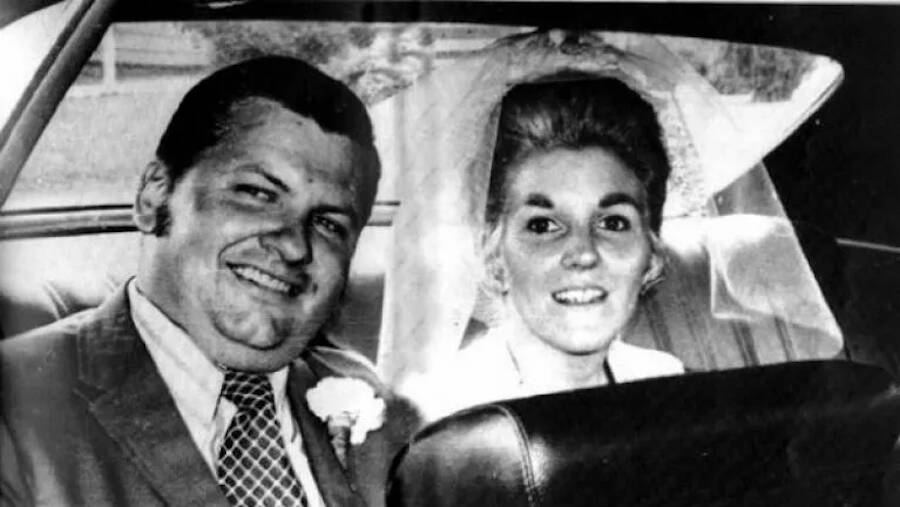
The execution record is filed.
What the defense argued beyond the insanity plea is not in the record.
That would require evidence.
AND THE STORY STILL ISN'T OVER
The house at 8213 West Summerdale Avenue was demolished in 1979.
Nothing remains of the crawl space, the trapdoor, or the odor that led investigators to the bodies.
Several victims were never identified, and efforts to identify them through DNA analysis have continued in recent decades.
The current status of that DNA analysis is not specified in the record.
How many victims remain unidentified is not specified in the record.
That would require evidence.
Elizabeth Piest became an advocate for missing children.
She testified in favor of Illinois' missing persons legislation.
The case led to changes in how police handle missing persons reports.
It also changed how serial killers are investigated.
A missing teenager's errand was no longer treated as a runaway case.
A contractor with a public life was no longer beyond suspicion.
The next concrete step is continued DNA analysis on unidentified remains.
The science is newer than the case.
The case is older than the science.
Robert Piest went to meet a contractor about a summer job.
He never came home.
His mother reported him missing on December 11, 1978.
The contractor was John Wayne Gacy.
Gacy was a building contractor.
He was a part-time clown performer.
He was a married man, a Democratic precinct captain, and a member of a local Jaycees chapter.
He buried 26 victims in the crawl space beneath his house.
He disposed of four others in the Des Plaines River.
He was convicted of 33 counts of murder.
He was executed on May 10, 1994.
The house is gone.
The record is filed.
The unidentified remain.
Advertisement
You may also like
The severed head in the canal, the confessed killer who was never charged, and the file police closed twice
The drainage canal ran along the Florida Turnpike near Vero Beach, 120 miles from where the boy had vanished. The head was found on…

The trucker's anonymous letters that named his own victims
The letters arrived unsigned, except for a circle with two dots and a curve. A smiley face. They were sent to the Oregonian and…

The Green River Killer’s confession count is 71. Why are only 48 convictions official?
Gary Leon Ridgway was a truck painter from Auburn, Washington. In November 2001, DNA evidence linked him to several victims, and he was arrested.…
The doctor with a scalpel and a secret that haunted Eliot Ness
The first body was found on September 5, 1934, in Kingsbury Run, a ravine that cut through Cleveland. He was a man, and no…
The slow-motion Bronco chase that began after O.J. Simpson was charged with murder
The Bronco drifted down the freeway at 35 miles an hour, a white speck trailed by a line of police cars. Al Cowlings was…
The Zodiac cipher that took 51 years to crack — and still gave no name
In December 2020, a team of private codebreakers solved the Zodiac's "340 cipher" — a cryptogram mailed to the *San Francisco Chronicle* in 1969.…