The courtroom chaos that let a convicted doctor walk free
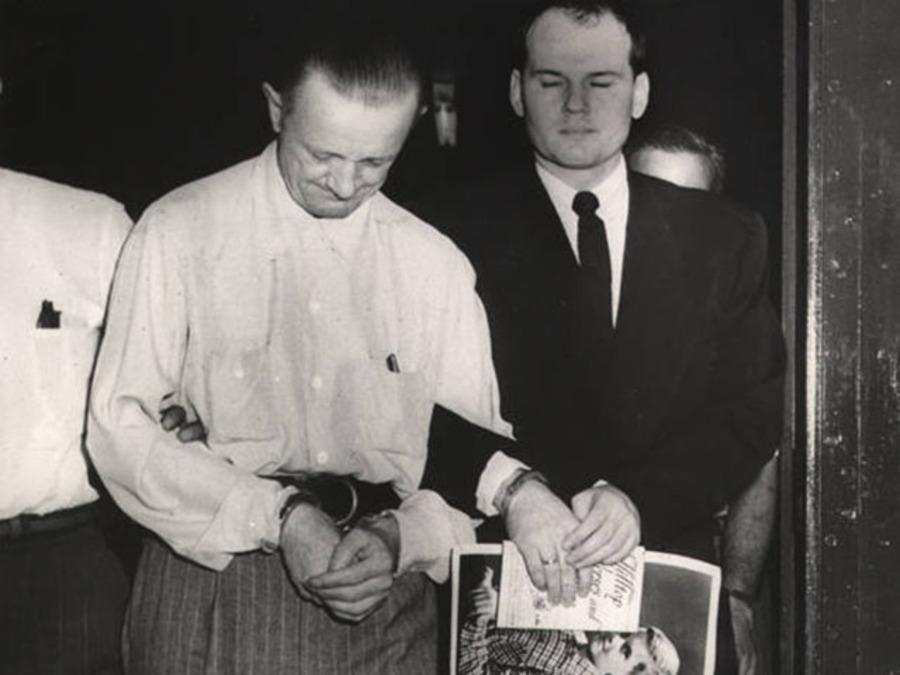
The lake house was unlocked.
Inside, on the night of July 4, 1954, Marilyn Sheppard lay bludgeoned to death in the upstairs bedroom.
She was four months pregnant.
Downstairs, her husband, Dr. Sam Sheppard, told police he had been asleep on the couch.
He said he woke to her cries.
He said he saw a "bushy-haired" intruder fleeing the house.
He said he chased the man toward the lake before being knocked unconscious.
The couple's 7-year-old son slept in another room.
He was not harmed.
The murder weapon was never found.
That is what the record establishes.
The identity of the intruder is not established.
The weapon itself is unknown.
A theory circulates online that an intruder killed Marilyn Sheppard.
It is a theory.
The official case remains unsolved.
The house was left unlocked, and a man with bushy hair was seen — according to one man's account.
That account was Sam Sheppard's.
He was the husband.
He was the accused.
The scene showed signs of a violent struggle, according to the investigation.
The struggle left a pregnant woman dead on the floor above.
Her husband said a stranger did it.
He said he chased that stranger to the water.
He said he was knocked out cold.
No one else reported seeing the intruder.
No weapon surfaced to match the wounds.
The front door stood open, waiting.
That is the clue that pulls.
That is the question the record leaves open: who else could have been there?
The answer would require evidence.
The evidence never came.
THE HASTY INVESTIGATION
The coroner testified that the murder weapon was a surgical instrument.
That claim was never substantiated.
The murder weapon was never found.
Chief Robert Schottke and Coroner Samuel Gerber concluded quickly that Sheppard was the killer.
The crime scene was not properly preserved.
The defense pointed to the lack of a murder weapon.
The defense pointed to the absence of blood on Sheppard's clothing.
The defense pointed to the unlocked house.
Three gaps in the record, each one opened early.
The prosecution argued Sheppard killed his wife in a rage over her alleged infidelity.

No motive was proven in court.
The couple's strained marriage was presented as a backdrop, but the record never confirmed what drove the violence.
Sheppard's brother Richard, a physician, performed surgery on Sam after the attack.
The same brother who treated him was also part of the family's early involvement.
The investigation moved forward on assumption, not on evidence.
The assumption was that the husband did it.
The evidence never arrived to support it.
What remains is a list of things absent: no weapon, no blood on his clothes, a house left open.
Not because the killer was careful.
Because the record does not say who else could have been there.
The coroner's surgical instrument theory gave the prosecution a story.
The story did not survive scrutiny.
The haste was visible in every step, from the unsecured scene to the quick conclusion.
The conclusion came first.
The evidence was meant to catch up.
It never did.
THE CARNIVAL TRIAL
The trial began in October 1954 and lasted nearly three months.
The courtroom was open to the press in a way that would later be called a circus.
Judge Edward J. Blythin allowed reporters free rein inside the room.
The jury was not sequestered.
Jurors read the newspapers. They heard the radio. They saw the headlines.
The prosecution presented a circumstantial case.
Prosecutor John T. Corrigan leaned on the coroner's testimony that the murder weapon was a surgical instrument — a claim never substantiated.
He leaned on the couple's troubled marriage.
Was the motive proven? No.
Was the weapon ever found? No.
The defense answered.
Attorney William J. Corrigan argued the evidence was insufficient.
He argued the investigation was botched.
He pointed to the absence of blood on Sam Sheppard's clothing.
He pointed to the unlocked house.
He pointed to the missing weapon.
The judge let the noise continue.
On December 21, 1954, the jury found Sheppard guilty of second-degree murder.
Not first-degree. Second-degree.
The sentence was life in prison.
The verdict was not a finding of motive.
It was a finding of a chaotic courtroom.
THE SUPREME COURT REVERSAL
The Supreme Court did not ask whether Sam Sheppard killed his wife.
It asked whether he could have received a fair trial in that courtroom.
In 1966, the Court ruled he could not have.
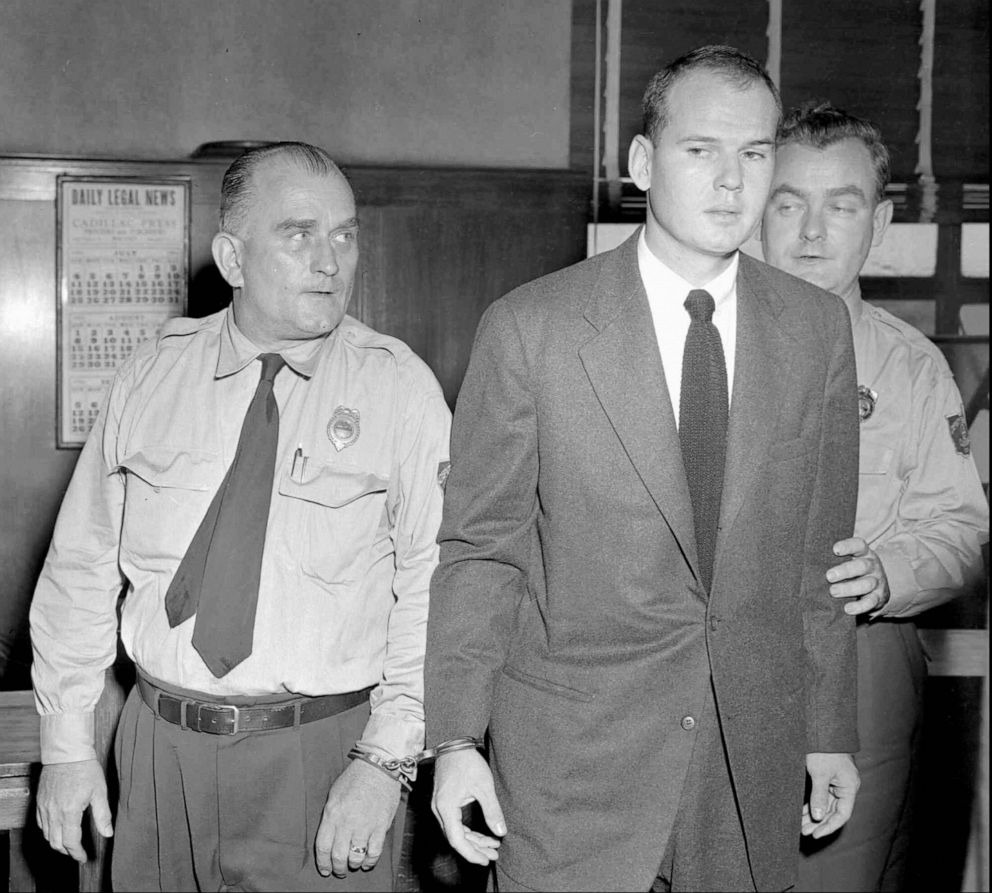
The ruling used the phrase "carnival atmosphere."
It described a trial where the media was allowed to roam free and the judge failed to restrain them.
The jury had not been sequestered.
The Court ordered a new trial.
Sheppard had already served nearly ten years.
The retrial was held in a different venue.
On November 16, 1966, the jury acquitted him.
Not because he was innocent.
Because the prosecution failed to prove guilt beyond a reasonable doubt.
The acquittal did not declare him innocent.
It declared the case unproven.
That distinction mattered.
Sheppard walked out of the courtroom a free man.
He was also a broken one.
He struggled with alcoholism.
He briefly worked as a professional wrestler.
On April 6, 1970, he died of liver failure.
He was 46 years old.
The legal system had finally given him a fair trial.
It had also taken a decade of his life.
The murder of Marilyn Sheppard remains officially unsolved.
No other suspect has ever been charged.
The courtroom chaos that let a convicted doctor walk free was not a vindication.
It was a correction.
A correction that came too late.
AND THE STORY STILL ISN'T OVER
In 1995, Samuel Reese Sheppard filed a wrongful-death lawsuit on behalf of his father, seeking to have Dr. Sam Sheppard declared innocent.
The case was closed in 2000, when a federal jury found that Sheppard had not been proven innocent.
That is not the same as a finding of guilt.
The murder of Marilyn Sheppard remains officially unsolved.
No other suspect has ever been charged.
The "bushy-haired" intruder theory remains a viral talking point, but the record does not establish it as fact.
It is a description from one man's account, repeated for decades.
That would require evidence.
The courtroom chaos was real, and the Supreme Court called it by name.
But the reversal was a correction of process, not a verdict on the man.
A new trial acquitted him, yet the official record still lists the crime as open.
If not Sam, then who?
The question hangs in the air, unanswered.
The son spent years trying to clear his father's name, and the jury gave him nothing but a closed file.
The house on the lake is gone now, and so is the doctor, dead of liver failure in 1970.
The case is closed, but the question of who killed Marilyn Sheppard still hangs in the air.
No one else stands accused.
No one else ever will.
Advertisement
You may also like
The 1967 trial that put the Boston Strangler's confession in the witness box
He confessed in 1964. Albert DeSalvo was already in custody on other charges when he sat down with a prosecutor from the Massachusetts Attorney…
The torn pajama top near Colette MacDonald's body that investigators said was staged
February 17, 1970. Military police were called to the off-base home of Army Captain Jeffrey MacDonald at Fort Bragg, North Carolina. Inside, they found…
The snowbound night three rock stars flew into a storm — and the last song they ever played
The cornfield near Clear Lake, Iowa, did not give up its secret until morning. On February 3, 1959, a small Beechcraft Bonanza had left…
A 'kill note' found in Adnan Syed's car — the defense called it a lie. The jury heard it anyway.
A single piece of paper, folded and placed inside a gray Nissan, sat in a glovebox. In February 1999, police searching Adnan Syed's car…
The courtroom outburst that silenced Polly Klaas's killer trial
The jury had already said guilty on every count. Then Richard Allen Davis stood up in the penalty phase and turned toward the victim's…
The night the murders ended the counterculture — and the fear that followed
The house at 10050 Cielo Drive sat at the end of a quiet lane in Benedict Canyon, the kind of place where the rich…