The night the murders ended the counterculture — and the fear that followed
The house at 10050 Cielo Drive sat at the end of a quiet lane in Benedict Canyon, the kind of place where the rich went to be left alone.
On the night of August 9, 1969, five people were murdered there.
Among the dead was actress Sharon Tate, eight and a half months pregnant.
The others were a coffee heiress, her boyfriend, a celebrity hairstylist, and a young man visiting the property's caretaker.
The morning light found them.
The crimes were discovered the following morning by the victims' associates and family members, who arrived to find a scene the newspapers would call unspeakable.
Nobody knew who had done it.
The identity of the killers was not yet known to the public.
All Los Angeles knew was that a peaceful Hollywood night had been shattered, and that the fear that followed was immediate.
The murders made no sense.
There was no robbery, no obvious motive, no witness who could name a face.
The public reaction was shock, then dread.
The murders were widely seen as marking the end of the 1960s counterculture era.
Not because the record proves it.
But because the moment demanded an explanation, and the era was the easiest one to blame.
What kind of people do this?
What kind of night ends like this?
What kind of city was this becoming?
Those questions had no answers yet.
That would require evidence.
THE SECOND NIGHT
The next night, August 10, supermarket executive Leno LaBianca and his wife Rosemary were murdered in their Los Feliz home.
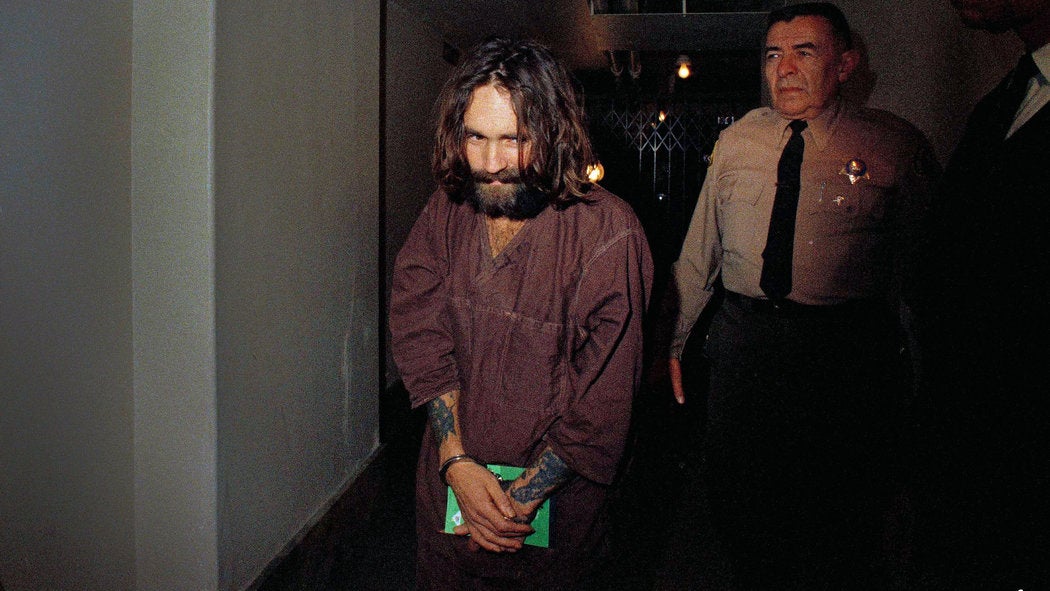
The killings were committed by members of a group led by Charles Manson, who directed the attacks but did not participate in them.
The crimes were discovered the following mornings by the victims' associates and family members.
Tate's husband, director Roman Polanski, was in Europe at the time.
Not a second house in Benedict Canyon.
Not a second actress.
A supermarket executive and his wife, miles away, in Los Feliz.
The pattern broke before it could form.
The investigation initially focused on other leads, including drug deals and a possible connection to the murder of musician Gary Hinman, who had been killed weeks earlier by Manson followers.
Hinman had died in July.
The police asked whether the two nights were linked.
They asked whether the city was under attack.
They asked who would be next.
That would require evidence.
The exact motive for the murders is not yet established in the record at this point.
Two nights.
Ten dead.
The first scene had names the public knew.
The second had none.
What kind of city was this becoming?
That question had no answers yet.
It was fear.
It was also a story the city told itself, waiting for the record to catch up.
THE BREAK IN THE CASE
She was in jail on an unrelated charge.
Susan Atkins, a follower of Charles Manson, told her cellmate, Virginia Graham, about the murders.
The cellmate told the authorities.
Atkins later gave a detailed statement to prosecutors.
The case cracked open.
The lead detective was Lieutenant Earl Deemer of the Los Angeles Police Department.
The prosecutor was Vincent Bugliosi of the Los Angeles County District Attorney’s Office.
He would later write a book about the case.
The prosecution’s case relied heavily on the testimony of the getaway driver, Linda Kasabian, who had been granted immunity.
It also relied on physical evidence linking the defendants to the scenes.
The full extent of Manson’s role is not yet proven at this stage.
The record, at this moment, has the accomplices talking.
It has the driver testifying.
It has the knives and the gun and the car.
What it does not yet have is Manson’s own admission.
The defense would argue that the prosecution had no direct evidence against him for the murders themselves.
That would come later, in the trial.
For now, the fear that gripped the city began to take a shape.
It was no longer a story the city told itself.
It was a case with a name attached to it.
It was a group, a leader, a car, a knife.
It was relief, and it was also dread.
Because the story was no longer a mystery.
It was a confession.
THE TRIAL
The trial began in June 1970.
Manson, Krenwinkel, and Atkins were tried together for the Tate murders. Van Houten was tried with them for the LaBianca murders. Watson was tried separately after being extradited from Texas.
The courtroom became a stage.
The defendants arrived with shaved heads. They carved an X into their foreheads, copying Manson's own mark. They sang. They shouted. They laughed at the testimony against them.
Judge Charles Older allowed the defendants to be removed from the courtroom during outbursts.
It was a spectacle. It was also a trial.
The media covered every moment. Daily courtroom spectators filled the seats. The press reported the bizarre behavior as much as the evidence.
The prosecution's case rested on Linda Kasabian's testimony. She drove the car on the night of the murders. She was granted immunity for her account.
The defense argued that the prosecution had no direct evidence against Manson for the murders themselves. He was not at the scenes. He did not hold the knife.
But the conspiracy case held.
The X on his forehead was the image that defined the proceedings. The shaved head. The chanting. The disruption.
Was it madness? Was it theater? Was it a strategy to poison the jury against him?
The record does not resolve it.
The defense attorneys tried to separate the man from the myth. They argued the evidence against him was circumstantial. They argued the state was trying him for who he was, not what he did.
The trial was about the murders. It was also about the fear that followed them. A city that had believed itself free was now watching a man in a courtroom carve an X into his own skin.
The witnesses testified. The evidence was presented. The jury deliberated.
And the courtroom remained packed, every day, until the end.
AND THE STORY STILL ISN'T OVER
All four were convicted of first-degree murder and conspiracy.
The jury fixed the penalty at death.
In 1972, the California Supreme Court abolished the death penalty, and their sentences were commuted to life in prison.
The case remains one of the most studied in American criminal history.
Vincent Bugliosi’s book *Helter Skelter* became a bestseller.
The media coverage was intense, and the trial drew massive public attention, with daily courtroom spectators and extensive press coverage.
The public reaction at the time was one of shock and fear.
The murders were widely seen as marking the end of the 1960s counterculture era.
Not because the record says so. But because that is what the public believed, and what the press reported.
It is a documented reaction. It is not a documented fact.
Charles Manson died in prison in November 2017.
One of the convicted women died in 2009.
The others have repeatedly been denied parole.
One was granted parole in 2023, but the decision was blocked by California Governor Gavin Newsom.
The future of parole decisions for the remaining defendants is not known.
That would require evidence.
The courtroom is empty now. The spectators are gone.
The fear, the shock, the sense that an era had ended—those did not require a verdict.
They outlived the trial.
They outlived the sentences.
They outlived the men and women convicted.
The story still isn't over.
Advertisement
You may also like
The bloody shirt scrap mailed to a newspaper that proved a killer's boast
A scrap of shirt arrived at a newspaper, stiff with dried blood. It was mailed as proof. Proof that the writer was the killer.…
The 2007 deal that kept Epstein's federal case secret — and the phone records that broke it open
In 2005, a mother walked into a Palm Beach police station and told officers her 14-year-old stepdaughter had been sexually abused at a mansion.…
The $5,800 bundle of cash a boy found along a riverbank in 1980
The boy was eight years old, playing along the Columbia River near Vancouver, Washington, in 1980. He found a rotting bundle of cash half-buried…
Why did Susan Atkins confess to a cellmate — and what did Kasabian see?
Virginia Graham had a cellmate who talked. Susan Atkins was in jail in October 1969 on unrelated charges when she told Graham about the…
The palm print on a rifle that sealed a president's fate
Dealey Plaza, 12:30 p.m. Central Standard Time, November 22, 1963. President John F. Kennedy was fatally shot while riding in the motorcade. Within hours,…
The glove that did not fit: how one courtroom moment shook a murder case
He pulled on the glove. Not easily. Not smoothly. In the courtroom, O.J. Simpson struggled to put on a pair of leather gloves —…