The door handle that caught a serial killer: inside the DNA hunt
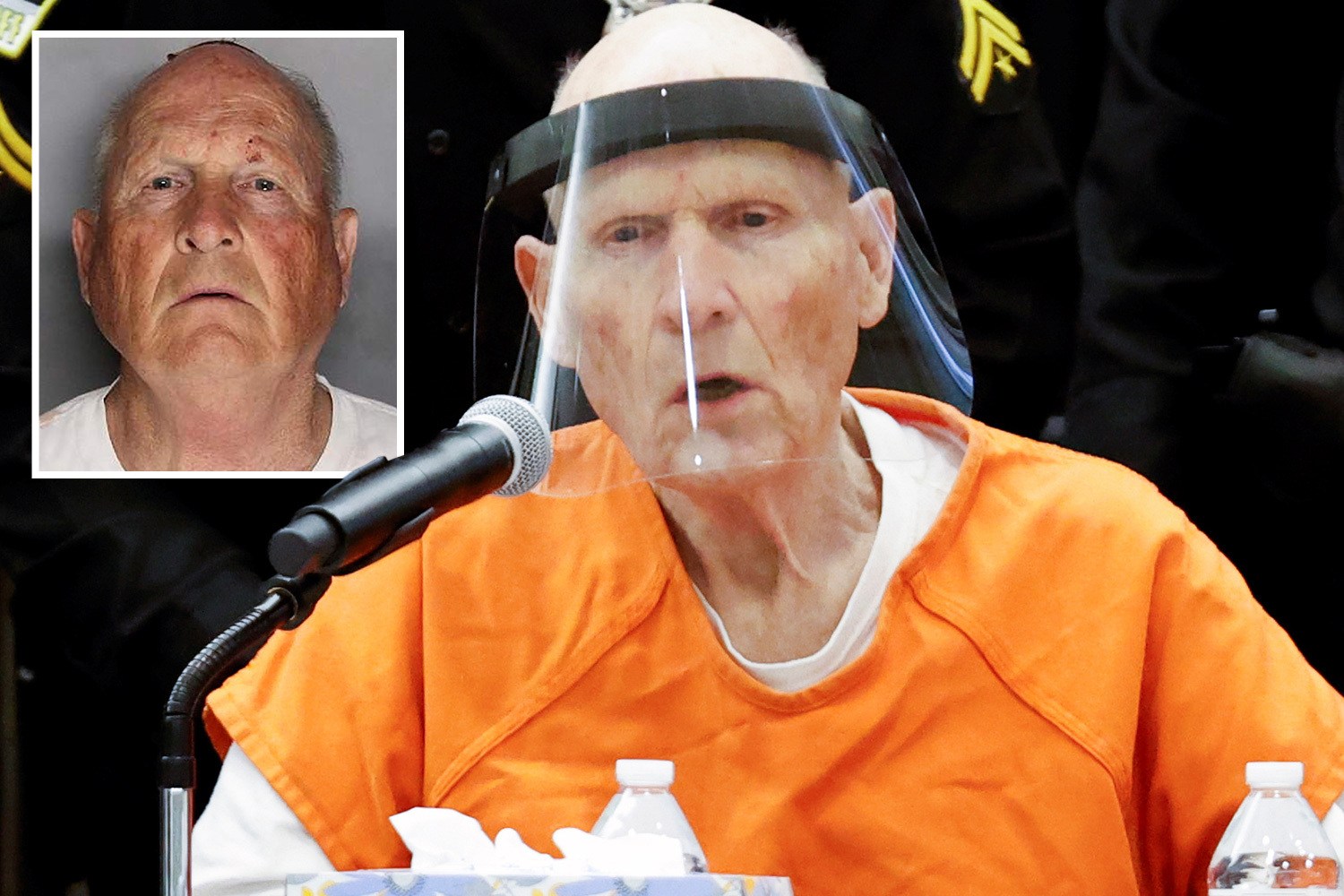
The door handle was on a car parked outside a house in Citrus Heights, California.
In 2018, investigators obtained a discarded sample of DNA from that handle.
They matched it to crime-scene DNA from a series of attacks and murders across California dating back to the 1970s.
The man who owned the car was Joseph James DeAngelo Jr., a former police officer.
He was arrested on April 24, 2018.
A mundane object, touched by a hand, ended a decades-long hunt.
The genealogy technique, using the public site GEDmatch, was widely credited as the decisive breakthrough.
Investigators compared crime-scene DNA against distant relatives' profiles on the site, and that led them to DeAngelo.
Not because he had submitted his own DNA. But because someone in his family had.
The record does not specify exactly how the sample from the door handle was obtained.
Was it swabbed? Was it picked up, a stray cell left on the metal?
That would require evidence.
What the record confirms is the match itself: the discarded sample, the crime-scene DNA, the same profile.
For years, the attacker wore a ski mask and used a flashlight to blind his victims.
He left items behind — a stolen watch, a single earring.
He made taunting phone calls to victims and police.
But he could not control what he left on a door handle.
The case had gone cold for decades.
In 2001, DNA testing linked the East Area Rapist attacks to the Southern California murders, confirming a single offender.
That offender had a name by 2018.
He was living in Citrus Heights.
A car door handle is small.
It is ordinary.
It is also the object that ended the hunt.
THE CRIMES
The crimes began in the Sacramento area.
There, the attacker was dubbed the East Area Rapist.
He spread north to the San Francisco Bay Area and south to Southern California, where he became known as the Original Night Stalker.
Between 1974 and 1986, a serial offender committed at least 50 rapes and 12 murders across California.
The precise number of rapes is not established.
The record confirms only "at least 50."
Victims included couples attacked in their homes.
They were often bound while the male was forced to listen to the rape of his partner.
The attacker wore a ski mask.
He used a flashlight to blind victims.
He left items at scenes: a stolen watch, a single earring.
He made taunting phone calls to victims and to police.
Among the murder victims was Katie Maggiore, killed in 1978 while walking her dog in Rancho Cordova.

The last known victim was an 18-year-old woman murdered in Irvine in 1986.
The terror spanned more than a decade.
It moved from suburb to suburb, county to county.
It is not a single story but a chain of them.
Each scene had its own darkness.
Each had its own door that would not lock.
The communities knew the pattern.
They knew the mask, the flashlight, the calls.
They did not know the name.
That would take decades and a different kind of evidence.
THE COLD CASE
For decades, the case frustrated investigators.
No suspect, despite the ski mask, the flashlight, the taunting calls.
Detectives kept files, compared reports, chased the same rituals across three regions of California.
Sacramento County Sheriff's Detective Carol Daly was part of that long effort.
An FBI agent worked the case beside her.
They knew the patterns.
They did not know the name.
In 2001, DNA testing linked the East Area Rapist attacks to the Southern California murders.
That confirmed a single offender.
It did not identify him.
The case went cold again.
Then, in 2018, investigators took a different route.
They used a public genealogy website, GEDmatch, to compare crime-scene DNA against distant relatives' profiles.
The technique, developed by investigators working with genetic genealogist Barbara Rae-Venter, was widely credited as the decisive breakthrough.
It led them to DeAngelo, living in Citrus Heights.
Not because the genealogy site named him outright.
But because it pointed toward a family, and a man, and then a door handle.
The specific steps of that genealogy search — how many relatives were matched, how the tree was built — are not detailed in the record.
What the record confirms is the discard.
A sample of DNA from his car door handle.
A match to the crime scenes.
An arrest on April 24, 2018.
Decades of frustration, then a single sample.
That is the evidence that decided the case.
THE PLEA AND SENTENCE
He was charged with 13 counts of murder and 13 counts of kidnapping with rape.
In June 2020, DeAngelo pleaded guilty to all charges.

The plea agreement spared him the death penalty.
Prosecutors led by Sacramento County District Attorney Anne Marie Schubert accepted the deal.
In August 2020, the trial judge sentenced him to life in prison without the possibility of parole.
DeAngelo was 74 years old.
He was also ordered to pay restitution to victims' families.
The specific restitution amount is not stated in the record.
He was given additional sentences for the rape-related charges.
Those sentences were to run consecutively.
The plea meant no trial testimony.
Some victims' families expressed frustration at that.
They wanted to hear him answer for the crimes in open court.
They wanted the evidence laid out, the DNA explained, the door handle described.
Instead, the case closed with a guilty plea and a sentence.
The relief was real. The grief was real too.
Not because the sentence was wrong. But because the plea left questions unspoken.
What would he have said? What would the families have asked?
That would require evidence.
The record shows a conviction and a life sentence.
It does not show a trial.
AND THE STORY STILL ISN'T OVER
DeAngelo is incarcerated at California State Prison, Sacramento, serving life without parole.
He has not been eligible for parole.
The case is considered closed.
Not because a trial settled it. But because a plea agreement ended it.
Some victims' families have expressed frustration that the plea agreement meant no trial testimony.
No testimony about the flashlight. No testimony about the taunting phone calls. No testimony about what the door handle gave up.
That would require a trial.
The record shows a conviction and a life sentence.
It does not show a trial.
The DNA genealogy method that caught him has since been adopted by law enforcement agencies nationwide.
It has also raised privacy concerns.
Concerns about who else's profile sits in a public database. Concerns about what else those profiles might be used to find. Concerns about whether the method that closed one case opens others.
The future of the genealogy method's use is not resolved in the record.
Its privacy implications are not resolved in the record.
The case stands as a landmark in forensic genealogy.
It is a landmark. It is also a question.
The method was the decisive breakthrough, the source material says. The door handle was the confirmation. The discarded sample was matched to the crime scenes.
DeAngelo is at California State Prison, Sacramento.
He will stay there.
The legacy of the method that put him there is still being written.
Advertisement
You may also like
The Avia shoe print that tied a serial killer to his final crime scene
The sole of an Avia athletic shoe left a pattern in the dark. That pattern turned up at more than one crime scene linked…
The floppy disk clue that ended a 30-year hunt for BTK
For more than a decade, the killer had been silent. Then, in 2004, he resumed sending letters and packages to media outlets, according to…
The 1888 letter signed 'Jack the Ripper' that police never proved genuine
A letter arrived at a news agency in late September 1888. It was signed with a name no one had seen before: "Jack the…
Two college students, one gas station, and the gunman who made them kneel
The night of July 19, 1976, in Orem, Utah, began like any other shift at a gas station. Two young men were working the…
The confession that broke the Hillside Strangler case — but one victim's body was found after the trial began
October 18, 1977. A body on a hillside in Los Angeles. She was young. She had been strangled. The medical examiner would confirm the…
The cellmate tip that cracked the Clutter family murders open
Floyd Wells was a prisoner. In late 1959, he told authorities that his former cellmate, Richard Hickock, had described planning a robbery of the…