The empty nursery Laci Peterson was preparing when she vanished with Conner
🚨 THE NURSERY THAT WAS NEVER FINISHED
The nursery was almost ready.
Laci Peterson, 27 years old and eight months pregnant, had planned to name her unborn son Conner.
She was preparing a room for him in the Modesto home she shared with her husband, Scott Peterson.
The crib, the walls, the small clothes — the ordinary work of a mother expecting a child.
That nursery was never used.
On December 24, 2002, Laci disappeared from that home.
Her husband reported her missing that evening.
The exact state of the nursery on the day she vanished is not in the record.
What remains is the image: an empty room, waiting for a boy who never arrived.
The case drew intense national media attention, partly because of the Christmas timing.
A pregnant woman, gone on Christmas Eve.
A nursery, prepared and then abandoned.
That detail haunts the case not because it proves anything.
But because it is the shape of a life interrupted.
She was there. Then she was not.
The room stayed empty.
DECEMBER 24, 2002 — THE DISAPPEARANCE
Laci Peterson disappeared from her home in Modesto, California, on December 24, 2002.
Her husband, Scott Peterson, reported her missing that evening.
Police initially treated the case as a possible abduction.
The exact time Laci was last seen alive is not specified in the record.
That is one of the first gaps.
Scott said he had gone fishing alone at the Berkeley Marina that morning.
A claim that seemed implausible to many.
He gave a brief, unemotional television interview.
Observers found it odd.
The room she had been preparing stayed empty.
She was eight months pregnant.
The couple had planned to name their son Conner.
The nursery waited.
The dog was there.
The house was there.
She was not.
The search began that night.
The family gathered.
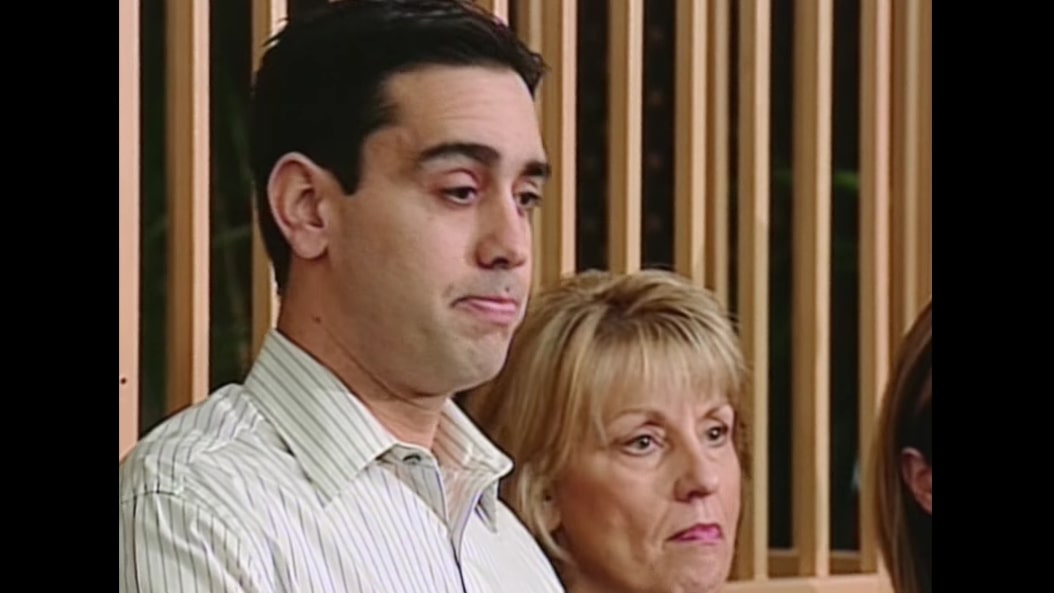
Her mother, Sharon Rocha, her stepfather, Ron Grantski, and her brother, Brent Rocha, would soon become public figures.
They would say what they believed.
But on December 24, there were only questions.
What had happened inside the home?
That has never been established.
The record shows a disappearance.
It shows a report made that evening.
It shows a husband's story about a morning of fishing.
It does not show the moment.
It does not show what occurred before Scott called police.
The investigation noted inconsistencies.
The record notes them too.

It is a timeline with a hole in the middle.
THE FAMILY'S PUBLIC PLEAS
Sharon Rocha became the voice of the search.
She stood before cameras, her daughter missing, her grandson unborn.
Ron Grantski stood beside her.
Brent Rocha stood beside her too.
They formed a line the public came to recognize.
They consistently maintained that Scott Peterson was responsible.
Not because they had evidence, they said.
Because they knew Laci, and they knew what she would have done.
They made public appeals for information.
The appeals drew national attention.
It is hard to separate the coverage from the pleas.
The timing helped: a pregnant woman gone before Christmas.
The family helped more.
They spoke when police would not.
They named their loss in a way investigators could not.
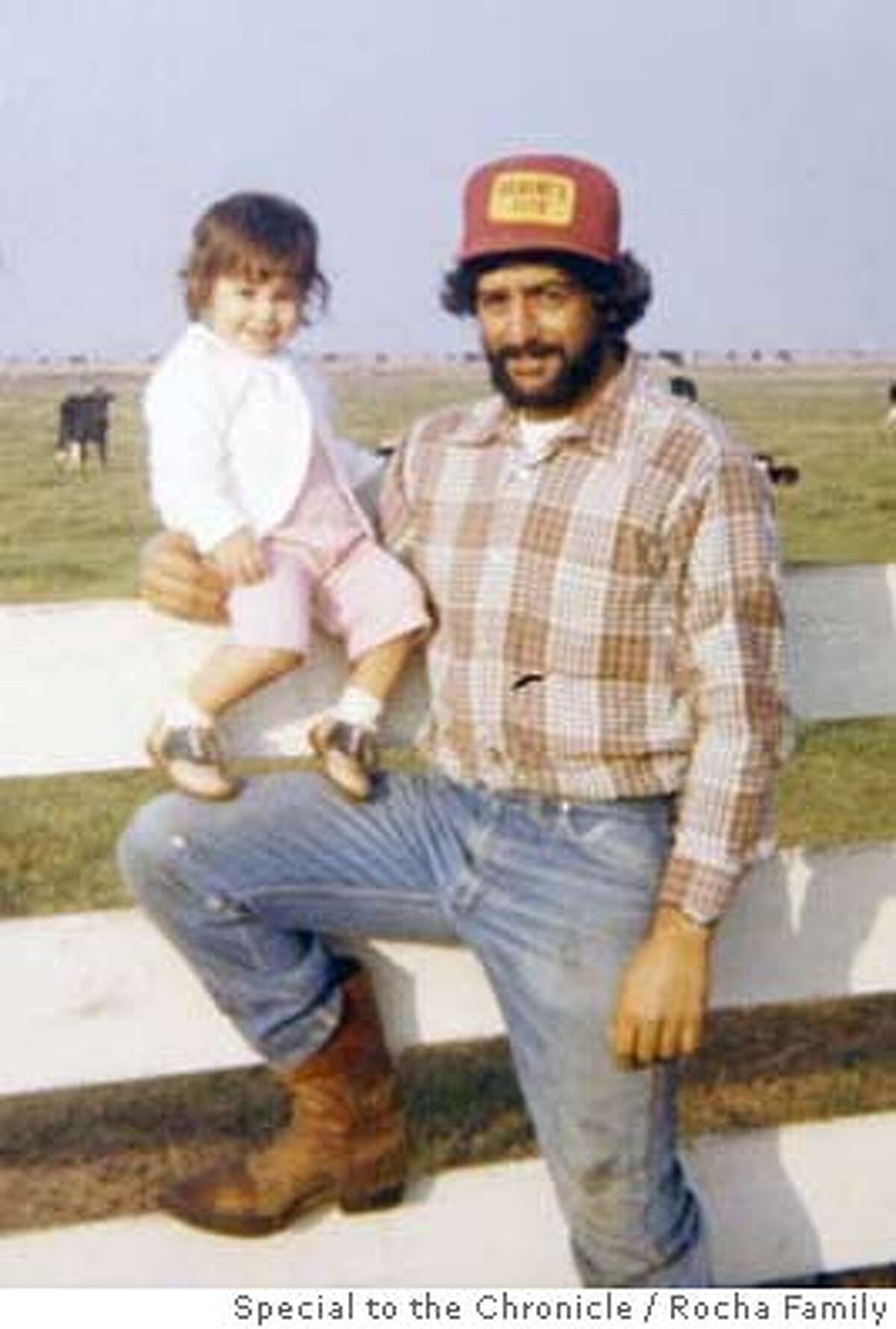
Laci's father, Dennis Rocha, was less visible.
He was present at trial.
He sat through the testimony.
The family's words filled the gap left by the investigation.
They did not fill the hole in the timeline.
The record does not detail the specific content of their public appeals.
What is documented is the role they played: prominent, persistent, public.
They asked for help finding Laci.
They asked for help finding Conner.
They asked for justice.
The questions outlived the search.
The family's determination did not.
THE AFFAIR AND THE BOAT
The boat was purchased before Laci disappeared.
Scott Peterson had told Amber Frey he had "lost his wife."
She came forward anyway.
Amber Frey cooperated with police and provided recorded phone calls.
In those calls, the record says, Scott Peterson made misleading statements.
What exactly those statements were, the record does not specify.
It is not established.
The prosecution argued a sequence: Scott killed Laci in the home.
He placed her body in his truck, the prosecution said.
He dumped it from his boat into the bay.
The boat was the alibi.
The boat was the weapon of disposal.
It was also the place where he said he had been fishing that morning.
The bodies were found near that marina.
The defense offered another story.
Laci had been abducted by strangers while walking the dog, they suggested.
That theory was never supported by evidence.
It remains a theory.

Amber Frey's calls did not make Scott a killer.
They made him a liar.
He had told her he had lost his wife before Laci was gone.
He had told her a version of the truth that was not yet true.
The betrayal was documented.
The murder was not.
It was circumstantial: the affair, the boat, the location of the bodies.
Each piece pointed one way.
None of it showed the moment inside the home.
That moment is not in the record.
The calls were recorded.
The boat was bought.
The bodies were found.
The line between what is known and what is alleged stayed thin.
APRIL 2003 — THE BODIES ARE FOUND
On April 13, 2003, the body of a full-term male infant washed ashore in San Francisco Bay.
The next day, Laci’s body was found nearby.
The remains were identified as Laci and her son, Conner.
The bodies were found near the marina where Scott said he had been fishing.
That was the place he told police he had gone alone on the morning of December 24.
The confirmation came four months after Laci vanished.
The worst fear was now a fact.
The exact cause of death is not stated in the source.
What happened inside the home that morning remains unestablished by the record.
After the bodies were discovered, Scott sold his car.
He changed his appearance.
The record does not say why.
The family had pleaded for answers through the winter.
They had stood before cameras and asked strangers to look for a pregnant woman and her unborn son.
Now the search was over in the worst way possible.
The nursery she was preparing stayed empty.
It remains a documented detail of her life, and a symbol of what never came to be.
The line between what is viral and what is documented holds here: the bodies are known, the death is not.
THE ARREST AND THE CHARGES
On April 18, 2003, Scott Peterson was arrested.
The charges were two counts of murder: one for Laci, one for her unborn son, Conner.
The trial began in June 2004 in Redwood City, not Modesto.
The change of venue came because of extensive pretrial publicity.
The prosecution presented circumstantial evidence: the affair, the boat, the location of the bodies.
The defense argued that the evidence was insufficient.
The defense argued that the prosecution’s timeline was flawed.
That is what the record says the defense argued.
What the defense argued in detail is not established in the source.
The nursery stayed empty while the case moved to court.
It is a documented detail of her life, and a symbol of what never came to be.
The line holds here: the arrest is known, the charges are known, the trial is known.
What happened inside the home that morning remains unestablished by the record.
The jury would hear the prosecution’s story of what happened in that home.
:max_bytes(150000):strip_icc():focal(999x0:1001x2)/laci-peterson-family-2-d60dbe78a8384fc4b387604161b69e09.jpg)
The jury would hear the defense’s story of what did not.
The weight of the case sat on a timeline, a boat, an affair, and two bodies found near the marina.
Laci’s family sat in the courtroom.
Her mother, Sharon Rocha, her stepfather, Ron Grantski, her brother, Brent Rocha.
They had maintained from the start that Scott Peterson was responsible.
The trial would test that claim.
The anticipation was heavy.
A high-stakes trial, a grieving family, a defendant charged with killing his wife and his unborn son.
THE VERDICT AND THE SENTENCE
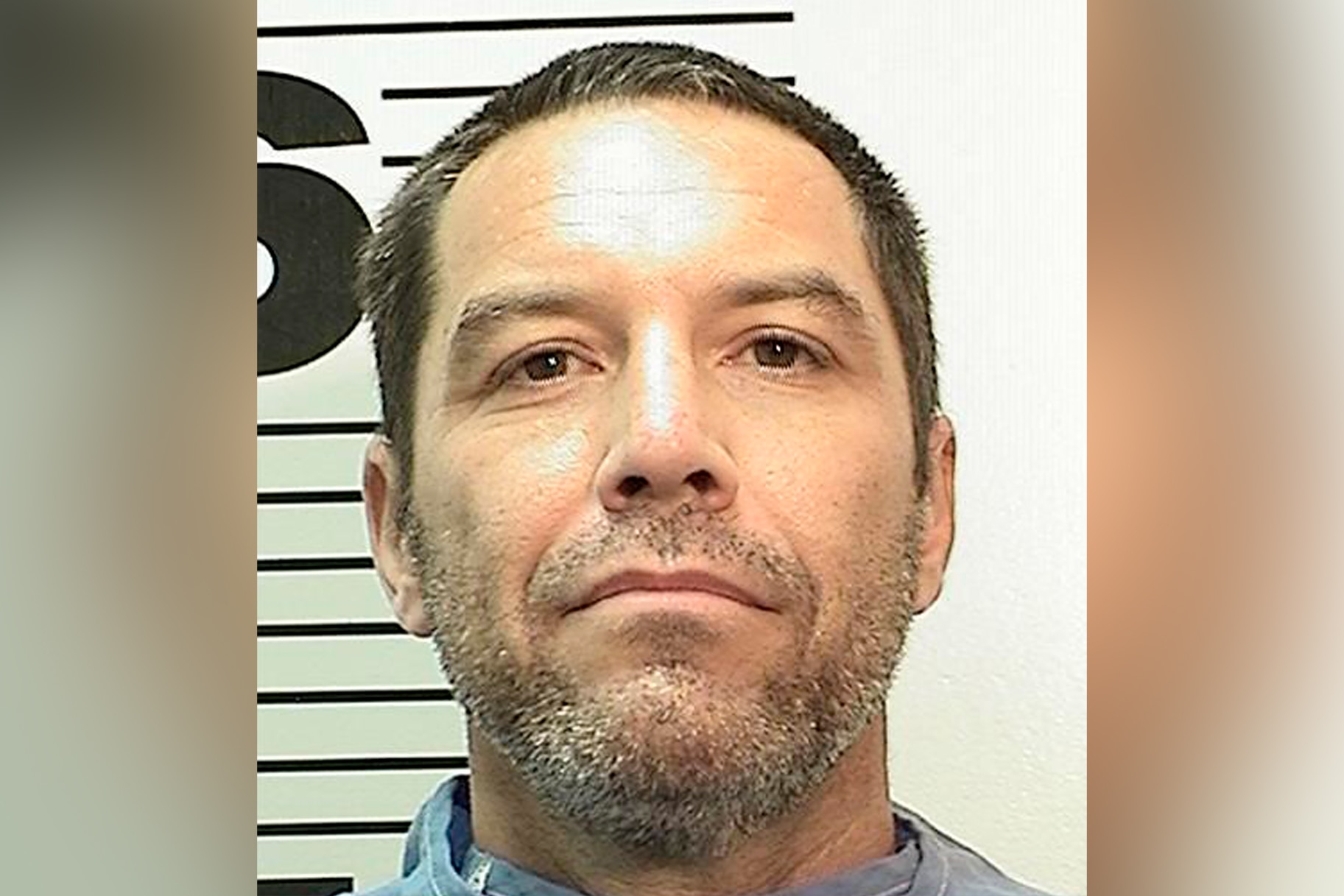
On November 12, 2004, the jury found Scott Peterson guilty of first-degree murder for Laci’s death.
The same jury found him guilty of second-degree murder for Conner’s death.
The verdict was widely reported.
Laci’s family expressed relief.
They expressed grief as well.
The exact words they spoke, the precise gestures they made in the courtroom — the record does not specify.
That remains unestablished.
In December 2004, the jury recommended the death penalty.
Judge Alfred Delucchi sentenced him to death on March 16, 2005.
The lead detective, Al Brocchini of the Modesto Police Department, had built the case.
Prosecutor James Brazelton had argued it.
Defense attorney Mark Geragos had fought it.
The trial that had tested the claim was over.
The claim had held.
Relief, because the verdict named what the family had maintained.
Grief, because the verdict did not bring Laci back.
It did not bring Conner back.
The nursery stayed empty.
The family had waited through the disappearance, through the search, through the bodies found in April, through the arrest, through the trial.
They had waited for the jury to answer.
The jury answered.
Scott Peterson was guilty of killing his wife.
He was guilty of killing his unborn son.
The sentence was death.
The loss remained.
That is what the record shows: a conviction, a sentence, a family left with relief and with sorrow.
Nothing more precise is documented.
TWO STORIES, ONE SET OF FACTS
The prosecution argued that Scott Peterson killed Laci in the home, placed her body in his truck, and dumped it from his boat into the bay.
That was their story.
The defense suggested that Laci had been abducted by strangers while walking the dog.
That theory was never supported by evidence.
The prosecution's case rested on circumstantial evidence: the affair, the boat, and the location of the bodies.
The defense argued that the evidence was insufficient and that the prosecution's timeline was flawed.
What was the timeline?
What happened inside the home?
What happened at the marina?
The record does not say.
A major mistake by police was the initial failure to secure the Peterson home, allowing potential evidence to be compromised.
That is documented.
What was lost inside those hours is not.
The same facts could be spun in radically different ways.
The boat was purchased before the disappearance.
The boat was a lie, or the boat was a hobby.
The affair was a motive, or the affair was a distraction.
The bodies were found near the marina where he said he had been fishing.
That is a coincidence, or that is a map.
Which one requires more belief?
Sharon Rocha, Laci's mother, sat through the trial and heard both stories.
She believed one of them.
The defense's alternative timeline is not detailed in the source.
It remains a suggestion, nothing more.
The jury weighed the same facts the public weighed.
They returned a verdict.
But the facts themselves never changed.
Only the telling did.
THE VIRAL CLAIM VS. THE RECORD
The case drew intense national media attention, partly because of the timing of the disappearance just before Christmas.
It also drew theories.
Online theories have circulated for years, about strangers, about cults, about everything except the record.
The record does not establish any alternative explanation beyond the prosecution's case.
That would require evidence.
The defense's abduction theory was never supported by evidence.
It was a story told in court, and the jury did not believe it.
The record shows that Scott Peterson was convicted.
It shows that the jury found him guilty of first-degree murder for Laci's death and second-degree murder for Conner's death.
It shows that Judge Delucchi sentenced him to death on March 16, 2005.
Then the record changed.
In 2020, the California Supreme Court overturned the death sentence.
The court ruled that the trial judge had improperly dismissed a juror who opposed the death penalty.
But the court upheld the murder convictions.
Scott Peterson remains on death row at San Quentin State Prison.
The conviction stands.
The sentence does not.
A new penalty phase was ordered.
As of the most recent reports, it has not yet been held.
What is viral is not what is documented.
The nursery is documented.
The disappearance is documented.
The verdict is documented.
The exact moment of Laci's disappearance is not.
What happened inside the home that morning is not.
The record does not establish it.
The theories do not fill that gap.
They only repeat it.
Laci's family has said they believe justice was served by the conviction.
They have opposed efforts to overturn the sentence.
Sharon Rocha wrote a book about her daughter and the ordeal.
The facts never changed.
Only the telling did.
THE ORDINARY MOMENT: THE UNFINISHED NURSERY
Laci was eight months pregnant, and she and Scott had planned to name their unborn son Conner.
She was preparing a nursery for his arrival.
A room painted, a crib assembled, a stack of folded blankets.
The specific details of the nursery's contents or decoration are not in the record.
No inventory of what hung on the walls.
No description of the color of the sheets.
That would require evidence the file does not contain.
What is documented is the act itself: a woman making a space for a child.
An ordinary moment of anticipation, the kind that happens in thousands of homes.
It is a hopeful act.
It is also a fragile one.
That nursery was never used.
It became a symbol of the loss, the empty room standing for the empty place in the family.
Sharon Rocha, Laci's mother, has kept speaking about the case in the years since.
She wrote a book about her daughter and the ordeal.
In it, she describes who Laci was before December 24, 2002.
A substitute teacher.
A Modesto native.
A daughter.
The nursery was part of that story, the promise of a future that never arrived.
The room waits.
The facts never changed.
Only the telling did.
AND THE STORY STILL ISN'T OVER
Scott Peterson remains on death row at San Quentin State Prison in California.
The convictions stood.
In 2020, the California Supreme Court overturned his death sentence, ruling that the trial judge had improperly dismissed a juror who opposed the death penalty.
The court upheld the murder convictions.
A new penalty phase was ordered.
As of the most recent reports, it has not yet been held.
The date for that new penalty phase is not specified in the source.
Sharon Rocha has continued to speak publicly about the case.
She wrote a book about her daughter and the ordeal.
Laci’s family has consistently stated that they believe justice was served by the conviction.
They have opposed efforts to overturn the sentence.
Not because the penalty matters more than the verdict.
But because the verdict named what happened.
The nursery was never finished.
The room waits still.
The case remains one of the most closely followed American murder cases of the early 2000s.
It is a story of evidence.
It is also a story of a family’s grief enduring.
What happens next is not written.
The conviction is.
The sentence is not.
That would require a hearing.
The family waits for it.
The record waits with them.
Advertisement
You may also like

The DNA under her fingernails that cracked a 17-year cold case — but left one question open
🚨 THE NEIGHBOR'S CALL THAT OPENED A 17-YEAR WAIT… A neighbor in Bellaire, Texas, called police about a break-in at a home on June…

The 4-day gap between a 5-year-old's abduction and a suspect's arrest in her murder
🚨 THE 4-DAY GAP July 15, 2002, in Stanton, California: a man asks a five-year-old for help finding a lost dog. The friend runs…
The grandmother's 911 call that started it all — and the family story that never fit
🚨 THE 911 CALL THAT DIDN'T MATCH THE FAMILY'S STORY The 911 call came on July 15, 2008, from a grandmother named Cindy Anthony.…
The missing boy's ring found in a crawl space — 27 bodies later
🚨 THE RING IN THE CRAWL SPACE The ring was small, gold, and it belonged to a missing 15-year-old boy. Police found it on…
The 2005 Aruba nightclub exit that left three men with stories that never matched
🚨 THE EXIT THAT STARTED EVERYTHING The club was called Carlos'n Charlie's, a bar and nightclub in Oranjestad, Aruba. Natalee Holloway, 18, from Mountain…
The tarot card message that turned a random killing spree into a hunt for 'God'
🚨 THE TAROT CARD THAT READ 'CALL ME GOD' The card was a piece of evidence, found at a crime scene during the investigation…