Ex-cop DeAngelo pleads guilty to Golden State Killer murders, rapes after 40-year hunt
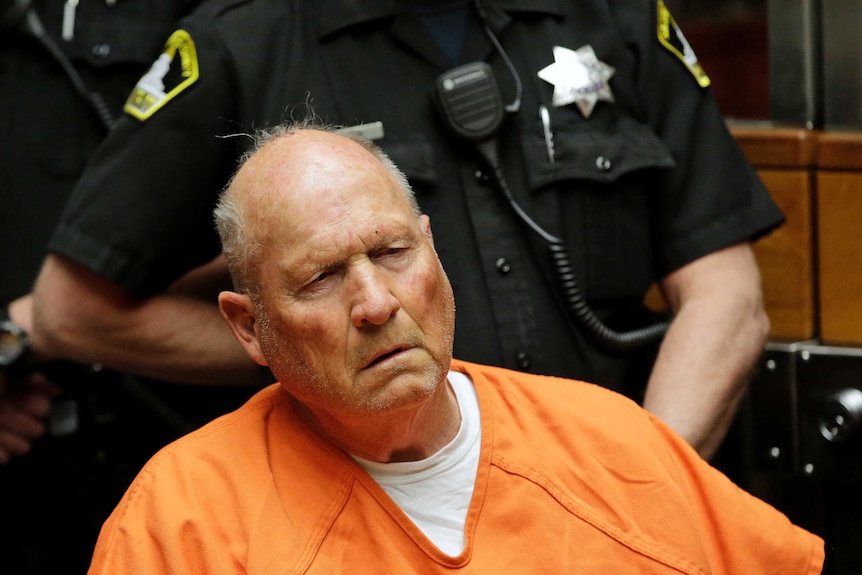
🚨 THE PLEA
In 2020, Joseph James DeAngelo Jr. pleaded guilty to 13 murders and 13 kidnapping-for-robbery counts, plus numerous rape-related charges, as part of a plea agreement.
The plea spared him the death penalty.
In August 2020, he was sentenced to life in prison without the possibility of parole.
The plea covered crimes committed in multiple counties.
He admitted to the rapes and other offenses as part of the deal.
DeAngelo was a former police officer.
He was arrested in April 2018.
The courtroom record does not establish any statement from DeAngelo in court.
The exact wording of his plea is not in the record.
What is in the record is the shape of the deal: a guilty plea, a life sentence, no trial for the rapes.
Not a confession delivered to the families.
Not a statement of remorse.
The record shows a plea agreement, signed and entered, covering decades of crimes across jurisdictions.
It is final.
It is also incomplete, in the way that a sentence of life can be final without being whole.
For forty years, the case was a series of open doors.
Then it was a name, an arrest, a charge sheet.
Then it was this: a man in a courtroom, pleading guilty.
The families of the dead did not get a trial.
They got a plea.
The survivors did not get a verdict.
They got a sentence.
The record does not explain why DeAngelo chose to plead.
That would require evidence the case file does not contain.
What the record does show is the outcome: 13 murders admitted, 13 kidnapping-for-robbery counts admitted, the rapes folded into the deal.
Life without parole.
He will not be eligible for parole.
He will not be granted it.
The case moved from cold to closed in the space of a guilty plea.
The fear that defined the decades did not end in a courtroom.
It ended on paper.
It is a heavy thing, that paper.
It is also the only thing the record offers.
1976 — THE FIRST REPORTS
It began in Sacramento County, in 1976.
The record does not state the exact date of the first attack.
The record does not state how many rapes occurred that year.
What is documented is a pattern: a man entering homes in the suburbs, targeting women alone or with a partner.
He stalked first, the reports said.
He sometimes bound the victim and her partner.
The media gave him a name: the East Area Rapist.
It fit the geography. It fit the fear.
The attacks escalated to burglary and rape.
They spread across multiple Northern California counties.
A house in the dark. A door left unlocked. A sound downstairs.
The pattern held: a stranger, a weapon, a command.
He was not a phantom in the woods.
He operated where people believed they were safe.
The suburbs were his terrain.
The crimes were reported, logged, filed.
The offender remained a name without a face.
The dread was creeping. So was he.
1979 — THE MOVE SOUTH
The attacks did not stay north.
In 1979, the crimes moved south to the San Francisco Bay Area.
The same offender was linked there to a series of violent assaults and murders.
The media gave him a new name: the Original Night Stalker.
The record does not establish the specific crimes in the Bay Area, nor the exact number of victims in this period.
What is documented is the pattern: homes entered, couples bound, violence escalating.
The East Area Rapist had been a prowler, a stalker, a shadow in Sacramento bedrooms.
The Original Night Stalker was something else.
He killed.
The crimes continued into the mid-1980s.
The last confirmed murder attributed to the offender came in 1986, in Goleta, California.
That is where the trail goes cold.
Not because the offender stopped. But because the record stops.
The geographic terror widened even as the identification narrowed.

He was in the Bay Area. He was in the south. He was in the suburbs.
Where was he not?
That would require evidence.
For now, there was only a name from the media and a string of jurisdictions that did not yet talk to one another.
The dread had moved south with him.
THE COLD CASE
For decades, the case was defined by a lack of physical evidence linking the crimes.
Police had DNA from several crime scenes, but no match in criminal databases.
The samples sat in storage, waiting for a name that would not come.
A critical mistake was the failure to connect the two series earlier.
Partly due to jurisdictional boundaries, the East Area Rapist and the Original Night Stalker were investigated as separate horrors.
Not because the crimes were different. But because the counties did not talk to one another.
The exact number of DNA samples is not established in the record.
The specific jurisdictional failures are not established in the record either.
What is documented is the gap: years of parallel investigations, each one blind to the other.
DeAngelo had been a police officer.
That may have helped him avoid suspicion.
That may have helped him understand police tactics.
It is a theory supported by his former profession.
It is not a fact the record confirms.
He knew how patrols worked. He knew how evidence was logged. He knew how long a lead could sit untouched.
The case went cold.
The perpetrator unidentified. The full scope of his crimes unknown.
Detectives retired. Files moved to storage. Families waited.
The DNA remained, and the DNA was the only thread.
But a thread with no match is just a strand.
It does not point. It does not speak. It waits.
That would require evidence.
For now, there was only a name from the media and a string of jurisdictions that did not yet talk to one another.
The dread had moved south with him.
2001 — THE DNA LINK
In 2001, DNA testing linked the East Area Rapist series to the Original Night Stalker murders.
That was the year the two names became one offender.
The record does not establish which specific DNA samples were used, nor which lab performed the testing.
What is established is this: the science matched the dread.
For decades, police had DNA from several crime scenes, but no match in criminal databases.
In 2001, the match was made between the series themselves.
It confirmed a single offender.
Not two men working the same territory. Not copycats.
One offender who had moved south with the crimes.
The East Area Rapist was the Original Night Stalker.
The Original Night Stalker was the East Area Rapist.
A glimmer of hope, then.
Science had done what jurisdictions could not.
It connected Sacramento to the Bay Area, the rapes to the murders, the years to each other.
The case remained unsolved until 2018.
Seventeen more years of no name.
The DNA had a story to tell, but it needed a listener.
That would require evidence.
For now, there was only a link on a lab report and a cold case that knew its own shape.
The dread had a single source.
2018 — THE GENEALOGY BREAK
In 2018, investigators uploaded the suspect’s DNA profile to GEDmatch, a public genealogy website.
Paul Holes, a retired cold-case investigator, helped pioneer the genetic genealogy technique, he said in interviews.
The upload produced a family tree.
That tree pointed to Joseph James DeAngelo Jr.
He was a former police officer.
He had lived in the areas where the crimes occurred.
The record does not establish the exact date of the GEDmatch upload.
The record does not establish who discarded the DNA sample from his car door.
What the record shows is the confirmation: a discarded sample from the car door matched the crime-scene DNA.
Holes testified that the technique was new, a tool built from public data and a spreadsheet of relatives.
It was a breakthrough after decades.
It was also a narrowing: one profile, one tree, one name.
The case had known its own shape for years — the link on the lab report, the single offender.
That link had a name now.
The confirmation came from the car door, a sample left behind without a warrant.
That would require evidence.

The evidence was in the lab report.
APRIL 2018 — THE ARREST
The arrest came in April 2018.
He was charged with 13 counts of murder with special circumstances.
He was charged with 13 counts of kidnapping for robbery.
He was charged with numerous rape-related offenses.
The lead prosecutor was Thien Ho of the Sacramento County District Attorney's office.
DeAngelo’s defense attorney was Diane Howard.
The charges spanned counties and decades.
The man who had once worn a police uniform now stood accused of crimes committed while he wore nothing the law could see.
The record does not establish the circumstances of the arrest.
The record does not establish DeAngelo's reaction.
The handcuffs are not in the file.
The courtroom is not in the file.
What is in the file is the warrant, the DNA match, the charges.
What is in the file is the confirmation from the car door.
What is in the file is the name, finally attached to the acts.
He was not convicted that day.
He was charged.
The plea came later.
The sentence came later.
But for the survivors, for the families, the arrest was the hinge.
The door that had been sealed for forty years opened.
He was held.
He was named.
He was brought into a room with a judge and a prosecutor and a defense attorney.
The man who had terrorized Sacramento and the Bay Area was no longer a ghost.
He was a defendant.
The relief was not yet justice.
It was the beginning of it.
That would require a trial, or a plea.
That would require evidence.
The evidence was already in the lab report.
THE PLEA DEAL
The plea was a trade.
It was a trade of death for life.
Prosecutor Thien Ho told the court the agreement brought closure.
It ensured a life sentence without parole, he said.
It avoided the risk of a lengthy trial, with its delays and its uncertainties.
Defense attorney Diane Howard argued the deal spared DeAngelo the death penalty.
That was, she said, a significant concession.
The plea covered crimes in multiple counties.
It covered 13 murders and 13 kidnapping-for-robbery counts.
It also covered the rapes.
He admitted to those rapes and other offenses as part of the deal.
He did not receive a separate trial for the rape charges.
They were folded into the plea.
The specific negotiations are not in the record.
What was offered, what was refused, who blinked first — that would require evidence.
The victims' families' views on the plea are also not in the record.
Some have spoken publicly since, but their private reactions to the deal itself remain unrecorded.
The deal was a calculation.
The prosecution calculated that certainty beat risk.
The defense calculated that life beat death.
DeAngelo calculated something too.
He stood in court and said the words.
He said guilty.
The judge accepted them.
The trade was complete.
He was 74 years old.
He will die in prison.
That is the moral weight of it.
A man traded away his last chance at freedom.
The state traded away its last chance at his execution.
Both sides called it justice.
Neither side called it closure.
Not exactly.
AUGUST 2020 — THE SENTENCE

The sentencing hearing was held in August 2020.
DeAngelo was sentenced to life in prison without the possibility of parole.
The sentence covered the 13 murders and 13 kidnapping-for-robbery counts.
It also covered the rapes and other offenses admitted in the plea.
He is serving that sentence at a California state prison.
The record does not state which prison.
The record also does not include any statements DeAngelo made at sentencing.
He has not been granted parole.
He will not be eligible.
Since his conviction, no further appeals have been reported.
The plea spared him the death penalty.
The sentence ensured he would die in custody.
Decades passed between the first reported rape in 1976 and the plea in 2020.
The victims' families waited through those decades.
The survivors waited through those decades.
The sentence did not give those years back.
It gave them a name.
It gave them an admission.
It gave them a life sentence without parole.
Prosecutor Thien Ho called it justice.
Defense attorney Diane Howard called it a resolution.
Both sides called it the end of the case.
Neither side called it closure.
Not exactly.
The case is closed.
The story is not.
AND THE STORY STILL ISN'T OVER
The plea was the end of the trial.
It was not the end of the story.
The case has been the subject of extensive media coverage.
Documentaries and books have told the story of the hunt.
Victims' families and survivors have spoken publicly about the closure the plea brought.
Many of them also noted the pain of the long wait for justice.
They waited decades.
DeAngelo’s family has largely stayed out of the public eye.
They have not spoken at length about the case.
The legacy of the investigation is bigger than one man.
The use of genetic genealogy in this case has since become a standard tool in cold-case investigations nationwide.
What began with a DNA profile on a public genealogy website is now a method used across the country.
It is a technique.
It is also a consequence.
The record does not establish any future legal proceedings.
No appeals have been reported since the conviction.
The record does not establish the current status of DeAngelo's health.
That would require evidence.
The case is closed.
The story is not.
The survivors carry it.
The families carry it.
The investigators who spent years on it carry it.
Paul Holes, the retired cold-case investigator, helped pioneer the technique that identified DeAngelo.
Thien Ho prosecuted the case.
Diane Howard defended it.
The plea spared DeAngelo the death penalty.
He was sentenced to life in prison without the possibility of parole.
He is serving that sentence at a California state prison.
He will not be eligible for parole.
Not because the system is lenient.
But because the plea was final.
The crimes spanned counties.
The investigation spanned decades.
The DNA linked the East Area Rapist to the Original Night Stalker.
The genealogy led to a family tree.
The discarded sample from his car door confirmed it.
That is the record.
What remains is the aftermath.
What remains is the waiting.
What remains is the legacy.
Advertisement
You may also like
Unsolved 1947 Black Dahlia murder: Elizabeth Short's body found, killer never charged
🚨 THE MANNEQUIN ON THE LOT The morning of January 15, 1947, was bright in the Leimert Park area of Los Angeles. A local…
Zodiac Killer case remains unsolved after 1968-69 attacks, no suspect ever charged
🚨 THE COLD OPEN: THE THEORY THAT WON'T DIE In 2021, a team of cold-case investigators claimed to have identified the Zodiac Killer as…
Manson Family murders trial ends with convictions for 7 killings
🚨 THE VERDICT, 1971 The verdict came in January 1971. A jury found Charles Manson, Susan Atkins, Patricia Krenwinkel, and Leslie Van Houten guilty…
O.J. Simpson acquitted of 1994 murders of ex-wife and waiter after nine-month trial
🚨 THE DOG AT MIDNIGHT It is June 12, 1994. A dog wanders the streets of Brentwood with blood on its paws. A passerby…
Lindbergh Baby Kidnapping: 1932 Abduction, 1935 Conviction, 1936 Execution Timeline
On the evening of March 1, 1932, Charles Lindbergh Jr., the 20-month-old son of aviator Charles Lindbergh and his wife Anne Morrow Lindbergh, was…
Black Dahlia case: 1947 Los Angeles murder of Elizabeth Short remains unsolved, no charges ever filed
On the morning of January 15, 1947, a woman's body was discovered in a vacant lot on Norton Avenue in the Leimert Park area…