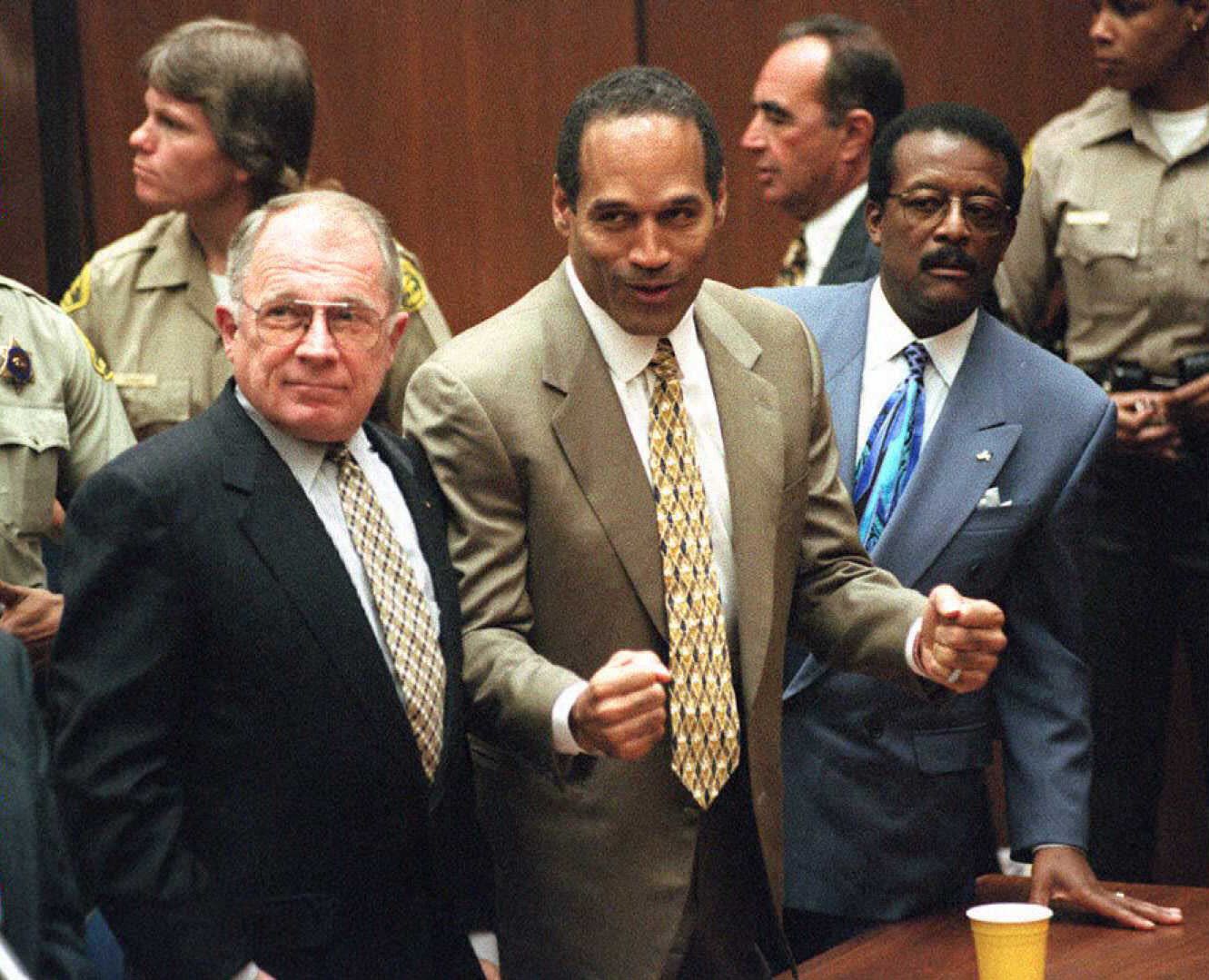
O.J. Simpson acquitted of 1994 murders of ex-wife and waiter after nine-month trial
🚨 THE DOG AT MIDNIGHT
It is June 12, 1994.
A dog wanders the streets of Brentwood with blood on its paws.
A passerby follows the dog.
The dog leads to the condominium on Bundy Drive.
Around midnight, the passerby finds Nicole Brown Simpson and Ronald Goldman dead outside.
Brown Simpson had been stabbed multiple times in the head and neck.
Goldman, a waiter who had returned a pair of eyeglasses left at a nearby restaurant, was also stabbed repeatedly.
A bloodied glove lies at the scene.
A knit cap lies at the scene.
Other items lie at the scene.
The exact time of death is not in the record.
Police arrive and treat it as a double homicide.
The dog is not in the record beyond that moment.
The dog is not a witness.
The dog is not a clue.
The dog is a beginning.
Who were these two people?
Who was the ex-wife of a football star?
Who was the waiter who brought back glasses?
The bodies were there.
The glove was there.
The cap was there.
What else was there?
That would require evidence.
THE VICTIMS AND THE ACCUSED
Nicole Brown Simpson was the ex-wife of former football star and actor O.J. Simpson.
She was found dead on the night of June 12, 1994, outside her condominium on Bundy Drive.
Ronald Goldman was a 25-year-old restaurant waiter.
He had returned a pair of eyeglasses left at a nearby restaurant.
He was also found dead at the same scene.
Orenthal James Simpson, known as O.J., was the sole defendant.
He was charged with two counts of first-degree murder.
He pleaded not guilty.
The case drew a cast of key figures.
Lead detective Mark Fuhrman’s testimony became central to the defense.
Prosecutor Marcia Clark led the state’s case.
Defense attorney Johnnie Cochran argued for Simpson.
Judge Lance Ito presided over the trial.

The victims’ families were prominent in the public narrative.
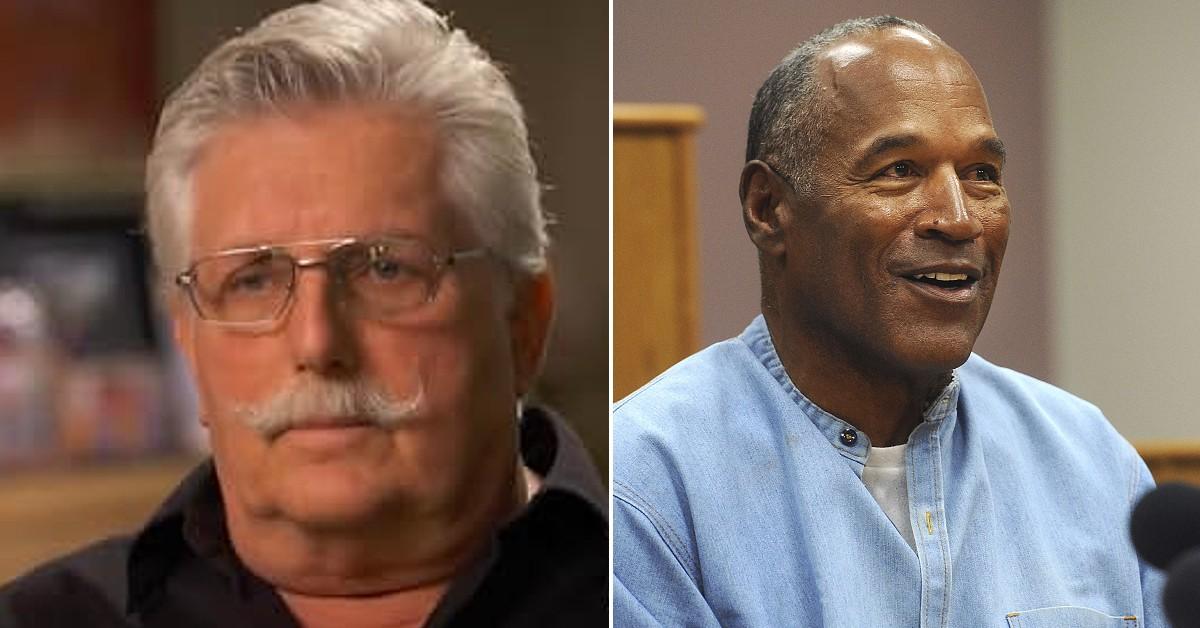
Denise Brown, Nicole’s sister, and Fred Goldman, Ronald’s father, spoke publicly.
No motive is stated in the source.
Why they were targeted, why that night, why those two.
That would require evidence.
THE SCENE AND THE GLOVE
Police arrived at the crime scene on Bundy Drive and later went to Simpson’s nearby estate on Rockingham Avenue.
There, they found a bloodied glove matching one at the scene, along with other evidence.
A knit cap and other items were also recovered from the scene outside Nicole Brown Simpson’s condominium.
The prosecution’s case relied heavily on DNA evidence linking Simpson to blood found at the scene and in his car and home.
A key piece was a pair of bloody gloves, one found at the crime scene and one at Simpson’s estate.
The gloves became the physical hinge of the prosecution’s theory.
Simpson was not arrested immediately.
He flew to Chicago that night.
The record does not state why he left, or what he said about the trip.
The exact chain of custody of the gloves is not detailed in the source.
It is not established how the gloves moved from the scene to the estate, or who handled them between discovery and trial.
That would require evidence.
What the record does show is a pair of gloves, two locations, and blood.
One glove at the scene where two people were stabbed to death.
One glove at the home of the man charged with their murders.
The forensic weight sat with the DNA, not the leather.
But the leather is what the public would remember.
THE BRONCO CHASE
He was asked to turn himself in.
He did not.
Instead, Simpson fled in a white Ford Bronco driven by his friend Al Cowlings on June 17, 1994.
The slow-speed chase was watched live by millions on television.
A murder suspect became a rolling spectacle, trailed by police cruisers and news helicopters.
The exact route of the chase is not established in the source.
What is established is the image: a white Bronco crawling down Los Angeles freeways, a crowd gathering on overpasses.
Some onlookers cheered.
Simpson eventually surrendered.
The surrender ended the chase, but it did not end the performance.
The Bronco was a vehicle; it was also a stage.
It turned a man charged with two counts of first-degree murder into a figure of live national attention.
Not because the evidence was settled. But because the optics were overwhelming.
The chase lasted about an hour by some accounts, though the source does not give a precise duration.
It was a televised event before the trial began.
It was a preview of how the case would be consumed.
The man in the back seat was not yet convicted of anything.
He was accused.
The accusation, on that freeway, looked like something else to millions of viewers.
Simpson surrendered, and the machinery of the trial took over.
But the Bronco had already done its work.
It had made the story watchable.
It had made the suspect a character.
The record would later hold the DNA, the gloves, the timeline of that night in June.
The record would hold the verdict.
The Bronco held only a man fleeing, then stopping.
THE DREAM TEAM AND THE FUHRMAN TAPE
The defense team was assembled and named, and the name stuck: the Dream Team.
Robert Shapiro, F. Lee Bailey, and Alan Dershowitz stood alongside Johnnie Cochran, according to the source summary.
Their argument was not that the evidence was weak.
Their argument was that the evidence was dirty.
The defense argued the evidence was contaminated, and that police—particularly Detective Mark Fuhrman—had planted or tampered with it, according to the source summary.
Fuhrman took the stand.
He denied using racial slurs, the source summary states.
Then the audio recordings surfaced.
The recordings captured him using racial slurs, according to the source summary.
The content of those recordings is not specified beyond the slurs themselves.
That is not established in the record.
What is established is the shift.
A detective's credibility crumbled in public, in real time, on a televised trial.
The prosecution's case leaned on DNA and a chain of custody.
The defense leaned on a man's recorded words.
It is a documented fact that the recordings existed.
It is a documented fact that they damaged the prosecution.
Whether the ends justified the means of obtaining them—that was never settled in this trial.
Fuhrman was a witness, not the defendant.
The jury would weigh his words against the blood.
The record holds the tape.
The record holds the denial.
The record holds the damage.
THE GLOVE THAT DIDN'T FIT
The trial began in January 1995.
It was televised gavel-to-gavel.
The cameras held on every exhibit, every objection, every gesture.
:max_bytes(150000):strip_icc():focal(749x0:751x2)/PEOPLE_MAG_BROWN_SISTERS_nicole-tout-1067c705ba0c4ab7a7e648e3ffd95be0.jpg)
Simpson was charged with two counts of first-degree murder.
He pleaded not guilty.
On a day in court, the defense asked Simpson to try on a pair of bloody gloves.
He pulled at the leather.
He worked his fingers into the lining.
He could not fit the glove over his hand.
That moment became famous.
It was a visceral image, a single gesture that seemed to answer a mountain of DNA.
The prosecution had built its case on blood — blood at the scene, blood in the car, blood at the estate.
The defense had built its case on contamination and planting.
The glove was their counterpoint.
It was one piece of a contested evidence chain.
The record does not state the glove's exact size.
The record does not state its condition on the day of the demonstration.
The record holds the image: a man straining against a glove that would not close over his hand.
The cameras caught it.
The public latched onto it.
Could one image outweigh a mountain of DNA?
That would require evidence.
The trial would run nine months.
The glove was not the verdict.
It was the moment the public remembered.
THE VERDICT
The trial lasted about nine months.
It began in January 1995 and ran through the summer, televised gavel-to-gavel.
On October 3, 1995, the jury returned a verdict of not guilty on both counts.
Not guilty of the murders of Nicole Brown Simpson.
Not guilty of the murders of Ronald Goldman.
The courtroom waited; the country watched.
The verdict was read, and Simpson was acquitted.
The acquittal was met with shock.
It was met with deep division across the country.
Some saw justice; others saw a failure of it.
The glove that didn't fit had become the public memory, but the jury's reasoning was not the record.
The jury's deliberation process is not in the source.
What is documented is the verdict itself: not guilty, on both counts, on October 3, 1995.
What is documented is the nine-month trial that preceded it.
What is documented is the national split that followed.
The record does not say why the jury decided as it did.

It says only what they decided.
The verdict landed like a weight.
It was a gut-punch of disbelief.
It was also a fact on paper, signed and read aloud.
The trial was over.
The case, in the criminal courts, was closed.
TWO READINGS OF THE SAME FACTS
The prosecution told a story of forensic certainty.
DNA evidence, they said, linked Simpson to blood at the crime scene, in his car, and in his home.
The defense told a different story, one of contamination and planting.
They argued the evidence had been mishandled, and that Detective Mark Fuhrman, in particular, had a motive to frame the defendant.
Then the glove.
The defense asked Simpson to try on a bloody glove in court, and it did not fit his hand.
It was a key defense moment, a piece of theater that the cameras captured.
Fuhrman took the stand and denied using racial slurs.
Audio recordings later surfaced of him using them, and the prosecution's witness was undermined.
The jury heard the DNA, the glove, the tape.
They heard the arguments about contamination and planting.
They heard the accusation of a racist detective.
Two readings of the same facts stood before them.
One said the science was clear.
The other said the science could not be trusted.
Which story did the jury believe?
Which story did they weigh?
The verdict was not guilty on both counts.
The jury's internal reasoning is not in the source.
It is not established why they deliberated as they did.
The trial was over.
The case, in the criminal courts, was closed.
THE VIRAL MOMENT, RE-EXAMINED
The glove that didn't fit became a cultural flashpoint.
It was the moment Johnnie Cochran turned a courtroom prop into a television event.
Simpson tugged at the leather glove in front of the jury, and it stopped short of his fingers.
The image looped on news broadcasts, in bars, in living rooms.
It was not established that the glove proved innocence.
The record shows it was one piece of a contested evidence chain.
Prosecutors had built their case on DNA linking Simpson to blood at the scene, in his car, at his home.
The glove demonstration was a defense argument, not a legal finding.
The defense argued contamination and planting.
%2Fdmn3xkgw.JPG)
Fuhrman had denied using racial slurs, then the tapes surfaced.
The chain of custody was attacked, the police conduct questioned, the glove itself became a symbol.
Not because it fit the verdict. But because it fit the narrative.
The jury deliberated, and the trial was over.
The acquittal was met with shock and division across the country.
Some saw the glove as proof of a frame-up.
Some saw it as a failure of the system.
The record does not establish which reading was true.
The glove did not fit Simpson's hand in court.
That is a fact.
What it meant was argued, replayed, and argued again.
The verdict was not guilty on both counts.
The glove was not the verdict.
It was one exhibit in a case where the defense said the evidence was dirty and the prosecution said it was damning.
The jury heard both.
The jury returned in about nine months.
What they deliberated is not established.
The glove remains a viral moment, a shorthand for a trial that was never simple.
AND THE STORY STILL ISN'T OVER
The criminal verdict was not the end of the story.
In a separate civil trial in 1997, a jury found Simpson liable for the wrongful deaths of Nicole Brown Simpson and Ronald Goldman, and ordered him to pay $33.5 million in damages to the victims' families, according to the source summary.
Simpson did not face a criminal retrial due to double jeopardy.
That is the law: once acquitted, he could not be tried again for the same murders.
The civil system worked differently.
It asked a different question, and it answered it differently.
The damages were ordered.
The families pursued that judgment.
In 2007, Simpson was arrested in Las Vegas for leading an armed confrontation with two sports memorabilia dealers in a hotel room, according to the source summary.
In 2008, he was convicted of kidnapping, armed robbery, and other charges, and sentenced to 33 years in prison with the possibility of parole after nine years.
He was granted parole in 2017 and released from a Nevada prison in October of that year.
He lived in Las Vegas for the remainder of his life.
He died on April 10, 2024, at age 76, after a battle with cancer, according to his family.
The families of Nicole Brown Simpson and Ronald Goldman continued to pursue civil judgments against his estate after his death.
What became of those judgments against the estate is not specified in the source.
Not established.
The legal aftermath did not end with the acquittal.
It did not end with the parole.
It did not end with his death.
The case remains a set of open questions, filed and refiled, long after the verdict was read.
The record shows the verdict, the liability finding, the conviction, the release, the death.
It does not show the final accounting.
Advertisement
You may also like
Unsolved 1947 Black Dahlia murder: Elizabeth Short's body found, killer never charged
🚨 THE MANNEQUIN ON THE LOT The morning of January 15, 1947, was bright in the Leimert Park area of Los Angeles. A local…
Zodiac Killer case remains unsolved after 1968-69 attacks, no suspect ever charged
🚨 THE COLD OPEN: THE THEORY THAT WON'T DIE In 2021, a team of cold-case investigators claimed to have identified the Zodiac Killer as…
Ex-cop DeAngelo pleads guilty to Golden State Killer murders, rapes after 40-year hunt
🚨 THE PLEA In 2020, Joseph James DeAngelo Jr. pleaded guilty to 13 murders and 13 kidnapping-for-robbery counts, plus numerous rape-related charges, as part…
Manson Family murders trial ends with convictions for 7 killings
🚨 THE VERDICT, 1971 The verdict came in January 1971. A jury found Charles Manson, Susan Atkins, Patricia Krenwinkel, and Leslie Van Houten guilty…
Lindbergh Baby Kidnapping: 1932 Abduction, 1935 Conviction, 1936 Execution Timeline
On the evening of March 1, 1932, Charles Lindbergh Jr., the 20-month-old son of aviator Charles Lindbergh and his wife Anne Morrow Lindbergh, was…
Black Dahlia case: 1947 Los Angeles murder of Elizabeth Short remains unsolved, no charges ever filed
On the morning of January 15, 1947, a woman's body was discovered in a vacant lot on Norton Avenue in the Leimert Park area…