The fiber evidence that linked Wayne Williams to the Atlanta Child Murders — and the questions it left behind
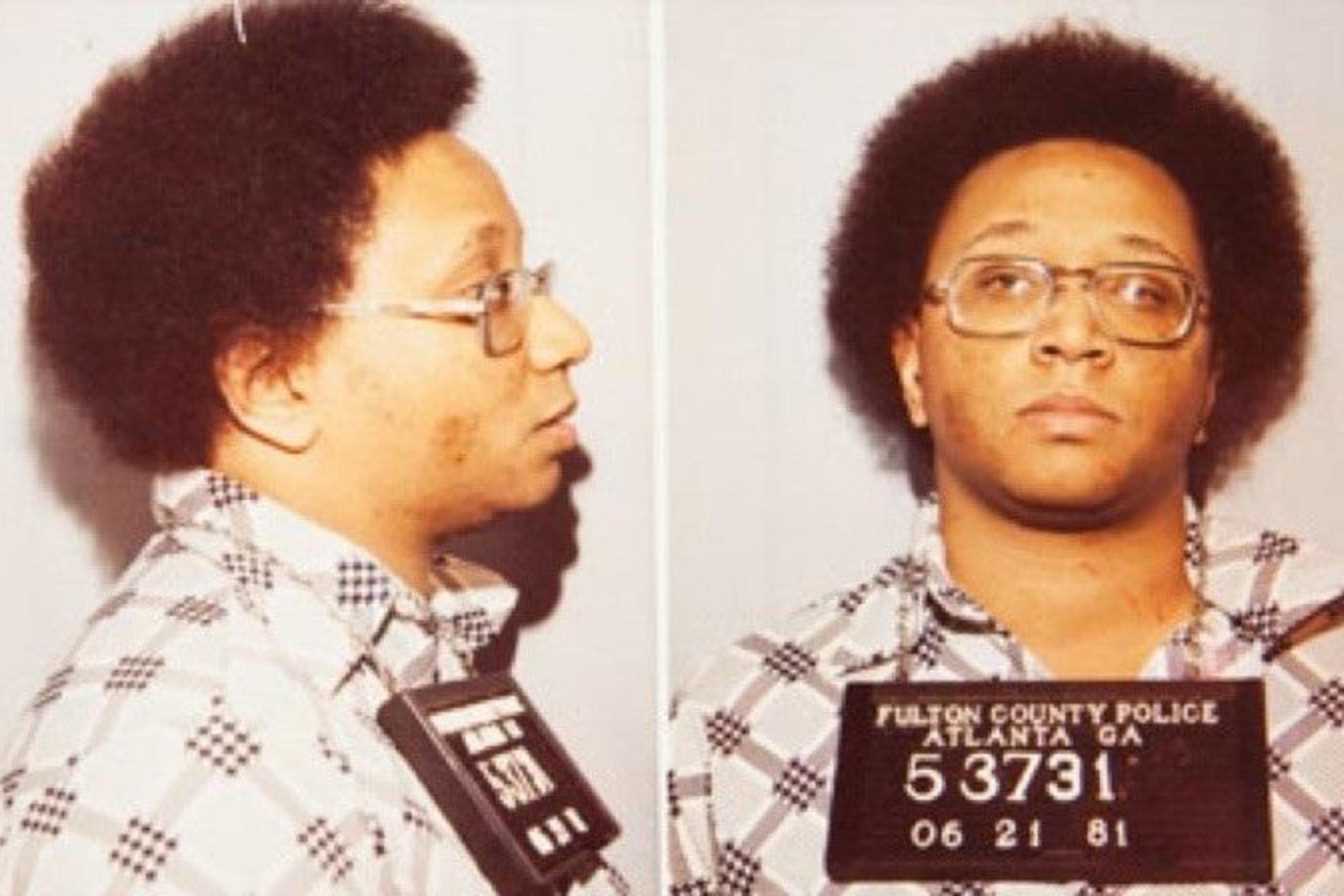
May 22, 1981. A bridge over the Chattahoochee River.
Police were staked out there after receiving tips about a suspicious vehicle, according to the investigation timeline.
They heard a loud splash.
Then they saw a car cross the bridge, driven by Wayne Williams, according to the police stakeout account.
Two days later, the body of a 27-year-old man was found downstream in the river, per the investigation record.
The splash is the detail the record leaves open.
What exactly was heard?
What did it mean?
Who, if anyone, was in the water that night?
The case record does not establish what caused the splash, nor whether it was directly linked to the victim found later.
It is a sound and a car and a body.
It is also a question that has never been answered in the documented record.
The officers heard the water break.
They saw Williams drive on.
The river kept moving.
THE FIBERS
Between 1979 and 1981, at least 28 Black children, teens, and young adults disappeared and were murdered in and around Atlanta.
The investigation began in 1979, with police struggling to connect the cases.
A task force was formed in 1980, later joined by the FBI.
The victims ranged in age from 7 to 28, most of them male.
Bodies were found in wooded areas, in rivers, in vacant lots.
The case became known as the Atlanta Child Murders, though several victims were adults.
Forensic analysis found dog hairs and carpet fibers on the victims.
Those fibers matched fibers from Williams's home, his car, and a carpet in his family's house.
The FBI's forensic laboratory testified about the statistical significance of the matching fibers.
A hair and fiber analyst took the stand and walked the jury through the comparisons.
He testified about how the fibers were identified, how they were matched, how unlikely the matches were.
The exact statistical significance of those matches is not quantified in the record.
The defense argued the fibers were common.
They argued the fibers could have come from many sources.
They argued the evidence was circumstantial, not conclusive.
The prosecution's case rested heavily on the fiber evidence.
It was unprecedented in its detail at the time.
The fibers became the cornerstone.
Not because they proved intent. Not because they proved a motive.
Because they placed Williams's environment on the bodies of the victims.
The river kept moving.
The fibers stayed.
THE TRIAL
On June 21, 1981, Williams was arrested and charged with two murders.
He stood trial in Fulton County Superior Court in 1982.
The prosecution led the case with the district attorney at its head.
Two defense attorneys answered for Williams.
The fiber evidence was the cornerstone of the prosecution's case.
Not because it was simple.
Because it was detailed.
Dog hairs and carpet fibers from Williams's home, his car, and his family's carpet were placed on the victims.
The FBI's hair and fiber analyst testified about the statistical significance of those matches.
The defense argued the fibers were common.
They argued the fibers could have come from many sources.
They argued Williams was a scapegoat.
The specific arguments of the defense attorneys are not detailed in the record beyond those claims.
The courtroom held the weight of that testimony.
On February 27, 1982, the jury found Williams guilty of both murders.
He was sentenced to two consecutive life terms.
The verdict landed.
The trial record closed.
Williams has maintained his innocence.
He has filed multiple appeals.
All were denied.
The fibers stayed with him.
The questions did not.
THE TWO STORIES
The prosecution told one story: the fibers, the bridge, the splash, the body downstream.
That story pointed to one man, and the prosecution argued that man was responsible for many other killings as well.
He was never tried for those other killings.
That was an argument, not a conviction, and the record does not establish it.
The defense told another story.
The fibers were common, they argued.
They could have come from many sources — a car, a house, a public place.
The defense said Williams was a scapegoat.
The same fibers were the center of both stories.
The prosecution saw a match that was statistically significant.
The defense saw coincidence.
Both sides had the same evidence.
Neither side had a confession, a witness to a killing, or a weapon.
The investigation itself was part of the problem.
It began in 1979 without a coordinated task force, and critics said that lack of early coordination cost time.
Later, the focus narrowed to a single suspect.
That left many cases unresolved.
The fiber evidence decided the trial.
It was unprecedented in its detail, and the jury convicted on it.
But the questions it left behind did not go away with the verdict.
Was the match meaningful?
Was it common enough to be meaningless?
Was one suspect enough?
That would require evidence the record does not provide.
AND THE STORY STILL ISN'T OVER
The DNA results, when they come, will not rewrite the verdict.
Wayne Williams remains incarcerated in Georgia state prison, and he has never been granted parole.
In 2007, the Atlanta City Council voted to reopen the cases.
In 2019, the Atlanta Police Department reopened the case files for DNA testing.
No conclusive results have been announced.
The DNA tests have not produced a definitive match to any suspect; that is not established by the record.
The other killings remain unsolved, and no other arrests have been made.
The families of the other victims continue to push for closure.
They ask for answers the case file has not yet given.
They ask for names the record does not hold.
They ask for a story that ends.
That would require evidence.
The fiber evidence convicted one man for two murders.
It did not close the other cases.
It did not name another suspect.
It left a question hanging over a river, over a city, over decades of grief.
The case is officially closed for the two murders Williams was convicted of.
It is not closed for the rest.
The families know the difference.
They keep asking.
Advertisement
You may also like
The tarot card left at the first D.C. sniper shooting — and the trunk hole that cracked the case
The first shooting happened on October 2, 2002, outside a Michael's craft store in Aspen Hill, Maryland. Not in a parking lot. Not at…
The radio and boots that broke the Clutter case — but the shotgun never surfaced
The radio sat on a table in a Las Vegas apartment, months after four people were bound and shot in a Kansas farmhouse. It…
Two men in police uniforms, one Thompson submachine gun, and a garage wall that gave way to silence
Seven men were dead against the garage wall by the time the echo of the guns stopped. It was February 14, 1929, a little…
The typewriter in a Montana cabin that matched the Unabomber's 35,000-word manifesto
Agents found the typewriter inside a 10-by-14-foot cabin near Lincoln, Montana, in 1996. The machine matched the one used to produce a 35,000-word manifesto.…
The cotton gin fan that pulled a body from the Tallahatchie — and the DNA test that settled it
A cotton gin fan came up with the body on August 31, 1955. It was tied to the neck with barbed wire, and it…
The bullet that tied Sacco to the crime — and the expert who couldn't agree
The bullet came out of a guard's body on a stretcher, passed from hand to hand, and ended up in a courtroom as the…