The fiber evidence that tied Wayne Williams to two murders — and the defense's claim it was a setup
The stakeout was on the river, and the river was dark.
On May 22, 1981, police heard a splash in the Chattahoochee.
They saw a car, and the car was driven by Wayne Williams.
Two days later, the body of the last confirmed victim was found downstream.
That is the sequence the record gives.
It is a sequence of sounds and sightings, not a picture of an act.
No eyewitness saw what happened between the splash and the body.
The prosecution's case would rest on something else entirely.
It would rest on fibers — filaments pulled from carpets, from clothing, from a car.
An FBI special agent would later testify that those fibers matched materials in Williams's home and car.
The defense would answer that the fibers were circumstantial.
The defense would answer that Williams was a scapegoat.
The trial would begin in December 1981 and run nearly two months.
More than 150 witnesses would take the stand.
The jury would hear from fiber experts and from the medical examiner.
And the jury would hear about the splash.
Was the splash connected to the death of the victim found downstream?
That is not established by the record.
A theory circulating online claims the fiber evidence was a setup.
That theory is not a documented fact.
What is documented is the stakeout.
What is documented is the car.
What is documented is the body, two days later, in the river.
What is documented is the trial that followed, built on threads.
THE STAKEOUT AND THE BODY
Between July 1979 and May 1981, at least 28 Black children, teenagers, and young adults disappeared or were found murdered in the Atlanta metropolitan area.
The victims ranged in age from 7 to 27.
Bodies were found in wooded areas, rivers, and vacant lots, often strangled or asphyxiated.
The killings terrorized the city's Black community and drew national attention.
Police initially struggled to connect the cases, with some deaths attributed to accidents or other causes.
The task force, led by the lead detective, focused on Williams after a police stakeout on the Chattahoochee River on May 22, 1981.
The stakeout heard a splash and saw a car driven by Williams.
Two days later, on May 24, 1981, the body of the last confirmed victim was found downstream in the river.
That victim was 27 years old.
The cause of death for the last victim is not definitively identified in the record.
The weapon is not identified.
The record documents the car.
The record documents the body, two days later, in the river.
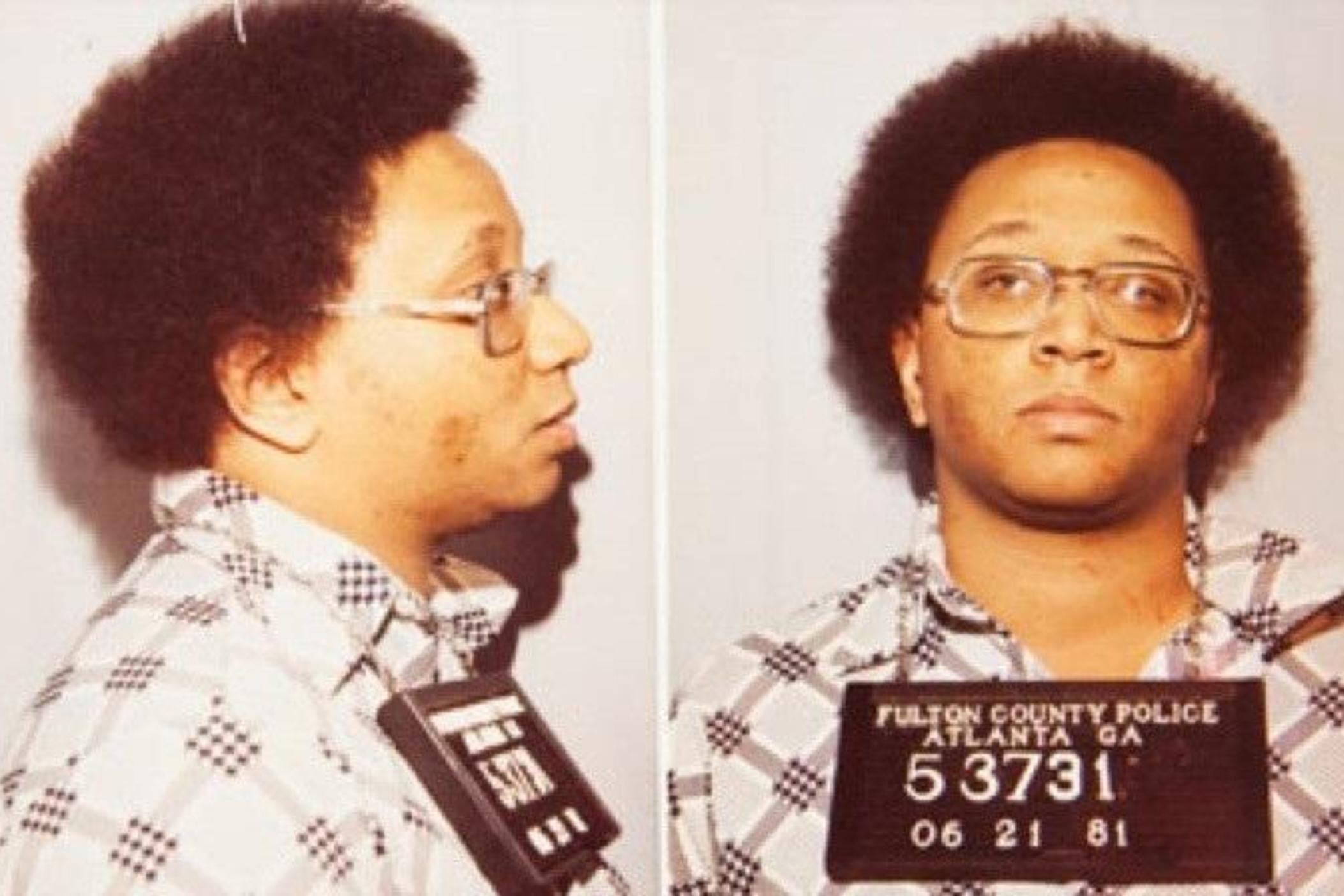
On June 21, 1981, Williams was arrested.
He was charged with two murders.
The task force had its suspect.
The case was about to become a trial built on threads.
THE FIBER WITNESS
The trial began in December 1981 in Fulton County Superior Court.
It lasted nearly two months.
Prosecutors presented over 150 witnesses.
Fiber experts took the stand.
The medical examiner took the stand.
An FBI special agent testified that fibers found on the victims matched carpets, clothing, and other materials in Williams's home and car.
The fibers were tiny.
The fibers were everywhere in the prosecution's case.
The defense argued the fiber evidence was circumstantial.
The defense argued Williams was a scapegoat.
The defense argued Williams had no connection to the victims.
The prosecution needed the fibers to close the gap between a splash heard on a river and a body found downstream.
Not because there was eyewitness testimony.
But because there was none.
The reliability of the fiber matching is disputed.
The defense's claim of a setup is not established by the record.
The jury heard about threads pulled from victims.
The jury heard about threads pulled from a car.
The jury heard about threads pulled from a home.
Every sentence of the trial turned on what was microscopic.
Every sentence of the trial turned on what was invisible to the naked eye.
Could a carpet fiber place a man at a murder?
Could a carpet fiber place a body in a car?
That would require evidence.
The court weighed the fibers.
The court weighed the arguments.
The court weighed the absence of any direct link between Williams and the two victims he was charged with killing.
It was a case built on threads.
It was also a case built on a stakeout.
Both stories ran through the same courtroom.
Only one would survive the verdict.
TWO STORIES, ONE VERDICT
The prosecution told one story: the fibers tied Williams to the victims, and the stakeout placed him near the river when the last victim disappeared.
The defense told another: the fiber evidence was unreliable, Williams was a scapegoat, and the investigation was marred by racial bias and a failure to pursue other suspects.
Both stories ran through the same courtroom.
The trial began in December 1981 and lasted nearly two months in Fulton County Superior Court.
Prosecutors presented over 150 witnesses, including fiber experts and the medical examiner.
The FBI agent who testified said the fibers found on the victims matched carpets, clothing, and other materials in Williams's home and car.
The defense argued it was all circumstantial.
They said Williams had no connection to the victims.
They said the investigation wanted a suspect and found one.
Not because the evidence pointed to him, the defense argued.
But because the city needed an answer.
The judge presided over the clash of interpretations.
On February 27, 1982, the jury found Williams guilty of both murders.
He was sentenced to two consecutive life terms in prison.
Williams has maintained his innocence and filed multiple appeals, all of them denied.
The verdict settled two cases.
It did not settle the rest.
It is not established that Williams was responsible for the other killings; he was never charged with them.
The jury heard only the two murders, the fibers, the stakeout.
The other families heard a verdict that did not name their children.
One story survived the verdict.
The other remains a claim, not a finding.
AND THE STORY STILL ISN'T OVER
The verdict did not close the case.
Williams remains in a Georgia state prison, denied parole multiple times.
The two murders he was convicted of are closed by law.
The other cases are not closed.
They remain officially unsolved, though many investigators and prosecutors have stated their belief that Williams was responsible for most of them.
That is a belief.
It is not a charge, and it is not a conviction.
In 2005, the Atlanta Police Department reopened several cases for DNA testing.
No charges were filed.
The testing produced no new charges.
The families of the other victims have kept asking.
They ask for names.
They ask for findings.
They ask for the cases to be solved, not just closed.
The case has become books, documentaries, films.
Some dramatizations changed names and facts.
The record they draw from remains what it was: one trial, two convictions, many unsolved deaths.
Williams has maintained his innocence through appeals, and the appeals were denied.
He has been denied parole multiple times.
He remains incarcerated.
The DNA testing from 2005 did not lead to any charges.
That is what the record shows.
It does not show that the testing cleared him.
It does not show that it implicated him.
It shows only that no charges were filed.
The story continues because the answers do not.
The families wait.
The files sit.
The river still holds what it took.
Advertisement
You may also like
The 1967 trial that put the Boston Strangler's confession in the witness box
He confessed in 1964. Albert DeSalvo was already in custody on other charges when he sat down with a prosecutor from the Massachusetts Attorney…
The torn pajama top near Colette MacDonald's body that investigators said was staged
February 17, 1970. Military police were called to the off-base home of Army Captain Jeffrey MacDonald at Fort Bragg, North Carolina. Inside, they found…
The snowbound night three rock stars flew into a storm — and the last song they ever played
The cornfield near Clear Lake, Iowa, did not give up its secret until morning. On February 3, 1959, a small Beechcraft Bonanza had left…
A 'kill note' found in Adnan Syed's car — the defense called it a lie. The jury heard it anyway.
A single piece of paper, folded and placed inside a gray Nissan, sat in a glovebox. In February 1999, police searching Adnan Syed's car…
The courtroom outburst that silenced Polly Klaas's killer trial
The jury had already said guilty on every count. Then Richard Allen Davis stood up in the penalty phase and turned toward the victim's…
The night the murders ended the counterculture — and the fear that followed
The house at 10050 Cielo Drive sat at the end of a quiet lane in Benedict Canyon, the kind of place where the rich…