The flight instructor's report that led FBI agents to suspect Moussaoui before 9/11 — and the warrant they never got
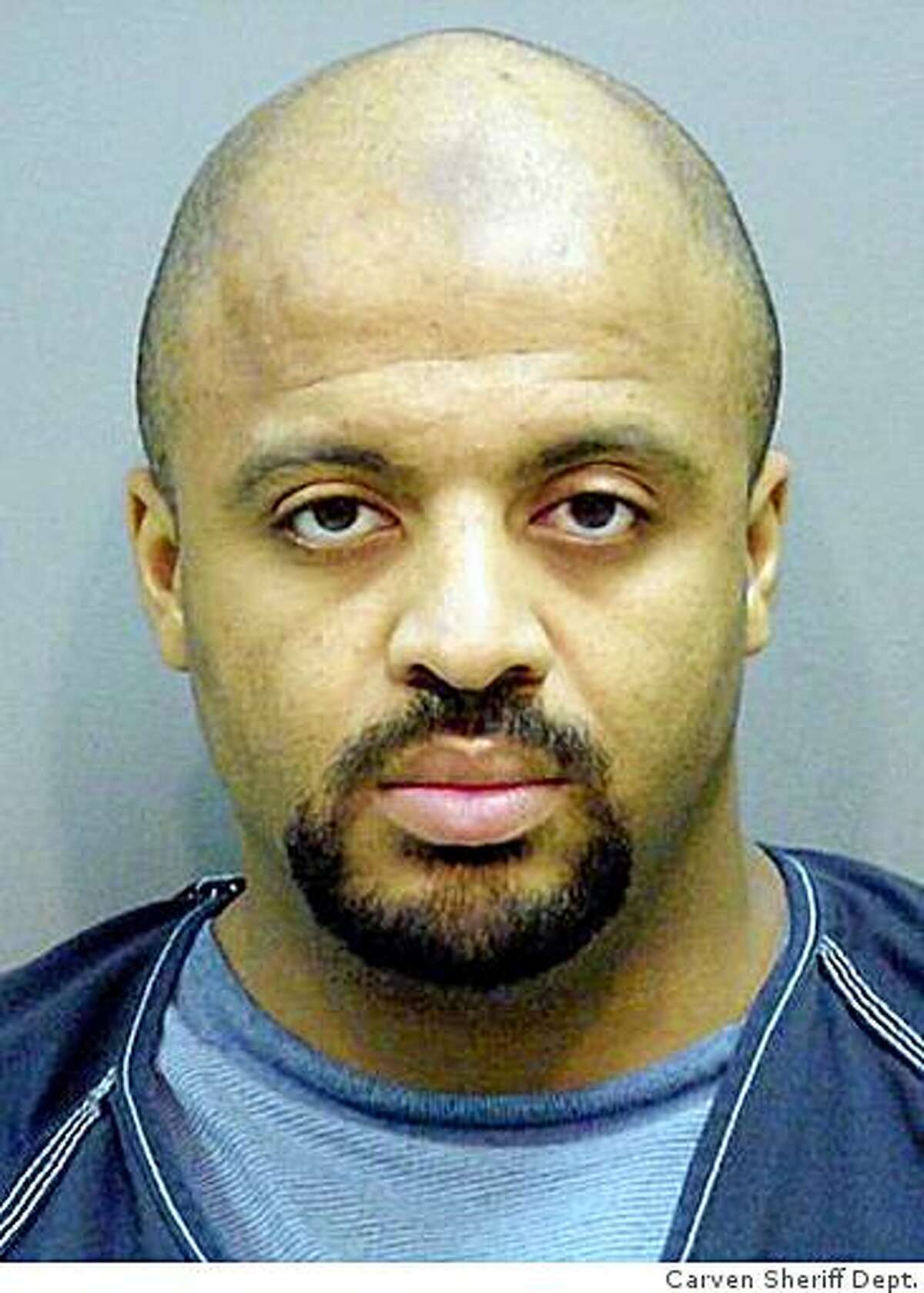
🚨 THE FLIGHT INSTRUCTOR'S RED FLAG…
The flight instructors in Minnesota saw something they could not ignore.
In August 2001, they reported a student to the authorities.
He wanted to learn to fly large jets, they said.
He had no intention of becoming a commercial pilot.
The specific content of their report is not detailed in the source.
The man was Zacarias Moussaoui, a French citizen of Moroccan descent.
On August 16, 2001, in Minnesota, he was arrested.
The charges were immigration-related.
FBI agents in Minneapolis suspected him of planning a hijacking.
They wanted to search his computer.
They never got a warrant.
The source does not specify why the warrant was denied or who made that decision.
The agents had a suspicion.
The agents had a suspect in custody.
The agents had no legal access to the machine in front of them.
What did the instructors see that day?
What did the agents fear?
What would a search have found?
That would require evidence the record does not provide.
The arrest was made.
The computer sat unsearched.
The summer ended.
AUGUST 16, 2001 — THE ARREST
He was a French citizen of Moroccan descent.
He was arrested on August 16, 2001, in Minnesota.
The charge was an immigration violation.
The arrest came after flight instructors reported him as suspicious.
They had flagged him for wanting to learn to fly large jets without intending to become a commercial pilot.
That was the report that started the chain.
The exact circumstances of the arrest beyond the immigration charges are not in the source.
It was a routine enough matter, on its face.
He was held, and the day passed.
He was not one of the 9/11 hijackers.
That is established in the record.
But on August 16, that fact was not yet known to anyone.
The arrest was one thing.
The suspicion was another.
The computer sat unsearched.
THE MINNEAPOLIS FBI'S SUSPICION
In Minneapolis, the agents saw a different man than the immigration authorities did.
They saw a man who wanted to fly a 747 but had no interest in learning to take off or land.
They saw a man who paid thousands in cash for the training.
They saw a man who fit a profile.
FBI agents in Minneapolis suspected Moussaoui of planning a hijacking.
They were not alone in that suspicion.
The suspicion was enough to hold him, but it was not enough to search his computer.
They asked for a warrant to search the computer.
The warrant never came.
Why not?
Who said no?
On what grounds?
That would require evidence the record does not provide.
The source does not specify why the warrant was denied or who made that decision.
It is a gap in the record.
It is the gap at the center of the story.
The agents had the man in custody.
They had the suspicion.
They did not have the warrant.
The computer sat in a bag.
The bag sat in an office.
The office sat inside the field office where the agents worked.
They could look at the bag.
They could not open the computer.
Not without the warrant.
The warrant never came.
The agents filed reports up the chain.
They warned that something was wrong.
They warned that Moussaoui might be planning to fly a plane into a building.
The warning went forward.
The warrant did not.
The agents were frustrated.
The record does not say what they did next.
It says only that they were unable to obtain the warrant.
September 11 was less than a month away.
SEPTEMBER 11, 2001 — THE ATTACKS
The morning began with four commercial airliners in the sky.
Nineteen hijackers commandeered those planes, according to the record of September 11, 2001.
Two planes were flown into the World Trade Center towers in New York City.
One plane was flown into the Pentagon in Arlington, Virginia.
A fourth plane crashed in a field in Shanksville, Pennsylvania, after passengers attempted to retake control.
The attacks killed nearly 3,000 people.
That is the scale of what was at stake.
That is the number of lives in the balance when the Minneapolis agents suspected Moussaoui and could not get the warrant.
The record does not establish any additional details about the attacks themselves.
It establishes the date, the planes, the targets, the crash site, and the death toll.
It does not establish what the hijackers did minute by minute, or what the passengers said as the planes went down.
That would require evidence the source does not provide.
What the record does say is that Moussaoui was not one of the hijackers.
He was in custody in Minnesota, held on immigration charges since August 16, 2001.
The nineteen hijackers were all dead by the end of that morning.
Moussaoui was alive, arrested, and suspected.
The suspicion had gone nowhere.
The warrant had not been obtained.
The planes still flew.
The towers still fell.
The field in Pennsylvania still took the fourth plane.
Nearly 3,000 people died.
The record offers no explanation for how the morning unfolded beyond these facts.
It offers only the sequence: the report, the arrest, the suspicion, the missing warrant, then the attacks.
September 11 was less than a month after that warrant was denied.
AFTER THE ATTACKS — THE SEARCH
The search came after the attacks, not before.
After September 11, the FBI searched Moussaoui's belongings.
They found flight manuals.
They found a flight simulator program.
They found other materials.
The full contents of that search are not listed in the source.
What the record shows is the sequence: the manuals, the simulator, the materials, all sitting in his possession while agents in Minneapolis suspected him of planning a hijacking.
The connection to the September 11 plot emerged after the attacks.
Investigators found evidence linking him to the broader al-Qaeda operation.
Not before the planes hit.
Not before the warrant was denied.
After.
The evidence was there all along, in the belongings of a man already in custody.
It was only examined once the towers had fallen, the Pentagon was burning, and a field in Pennsylvania held the wreckage of the fourth plane.
The search answered questions that had been asked in August.
It answered them in September, too late for the nearly 3,000 people killed.
The flight manuals were found.
The flight simulator program was found.
The connection was found.
What was not found, in time, was a way to look before the attacks.
That would require a warrant.
That warrant never came.
THE INDICTMENT — DECEMBER 2001
In December 2001, the legal system began to close in.
Moussaoui was indicted on six conspiracy charges.
The charges included conspiracy to commit acts of terrorism transcending national boundaries.
They included conspiracy to destroy aircraft.
They included conspiracy to use weapons of mass destruction.
They included conspiracy to murder U.S. employees.
They included conspiracy to destroy property.
The indictment carried the formal weight of a nation responding to an attack that killed nearly 3,000 people.
He was the only person charged in the United States in connection with the September 11 attacks.
The nineteen hijackers were all dead.
So Moussaoui became the sole defendant in U.S. courts.
The specific details of the indictment beyond those charges are not in the source.
What the record shows is the shape of the accusation, not every page of it.
The charges named conspiracies, not the acts themselves.
That distinction mattered to the defence, and it would matter at trial.
For now, in December 2001, the government had its case.
The man arrested in Minnesota on immigration charges in August was now charged with terrorism.
The warrant that never came had been overtaken by an indictment.
That would require evidence, and the evidence would come later.
THE PROSECUTION'S CASE
The prosecution built its case on a single proposition: Moussaoui was part of the al-Qaeda plot, even if he was not among the nineteen hijackers.
The lead federal prosecutor came from the Eastern District of Virginia, where the trial would eventually be held.
That district had handled terrorism cases before.
Prosecutors argued that Moussaoui's flight training in Minnesota was not an isolated act but preparation for a role in a larger operation.
He had wanted to learn to fly large jets without intending to become a commercial pilot.
That was the fact that had made flight instructors suspicious in the first place.
The most damaging evidence came from a captured al-Qaeda senior operative.
That operative testified that Moussaoui had been selected for a possible second wave of attacks.
Not the first wave.
A second wave.
The name of the operative is not specified in the source.
That detail is not established in the record.
The testimony came via closed-circuit video, because the operative was held in U.S. custody.
Prosecutors pointed to what the FBI found after the attacks: flight manuals, a flight simulator program, other materials.
Those items, they argued, were the tools of a plot in progress.
Moussaoui was the only person charged in the United States in connection with the September 11 attacks.
The hijackers were all dead.
He was the one who survived to stand trial.
The prosecution's confidence rested on that testimony and those materials.
It also rested on Moussaoui himself, who later made statements that appeared to admit knowledge of the plot.
He would recant those statements.
That would become a problem for the defence, not the prosecution.
The government's case had a weakness, and the defence would find it.
The FBI had failed to share intelligence before the attacks.
That failure would be argued, and argued again.
But for the prosecution, the evidence of a second wave was the centre of the case.
The jury would decide what to make of it.
THE DEFENCE'S ARGUMENT
The defence argued that Moussaoui was not involved in the September 11 plot itself.
The government's case, his lawyers said, was built on speculation.
The FBI's failure to share intelligence before the attacks became the defence's sharpest tool.
They argued that the government could have prevented the attacks if it had acted on its own agents' warnings.
Those warnings had come from Minneapolis.
They had been ignored.
Moussaoui, acting as his own attorney for part of the proceedings, made statements that appeared to admit knowledge of the plot.
He later recanted.
The exact nature of those admissions and that recantation is not detailed in the record.
Was he a conspirator?
Was he a scapegoat?
The jury would have to weigh a man who confessed and then took it back.
The prosecution had a captured al-Qaeda operative on video.
The defence had the paper trail of a bureaucracy that stalled.
Not because the evidence was weak.
But because the story kept shifting.
Moussaoui's own voice complicated everything.
He spoke in court, and what he said sounded like guilt.
Then he said it did not mean what it seemed.
That would require evidence.
The jury would decide what to make of it.
THE VERDICT AND SENTENCE
He pleaded guilty in 2005.
Then he tried to withdraw the plea. The court rejected that effort.
The penalty phase began in 2006. Prosecutors sought the death penalty.
The trial took place in the U.S. District Court for the Eastern District of Virginia, in Alexandria, Virginia. The jury convicted him on all six counts.
Then the jury weighed his life. They found him eligible for the death penalty. They did not unanimously agree on a sentence.
The jury's deliberation details are not in the source. That would require evidence.
So the judge sentenced him to life in prison without the possibility of parole. Not death. Life.
He was the only person charged in the United States in connection with the September 11 attacks. The nineteen hijackers were dead. He was the sole defendant.
The conviction stood on all six counts. The conspiracy charges were terrorism transcending national boundaries, destroying aircraft, using weapons of mass destruction, murdering U.S. employees, and destroying property.
The outcome was final. It was a life sentence at the federal supermax prison in Florence, Colorado.
He remains in custody with no possibility of release. His appeals were rejected. His 2019 lawsuit seeking to testify in a civil case did not change his status.
The criminal case is closed. He stays where he is.
AND THE STORY STILL ISN'T OVER
He is at the federal supermax prison in Florence, Colorado.
He has been there since his sentencing in 2006.
He has made occasional court filings since then.
Appeals of his conviction and sentence were attempted.
All of them were rejected.
In 2019, he filed a lawsuit seeking to testify in a civil case related to the September 11 attacks.
That effort did not change his status.
The outcome of that lawsuit is not specified beyond that.
The criminal case is closed.
It is closed, and the sentence is final.
Life in prison without parole.
No possibility of release.
The families of the victims have continued to pursue civil litigation against various parties.
That litigation continues.
Moussaoui's case does not.
He remains where he is.
The questions do not end with the verdict.
They do not end with the sentence.
They do not end with the rejected appeals.
They continue in civil courtrooms, in archives, in the record of what was known before August 16, 2001, and what was not acted on.
A warrant was never obtained.
That remains in the record.
The story is not over because the case is.
The case is over because the story is not.
Advertisement
You may also like
The DNA under her fingernails that cracked a 17-year cold case — but left one question open
🚨 THE NEIGHBOR'S CALL THAT OPENED A 17-YEAR WAIT… A neighbor in Bellaire, Texas, called police about a break-in at a home on June…
The 4-day gap between a 5-year-old's abduction and a suspect's arrest in her murder
🚨 THE 4-DAY GAP July 15, 2002, in Stanton, California: a man asks a five-year-old for help finding a lost dog. The friend runs…
The grandmother's 911 call that started it all — and the family story that never fit
🚨 THE 911 CALL THAT DIDN'T MATCH THE FAMILY'S STORY The 911 call came on July 15, 2008, from a grandmother named Cindy Anthony.…
The missing boy's ring found in a crawl space — 27 bodies later
🚨 THE RING IN THE CRAWL SPACE The ring was small, gold, and it belonged to a missing 15-year-old boy. Police found it on…
The 2005 Aruba nightclub exit that left three men with stories that never matched
🚨 THE EXIT THAT STARTED EVERYTHING The club was called Carlos'n Charlie's, a bar and nightclub in Oranjestad, Aruba. Natalee Holloway, 18, from Mountain…
The tarot card message that turned a random killing spree into a hunt for 'God'
🚨 THE TAROT CARD THAT READ 'CALL ME GOD' The card was a piece of evidence, found at a crime scene during the investigation…