The glasses with the uncommon hinge that led police to a University of Chicago student
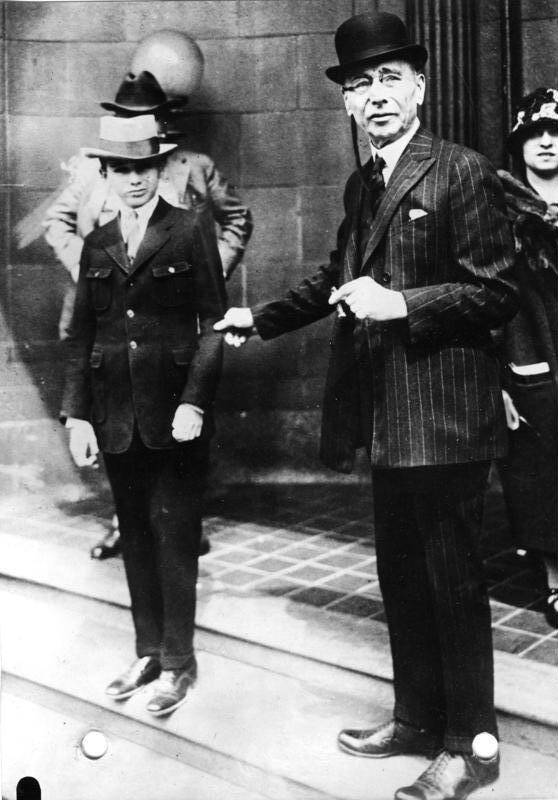
The glasses sat in the mud near the culvert, their hinge catching the light.
On May 22, 1924, a body was found in a culvert near the Indiana border.
The victim was 14-year-old Robert "Bobby" Franks.
Near the body, police found a pair of eyeglasses.
Not a confession. Not a witness. A hinge.
The hinge was uncommon, a unique mechanism that an optician in Chicago could trace.
He identified the glasses as belonging to Nathan Leopold, a 19-year-old University of Chicago student.
That single object turned a missing-person report into a murder investigation.
Leopold initially claimed he dropped the glasses during a bird-watching trip.
His alibi collapsed under questioning.
The glasses are the documented object that broke the case open.
It is not established that they were the only piece of evidence; the record notes they were a key breakthrough, not the sole one.
But the hinge pointed the finger.
A boy reported missing. A body in the culvert. A pair of glasses with a rare hinge.
What else did the police find? What did the optician remember about the man who bought them?
That would require evidence.
The hinge did the talking first.
TWO STUDENTS AND A RENTED CAR
They were University of Chicago students, both of them.
Nathan Leopold was 19. Richard Loeb was 18.
They were the sons of prominent families, and they were still teenagers.
On May 21, 1924, they drove a rented Willys-Knight automobile.
The victim was 14-year-old Robert "Bobby" Franks, walking home from school.
The case record states they kidnapped him in that car.
The case record states they killed him with a chisel.
Then they attempted to collect a $10,000 ransom from the Franks family.
The ransom note was never collected.
According to their later confessions, the motive was a desire to commit the "perfect crime."
Not a crime of anger. A crime of ambition.
They planned it, the confessions say, to prove they could get away with it.
Two teenagers from prominent families, and they thought they could commit the perfect crime.
What did they think would happen when the body was found?
What did they think the ransom would buy them?
What did they think a chisel and a rented car would prove?
That would require evidence, and the record does not supply it.
The exact sequence of events on May 21 is not detailed in the record.
Where the car was driven, when the chisel was used — that is not established.
What is established is the arc: the rental, the ride, the chisel, the note.
The note was never collected.
The body was found the next day, in a culvert near the Indiana border.
The glasses were found near the body.
The hinge did the talking first.
THE ALIBI COLLAPSES
The optician's identification was the first crack.
Leopold was brought in and shown the glasses.
He claimed he had dropped them during a bird-watching trip.
The alibi collapsed under questioning.
Not because the story was elaborate. Because the details did not hold.
Richard Loeb was then brought in for questioning.
Both eventually confessed.
The exact wording of the confessions is not in the record. Neither is the order in which each man spoke.
What the record does establish is the speed.
Days, not months, from discovery to confession.
The ransom note was analyzed.
A typewriter expert confirmed it had been typed on Leopold's typewriter.
The chisel used in the murder was found in a river.
The rented car was traced to Leopold.
Each object closed a door.
The glasses broke the case open. The typewriter sealed it. The chisel and the car finished it.
It was a fast collapse.
It was also a complete one.
By the time the questioning ended, the perfect crime was no longer perfect.
It was a collection of small, traceable things.
A hinge. A keyboard. A tool. A rental.
The investigation record does not say which man spoke first. It does not say what either man said verbatim.
It says they confessed.
That was enough.
DARROW'S PLEA
Darrow entered a plea of guilty to murder.
That plea did not end the case. It ended the trial.
With no jury to persuade, the case went directly to sentencing before a single judge.
The families had hired Clarence Darrow, and Darrow argued for their lives.
He spoke of their youth. He spoke of their psychological state. He argued against the death penalty.
His closing argument lasted twelve hours.
Twelve hours of a courtroom listening to one man ask for mercy.
The case record says the argument is widely remembered for that plea — for mercy, not for innocence.
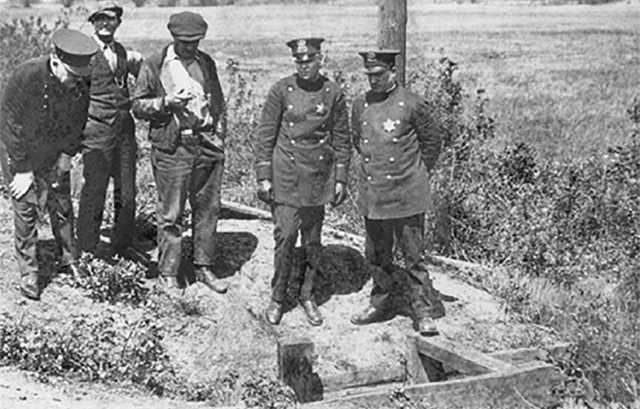
On September 10, 1924, the judge sentenced both to life imprisonment for murder.
He added 99 years for kidnapping.
The death penalty was spared.
The judge's reasoning for the sentence is not detailed in the record beyond the outcome.
There was no appeal.
Both men were sent to Illinois State Penitentiary at Joliet.
A plea, not a trial, had decided their fate.
The record does not say what the judge thought of Darrow's twelve hours.
It does not say what the judge thought of the defendants.
It says only what he did: life plus 99 years.
That was the sentence.
That was the end of the courtroom.
The trial was over. The case was not.
AND THE STORY STILL ISN'T OVER
The verdict was not the end.
Richard Loeb was killed in prison in 1936 by a fellow inmate in a shower-room attack.
The name of the inmate is in the record but is not included here.
The motive for the attack is not in the record.
Nathan Leopold served over 33 years in prison.
He became a model prisoner.
He taught.
He worked in the prison library.
He was paroled in 1958.
He moved to Puerto Rico.
He worked as a medical technician.
He wrote an autobiography, "Life Plus 99 Years."
He died in 1971.
A heart attack.
The Franks family remained in Chicago.
The victim's father died in 1928.
The victim's mother died in 1949.
Two parents outliving their son by years.
The case remains one of the most studied in American criminal justice history.
Studied for Darrow's defense.
Studied for the legal arguments about youth and mental state.
What did the arguments settle?
That would require evidence.
The courtroom closed.
The sentences ran.
The decades ran longer.
Advertisement
You may also like
The severed head in the canal, the confessed killer who was never charged, and the file police closed twice
The drainage canal ran along the Florida Turnpike near Vero Beach, 120 miles from where the boy had vanished. The head was found on…
The trucker's anonymous letters that named his own victims
The letters arrived unsigned, except for a circle with two dots and a curve. A smiley face. They were sent to the Oregonian and…
The Green River Killer’s confession count is 71. Why are only 48 convictions official?
Gary Leon Ridgway was a truck painter from Auburn, Washington. In November 2001, DNA evidence linked him to several victims, and he was arrested.…
The doctor with a scalpel and a secret that haunted Eliot Ness
The first body was found on September 5, 1934, in Kingsbury Run, a ravine that cut through Cleveland. He was a man, and no…
The slow-motion Bronco chase that began after O.J. Simpson was charged with murder
The Bronco drifted down the freeway at 35 miles an hour, a white speck trailed by a line of police cars. Al Cowlings was…
The Zodiac cipher that took 51 years to crack — and still gave no name
In December 2020, a team of private codebreakers solved the Zodiac's "340 cipher" — a cryptogram mailed to the *San Francisco Chronicle* in 1969.…