The gun Blake said he left at dinner — and the staff who never saw him return
🚨 THE GUN HE LEFT AT DINNER — AND THE STAFF WHO NEVER SAW HIM RETURN
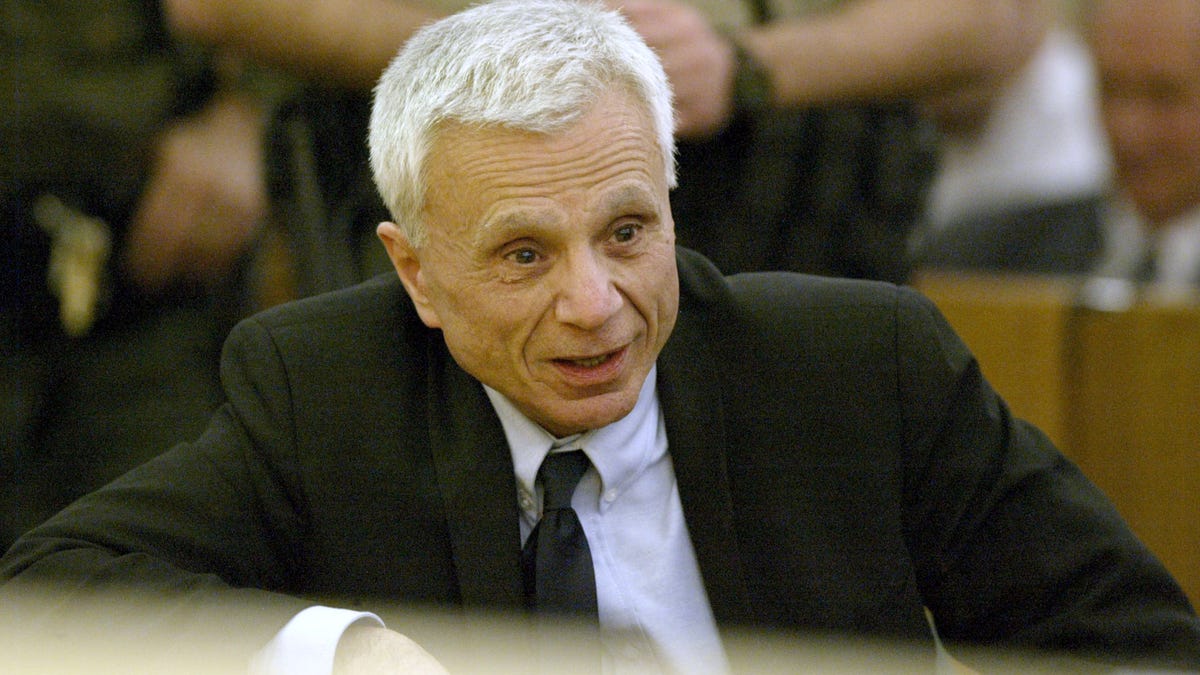
The gun was left at the table, or so Robert Blake told police.
On the evening of May 4, 2001, he said he returned to Vitello's Restaurant to retrieve the handgun he had forgotten.
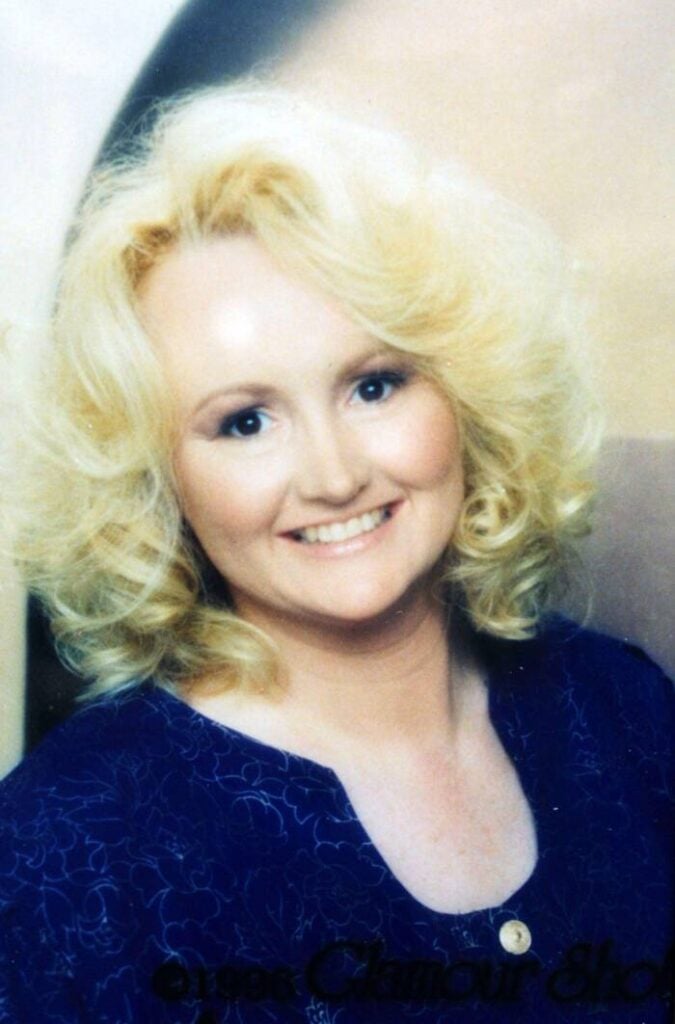
When he came back to the parked car, his wife, Bonny Lee Bakley, was slumped over, shot in the head.
She was 44, and they had been married less than six months.
He told police he had left the .38-caliber revolver at dinner.
The restaurant staff said they did not see him return.
That is the detail that splits the story in two.
Either Blake walked back inside for the weapon, or he did not.
The record does not settle it.
Staff accounts contradict his claim, and no footage or receipt from that night establishes his re-entry.
The murder weapon itself was found days later, in a dumpster near the restaurant.
Ballistics matched it to the bullet that killed Bakley.
A theory circulating online holds that the forgotten gun was a staged alibi, a prop left behind to explain his absence.
That theory is not a fact established by the record.
It is a story that fits the gaps, but the gaps remain gaps.
Was he in the restaurant, or was he at the car?
Did he find her dead, or did he know she was dying?
The staff never saw him return.
The gun was found in the trash.
The case would hinge on what happened in those minutes between dinner and the 911 call.
The record offers conflicting accounts and a weapon found days later.
That is all it offers.
THE COUPLE — SIX MONTHS MARRIED
Robert Blake, born Michael James Gubitosi, was an Emmy-winning actor known for the 1970s TV series *Baretta*.
Bonny Lee Bakley, 44, was his wife of less than six months.
They married in November 2000, after Bakley gave birth to a daughter, Rose, whom Blake believed was his child.
A later paternity test confirmed Blake was the father.
Bakley had a history of running mail-order scams.
She had been involved with other men, including actor Christian Brando, who had pleaded guilty to manslaughter in a separate 1990 shooting.
The lead detective was LAPD Detective Rob Helton.
The district attorney's office was led by then-Los Angeles County DA Steve Cooley.
The exact nature of Blake and Bakley's relationship at the time of the shooting is not detailed in the record.
It is a marriage of six months. It is also a marriage with a newborn daughter.
It is a marriage that ended with a body in a parked car.
The case would hinge on what happened in those minutes between dinner and the 911 call.
The record offers conflicting accounts and a weapon found days later.
That is all it offers.
MAY 4, 2001 — DINNER AT VITELLO'S
They sat at a table inside Vitello's, a neighborhood Italian spot on Ventura Boulevard.
The evening was ordinary, the kind of dinner a couple has on a Friday night.
Then the meal ended.
Blake told police he walked back into the restaurant to retrieve a handgun he had left at the table.
A .38-caliber revolver, forgotten like a wallet or a set of keys.
When he came back to the parked car, he said, Bakley was slumped over, shot in the head.
She was pronounced dead at a local hospital.
The exact time Blake left the restaurant and returned to the car is not specified in the record.
It is a gap that the case never quite closed.
Restaurant staff said they did not see Blake return.
They saw him leave, they said, and they did not see him come back.
Not because the restaurant was empty.
Because the staff remembered the evening differently than he did.
The table was cleared.
The gun was gone.
The car held a dying woman.
Blake's account placed himself inside the restaurant at the moment Bakley was shot.
The staff's memory placed him outside it.
The record offers both versions.
It does not resolve them.
A weapon found days later in a dumpster near the restaurant would add ballistics to the timeline, but not clarity.
For now, the night of May 4, 2001, rests on a simple question: did he go back in, or didn't he?
The staff said no.
Blake said yes.
That is all the record establishes about those minutes.
THE 911 CALL AND THE FIRST ACCOUNT
The 911 call itself is not detailed in the record.
That is the first thing to know about that night.
Police initially treated Blake as a witness.
Suspicion turned quickly.
Investigators noted that Blake told conflicting accounts of his movements after the shooting.
The exact nature of those conflicts is not specified in the record.
Blake claimed he had gone back into the restaurant to retrieve the gun he left at the table.
Restaurant staff said they did not see him return.
The staff said no.
Blake said yes.
That is all the record establishes about those minutes.
Was he inside, grabbing the weapon?
Was he outside, at the car?
Was he somewhere else entirely?
That would require evidence the record does not provide.
Police also found no gunshot residue on Blake's hands.
Not because the test cleared him.
But because the absence of residue proved nothing either way.
A gun fired from a distance leaves no residue on the shooter.
A gloved hand leaves none.
A wiped hand leaves none.
The record does not say which, if any, applied.
It says only what the test did not find.
Blake was a witness that night.
He became a suspect soon after.
The turn was not a single fact.
It was a stack of small inconsistencies, each one noted by investigators.
The gun left at dinner.
The return no one saw.
The conflicting accounts of where he went and when.
Each one a thread.
None of them, on its own, the knot.
The first account was the only one Blake gave at the scene.
What he told police in those early minutes is not fully in the record.
What is in the record is that his story shifted.
And that staff did not see him come back through the door.
THE WEAPON IN THE DUMPSTER
Days later, a .38-caliber revolver was found in a dumpster near the restaurant.
It was not found the night of the shooting.
It was not found the next morning.
Ballistics matched the gun to the bullet that killed Bakley.
That part of the record is firm.
The gun was traced to a man named Gary McLachlan.
McLachlan said he had given it to Blake years earlier.
That statement is the only documented link between Blake and the weapon.
How the gun ended up in the dumpster is not established.
The record does not say who put it there.
The record does not say when it was placed there.
The dumpster sat close to the scene where Bakley died.
It sat close to the restaurant whose staff said they never saw Blake return.
The weapon was found days later, not hours.
The gap in time is part of the case.
The gap in place is part of the case.
The gun exists. The bullet matches. The link to Blake rests on one man's word.
McLachlan's word was given to investigators.
It was never tested in open court beyond what the record shows.
The physical evidence ties the crime to a weapon.
It does not tie the weapon to a moment.
It does not tie the weapon to a hand.
It does not resolve the timeline Blake gave police.
The revolver was the object Blake said he left at dinner.

It was the object he said he returned for.
It was found in a dumpster, not on a table, not in a car.
That is what the record establishes.
That is where the record stops.
THE WITNESS — DUFFY HAMBLETON
Prosecutors presented testimony from Ronald "Duffy" Hambleton, a former stuntman and a friend of Blake's.
Hambleton said Blake had offered him $10,000 to kill Bakley.
Hambleton said Blake had asked him to obtain a silencer.
He said these things on the stand, under oath.
Then he said other things.
Hambleton later recanted parts of his testimony.
He said he had lied under pressure from police.
Which parts were lies, and which were true?
The record does not detail the full extent of the recantation.
That is not established.
What is established is that the prosecution's key witness changed his story.
His credibility was in dispute.
It was in dispute on the stand, where the defense attacked him.
It was in dispute in the press, where his shifting account became the story.
A jury heard a witness who admitted to lying.
A jury heard a witness who said he was pressured into lying.
That is the foundation the murder case stood on.
It was a foundation of sand.
Hambleton was not the only witness, but he was the one the prosecution leaned on.
He was the one who put the $10,000 offer into the record.
He was the one who put the silencer request into the record.
And he was the one who took it back.
The full extent of his recantation is not detailed in the record.
The full truth of what he said, and why, is not resolved.
That is where the testimony stops.
That is where the case had to go on without him.
THE HOMELESS MAN'S CLAIM
Then a homeless man came forward.
He said he had seen Blake leave the restaurant and return to the car before the shooting.
That contradicted Blake's story of finding his wife already shot.
Prosecutors called it a major turning point.
The defense called the man a liar.
His credibility was attacked on the stand.
His account was never fully corroborated.
No other witness placed Blake at the car at that moment.
The man's identity is not established in the record.
The specifics of what he claimed to see are not established in the record.
What remains is a statement, given once, under unknown conditions.
The jury heard it.
The jury weighed it.
The jury had to decide whether a homeless man's word could outweigh the absence of physical evidence.
No gunshot residue was found on Blake's hands, according to investigators.
No clear motive was established beyond an alleged fear of extortion.
The homeless man's sighting was the closest the prosecution came to an eyewitness.
It was also the easiest to attack.
A man without a fixed address, testifying about a night years earlier, in the dark, across a street.
That would require corroboration.
That would require something more than a story.
The record offers neither.
THE INDICTMENT AND THE TRIAL
In April 2002, a grand jury indicted Robert Blake on one count of murder with special circumstances, plus two counts of solicitation of murder.
One count alleged he asked Hambleton to kill Bakley.
The other alleged he asked a second man, a former bodyguard, to do the same.
The record does not name that second man.
Blake pleaded not guilty.
The trial began in December 2004.
The prosecution’s case leaned on Hambleton.
It leaned on him heavily.
It leaned on him until he took the stand and admitted he had lied in earlier statements.
His credibility collapsed there, in open court.
The defense argued Bakley was killed by someone else.
Someone she had scammed, perhaps.
A stalker, perhaps.
That would require evidence.
The record offers none.
The jury heard the conflicting accounts of Blake’s movements that night.
They heard the staff who said they never saw him return to the restaurant.
They heard about the gun found in the dumpster days later.
They heard about the homeless man whose story was never fully corroborated.
The prosecution’s foundation was shaky.
The defense offered an alternative narrative.
Both were presented.
Neither was proven beyond a reasonable doubt in the jury’s first deliberation.
THE VERDICT — ACQUITTAL AND MISTRIAL
The verdict came on March 16, 2005.
The jury acquitted Robert Blake of the murder charge.
They deadlocked on the two solicitation counts.
The judge declared a mistrial on those charges.
The exact reasons for the jury's deadlock are not detailed in the record.
The district attorney's office later declined to retry Blake on the solicitation counts.
They were dismissed.
It is an acquittal.
It is also a mistrial.
The criminal case against Blake ended with no conviction.
The civil case did not end the same way.
In November 2005, a civil jury found Blake liable for Bakley's wrongful death.
The jury awarded her children $30 million.
The amount was later reduced on appeal.
Blake was never convicted of any crime related to Bakley's death.
The criminal acquittal stood.
The civil liability stood.
They are two different verdicts from two different systems.
The criminal jury heard the evidence and found reasonable doubt.
The civil jury heard different evidence and found liability.
The record does not reconcile them.
It only reports them.
AND THE STORY STILL ISN'T OVER
Robert Blake was never convicted of any crime related to Bakley's death.
He returned to acting occasionally, but he remained largely out of the public eye.
In 2018, he gave a rare interview in which he maintained his innocence.
He was 89 years old.
Blake died of heart failure on March 9, 2023, at his home in Los Angeles.
The case remains officially unsolved in the criminal sense.
No one else was ever charged.
Whether anyone else was involved in Bakley's death is not established by the record.
The civil judgment, though, was a different matter.
In November 2005, a civil jury found Blake liable for Bakley's wrongful death and awarded her children $30 million.
The amount was later reduced on appeal.
It was never fully paid.
Blake's assets were largely depleted by legal fees, and he lived modestly in his final years.
Bakley's daughter, Rose, was raised by her maternal grandmother.
Rose later became an advocate for children of domestic violence.
The gun sat in a dumpster for days before it was found.
The staff at Vitello's never saw him return.
The homeless man's account was never fully corroborated.
The witness's credibility was attacked.
Hambleton recanted parts of his testimony.
The jury acquitted him.
The solicitation counts were dismissed.
The district attorney declined to retry.
The criminal case is unsolved.
The civil case is unpaid.
The central figure is gone.
That is where the record ends.
Advertisement
You may also like
The DNA under her fingernails that cracked a 17-year cold case — but left one question open
🚨 THE NEIGHBOR'S CALL THAT OPENED A 17-YEAR WAIT… A neighbor in Bellaire, Texas, called police about a break-in at a home on June…
The 4-day gap between a 5-year-old's abduction and a suspect's arrest in her murder
🚨 THE 4-DAY GAP July 15, 2002, in Stanton, California: a man asks a five-year-old for help finding a lost dog. The friend runs…
The grandmother's 911 call that started it all — and the family story that never fit
🚨 THE 911 CALL THAT DIDN'T MATCH THE FAMILY'S STORY The 911 call came on July 15, 2008, from a grandmother named Cindy Anthony.…
The missing boy's ring found in a crawl space — 27 bodies later
🚨 THE RING IN THE CRAWL SPACE The ring was small, gold, and it belonged to a missing 15-year-old boy. Police found it on…
The 2005 Aruba nightclub exit that left three men with stories that never matched
🚨 THE EXIT THAT STARTED EVERYTHING The club was called Carlos'n Charlie's, a bar and nightclub in Oranjestad, Aruba. Natalee Holloway, 18, from Mountain…
The tarot card message that turned a random killing spree into a hunt for 'God'
🚨 THE TAROT CARD THAT READ 'CALL ME GOD' The card was a piece of evidence, found at a crime scene during the investigation…