The handgun found in a dumpster that matched the murder weapon — but the man accused of the killing was acquitted
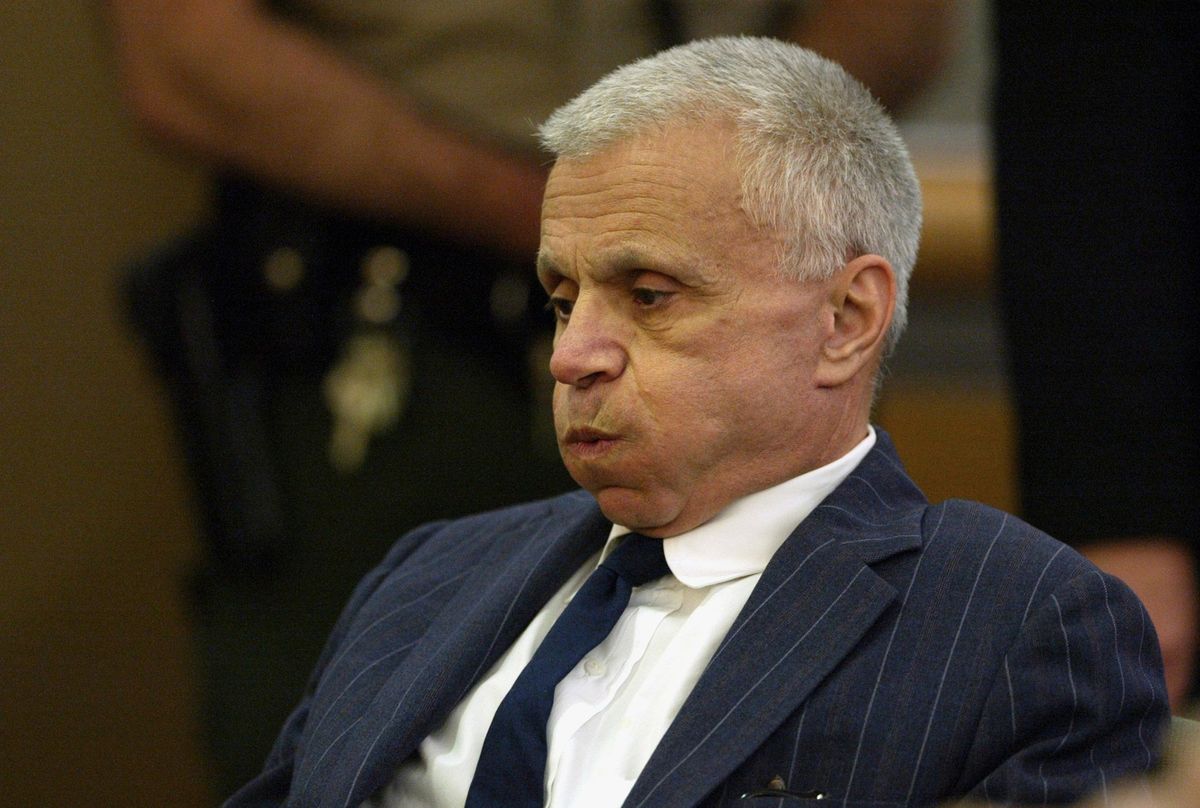
🚨 THE GUN IN THE DUMPSTER — AND THE MAN WHO WALKED FREE
The .38-caliber handgun came out of a dumpster near Robert Blake's home.
Ballistics matched it to the murder weapon.
On May 4, 2001, Bonny Lee Bakley was shot in the head while sitting in a parked car outside Vitello's restaurant in Studio City, Los Angeles.
Blake said he had returned to the restaurant to retrieve a handgun he left at the table.
During that absence, Bakley was killed.
She was pronounced dead at a nearby hospital.
The man accused of the killing was acquitted.
The actor walked free in March 2005.
A theory circulating online suggests the gun was planted.
That is a theory.
The documented record shows the gun was recovered from a dumpster near Blake's home, and ballistics matched it to the murder weapon.
Whether it was planted is not established by the source.
The timeline rests on an errand.
Blake said he went back for the gun.
Witnesses said they did not see him re-enter the building.
The gun was found.
The gun matched.
The jury acquitted.
How does that happen?
How does a ballistics match end in a not-guilty verdict?
How does the accused walk free?
The answer is in the timeline, the witnesses, and the two stories told about the same facts.
THE DINNER AT VITELLO’S
On the evening of May 4, 2001, Bakley and Blake dined at Vitello’s restaurant in Studio City.
She was 44, with a history of running mail-order scams and celebrity-adjacent schemes.
He was Robert Blake, the actor from “Baretta,” and her husband since November 2000.
Their marriage was turbulent and brief.
Bakley had a young daughter whose paternity was disputed; a DNA test later established Blake as the father.
The dinner itself was ordinary.
The exact conversation or mood at the table is not in the record.
No one recorded what they said, what they ate, or how long they sat there.
After the meal, Blake said he returned to the restaurant to retrieve a handgun he had left at the table.
A handgun at dinner.
That detail alone was strange.
But the evening was about to turn on it.
He stepped away.
She stayed in the car.
The restaurant was still open, the street still lit, the night still young.
It is the mundane setting that makes what followed so jarring.
A dinner out.
A brief errand.
A gun left behind like a forgotten jacket.
None of it seemed remarkable at the time.
THE SHOT IN THE CAMRY
A brief errand.
A gun left behind like a forgotten jacket.
None of it seemed remarkable at the time.
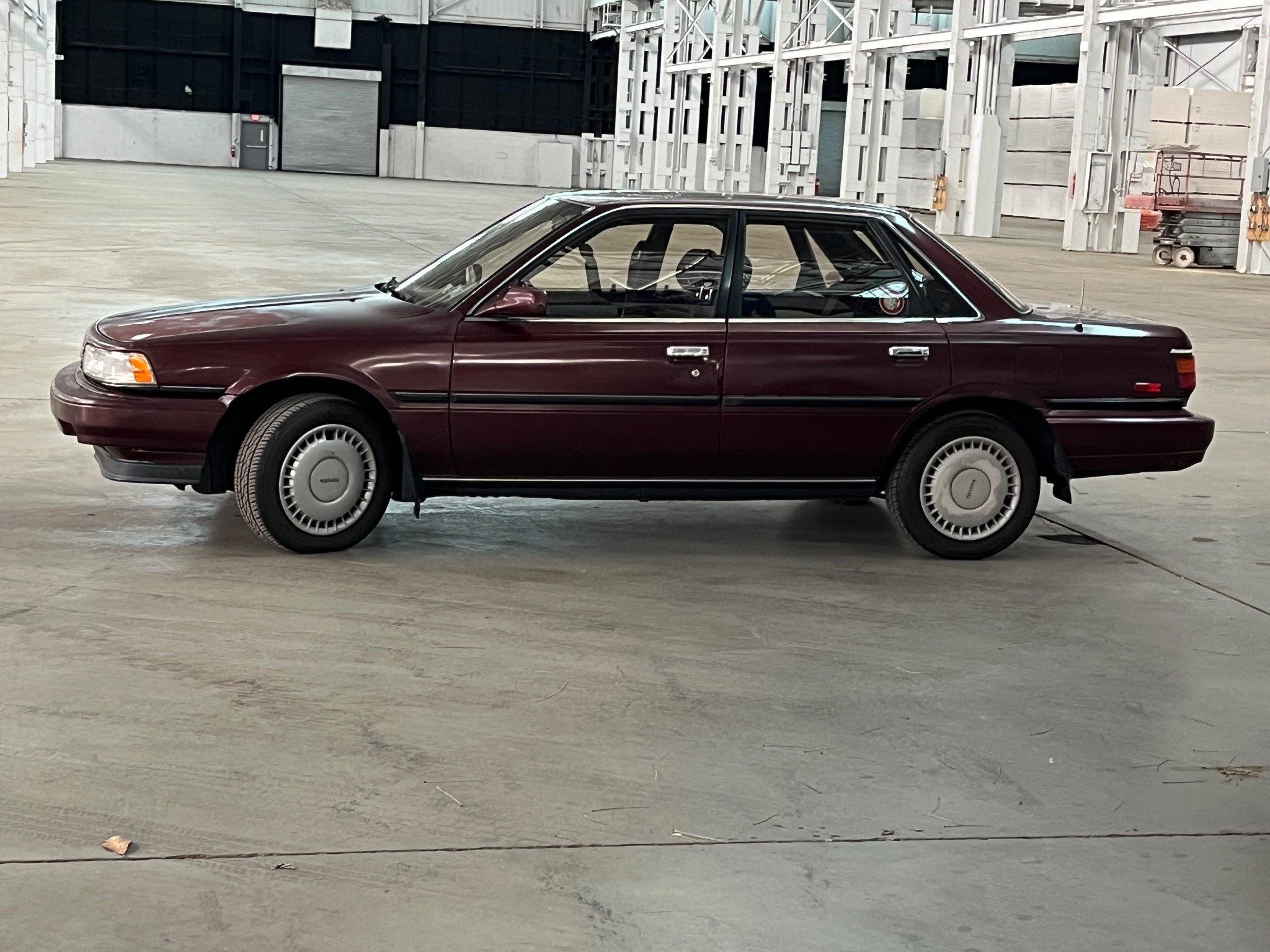
Then, during that absence, Bakley was shot in the head while sitting in the 1989 Toyota Camry.
She was pronounced dead at a nearby hospital.
The killing initially appeared to be a botched robbery or a random drive-by shooting.
A carjacking, maybe.
A stray bullet from a gang drive-by.
That was the first story, the one the street told.
But the car was still there.
The purse was still there.
The jewelry was still on her.
Investigators later noted that Bakley’s purse and jewelry were not taken, which undercut the robbery theory.
Robbers take things.
That is what robbers do.
They do not leave the wallet and the rings and the bag behind.
So the theory shifted.
Detectives turned toward the husband.
Blake said he had returned to the restaurant to retrieve the handgun he left at the table.
Witnesses said they did not see him re-enter the building.

Not the front.
Not the back.
Not at all, according to their testimony.
The errand became the problem.
The timeline became the problem.
The man became the problem.
Who fired the shot is not established by the record; the case was not resolved criminally.
The confusion of the first hours gave way to a sharper question.
It was a question aimed at one man.
And it would not go away.
THE TURN TOWARD BLAKE
The first reports called it a carjacking, a drive-by, a robbery that went wrong.
It was none of those.
Police initially treated the shooting as a possible carjacking or robbery, but the investigation quickly turned toward Blake.
Detectives noted inconsistencies in his account.
He claimed he left Bakley alone while returning to the restaurant.
Witnesses said they did not see him re-enter the building.
The door he said he walked through, the errand he said he ran—no one could confirm it.
Bakley’s purse and jewelry were not taken.
That undercut the robbery theory.
Robbers take things.
Nothing was taken.
The case involved two of Blake’s bodyguards, who were initially suspected of involvement.
Prosecutors alleged that Blake had obtained the gun through one of his bodyguards, who later cooperated with authorities.
The name of the bodyguard who cooperated is not specified in the source.
What is specified is the shape of the accusation.
A gun, obtained through a trusted man, used on a street outside a restaurant.
The other bodyguard, Ronald “Duffy” Hambleton, was arrested and charged with murder and conspiracy.
He later pleaded guilty to lesser charges.
He testified against Blake.
The weight of the evidence was circumstantial, but it was piling up.
The timeline was tight.
The motive was alleged.
The witnesses were bodyguards.
The investigation had turned, and it was not turning back.
THE DUMPSTER GUN
A key piece of evidence was a handgun recovered from a dumpster near Blake’s home.
The gun was a .38-caliber handgun.
Ballistics matched the gun to the murder weapon.
The match seemed conclusive.
It was the weapon, the record said.
Prosecutors alleged Blake had obtained the gun through one of his bodyguards.
That bodyguard later cooperated with authorities.
The defense argued Bakley was killed by someone else—possibly a man she had scammed—and that Blake was framed.
The frame, the defense said, involved the gun.
How the gun got into the dumpster is not established.
The source only says it was recovered there.
Nothing in the record explains the distance from the shooting to the dumpster, or who carried it, or when.
The ballistics match said what it said.
The framing claim said what it said.
Both could not be true.
One was physical; the other was a story.
The jury would have to choose.
The motive was alleged.
The witnesses were bodyguards.
The gun was in the dumpster.
The investigation had turned, and it was not turning back.
THE BODYGUARD’S TESTIMONY
One bodyguard, Ronald “Duffy” Hambleton, was arrested and charged with murder and conspiracy.
Hambleton later pleaded guilty to lesser charges and testified against Blake.
The lead detective was a veteran LAPD homicide investigator, though his name was not as widely publicized.
The district attorney’s office was led by then-Los Angeles County DA Steve Cooley.
The prosecution’s case now rested on the word of a man who had once been accused of the same killing.
Hambleton’s testimony carried the weight of the state’s theory: that Blake obtained the gun through his bodyguards.
The defense countered that the bodyguards were unreliable witnesses.

Men who had faced murder charges themselves, the defense argued, would say anything to save themselves.
The specific nature of Hambleton’s cooperation is not detailed in the source.
His motivations are not detailed in the source.
What is documented is the deal: lesser charges in exchange for testimony against Blake.
What is documented is the gun in the dumpster, matched by ballistics to the murder weapon.
What is documented is the jury’s acquittal anyway.
Hambleton served a prison sentence for his role in the case.
The stakes of his testimony were the difference between a conviction and a walk.
The jury heard him.
They weighed him.
They did not believe enough.
THE TRIAL AND THE VERDICT
They arrested him in April 2002.
The charge was first-degree murder.
Also two counts of solicitation of murder.
Also one count of conspiracy to commit murder.
The trial began in December 2004.
Prosecutors presented a motive.
Blake reportedly despised Bakley.
He reportedly feared losing custody of their daughter.
The gun from the dumpster sat in evidence.
The ballistics matched.
The bodyguards testified.
The defense called them unreliable.
The jury heard the timeline.
They heard the errand.
They heard the return to the restaurant.
In March 2005, they acquitted him of the murder charge.
They acquitted him of one solicitation count.
They deadlocked on the remaining charges.
One solicitation count ended in not guilty.
The mistrial stood on the rest.
Prosecutors declined to retry him.
The acquittal landed despite the ballistics match.
The deadlock left the rest open.
The jury’s reasoning is not in the record.
Why they believed one count and not another?
Why the gun matched and still failed?
Why the deadlock?
That would require evidence.
None is recorded.
The man accused of the killing walked free.
The charges that remained were never tried again.
TWO STORIES, ONE GUN
The prosecution told the jury that Blake had motive, means, and the gun in his hand.
He despised Bakley, they argued, and he feared losing custody of their daughter.
He obtained the weapon through a bodyguard, they said, and the ballistics match tied him to the murder.
The defense told a different story with the same exhibits.
The evidence was circumstantial, they argued; the bodyguards were unreliable men who traded testimony for leniency.
Bakley was killed by someone she had scammed, they said, and Blake was framed.
The gun was real. The timeline was real. The witnesses were real.
Each fact sat in the record like a stone, and each side built a different house from it.
The prosecution stacked the stones into a wall of guilt.
The defense scattered them into a field of doubt.
The jury heard both structures and could not climb the wall.
In March 2005, they acquitted Blake of the murder charge and one solicitation count.
They deadlocked on the remaining charges, and prosecutors declined to retry.
The verdict did not declare the defense correct.
It declared the prosecution's proof insufficient.
Which story is true is not established by the record.
The gun matched. The acquittal stands.
Both things are true, and both things resist reconciliation.
THE VIRAL THEORY VS. THE RECORD
A theory circulating online suggests the dumpster gun was planted to frame Blake.
The documented record shows the gun was recovered from a dumpster near Blake’s home.
The documented record shows ballistics matched it to the murder weapon.
The source does not mention any evidence of planting.
The source does not establish that the gun was not planted.
The defense argued framing at trial.
The defense argued that Bakley was killed by someone else—possibly a man she had scammed—and that Blake was framed.
The record does not confirm that claim.
It does not refute it either.
The LAPD’s handling of the investigation was criticized in some quarters.
No official misconduct was established.
Was the gun placed there to frame a man?
Was it dropped by the real killer?
Was it Blake’s own weapon, discarded in a panic?
That would require evidence.
The record shows a gun, a dumpster, a ballistics match.
It shows an acquittal.
Whether the gun was planted is not established.
It remains a theory.
The gap between the two is the case itself.
THE ORDINARY MOMENT: THE RETURN TO THE RESTAURANT
He said he went back inside for a gun he had left at the table.
Witnesses said they did not see him re-enter the building.
That is the whole errand, as told.
Not because the witnesses were lying. Because the record does not say what they were doing when he supposedly walked past them.
The door, the table, the handgun—none of it was captured.
What Blake actually did during that time is not established.
It is a gap in the timeline. It is also the pivot of the case.
Prosecutors built their story on that absence: enough time to get the gun, enough time to walk back, enough time for the shot.
The defense built theirs on the same absence: no one saw him go in, no one saw him come out, no one saw the gun in his hand.
Both stories need the moment to be real. Neither story can prove it.
He said he returned. The witnesses said they did not see it. The jury heard both and acquitted.
The ordinary errand became the crux, and the crux stayed unresolved.
A man walks back to a restaurant. A woman dies in a car. A gun appears in a dumpster.
That is the sequence. The sequence is all there is.
The reader knows the ending now: the acquittal, the civil judgment, the death in 2023.
But this moment—the steps back toward the door—remains open.
He said he went for the gun. The gun was found. The gun matched.
What happened in between was never established.
It is a question the record leaves open. It is a question the record cannot answer.
AND THE STORY STILL ISN’T OVER
The jury acquitted him of the murder charge.
Prosecutors declined to retry him on the counts where they deadlocked.
Blake was never convicted of any criminal charge in Bakley’s death.
But the civil trial came next.
In 2005, a separate jury found Blake liable for Bakley’s wrongful death.
That jury awarded her children $30 million.
The amount was later reduced on appeal.
Blake was also found liable for battery.
He was ordered to pay a reduced sum.
The exact amount after that reduction is not specified in the source.
He later declared bankruptcy.
The criminal case ended with him free.
The civil case ended with him liable.
It is both.
He largely withdrew from public life after the judgment.
On March 9, 2023, Blake died at age 89.
The cause was heart failure, at his home in Los Angeles.
Bakley’s daughter, an infant at the time of the killing, was raised by her maternal family.
The case remains a subject of documentaries and retrospectives.
It is often cited for its unusual outcome.
A criminal acquittal.
A massive civil judgment.
The gun was found.
The gun matched.
The man walked free.
The story still is not over.
Advertisement
You may also like
The DNA under her fingernails that cracked a 17-year cold case — but left one question open
🚨 THE NEIGHBOR'S CALL THAT OPENED A 17-YEAR WAIT… A neighbor in Bellaire, Texas, called police about a break-in at a home on June…
The 4-day gap between a 5-year-old's abduction and a suspect's arrest in her murder
🚨 THE 4-DAY GAP July 15, 2002, in Stanton, California: a man asks a five-year-old for help finding a lost dog. The friend runs…
The grandmother's 911 call that started it all — and the family story that never fit
🚨 THE 911 CALL THAT DIDN'T MATCH THE FAMILY'S STORY The 911 call came on July 15, 2008, from a grandmother named Cindy Anthony.…
The missing boy's ring found in a crawl space — 27 bodies later
🚨 THE RING IN THE CRAWL SPACE The ring was small, gold, and it belonged to a missing 15-year-old boy. Police found it on…
The 2005 Aruba nightclub exit that left three men with stories that never matched
🚨 THE EXIT THAT STARTED EVERYTHING The club was called Carlos'n Charlie's, a bar and nightclub in Oranjestad, Aruba. Natalee Holloway, 18, from Mountain…
The tarot card message that turned a random killing spree into a hunt for 'God'
🚨 THE TAROT CARD THAT READ 'CALL ME GOD' The card was a piece of evidence, found at a crime scene during the investigation…