Inside the taunting Zodiac letter that made a reporter a target
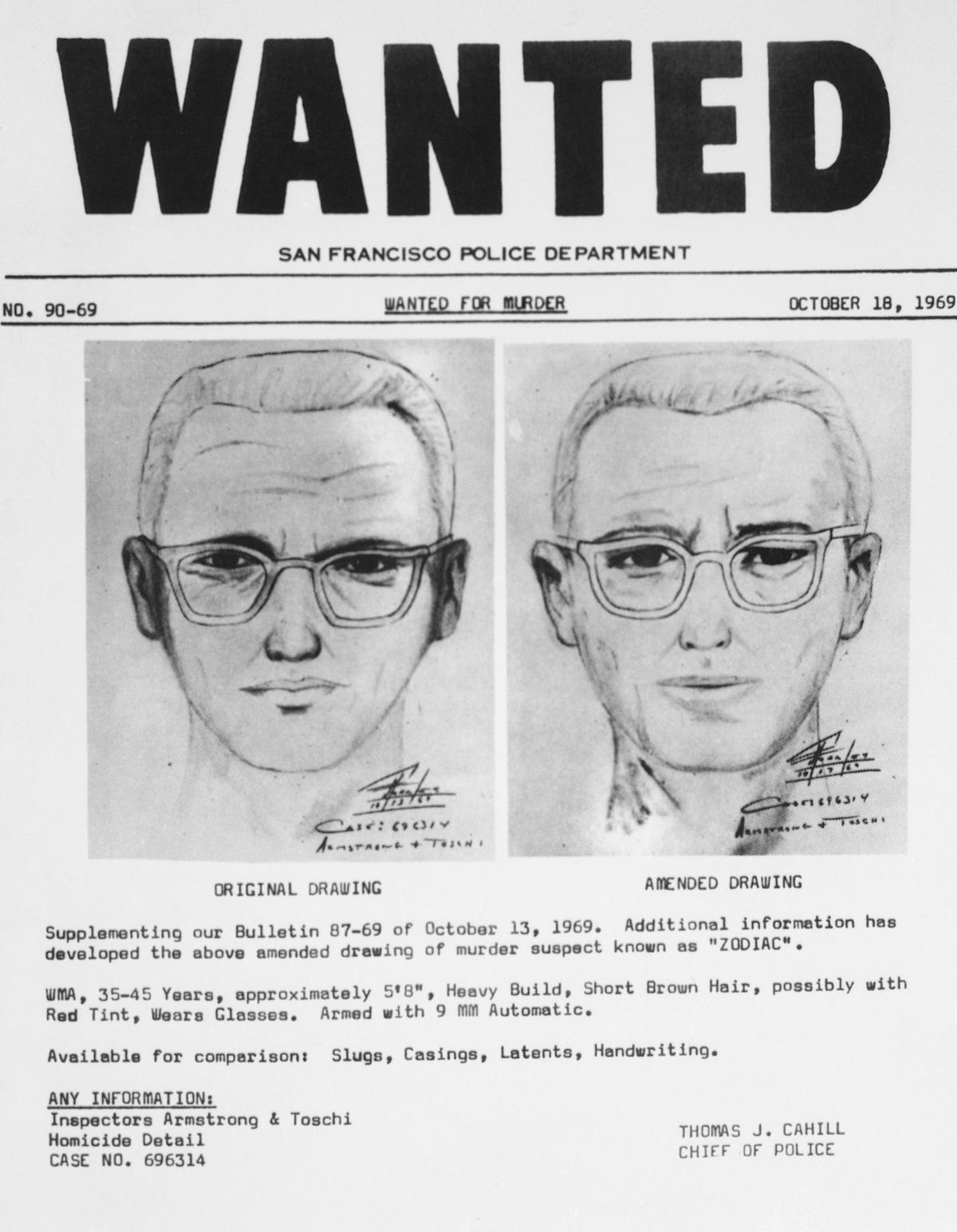
The envelopes arrived at the San Francisco Chronicle with return addresses that did not exist.
Inside were letters, each one a taunt, each one carrying a cryptogram the killer dared the city to solve.
San Francisco Chronicle reporter Paul Avery opened them, read them, and wrote about them for his paper.
He wrote about the attacks in Vallejo, at Lake Berryessa, in the Presidio Heights neighborhood.
He wrote about the details the letters contained, details that only police knew.
The killer noticed.
Paul Avery became a target of the killer's threats.
The letters made him a target because he had done his job, because he had printed the taunts, because the killer wanted an audience and Avery gave him one.
The first cipher was solved by a Salinas high school teacher and his wife, Donald and Bettye Harden.
It read: "I like killing people because it is so much fun."
The solution was printed in the papers.
The public read it, and the unease spread through the Bay Area.
The letters confirmed the killer's involvement because they contained crime-scene facts that had not been released.
Not because the police had confirmed the author.
But because only the killer and the investigators could have known those details.
Was Avery a target because he was a reporter, or because he was the one who kept the story alive?
That would require evidence.
The case was never solved.
No suspect was ever charged.
The killer's identity is not established.
The letters proved a killer wrote them, but they never proved who the killer was.
THE FIRST ATTACKS
It began on a secluded road in Benicia, on December 20, 1968.
Two teenagers were shot there, parked on a lover’s lane.
A .22-caliber pistol was used.
The newspapers covered it as a local tragedy, a double homicide without a name attached.
Then came July 4, 1969, in Vallejo.
Two people were shot in a parked car; one died, the other survived.
The weapon was a 9mm Luger.
The surviving victim told police a man had approached the car, fired, and walked away.
By late September, the attacks crossed into a different kind of horror.
At Lake Berryessa, two people were stabbed; one died, the other survived.
The weapon was a knife.
Witnesses described a man in a hooded costume, an executioner’s mask.
Then, on October 11, 1969, a taxi driver was shot and killed in San Francisco’s Presidio Heights.
The weapon was a .38-caliber pistol.
Between December 1968 and October 1969, the killer later known as the Zodiac murdered at least five people across the Bay Area.
The geography widened. The violence escalated. The public read each new headline with a colder dread.
Police in Benicia, Vallejo, Napa County, and San Francisco each worked their own cases.
Coordination was poor.
No suspect was ever charged.
The killer’s identity is not established.
No vehicle was definitively linked to him.
The record holds the attacks, the dates, the weapons, the deaths.
It does not hold a name.
THE LETTERS AND THE CIPHER
Then the letters began.
They arrived at the San Francisco Chronicle, the San Francisco Examiner, and the Vallejo Times-Herald.
Each envelope contained a cryptogram.
The killer was writing to the papers the way other men wrote to their editors.
The first cipher was solved by a Salinas high school teacher and his wife, Donald and Bettye Harden.
It read: "I like killing people because it is so much fun."
The letters included details of the crimes that only police knew.
That is how the newspaper readers knew the writer was real.
That is how the police knew too.
Paul Avery, a reporter at the San Francisco Chronicle, received the Zodiac's letters.
He wrote extensively about the case.
Then the threats came for him.
The killer made a reporter a target.
Dave Toschi, the lead detective in San Francisco, also received the letters.
He became the public face of the investigation.
His name was in the papers as often as the killer's.
The letters turned a string of attacks into a conversation.
A murderer was writing to the city, and the city was reading.
Was it a game?
Was it a confession?
The identity of the letter writer is not established.
The record holds the attacks, the dates, the weapons, the deaths.
It does not hold a name.
What it holds is the correspondence.
What it holds is the taunt.
What it holds is a reporter in the crosshairs, and a detective reading his mail.
THE INVESTIGATION AND THE SUSPECT
Vallejo investigated. Napa County investigated. Benicia investigated. San Francisco investigated.
The jurisdictions worked the same string of attacks, but coordination was poor.
A partial palm print was recovered from the taxi driver's cab.
It was never matched.
A composite sketch was drawn from witness descriptions.
It led nowhere.
The evidence was tantalizing. It was also inconclusive.
Arthur Leigh Allen, a Vallejo schoolteacher and convicted child molester, was publicly named as a suspect.
He was investigated extensively in the 1970s. He was investigated again in the 1990s.
He was never charged.
In 2002, DNA testing on saliva from the envelopes of the Zodiac letters excluded Allen as the source.
The most prominent suspect was cleared by the record.
Was the palm print his? The record does not establish that.
Was the sketch his? The record does not establish that.
Was Allen the Zodiac? The record does not establish that either.
The case remains open.
The FBI still receives tips. Local police still receive tips.
The killer's identity remains unknown.
That would require evidence.
AND THE STORY STILL ISN'T OVER
The San Francisco Police Department still lists the case as open.
In 2021, a team of independent investigators claimed to have identified the killer as Gary Francis Poste.
The FBI and local police did not confirm the claim.
It was widely disputed.
That would require evidence.
The killer's identity remains unknown.
The statute of limitations does not apply to murder, so the case remains technically prosecutable if a suspect were identified.
Tips still come in.
The FBI still receives tips. Local police still receive tips.
The case has inspired numerous books, films, and documentaries.
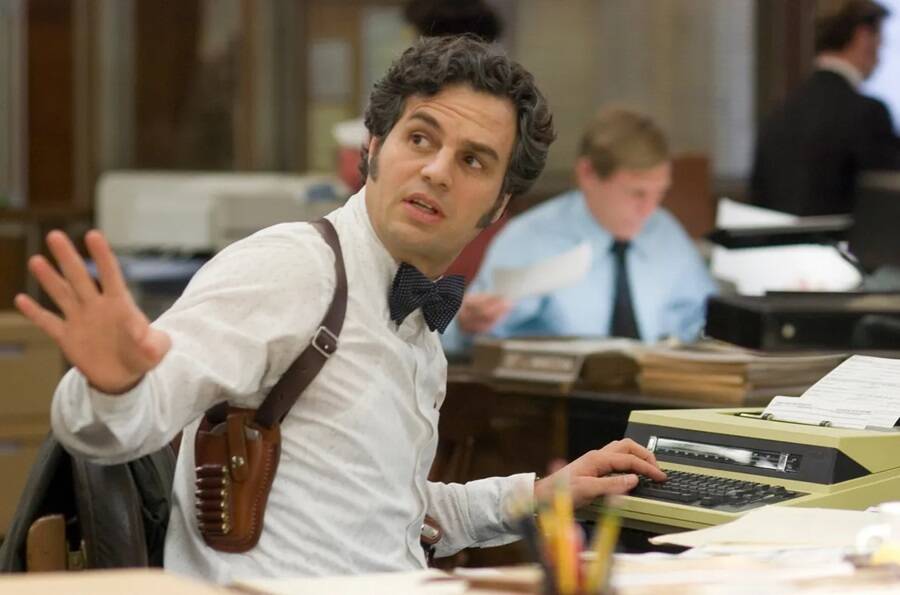
The 2007 film "Zodiac," directed by David Fincher, dramatized the investigation.
It is a story told and retold.
It is also a story with no ending.
The victims' families have largely faded from public view.
Some have occasionally spoken to documentarians.
They speak to cameras, not to headlines.
The media moved on long ago. The public did not.
New claims surface. Old claims resurface.
None of them are confirmed.
The case remains open.
The identity behind the letters remains unproven.
That is where the story sits.
It is not solved. It is not closed. It is simply still there.
Advertisement
You may also like
The parking ticket that led police to Son of Sam's door
The ticket was for parking, issued near one of the attacks. It led officers to a car registered to David Berkowitz, a 24-year-old postal…
The 1999 drive home from Woodlawn High — and the ride request that still haunts the timeline
The ride request was made on a Wednesday. January 13, 1999, was the day Hae Min Lee, an 18-year-old senior at Woodlawn High School,…
The 911 call that started it, and the search that missed Caylee's remains for months
The 911 call came on July 15, 2008. Cindy Anthony told the dispatcher that her 22-year-old daughter, Casey Anthony, and her 2-year-old granddaughter, Caylee…
Why the FBI's tear gas assault on Waco preceded a fire that killed 76 — and who started it remains unknown
On April 19, 1993, FBI armored vehicles punched holes into the walls of the Mount Carmel Center compound near Waco, Texas, and inserted tear…
The desert graves that were found three years after a family vanished
The television was still on. Uneaten dinner sat on the table. The family dog was in the backyard. Both vehicles were still at the…
The false babysitter story that unraveled Casey Anthony's defense
She gave them a name. A babysitter named Zenaida Fernandez-Gonzalez, she told investigators, had taken her daughter. The name was repeated in news coverage.…