The kennel video recorded on Paul Murdaugh's phone — and the voice detectives say they heard
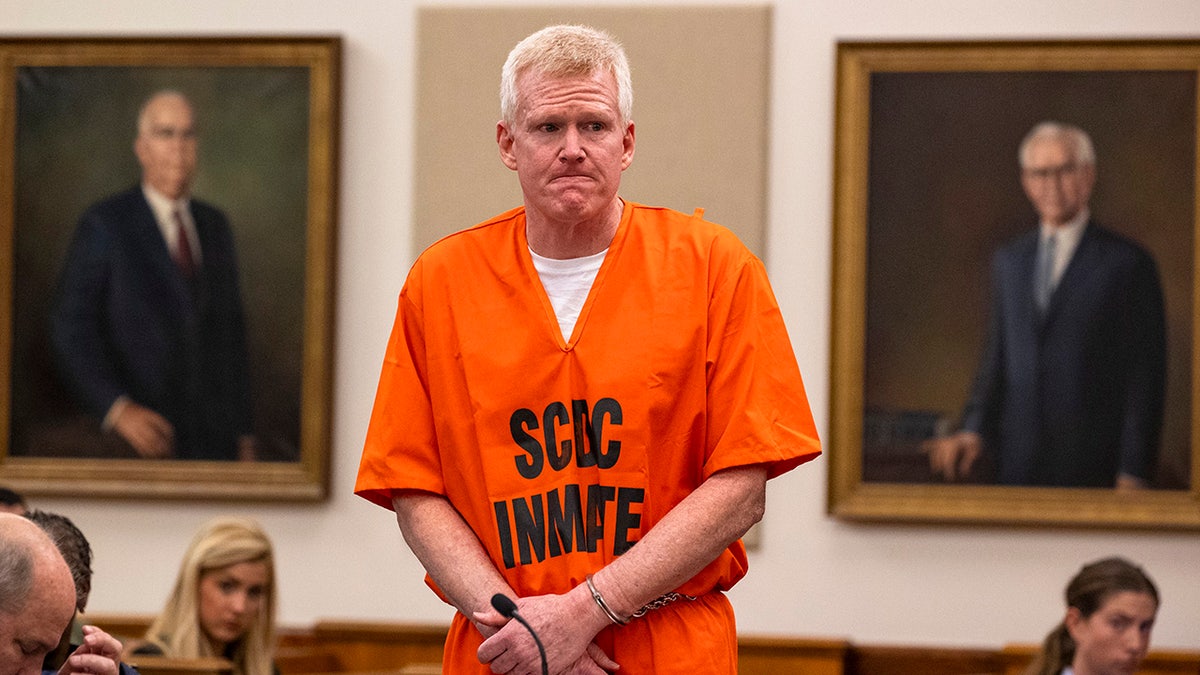
The phone was in Paul Murdaugh's pocket.
It recorded video at the dog kennels on the evening of June 7, 2021.
Paul was 22. His mother, Maggie, was 52. They were found shot to death at the family's hunting estate in Colleton County, South Carolina, near the town of Islandton.
Their bodies were discovered by Paul's father, Richard "Alex" Murdaugh, who called 911.
The phone was Paul's. The video was recorded near the time of the killings.
What the video shows visually is not specified in the record.
What the record does contain is audio.
The prosecution argued that audio placed Alex at the scene.
The defense contended the timeline was unreliable.
The recording is one piece of evidence. It is the piece people keep returning to.
A dead man's phone, found with his body, holding a sound that might place his father at the kennels.
That is the pull of it. A single file on a phone, and the question of whose voice it carries.
The prosecution heard Alex. The defense heard a timeline that could not hold.
Neither side disputes that the phone recorded audio at the kennels near the time of the killings.
What the audio proves — that is the argument.
The record establishes the recording exists. It does not independently establish what it shows.
That would require evidence.
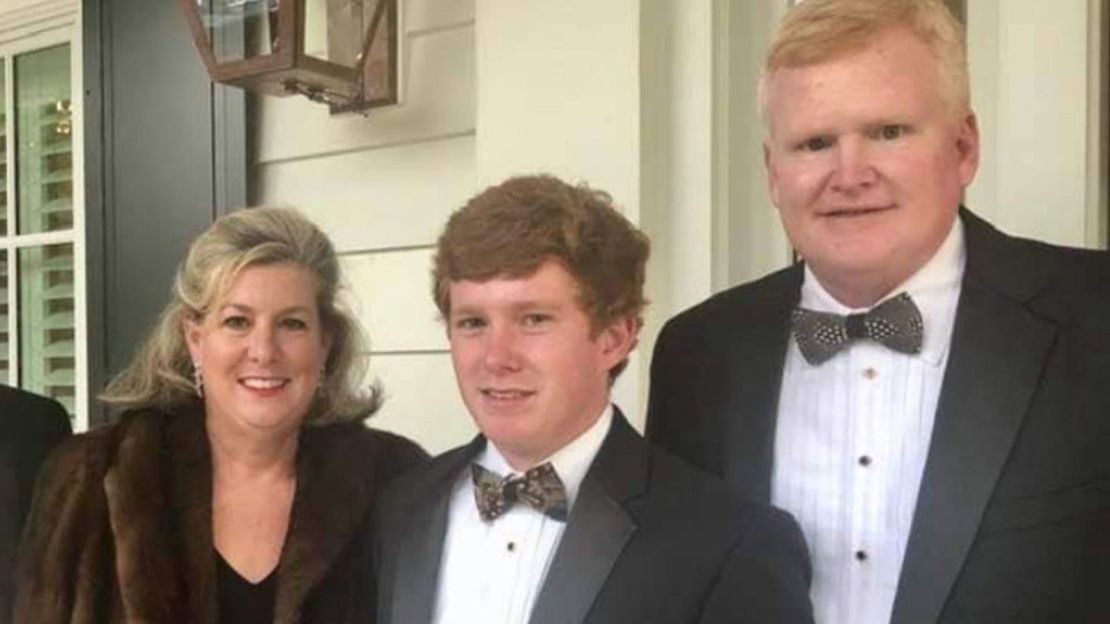
THE FAMILY AND THE 911 CALL
Paul was a University of South Carolina student.
Maggie was a former schoolteacher and the wife of Alex Murdaugh.
Alex Murdaugh was a prominent personal injury attorney, the last in a line of powerful local prosecutors.
The case drew attention because of the family's prominence in the Lowcountry legal community.
It drew attention for another reason: Paul had been facing legal scrutiny over a 2019 boat crash that killed a young woman.
On June 7, 2021, Alex Murdaugh called 911 after discovering the bodies of his wife and son at the family's hunting estate.
He made the call.
What he said in that call is not in the record; only that he made it.
For nearly two years, the investigation produced no arrests.
Alex Murdaugh publicly denied involvement.
The family was shattered in public view.
Alex's surviving son, Buster Murdaugh, appeared in coverage.
Alex's brother, John Marvin Murdaugh, spoke publicly in support of him.
Maggie's mother and sister attended the trial.
They sat in the courtroom while the legal machinery began.
The family's legal legacy — three generations of elected prosecutors — was the backdrop.

It was also the shadow.
The father who found them, the son who survived, the mother and sister who watched.
That weight came before the verdicts, before the arguments, before the evidence was even named.
THE ADMISSION AND THE EVIDENCE
In September 2021, Alex Murdaugh was shot in the head during an alleged roadside ambush.
He later admitted he had arranged the shooting with Curtis Edward Smith, a former client, in an apparent attempt to secure a life insurance payout for his surviving son.
That admission destroyed his credibility.
It refocused attention on the murders of Paul and Maggie.
The prosecution presented evidence of Alex's financial crimes.
He had stolen millions from his law firm and clients, prosecutors said.
They argued this provided a motive to kill his wife and son to distract from his fraud.
The defense argued the murders were unrelated to the financial crimes.
Alex was not at the scene, they said.
Curtis Edward Smith testified about helping dispose of evidence.
The exact nature of that evidence is not specified in the record.
The trial began in January 2023 in Colleton County.
Judge Clifton Newman presided.

Lead prosecutor Creighton Waters presented the state's case.
Dick Harpootlian and Jim Griffin led the defense.
A grieving father had become the accused.
A man who staged his own shooting now faced the question of what else he had staged.
TWO READINGS OF THE SAME FACTS
The prosecution argued the kennel video audio placed Alex at the scene.
His financial crimes — stealing millions from his law firm and clients — provided the motive, prosecutors said, a reason to kill his wife and son to distract from the fraud.
The defense read the same facts differently.
The timeline was unreliable, Dick Harpootlian and Jim Griffin argued.
Alex was not at the scene.
The state had failed to prove motive.
The murders were unrelated to the financial crimes.
Two readings of the same video.
Two readings of the same man.
One set of facts, two completely different stories, and the jury had to choose.
Was the audio definitive proof of his presence?
Was the timeline trustworthy?
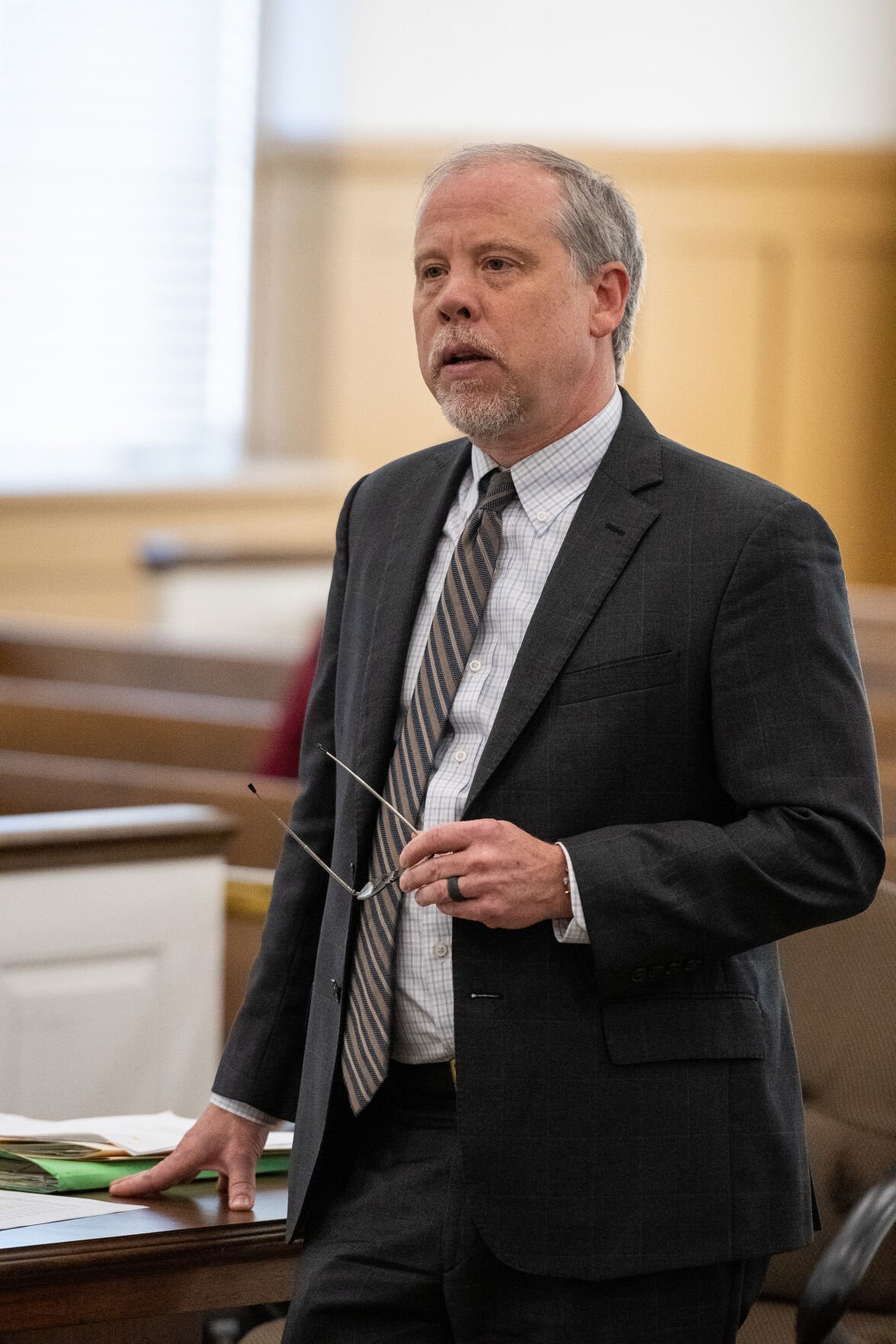
Was a grieving father capable of this?
That would require evidence, and both sides claimed to have it.
On March 2, 2023, the jury found Alex Murdaugh guilty of two counts of murder and two weapons charges.
Judge Clifton Newman sentenced him to two consecutive life sentences without the possibility of parole.
In a separate proceeding, Alex pleaded guilty to numerous financial crimes, including fraud and money laundering, and received additional sentences.
He has maintained his innocence regarding the murders.
He has filed appeals.
The audio is real evidence introduced at trial.
Whether it definitively proves Alex's presence is not established — the defense contested the timeline, and the record does not resolve that dispute.
What the record does show is a verdict.
Final.
Two life sentences, back to back.
The family's legal legacy, three generations of elected prosecutors, ended with that sentence.
Maggie's mother and sister attended the trial.
Buster, the surviving son, has largely stayed out of the public eye.
The kennel video played in court.
The voices on it were real.

The interpretation of those voices was the whole case.
AND THE STORY STILL ISN'T OVER
Alex Murdaugh is serving two consecutive life sentences at a South Carolina prison.
His appeals have been ongoing, with his defense team arguing prosecutorial misconduct, including allegations that a court clerk influenced the jury.
As of late 2024, the appeals process continues.
The outcome of those appeals is not known.
Buster Murdaugh, the surviving son, has largely stayed out of the public eye but has spoken occasionally about his father's conviction.
He has not spoken about the kennel video.
The family's legal legacy, which included three generations of elected prosecutors, has ended.
It ended with the father.
It ended with the conviction.
It ended with two life sentences.
The case has been the subject of extensive media coverage, including documentaries and podcasts.
No journalist has been named as having uncovered new evidence central to the case.
The recordings remain what they were.
The interpretations remain what they were.
An appeal is pending.
A family legacy is gone.
And a recording is still being argued over.
That is not a conclusion.
That is a continuation.
Advertisement
You may also like
A boat bought weeks before Christmas, and the fishing trip that broke a timeline
The boat was new when Scott Peterson told police he had spent the morning fishing alone at the Berkeley Marina. He bought it weeks…
The 2018 confession that put a 27-year-old murder case back in court
In a 2018 documentary interview, Duane “Keffe D” Davis described sitting in the front passenger seat of the white Cadillac. He claimed the gun…

The Black Dahlia clue that never led anywhere — a newspaper clipping
The clipping was a piece of a newspaper, folded once, kept among Elizabeth Short's belongings. Investigators logged it as a key piece of evidence.…
The ransom note found on a windowsill after a 20-month-old vanished from his crib
The nursery window was open. On the evening of March 1, 1932, Charles Lindbergh Jr., the 20-month-old son of aviator Charles Lindbergh and his…

The Green Beret's call about 'acid is groovy' intruders that unraveled
The phone call came just after 3 a.m. on February 17, 1970. Military police at Fort Bragg, North Carolina, were dispatched to 544 Castle…
The Zodiac letter that detectives still cannot explain
A second cryptogram arrived in November 1969. It came to the newspapers, signed by the Zodiac. It was never definitively solved. The meaning of…