The knife in Alfonso Rodriguez's apartment that matched Dru Sjodin's wounds
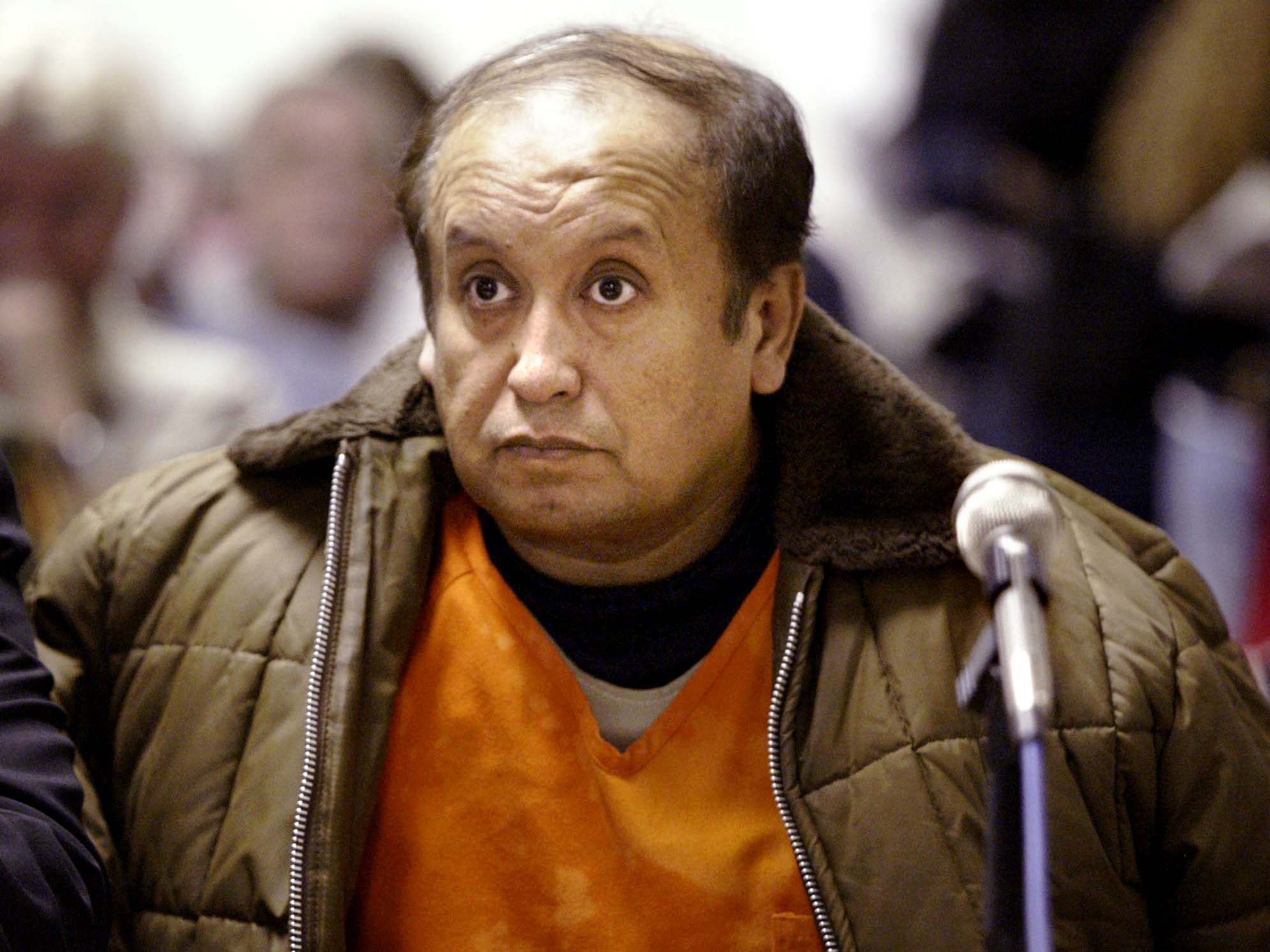
🚨 THE SCREAM IN THE PARKING LOT…
The scream came from the Columbia Mall parking lot in Grand Forks, North Dakota, on November 22, 2003.
A co-worker heard it, then saw a man forcing Dru Sjodin into a vehicle.
Sjodin was 22, a University of North Dakota student who had just finished a shift at her part-time job at Victoria’s Secret.
Her car was found nearby, with her purse and cell phone still inside.
The man had a name, but at that moment, no one knew it.
He was later identified as Alfonso Rodriguez Jr., a 50-year-old convicted sex offender from Crookston, Minnesota, released from prison in May 2003.
Not because the scream was unusual for a Saturday evening. But because it happened in an ordinary place, after an ordinary shift, on a night that should have ended with a drive home.
What kind of vehicle? The exact make and model are not consistently reported in the source.
Witnesses described a dark-colored sedan, and that is what the record holds.
Who was that man, and how did they find him?
That would require evidence.
The evidence came days later, and it came from witnesses, from a car, from a description.
But on that night, in that lot, there was only the scream, the vehicle, and the empty space where her car had been.
She was gone before anyone could write down a license plate.
THE ARREST — DAYS LATER
Witnesses placed his car near the mall.
A co-worker described the suspect.
Rodriguez was arrested within days of the abduction.
The exact date of the arrest is not specified in the source.
He was a 50-year-old convicted sex offender from Crookston, Minnesota.
He had been released from prison in May 2003 after serving time for a previous kidnapping.
The case became federal because Sjodin was believed to have been taken across state lines.
That triggered the FBI’s involvement.
The suspect was in custody.
The victim was still missing.
Not because the arrest solved the case. But because the arrest only confirmed what the parking lot had already suggested.
A man had been there. A car had been there. A description had been given.
Now there was a name.
Rodriguez’s name was known to the system — he was a registered sex offender, recently released.
That fact did not find Sjodin.
It only made the waiting harder.
Investigators had a suspect and a knife later found in his apartment.
They did not have her body.
The search continued across fields, roads, and ravines.
Every day without her was a day the evidence could not speak.
The relief of an arrest carried its own weight: an arrest is not a recovery.
A charge would come, but not yet.
That would require a body, or at least a case built on what the knife and the DNA could prove.
For now, there was a man in custody and a woman still unaccounted for.
THE KNIFE IN THE APARTMENT
The knife sat in Rodriguez's apartment before the body had a name attached to a ravine.
It was a key piece of evidence, according to the investigation.
The knife matched the wounds on Sjodin's body, prosecutors would later argue.
Not because the match was made in a single dramatic moment.
The source does not specify when the knife was found or how it was matched to the wounds.
That detail remains unestablished, even as the weapon itself became central to the case.
DNA evidence linked Rodriguez to Sjodin, the investigation found.
Cell phone records placed him near the abduction site, investigators said.
Vehicle tracking did the same.
The records placed him there.
The tracking placed him there.
The DNA placed him there.
The knife matched the wounds.
Each piece stood alone.
Together, they formed a case that could be taken to trial.
This evidence was later presented at trial, according to the record.
The apartment, the parking lot, the ravine — the knife connected them before the body was found.
Not because anyone saw the stabbing.
But because the weapon itself carried the match.
The man was in custody.
The woman was still missing.
The knife waited in evidence, its significance only fully understood months later, when the body was discovered and the wounds could be compared.
THE BODY IN THE RAVINE — APRIL 2004
The snow had melted by April, and the ground gave up what it had held since November.
A farmer found her in a ravine near Crookston, Minnesota.
The ravine sat about 30 miles from the parking lot where she had been taken.
Hundreds of volunteers and law enforcement from multiple agencies had searched for months.
They had searched fields, ditches, and riverbanks.
They had searched through the winter.
The discovery ended the search.
She had been stabbed to death.
The knife in Rodriguez's apartment could now be compared to her wounds.
It matched.
The source does not name the farmer who found her.
The source does not give the exact date in April.
What is documented is the place and the distance: a ravine near Crookston, about 30 miles from the abduction site.
What is documented is the cause: stab wounds.
What is documented is the consequence: prosecutors could now charge Rodriguez with kidnapping resulting in death.
The man was in custody.
The woman was no longer missing.
She was evidence now — a body, a wound pattern, a location on a map.
The legal case could proceed with a murder charge.
The search had ended.
The trial had not yet begun.
THE FEDERAL CHARGE
The federal charge came after the body was found.
Prosecutors charged Alfonso Rodriguez Jr. with kidnapping resulting in death.
He pleaded not guilty.
The source does not specify the exact date of the charge or the plea hearing.
That date is not established in the record.
What is established is the legal path.
The case was federal because Sjodin was believed to have been taken across state lines.
That crossing triggered the FBI’s involvement.
The trial began in August 2006 in Fargo, North Dakota.
It was moved there after a change of venue from Grand Forks.
The change was meant to find jurors who had not already formed an opinion.
The charge itself carried a specific weight.
Kidnapping resulting in death is not the same as murder.
It required proving the abduction first.
It required proving the death followed from it.
It required proving Rodriguez did both.
The case prompted criticism of the federal system.
Critics asked why a released sex offender was not monitored more closely.
They asked how he could be free in May 2003.
They asked why the system did not act.
That would require a different investigation.
The legal case could proceed with a murder charge.
The search had ended.
The trial had not yet begun.
THE TRIAL — AUGUST 2006
The trial opened in Fargo in August 2006.
Not Grand Forks, where the abduction happened. Fargo, where the court hoped a jury could judge the facts.
Prosecutors stood and laid out their case piece by piece.
The DNA evidence, they said, linked Rodriguez to Sjodin.
The knife found in his apartment matched the wounds on her body.

Witnesses placed his car near the mall, placed him near the scene.
The defense answered with a single word repeated: circumstantial.
Circumstantial, they argued, meant the evidence pointed but never proved.
Rodriguez was not the killer, the defense insisted.
He was a man placed nearby by observation, not by certainty.
The courtroom heard the knife described. It heard the DNA explained.
It heard witnesses recount what they saw that November afternoon.
Each fact pointed the same direction. Each fact, the defense said, could be read another way.
Was the knife the weapon? The prosecution said the wounds matched.
Did the DNA place him with her? The prosecution said the science was clear.
Did the witnesses place him at the scene? The prosecution said they did.
The defense said none of it was enough.
The names of the defense attorney and the federal judge are not consistently recalled in mainstream reporting.
That detail is not established. It remains a gap in the record.
The jury listened to both stories of the same facts.
One side built a chain. The other side pulled at every link.
The trial was about what the evidence could prove.
It was also about what doubt could survive.
THE VERDICT AND SENTENCE
The jury deliberated, and in September 2006, they returned a verdict.
Guilty.
The courtroom heard the word, and the trial moved from evidence to consequence.
In November 2006, the judge sentenced Rodriguez to death.
The sentence was a formal end to one chapter, but the law does not stop at a sentencing hearing.
In 2016, an appeals court overturned the death sentence.
A new sentencing hearing was ordered.
The guilty verdict stood, but the punishment was reopened.
In 2021, a federal jury again sentenced Rodriguez to death.
He remains on federal death row.
The source does not specify the exact dates of the verdict or the sentencing.
It does not need to.
The sequence is what the record holds: the jury found him guilty, the judge imposed death, the appeal undid the penalty, and a second jury reimposed it.
Each step was argued.
Each step was documented.
The legal battle extended far beyond the trial that began in August 2006.
It is a timeline that runs from the parking lot scream to a federal death row cell, with stops at a ravine, a courtroom, and an appellate panel.
Justice was delivered in September 2006.
It was also delivered again in 2021.
And still, the case is not over.
THE TWO STORIES OF THE SAME FACTS
The prosecution told a story built on things that could be touched and traced.
DNA, the knife, and witness testimony placed Rodriguez at the scene and linked him to the murder, prosecutors argued.
The knife found in his apartment matched the wounds on Sjodin’s body, they said.
Cell phone records and vehicle tracking put him near the abduction site, they added.
The defense told a different story from the same facts.
The evidence was circumstantial, the defense argued.
Rodriguez was not the killer, they said.
Circumstantial means it points, but it does not prove.
The source does not provide the defense's specific alternative theory or alibi; that remains not established.
The jury heard both stories in Fargo in August 2006.
They heard about the scream in the parking lot.
They heard about the months before the body was found.
They heard about the knife in the apartment.
In September 2006, the jury sided with the prosecution.
They found Rodriguez guilty.
The defense's argument did not disappear; it remained a counterpoint throughout the trial.
It still remains one today.
The same facts, two stories.

Which one you believe depends on what you require from proof.
THE KNIFE, RE-EXAMINED
The knife was in the apartment all along.
It sat there through the arrest, through the search, through the months of waiting.
On November 22, 2003, a co-worker heard a scream in a parking lot.
The knife was already in the apartment then, though no one knew it mattered.
Not because it was hidden. But because its meaning had not yet arrived.
For months, the knife was an object among objects.
Then a farmer found the body in a ravine near Crookston, Minnesota, in April 2004.
She had been stabbed to death.
Only then did the knife become what it was: a match for the wounds on her body.
The record does not specify how the knife was matched to those wounds.
No forensic analysis details are given in the reporting.
What is documented is the match itself, and the timing of its significance.
The knife connects the apartment to the ravine.
It connects the ravine to the trial.
It connects the trial to the sentence.
Was it always the knife?
It was always in the apartment.
Was it always the weapon?
That would require evidence.
The evidence arrived late, with the body.
The body arrived in April.
The arrest had come in November.
The knife sat between those dates, waiting for the ground to give up its answer.
A single object, re-read.
The same blade, a different fact.
AND THE STORY STILL ISN'T OVER
The sentence stands. The knife sits in an evidence file, its work done.
Alfonso Rodriguez Jr. is on federal death row at the U.S. Penitentiary in Terre Haute, Indiana.
The appeals have continued, and the defense attorneys argue over mental health and the fairness of the death penalty.
They argue the same facts, re-read.
Not because the evidence changed. Because the law keeps asking.
The source does not specify the next concrete legal step or hearing date.
That remains open.
Linda Walker, Dru's mother, did not stop at the verdict.
She pushed for the Dru Sjodin National Sex Offender Public Website Act, a national online registry for sex offenders.
Her advocacy became law.
The ravine where Dru's body was found is now a memorial.
People go there. They leave things. They remember.
The case is cited when lawmakers talk about monitoring released offenders.
It is cited when they talk about federal kidnapping law.
It is a name on a statute.
It is a stone by a ravine.
It is a man on death row, waiting.
It is a mother who turned grief into a registry.
The story is not over because the sentence is not the end.
The appeals are the story.
The hearings are the story.
The next filing, the next argument, the next question — that is the story.
Dru Sjodin's name is in the law.
Her body is in the ground.
Her mother is still speaking.
The case is closed in one courtroom and open in another.
That is not a contradiction.
That is the system working, slowly, the way it works.
The knife matched the wounds.
The body was found months later.
The verdict came years after that.
And the record still does not say when the next step comes.
It only says the step is coming.
Advertisement
You may also like

The DNA under her fingernails that cracked a 17-year cold case — but left one question open
🚨 THE NEIGHBOR'S CALL THAT OPENED A 17-YEAR WAIT… A neighbor in Bellaire, Texas, called police about a break-in at a home on June…
The 4-day gap between a 5-year-old's abduction and a suspect's arrest in her murder
🚨 THE 4-DAY GAP July 15, 2002, in Stanton, California: a man asks a five-year-old for help finding a lost dog. The friend runs…
The grandmother's 911 call that started it all — and the family story that never fit
🚨 THE 911 CALL THAT DIDN'T MATCH THE FAMILY'S STORY The 911 call came on July 15, 2008, from a grandmother named Cindy Anthony.…
The missing boy's ring found in a crawl space — 27 bodies later
🚨 THE RING IN THE CRAWL SPACE The ring was small, gold, and it belonged to a missing 15-year-old boy. Police found it on…
The 2005 Aruba nightclub exit that left three men with stories that never matched
🚨 THE EXIT THAT STARTED EVERYTHING The club was called Carlos'n Charlie's, a bar and nightclub in Oranjestad, Aruba. Natalee Holloway, 18, from Mountain…
The tarot card message that turned a random killing spree into a hunt for 'God'
🚨 THE TAROT CARD THAT READ 'CALL ME GOD' The card was a piece of evidence, found at a crime scene during the investigation…