The love letters that made a choir singer's affair the talk of 1920s New Jersey
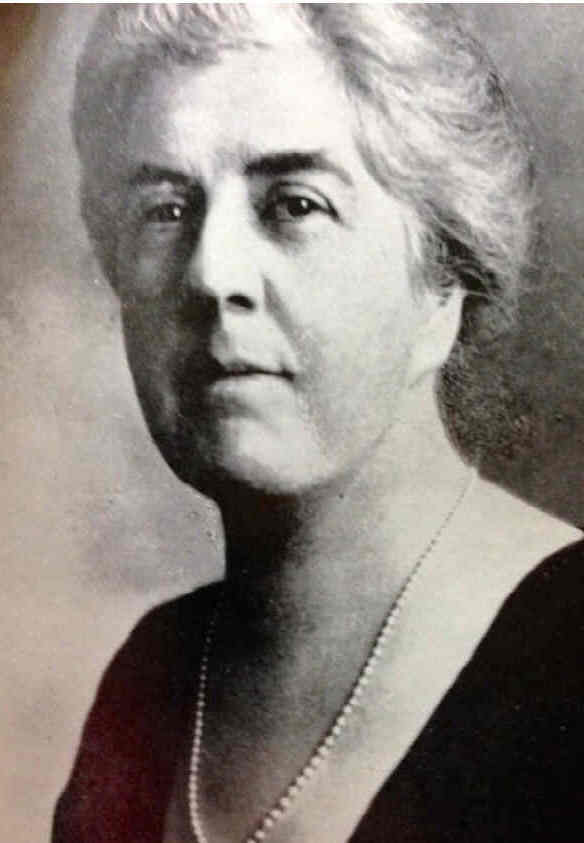
The letters were under the crabapple tree, next to the bodies.
On September 14, 1922, the bodies of Reverend Edward Wheeler Hall and Mrs. Eleanor Reinhardt Mills were found beneath that tree in Phillipsburg Meadow, Franklin Township, New Jersey.
Near them, investigators found love letters written by Mills to Hall.
They also found Hall's calling cards.
The letters were small, intimate things, folded and kept.
They established the affair.
Hall was the married pastor of St. John's Episcopal Church in New Brunswick.
Mills was a married choir singer in his congregation.
She sang in his church.
He preached in hers.
The letters proved what the congregation whispered.
They proved what the spouses feared.
They proved a motive.
A jealous spouse might read those words and see a reason.
A jealous spouse might read them and act.
Who else might have read them?
Who else held the pages before the investigators did?
Who else walked away from the tree with the knowledge of what those letters meant?
That would require evidence.
The identity of the killer is not established by the record.
The letters suggest a motive, not a hand.
They point to a heartbreak, not a gun.
A theory circulating online holds that the letters name a specific killer.
The record does not establish that.
The record establishes only what was found: two bodies, arranged side by side, Hall's straw hat over his face.
And the letters, still there, still read.
She wrote to him in ink.
Someone else may have read her words in anger.
That is the unease.
That is the question the tree keeps.
THE MISSING AND THE DISCOVERY
They were reported missing the day before.
Hall was 41, the married rector of St. John's Episcopal Church. Mills was 34, a choir singer in his congregation, a married mother of two.
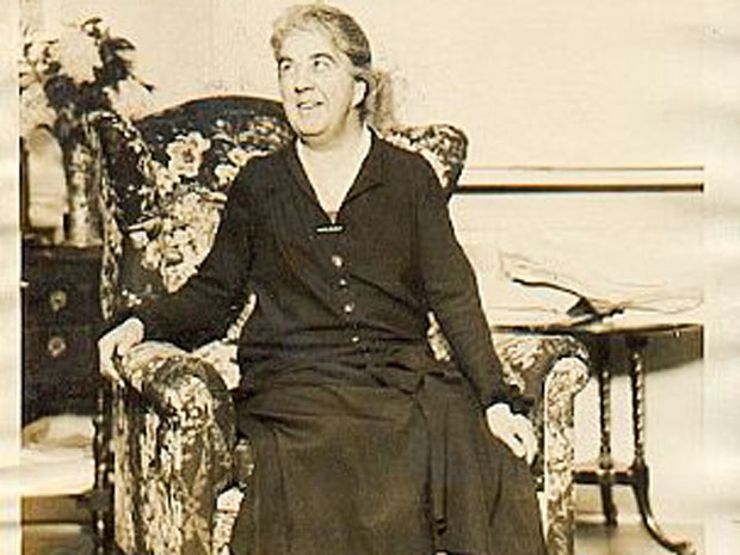
A young couple found them on the evening of September 14, 1922, beneath a crabapple tree in a secluded spot called Phillipsburg Meadow. The couple reported the scene to police.
The bodies were arranged side by side. Hall's straw hat was placed over his face.
Both had been shot in the head.
The first officers on the scene reportedly let onlookers wander through before evidence was properly collected. That is the frustration the record keeps.
The exact time of death is not in the record. Not because no one asked. But because the scene had already been stepped on.
The case drew intense national press attention. It was a pastor, a choir singer, a lovers' lane. It was a scandal with a hat placed gently over a dead man's face.
The shock is in the arrangement. The bodies side by side, the hat placed, the care in a killing.
That care suggests someone who wanted them found a certain way. Or someone who wanted the scene to say something.
The record does not say what. The record says the officers let the crowd in, and the ground was disturbed, and the exact time of death was never fixed.
She was 34. He was 41. They had been missing one day.
Then the young couple walked into the meadow, and the pastoral quiet turned into a crime scene, and the tree kept its question.
THE WITNESS AND THE ACCUSED
The prosecution's case rested on a theory: that Hall's wife, her two brothers, and a cousin conspired to kill the couple.
It was a theory built on motive, opportunity, and one witness.
That witness was a farmer's wife known as the "Pig Woman."
She claimed she had been watching her cornfield on the night of the murders.
She testified that she saw four figures near the crabapple tree.
She testified that she heard voices.
She testified that she saw a woman's figure bending over the bodies.
She testified from a hospital bed in the courtroom, dying.
Her failing health compromised her account.
Her inconsistencies compromised it further.
The defense argued the family had been framed.
They pointed to the lack of physical evidence linking them to the crime.
No weapon was ever recovered.
No fingerprints were ever produced.
The investigation was criticized for failing to pursue other leads.
There was a mysterious man known as "the Latin lover."
His identity is not established by the record.
He was never identified.
The record does not say who he was.
The record does not say he existed beyond the mentions in the case.
How much weight can a dying woman's testimony carry?

How much weight should it carry?
How much weight did it carry?
That would require evidence.
She was on the ground below the tree, watching, or so she said.
The jury would decide what to believe.
The defense would spend years attacking her story.
The question of the tree kept its answer.
THE TRIAL AND THE VERDICT
The trial began in November 1926, more than four years after the bodies were found beneath the crabapple tree.
Four defendants sat in the courtroom: Frances Hall, her two brothers, and her cousin.
All four were charged with first-degree murder.
The prosecution, led by Alexander Simpson, built its case on motive, opportunity, and the testimony of the farmer's wife known as the Pig Woman.
She testified from a hospital bed in the courtroom, her account weakened by failing health and inconsistencies.
The defense attacked her credibility.
The defense argued the prosecution had no direct evidence, no weapon, no confession, no witness who placed the defendants at the tree.
The jury heard weeks of testimony.
They heard about the love letters, the calling cards, the straw hat placed over Hall's face.
They heard about a jealous wife and a family's pride.
They heard about a mysterious man called the Latin lover, never identified, never charged.
The jury deliberated for approximately five hours.
The verdict was not guilty for all four defendants.
The courtroom emptied.
Frances Hall and her brothers returned to their private lives in New Brunswick.
The verdict was widely seen as a vindication of the Stevens family, who had maintained their innocence throughout.
It was a vindication.
It was not a solution.
The verdict does not establish who committed the murders.
The .32-caliber revolver was never recovered.
The case was never reopened.
No one else was ever charged.
The question of the tree kept its answer.
AND THE STORY STILL ISN'T OVER
The acquittal came in 1926.

Frances Hall and her brothers went home to New Brunswick.
They lived quietly.
Frances Hall died in 1942.
Her brothers died in 1940 and 1942.
The cousin died in 1939.
The case was never reopened.
No one else was ever charged.
The Hall-Mills case remains officially unsolved.
Over the years, books and articles have revisited the story.
They re-read the love letters.
They re-examined the testimony.
They re-argued the motives.
No new evidence has emerged.
The killer or killers remain unidentified.
That is not established by the record.
It is a theory, not a fact.
The Mills children grew up without their mother.
The Hall family carried their own silence.
The verdict cleared the accused.
It did not answer the tree.
It did not name the shooter.
It did not recover the .32-caliber revolver.
The case is often cited now as a lesson.
A flawed investigation.
A trial that failed to establish guilt beyond a reasonable doubt.
The couples' families are gone.
The witnesses are gone.
The accused are gone.
What remains is the official file.
What remains is the unanswered question.
What remains is the ache of a closed case that was never solved.
The letters under the crabapple tree proved the affair.
They proved nothing else.
The story still is not over.
It simply stopped.
Advertisement
You may also like
The police call that sent a bleeding boy back to Dahmer's apartment
Two Milwaukee police officers answered a call in May 1991 about a naked, bleeding boy. The boy was Konerak Sinthasomphone, 14 years old. They…
The 1988 letter cited in the Menendez brothers' 2018 habeas petition — and the question it still raises
A letter surfaces in 2018, cited in a habeas corpus petition filed by two brothers serving life without parole. The petition calls it new…
The 2019 memoir that placed Keffe D in the Cadillac — now a Nevada judge must decide
The white Cadillac appears in print before it appears in court. In 2019, Duane "Keffe D" Davis published a memoir describing himself inside that…
Two confessions, one shotgun — and the detail that never matched in the Clutter case
The night was November 15, 1959. Four members of the Clutter family were murdered in their farmhouse in Holcomb, Kansas. Herbert Clutter. His wife,…
The $1 million extortion letter that named the Tylenol killer — and the suspect who was never charged
The letter arrived at Johnson & Johnson in 1982, typed and demanding $1 million to "stop the killings." The killings were the Tylenol poisonings…
The Green Beret doctor who told police four intruders killed his family — then changed his story
The call came in the early hours of February 17, 1970. Military police arrived at the off-post apartment of Army Captain Jeffrey MacDonald at…