The midnight screening, the rifle, and the notebook a psychiatrist never opened
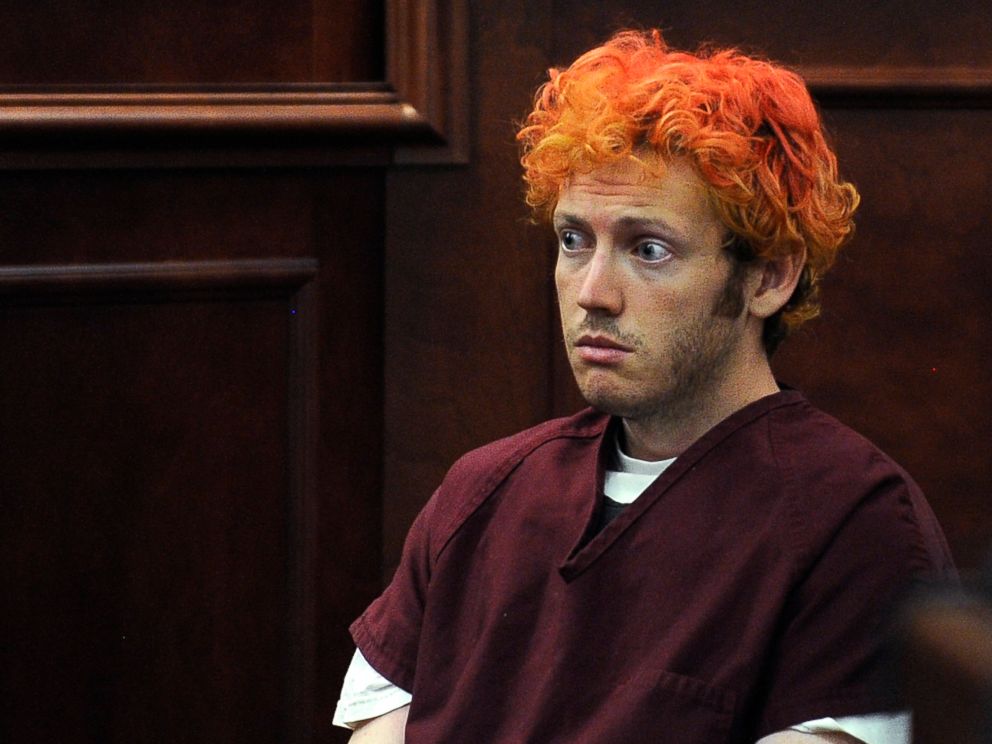
The notebook was mailed to a psychiatrist, Dr. Lynne Fenton, before the shooting.
It was not opened until after.
Investigation evidence describes it as containing drawings and descriptions of an attack.
What exactly it said, page by page, is not in the record.
The shooting happened at a midnight screening of *The Dark Knight Rises* at Century 16 in Aurora, Colorado, on July 20, 2012.
The gunman carried a Smith & Wesson M&P15 rifle, a Remington 870 shotgun, and two Glock handguns.
He walked into the theater and opened fire on the audience.
Twelve people were killed.
Seventy were injured.
Police arrested him outside the building minutes later.
But the notebook had been sent before any of it.
Dr. Fenton was his psychiatrist.
She received it before the attack.
She did not open it until after the shooting.
Why?
That is not established.
Was it a confession?
A warning?
A map of the plan?
That would require evidence the record does not provide.
What is documented is the package, the timing, and the delay.
The rest is theory.
The notebook sat unopened while the theater filled.
It sat unopened while the rifle fired.
It sat unopened until the attack was over.
Then someone opened it.
And the drawings and descriptions of an attack were inside.
That is what the investigation evidence says.
Nothing more.
12:39 A.M.
The first report came from Aurora Police Department officers responding to multiple 911 calls at approximately 12:39 a.m.
The gunman entered the theater and opened fire.
The attack killed 12 people and injured 70 others, according to the case record.
Police arrested the suspect, James Holmes, outside the theater minutes later.
He was in body armor, and he surrendered without resistance, the police report says.
The exact sequence of events inside the theater is not detailed in the source.
What is documented is the moment of arrest: quick, silent, without a struggle.
But the danger wasn't over.
At his apartment, officers later discovered a booby-trapped setup with explosives and incendiary devices.
They disarmed it, according to the investigation evidence.
That is what the record says.
The shooting was over. The apartment was secured. The suspect was in custody.

It is a timeline that ends neatly at the curb outside Century 16.
It is also a timeline that leaves a gap: the minutes between the first 911 call and the surrender.
What happened inside those minutes is not established.
The case record does not resolve it.
That would require evidence.
THE ARSENAL AND THE APARTMENT
Police found him outside the theater in body armor.
He surrendered without resistance.
Before the shooting, Holmes had purchased the weapons legally.
He had been stockpiling ammunition.
The investigation evidence shows a Remington 870 shotgun, a Smith & Wesson M&P15 rifle, and two Glock handguns.
He was a 24-year-old former neuroscience graduate student at the University of Colorado Anschutz Medical Campus.
At his apartment, officers discovered a booby-trapped setup with explosives and incendiary devices.
Police disarmed it.
The full extent of that setup is not specified in the record.
What was rigged, where it was placed, how it might have worked — that would require evidence.
The apartment was one plan.
The theater was another.
He had also mailed a notebook to his psychiatrist, Dr. Lynne Fenton.
It contained drawings and descriptions of an attack, according to investigation evidence.
The notebook was not opened until after the shooting.
Its exact contents are not established in the record.
The prosecution would later point to the notebook as planning.
The defense would point to the same pages as illness.
Neither reading is settled by the document alone.
The notebook sat unopened while the theater filled.
It sat unopened while the first 911 calls came in at 12:39 a.m.
It sat unopened while police led him away in body armor.
The weapons were legal.
The ammunition was stockpiled.
The apartment was disarmed.
The notebook waited.
THE TRIAL
The trial began in April 2015.
Jury selection took months.
Holmes was charged with 166 counts.
That included 24 counts of first-degree murder, two for each victim.
It also included 140 counts of attempted murder.
He pleaded not guilty by reason of insanity.
The prosecution, led by District Attorney George Brauchler, argued Holmes was sane.
Brauchler said Holmes knew what he was doing.
The defense, led by Daniel King and Tamara Brady, presented evidence of schizophrenia and psychosis.

The specific evidence from either side is not detailed in the record.
What is documented is the argument itself.
The defense argued severe mental illness.
The prosecution argued premeditation.
The planning of the attack.
The booby traps.
In July 2015, the jury rejected the insanity defense.
They found Holmes guilty on all counts.
In August 2015, the same jury sentenced him.
Life in prison without parole.
They had failed to reach a unanimous decision on the death penalty.
Judge Carlos Samour Jr. imposed the sentence.
The verdict carried weight.
The legal battle over sanity had ended.
One question remained open.
What was in the notebook that made the defense argue insanity?
What did the prosecution say about it?
What did the jury hear?
That would require evidence.
AND THE STORY STILL ISN'T OVER
The sentence was imposed in August 2015.
Judge Carlos Samour Jr. handed down 12 consecutive life sentences plus 3,318 years.
No possibility of parole.
Holmes is serving that term at a maximum-security prison in Colorado.
The courtroom closed on the verdict. The story did not close with it.
The Aurora theater was renovated and reopened.
The screening room where 12 people died now shows films again.
That is a fact of the case record. It is also a fact that families still carry the date.
Victims' families have continued to advocate for gun control and mental health awareness.
They have said it in public statements. They have said it for years.
In 2021, a federal judge dismissed a lawsuit against the theater chain, Cinemark.
The families had sued over security measures. The judge ruled against them.
That was a legal end. It was not a moral one.
Holmes has not been granted any appeals.
That is what the court record says. The status of any future appeals is not specified beyond that.
Not because the appeals were considered and rejected. Because none have been granted.
What remains open?
That would require evidence.
The notebook mailed before the shooting was opened only after. Its contents were described in investigation evidence. What the psychiatrist never opened, the jury never saw as a whole.
The rifle was legal. The ammunition was stockpiled. The apartment was booby-trapped and disarmed.
The first report came at 12:39 a.m. The trial began in April 2015. The verdict came in July.
Twelve life sentences. One hundred sixty-six counts. One notebook.
The theater reopened. The families kept speaking. The appeals have not come.
It is a closed case. It is also an open wound.
Advertisement
You may also like
The cellmate confession that cracked the Manson murders
The cellmate was in jail on a charge of her own. Susan Atkins was there too, held on something unrelated to Cielo Drive. The…
The psychologist's mistress who heard a confession and changed a murder case
The tape recorder was running. Erik Menendez was in a therapy session with Dr. Jerome Oziel, his psychologist, when he confessed to the murders…
The cotton gin fan tied to Emmett Till's neck — and the evidence that didn't convict
The Tallahatchie River gave up its weight on August 31, 1955. Emmett Till's body surfaced with a cotton gin fan tied to his neck…
A Splash in the Chattahoochee — the Fiber Evidence That Tied Wayne Williams to Two Murders
The bridge over the Chattahoochee was quiet that night in May 1981. Police had staked it out after a tip, waiting on the dark…
The slumber party interrupted: Polly Klaas's last night before the intruder came
The party was a sleepover. Three girls, twelve years old, in the bedroom of a house in Petaluma, California. It was October 1, 1993.…
The .40-caliber pistol traced to New Jersey that linked Andrew Cunanan to Versace's killing
A .40-caliber pistol ended Gianni Versace’s life on the steps of his Miami Beach mansion. That same pistol had been stolen from a prior…