The note demanding $10 million that broke the D.C. sniper case open
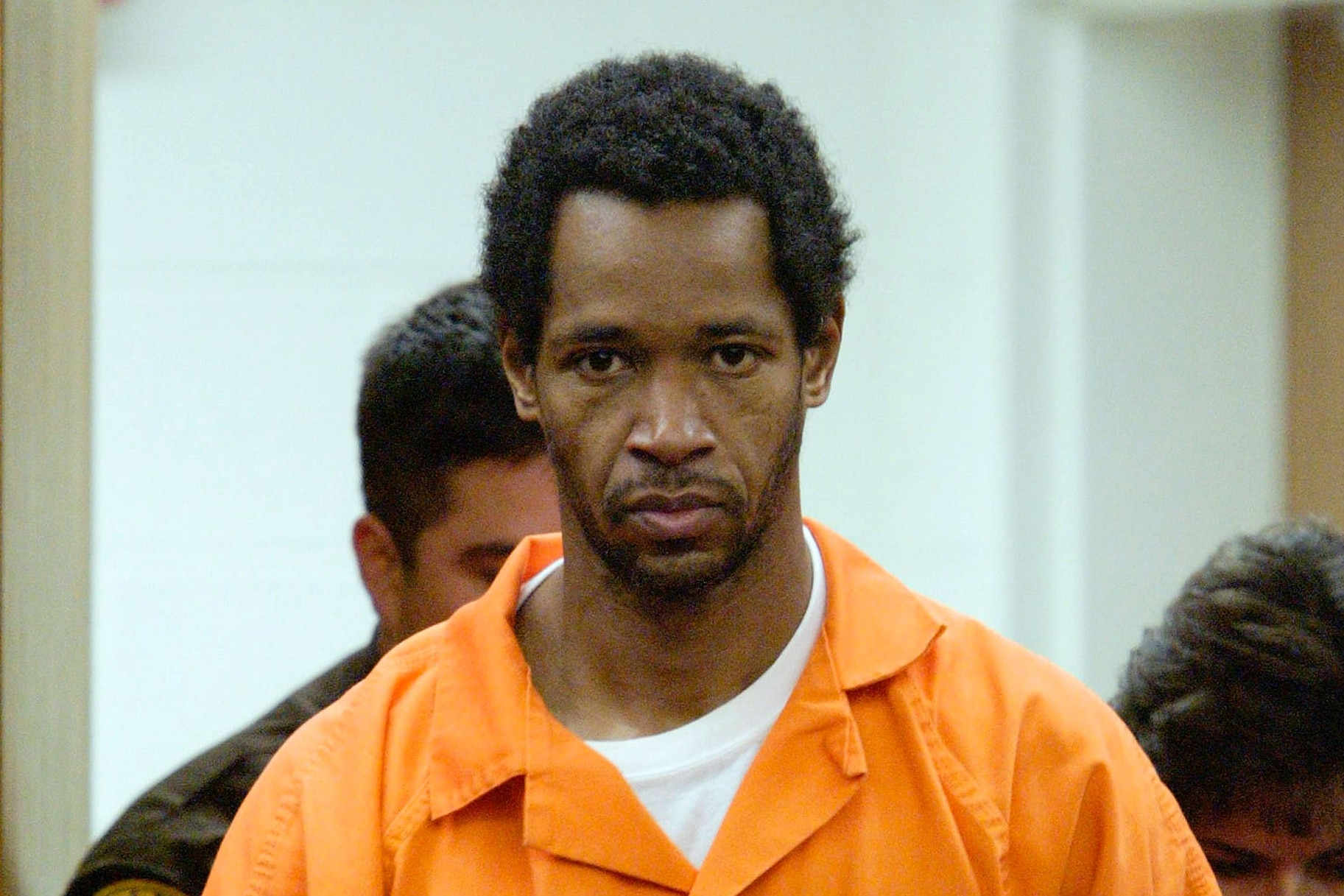
🚨 THE NOTE THAT DEMANDED $10 MILLION — AND CHANGED EVERYTHING
A note demanded $10 million.
It was found near a shooting in Ashland, Virginia.
The note threatened more attacks if the money was not paid.
Before the note, the shootings seemed disconnected.
Random acts. Unrelated victims. No pattern the police could hold.
The note linked them.
It turned a scattered series of killings into a single demand, a single negotiation, a single trail.
The exact wording of the note is not in the record.
Who wrote it is not in the record either.
What the record does establish is the effect.
The note led police to focus on a blue Chevrolet Caprice.
That car had already been reported in connection with a shooting in Alabama.
A liquor store in Montgomery, Alabama, in September 2002.
One note, one car, one thread pulled loose.
Was the note a genuine demand for money?
Was it a taunt, a misdirection, a game?
Was it written by one man, or two, or neither?
That would require evidence the record does not provide.
What the record shows is a turning point.
The shootings stopped being random that day.
They became a message.
OCTOBER 2 — THE FIRST SHOT OUTSIDE A GROCERY STORE
October 2, 2002, began like any other Tuesday in Wheaton, Maryland.
The first shot came outside a grocery store.
It was a single gunshot, fired from a distance.
The case summary records that the first fatality was reported that day.
The identity of the first victim is not specified in the source.
What is documented is the pattern that followed.
Victims were struck while loading a car.
Victims were struck while mowing a lawn.
Victims were struck while pumping gas.
Victims were struck while walking down a street.
These were ordinary activities.
These were ordinary people.
The randomness was the message.
A person could be doing nothing wrong and still be the target.
That was the new rule of the street in the D.C. area.
The grocery store shooting was not yet a pattern.
It was a single event, a lone report.
But it was the first.
The record shows one shot, one fatality, one place.
It does not show a reason.
It does not show a connection.
It shows a Tuesday that ended differently than it began.
The investigation would spend weeks trying to make sense of it.
The investigation would spend weeks failing to see the link.
That link was still out there, waiting to be found.
THREE WEEKS OF RANDOM SHOOTINGS
The bus driver was gunned down at a bus stop.
A woman was killed outside a store.
A man was shot while mowing grass at a car dealership.
A woman was killed at a gas station.
A man was shot outside a home improvement store.
Over three weeks, ten people were killed and three were wounded across Maryland, Virginia, and Washington, D.C., according to the case summary.
The attacks typically involved a single gunshot from a distance.
Victims were struck while loading a car, pumping gas, or walking down a street.
A 13-year-old boy was shot and wounded outside his middle school in Bowie, Maryland.
He survived.
The shootings appeared random.
There was no pattern to the targets, no obvious connection between the places, no reason one person was hit and another was not.
The case drew intense national attention, according to the case summary.
Why this street?
Why this store?
Why this moment?
That would require evidence the record does not provide.

The specific dates and locations of each shooting are not detailed in the source.
The investigation would spend weeks trying to make sense of it.
The investigation would spend weeks failing to see the link.
That link was still out there, waiting to be found.
THE NOTE IN ASHLAND — A DEMAND FOR $10 MILLION
The note was found near a shooting in Ashland, Virginia.
It demanded $10 million.
It threatened more attacks if the money did not come.
The investigation summary records the demand and the threat.
The exact location of the note is not specified in the record.
The circumstances of its discovery are not specified either.
What the note did was link the shootings.
Before the note, the attacks seemed random, disconnected, impossible to track.
After the note, they were something else.
They were a negotiation.
The investigation summary calls this a key turning point.
It is the moment the case shifted from confusion to a possible lead.
The note pointed to a blue Chevrolet Caprice.
That car had been reported in connection with an earlier shooting in Alabama.
It led police to focus on the vehicle.
Not because they knew who was inside.
But because the note gave them a thread to pull.
What did the note prove?
It proved the shootings were connected.
It proved someone was behind them.
It proved the person wanted money.
That would require evidence, and the record holds the evidence of the link.
The note was the break.
It was the shift.
It was the moment the investigation stopped looking at single shootings and started looking at a pattern.
THE BLUE CHEVROLET CAPRICE — A NEW FOCUS
The note was the break, and the break had a direction.
The investigation summary states the note led police to focus on a blue Chevrolet Caprice.
The car was not new to them.
It had been reported in connection with an earlier shooting in Alabama, according to the investigation summary.
The exact nature of that Alabama connection is not detailed in the record.
It is a link without a full explanation.
That would require evidence the summary does not provide.
But the focus narrowed.
The suspects were later linked to a shooting at a liquor store in Montgomery, Alabama, in September 2002, the investigation summary states.
That was weeks before the first shot in Wheaton.
A liquor store in Montgomery.
A grocery store in Wheaton.
The geography widened even as the target list shrank.
Investigators found the two had traveled across the country, according to the investigation summary.
Across the country in a blue Chevrolet Caprice.
The same car that had been reported in connection with an earlier shooting.
The same car that would later be found at a rest stop.
The pattern was not just the shootings.
It was the movement between them.
It is a car. It is also a clue.
The investigation stopped asking who was shooting and started asking who was driving.
OCTOBER 24 — THE ARREST AT THE REST STOP
The truck driver's tip came in on October 24.
It led police to a rest stop near Myersville, Maryland.
The exact circumstances of that tip are not detailed in the record.
Neither are the precise moments of the arrest.
What the case summary states is this: John Allen Muhammad and Lee Boyd Malvo were found asleep in a Chevrolet Caprice.
Not because they were hiding. Because they were resting.
The car was the blue Caprice the investigation had been chasing.
Inside the vehicle, police discovered a Bushmaster .223-caliber rifle.
A scope was with it.
A tripod with a hole drilled in it was also there.
That hole was the mechanism.
It allowed the rifle to be fired from the trunk of the car.
The car was the weapon platform.
The trunk was the firing position.
The manhunt that had spanned three weeks and three states ended in a nap.
It is a rest stop. It is also the end.
The rifle matched the shootings through ballistic evidence, according to the investigation summary.
But that is the next section.
Here, the record leaves the moment itself unconfirmed.
Who exactly called. When exactly they called. How the officers approached the sleeping car.
That would require evidence the summary does not provide.
What is established: the tip came from a truck driver.
What is established: the two were asleep.
What is established: the rifle, the scope, and the drilled tripod were in the car with them.
She was not in the car. The victims were elsewhere.
The relief came in the quiet of a Maryland rest area, not in a chase.
The culmination of the manhunt was a check on a sleeping pair.
THE RIFLE AND THE BALLISTIC MATCH
The Bushmaster .223-caliber rifle was found in the car.
Ballistic evidence matched the rifle to several of the shootings.
The specific shootings matched by ballistics are not listed in the record.
The rifle had a scope.
It had a tripod with a hole drilled in it.
The hole allowed the rifle to be fired from the trunk.
The car was a Chevrolet Caprice.
It was the same blue Chevrolet Caprice the note had led police to focus on.
The evidence was solidifying, piece by piece.
The scope gave the shooter distance.
The tripod gave the shooter concealment.
The trunk gave the shooter a firing position no one was watching.
The rifle was the link the investigation had been missing.
Before the note, the shootings seemed disconnected.
After the rifle, they were connected by a single weapon.
The ballistic match was the confirmation.
It is a certainty in the record.
It is also a partial one.
The record names the rifle.
It does not name every shooting it was matched to.
That would require evidence the summary does not provide.
The rifle was found.
The rifle was matched.
The rifle was the culmination of the manhunt.
THE CONFESSION AND THE DISPUTED DETAILS
The rifle was found.
The rifle was matched.
The rifle was the culmination of the manhunt.
On October 24, 2002, they were arrested together, asleep in the Chevrolet Caprice at the rest stop near Myersville.
Muhammad was a former U.S. Army soldier, 41 at the time.
Malvo was 17.
According to the investigation summary, Malvo reportedly confessed to participating in the shootings.
Details of his statements were disputed.
The investigation summary does not specify what he said.
The investigation summary does not specify what was disputed.
It is not established what the confession contained.
It is not established why the details were challenged.
A confession should close a case.
This one did not.
It raised questions instead: what did he claim, what did he retract, what did he mean by participating.
That would require evidence.
The record offers the report of a confession.
It offers the report of a dispute.
It does not offer the confession itself.
The man who confessed was a teenager.
The man he was arrested with was a soldier trained in marksmanship.
The record places them in the same car.
The record places the rifle in that car.
The record does not place the words in Malvo's mouth.
He reportedly confessed.
Reportedly is the word that holds the distance.

THE TRIALS — MUHAMMAD AND MALVO
They tried Muhammad first.
Virginia charged him with capital murder for the shooting of a man at a gas station in Manassas.
The trial summary records the charge.
It records the conviction, in November 2003.
It records the sentence: death.
Then they tried Malvo separately.
He was convicted of capital murder in December 2003.
The sentence was life in prison without parole.
The specific evidence presented at trial is not detailed in the record.
Not the ballistics from the Bushmaster.
Not the testimony about the note demanding $10 million.
Not the disputed details of any confession.
The record holds the verdicts and the sentences.
It holds the order: Muhammad first, then Malvo.
It holds the weight of that order.
Was the sequence deliberate?
Was it strategy?
Was it jurisdiction?
That would require evidence.
The record states the outcome, not the reasoning.
Justice arrived in two parts.
One man was sentenced to death.
One man, a juvenile, was sentenced to life.
The legal process moved.
It convicted.
It sentenced.
It separated the two men's fates.
The record does not explain why Muhammad went first.
It does not explain the choice of the Manassas shooting as the charge.
It states the facts as they occurred.
The trials happened.
The convictions followed.
The sentences were pronounced.
That is the documented turning point.
That is where the record stops.
AND THE STORY STILL ISN'T OVER
Muhammad’s death sentence was carried out on November 10, 2009, in Virginia.
That is the date the record gives.
The other sentence took a different path.
In 2005, the U.S. Supreme Court ruled that sentencing juveniles to death was unconstitutional.
That ruling affected Malvo’s case.
He had been 17 at the time of the attacks.
He remained in prison.
In 2017, the U.S. Supreme Court ruled that mandatory life without parole for juveniles was unconstitutional.
That ruling affected his sentence too.
Malvo was resentenced to life with the possibility of parole in 2021.
He remains in prison in Virginia.
The record does not establish the current status of any pending appeals or motions.
It does not say whether any are active.
It does not say whether any have been denied.
It does not say whether any have been filed.
That would require evidence beyond the record.
So the story ends where the record stops.
The sentences were pronounced.
The executions were carried out.
The resentencings were ordered.
One man is gone.
One man remains.
The case is still studied.
The victims’ families have spoken about the lasting trauma.
The 13-year-old boy who was shot survived and has spoken about his recovery.
The Chevrolet Caprice used in the attacks was later destroyed.
The record holds those facts.
It holds the dates.
It holds the rulings.
What it does not hold is a final word on Malvo’s future.
That question stays open.
Advertisement
You may also like
The DNA under her fingernails that cracked a 17-year cold case — but left one question open
🚨 THE NEIGHBOR'S CALL THAT OPENED A 17-YEAR WAIT… A neighbor in Bellaire, Texas, called police about a break-in at a home on June…
The 4-day gap between a 5-year-old's abduction and a suspect's arrest in her murder
🚨 THE 4-DAY GAP July 15, 2002, in Stanton, California: a man asks a five-year-old for help finding a lost dog. The friend runs…
The grandmother's 911 call that started it all — and the family story that never fit
🚨 THE 911 CALL THAT DIDN'T MATCH THE FAMILY'S STORY The 911 call came on July 15, 2008, from a grandmother named Cindy Anthony.…
The missing boy's ring found in a crawl space — 27 bodies later
🚨 THE RING IN THE CRAWL SPACE The ring was small, gold, and it belonged to a missing 15-year-old boy. Police found it on…
The 2005 Aruba nightclub exit that left three men with stories that never matched
🚨 THE EXIT THAT STARTED EVERYTHING The club was called Carlos'n Charlie's, a bar and nightclub in Oranjestad, Aruba. Natalee Holloway, 18, from Mountain…
The tarot card message that turned a random killing spree into a hunt for 'God'
🚨 THE TAROT CARD THAT READ 'CALL ME GOD' The card was a piece of evidence, found at a crime scene during the investigation…