The package to the Los Angeles Examiner that claimed to hold Black Dahlia clues
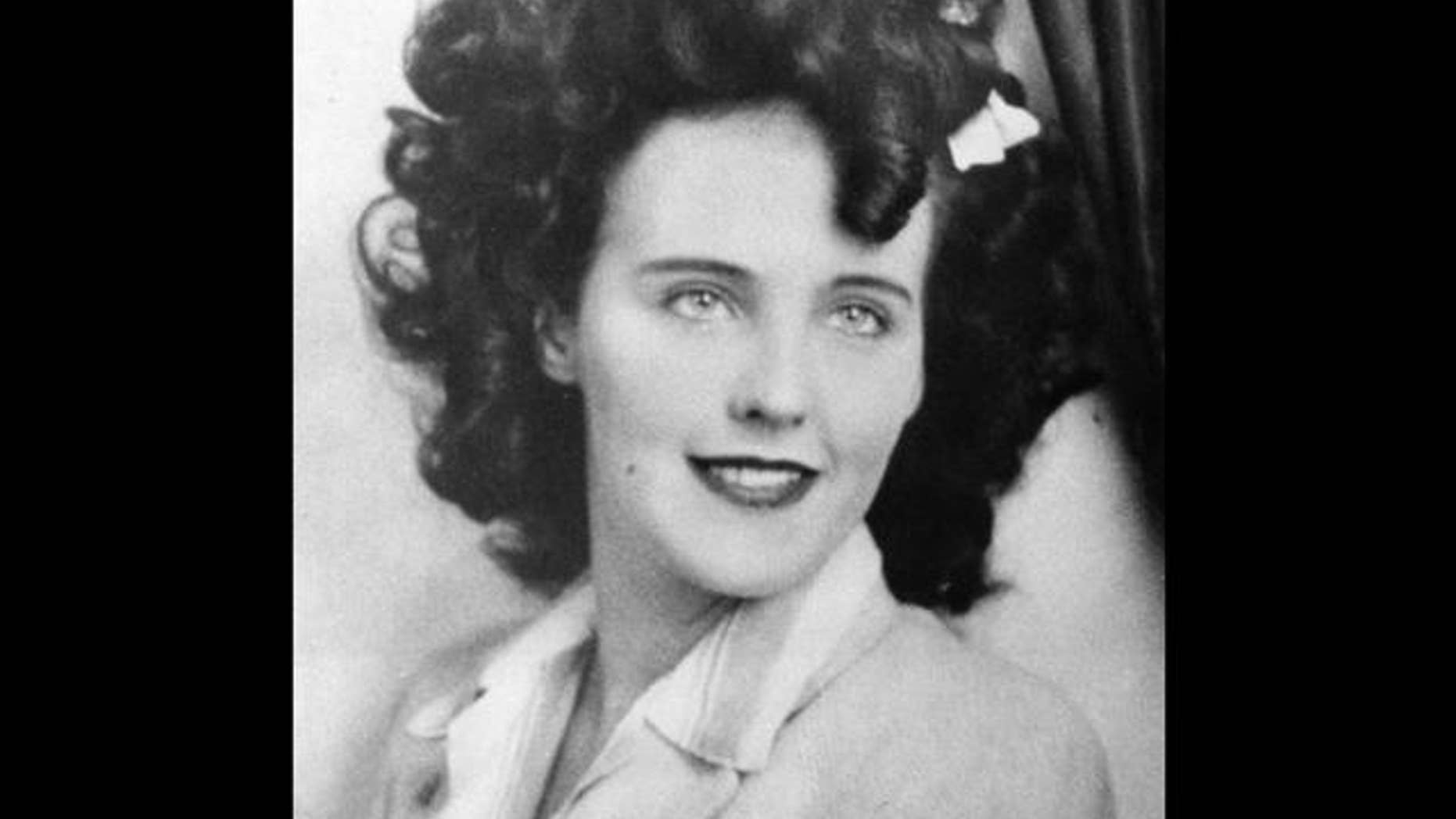
The package sat in a pile of mail at the Los Angeles Examiner, unremarkable until someone opened it.
Inside were Elizabeth Short's address book and other personal belongings, mailed by a person claiming to be the killer.
The newspaper had asked for such things.
The case had consumed the city, and the press was part of the machinery now.
Reporters like Aggie Underwood of the *Los Angeles Herald-Express* covered every detail.
The package arrived in that heat, in that crush of tips and letters and calls that flooded the newsrooms.
Whoever sent it knew the address book would matter.
The investigation summary states the package contained Short's belongings.
It states the sender claimed to be the killer.
It does not state who that sender was.
It does not state whether the package truly came from the killer.
That was never confirmed.
The identity of the sender is not established.
Whether the package was a confession, a hoax, or a cruel piece of theater is not established.
The record leaves the question open.
A package can be mailed by anyone.
A killer, a crank, a collector, a stranger who found the book on a bus.
The address book itself was real.
The claim attached to it was not verified.
The autopsy had been done.
The body had been identified through fingerprints.
The city was reading headlines, and the headlines were reading the mail.
This package promised answers.
It delivered objects instead.
The investigation summary records the arrival of the package.
It records what the package contained.
It records the claim.
It does not record proof.
The sender remains unnamed.
The package remains what it was: something mailed, something opened, something never explained.
The case would produce more than sixty confessions over the years.
None of them were credible.
This one arrived early, wrapped in paper, addressed to a newspaper.
It was part of the media attention that surrounded the case.
It was also part of the noise.
THE BODY ON NORTON AVENUE
The morning of January 15, 1947, a local woman walked into a vacant lot at 39th Street and Norton Avenue in Leimert Park.
She saw a figure lying in the grass, severed in half at the waist.
She thought it was a mannequin.
It was not a mannequin.
It was the body of a woman, drained of blood, posed with her hands above her head.
The victim was identified through fingerprints as Elizabeth Short, a 22-year-old aspiring actress.
The exact time of death is not known.
The identity of the killer is not known.
What is known is the scene itself: a body cut clean, placed in an open lot, found by someone who mistook horror for display.
The newspapers would not let the image rest.
They printed the details, the photographs, the pose.
They gave the victim a name that stuck — the Black Dahlia — a nickname coined by the press, reportedly inspired by the film *The Blue Dahlia* and Short's habit of wearing black.
The public read it all.

They stared at the pictures.
They asked the same question the police asked: who could do this?
That would require evidence.
The body was dumped, not killed, in that lot.
There was no clear crime scene.
There was only the vacant ground, the morning light, and a woman's mistake about a mannequin.
She was on the ground below.
The case would follow that image for decades.
THE MEDIA CIRCUS
The press gave her a name before it gave her a story.
"Black Dahlia," the papers called her, reportedly after the film *The Blue Dahlia* and her habit of wearing black.
The nickname stuck in a way the case never could.
Aggie Underwood of the *Los Angeles Herald-Express* covered the case extensively.
She was a reporter in a city of them, all chasing the same mutilated body and the same empty lot.
The coverage was relentless.
It was also part of the spectacle.
Underwood became part of the lore when a package arrived at the *Los Angeles Examiner*.
The package claimed to hold the killer's clues.
It contained Short's address book and other belongings.
Someone had mailed them, saying they were the killer.
The authenticity of the package was never confirmed.
That fact did not slow the headlines.
The exact origin of the nickname is not fully documented.
The full extent of media involvement is not fully documented either.
What is documented is the frenzy.
Reporters chased leads, printed confessions, and filled columns with a story that had no answer.
The case drew intense attention, and Underwood was at its center.
It is easy to imagine the newsroom then.
It is harder to know what was true.
The package was a promise the record could not keep.
The press shaped the story, and the story shaped the press.
Neither was ever solved.
THE SUSPECTS AND THE CONFESSIONS
The first suspect was a man who had driven Elizabeth Short to Los Angeles.
Robert "Red" Manley was the last known person to see her alive.
He was held for questioning.
He passed a polygraph.
He was released.
The investigation summary records that the LAPD interviewed hundreds of people.
It records thousands of tips.
It records more than sixty confessions over the years.
None of them were credible.
That is what the record says: none were credible.
The credibility of any single confession is not established.
All were deemed not credible.
So the police worked the flood.
They chased the tips and the hoaxes and the men who walked into a station to say they did it.
The press printed the names of the accused.
The press printed the denials.
The public read both.
Frustration built in the squad room, and the pressure followed it.
Why so many confessions?
Why so many tips that led nowhere?
Because the body was dumped, and the crime scene was a vacant lot.
Because the story was everywhere, and a story that big pulls people toward it.
Some confessed for attention.
Some confessed out of guilt for other things.
Some confessed because they wanted to be part of the story.
The police could not tell which was which.
That would require evidence.
Manley was cleared.
The others were not even that.
They were names in a file, statements taken, statements discarded.
The case moved forward without a viable suspect.
It moved forward without a murder weapon.
It moved forward anyway.
AND THE STORY STILL ISN'T OVER
No one was ever arrested.
No one was ever charged.
The case remains officially unsolved.
The LAPD has reopened it multiple times, most recently in the 2000s, but no charges have been filed.
In 2003, former LAPD detective Steve Hodel published a book claiming his father, George Hodel, was the killer.
He cited circumstantial evidence: an alleged connection to Short, a knowledge of medicine.
George Hodel died in 1999.
He was never charged.
The identity of the killer is not established.
The truth of any theory, including Hodel's, is not established.
That would require evidence the record does not provide.
The case continues to generate books.
It generates films.
It generates documentaries.
It does not generate answers.
Sixty people confessed, and none were credible.
A package arrived at the *Los Angeles Examiner*, and its authenticity was never confirmed.
The press coined the name, and the press received the clues, and the press moved on to the next story.
The public followed.
Decades passed.
The body was found on a vacant lot, and the lot is still a lot.
The file is still a file.
The question is still a question.
Who killed Elizabeth Short?
Who mailed the package?
Who posed the body on Norton Avenue?
The record does not say.
It never did.
The story stays open because the case stays open.
It stays open because the theory keeps being told.
It stays open because no one has ever closed it.
She was on the ground below.
The case is above it, still turning.
Advertisement
You may also like
The parking ticket that led police to Son of Sam's door
The ticket was for parking, issued near one of the attacks. It led officers to a car registered to David Berkowitz, a 24-year-old postal…
The 1999 drive home from Woodlawn High — and the ride request that still haunts the timeline
The ride request was made on a Wednesday. January 13, 1999, was the day Hae Min Lee, an 18-year-old senior at Woodlawn High School,…
The 911 call that started it, and the search that missed Caylee's remains for months
The 911 call came on July 15, 2008. Cindy Anthony told the dispatcher that her 22-year-old daughter, Casey Anthony, and her 2-year-old granddaughter, Caylee…
Why the FBI's tear gas assault on Waco preceded a fire that killed 76 — and who started it remains unknown
On April 19, 1993, FBI armored vehicles punched holes into the walls of the Mount Carmel Center compound near Waco, Texas, and inserted tear…
The desert graves that were found three years after a family vanished
The television was still on. Uneaten dinner sat on the table. The family dog was in the backyard. Both vehicles were still at the…
The false babysitter story that unraveled Casey Anthony's defense
She gave them a name. A babysitter named Zenaida Fernandez-Gonzalez, she told investigators, had taken her daughter. The name was repeated in news coverage.…