The ransom note's $118,000 demand: a clue that still haunts the Ramsey case
The 911 call came at 5:52 a.m. on December 26, 1996.
Patsy Ramsey told the operator her 6-year-old daughter was missing.
A ransom note was found on the stairs of the family home.
The note demanded $118,000.
The amount is oddly specific.
It is not a round number, not $100,000, not $150,000.
It is $118,000.
The note was written on paper from the family's own notepad.
That detail is in the police report.
That detail is part of the investigation evidence.
Who wrote the note is not established by the record.
That remains a question, not a fact.
The note itself was long, detailed, unusually so.
Ransom notes are rarely this long.
Ransom notes are rarely written on the victim's own stationery.
The demand sits at the center of the case, a documented clue.
Its meaning is a theory, not a fact established by the record.
Why $118,000?
Why that number, on that paper, on those stairs?
That would require evidence.

The record does not provide it.
THE SEARCH AND THE BODY
The house filled with people before the police understood what they were looking at.
John Ramsey carried his daughter up from the basement and laid her on the floor near the Christmas tree.
According to John Ramsey's account, he found her in a small basement room, wrapped in a white blanket.
The coroner's office later determined the cause of death: asphyxia due to strangulation.
A skull fracture was also present.
Investigation evidence showed a garrote around her neck, made from a broken paintbrush and cord.
She was on the ground below.
The exact timeline of the crime is not established.
The record does not establish when she was struck, when she was strangled, or in what order.
What the record does establish is that the scene was not preserved.
According to the investigation report, friends and family moved freely through the house that morning.
Police initially treated the case as a kidnapping, not a homicide.
The home was not immediately sealed.
No thorough search was conducted at first.
By the time investigators understood what they had, the body had been moved.
John Ramsey moved his daughter before investigators could document her original position, the investigation report states.
That movement was not a crime scene photograph.
It was a father carrying his child.
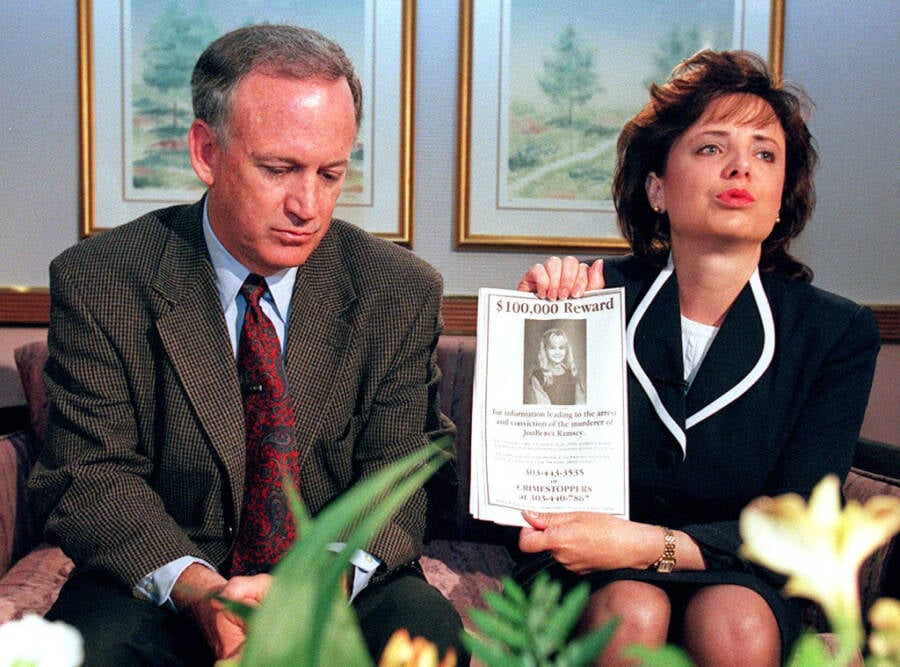
The investigation report records the fact without explaining the intent, and the record does not assign motive.
What was lost cannot be measured.
The original position of the body, the precise arrangement of the blanket, the exact relation of the garrote to the floor—none of it was documented in place.
Detective Linda Arndt was the lead officer on scene that morning.
She testified about the chaos of the early hours.
The Boulder Police Department did not immediately seal the home, according to the investigation report.
The evidence that remained was collected, but the evidence that moved was gone.
A garrote made from a broken paintbrush and cord was preserved.
The coroner's findings were preserved.
The position of the body was not.
That would require evidence.
The record does not provide it.
THE DNA AND THE GRAND JURY
The grand jury convened in 1998 and met for over a year.
It heard testimony, weighed evidence, deliberated.
No indictments were issued at the time, according to court records.
That is what the public knew for more than a decade.
In 2013, court documents revealed something else.
The grand jury had voted to indict John and Patsy Ramsey on charges of child abuse resulting in death.
District Attorney Alex Hunter declined to sign the indictment.

The reason for the grand jury's vote is not detailed in the record.
That is not established.
What is established is the DNA.
Investigators collected DNA from under her fingernails and from her clothing early on.
Testing at the time was limited, according to investigation evidence.
The samples sat.
In 2008, new DNA testing using more sensitive methods was run.
It excluded the Ramsey family as sources of the DNA found on her underwear and under her nails.
The Boulder District Attorney's office made that finding formal.
It cleared John and Patsy Ramsey of suspicion.
Not charged.
Not convicted.
Never tried.
The grand jury voted; the DA declined.
The DNA cleared; the case stayed open.
Two tracks ran side by side.
One pointed toward the parents.
One pointed away from them.
The record holds both.
The record resolves neither.

The question is not whether the grand jury voted.
It did, according to the 2013 documents.
The question is what the vote meant.
The record does not say.
The DNA says what it says.
The grand jury said what it said.
They have never been reconciled.
That would require evidence.
THE FALSE CONFESSION AND THE VIRAL THEORY
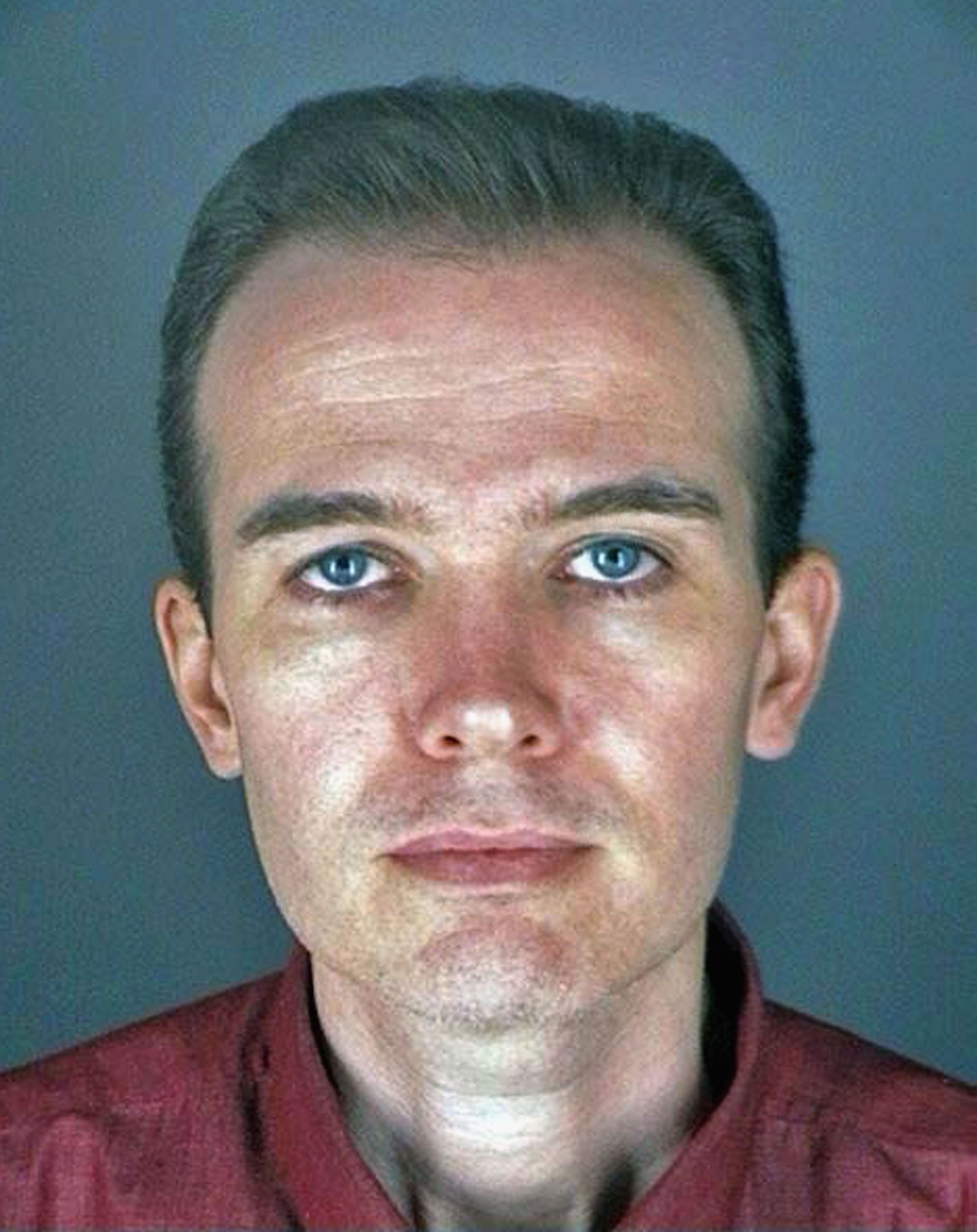
In 2006, John Mark Karr was arrested in Bangkok, Thailand, after claiming he was with JonBenét when she died.
The arrest record shows he was taken into custody on the strength of his own words.
He was extradited to Colorado, where the case against him collapsed.
DNA testing excluded him, according to the DNA test results.
He was released without charges.
Karr had confessed. The evidence did not confess with him.
The grand jury said what it said. The DNA said something else.
A stun gun was theorized by some experts, but that was not confirmed.
The expert theory pointed to markings on the body. The record does not establish that a stun gun was used.
It is a theory. It remains a theory.
That would require evidence.

The $118,000 figure in the ransom note has become a subject of online speculation.
Some theorists point to John Ramsey's bonus that year. Others point to a salary figure.
These are viral claims. They are not established by the record.
The note demanded $118,000. Why that number, the record does not say.
The ransom note was written on paper from the family's own notepad.
The note was long. The note was detailed.
The note demanded exactly $118,000.
What that figure meant, no one has proven.
Karr's confession was false. The stun gun theory is unconfirmed. The $118,000 figure remains unexplained.
Three things that sound like answers. Three things the record leaves open.
The case remains officially unsolved.
AND THE STORY STILL ISN'T OVER
Patsy Ramsey died of ovarian cancer in 2006.
John Ramsey kept speaking. He advocated for renewed investigation. He publicly criticized the Boulder Police Department's handling of the case.
In 2024, the Boulder Police Department announced it was using new DNA technology to re-examine evidence.
The case remains open. The case remains unsolved.
What will the new technology find? Will it match the DNA that excluded the family in 2008? Will it explain the $118,000 figure?
That would require evidence.
The outcome of the 2024 DNA re-examination is not yet known. The record does not establish it. The record does not resolve it.
It is a promise of answers. It is also a reminder of how long the questions have stood.
Three things sound like endings: a death, a criticism, an announcement. Three things the record leaves open: the DNA, the note, the case itself.
The story is not over because the case is not closed. It is not over because the technology is still running.
She was six years old. The note demanded $118,000. The basement held her body.
No one has been charged. No one has been convicted. The Boulder Police Department says it continues to review evidence.
The new technology might bring answers. It might not. That is the only honest statement the record allows.
Advertisement
You may also like
The cellmate confession that cracked the Manson murders
The cellmate was in jail on a charge of her own. Susan Atkins was there too, held on something unrelated to Cielo Drive. The…
The psychologist's mistress who heard a confession and changed a murder case
The tape recorder was running. Erik Menendez was in a therapy session with Dr. Jerome Oziel, his psychologist, when he confessed to the murders…
The cotton gin fan tied to Emmett Till's neck — and the evidence that didn't convict
The Tallahatchie River gave up its weight on August 31, 1955. Emmett Till's body surfaced with a cotton gin fan tied to his neck…
A Splash in the Chattahoochee — the Fiber Evidence That Tied Wayne Williams to Two Murders
The bridge over the Chattahoochee was quiet that night in May 1981. Police had staked it out after a tip, waiting on the dark…

The slumber party interrupted: Polly Klaas's last night before the intruder came
The party was a sleepover. Three girls, twelve years old, in the bedroom of a house in Petaluma, California. It was October 1, 1993.…
The .40-caliber pistol traced to New Jersey that linked Andrew Cunanan to Versace's killing
A .40-caliber pistol ended Gianni Versace’s life on the steps of his Miami Beach mansion. That same pistol had been stolen from a prior…