The red VW Jetta spotted near Sierra LaMar’s bus stop that changed everything
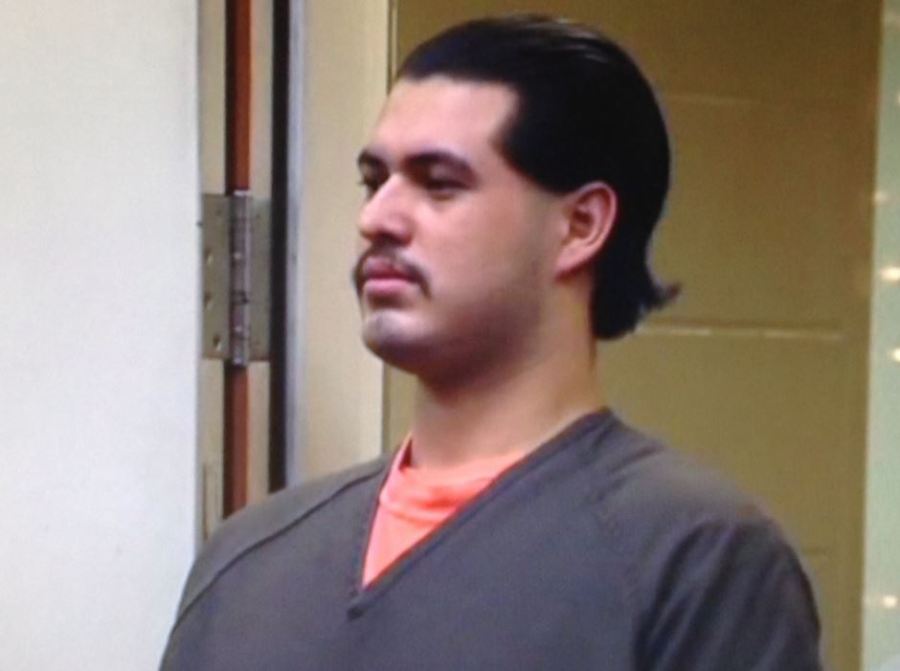
🚨 THE RED JETTA AT THE BUS STOP…
A red Volkswagen Jetta was seen near Sierra LaMar’s bus stop on the morning of March 16, 2012.
Detectives identified the car from neighborhood surveillance footage.
The car was traced to Antolin Garcia-Torres, who lived within a mile of Sierra’s home.
That sighting is the pivot that turned a missing girl into a murder case.
How does one ordinary car rewrite everything?
How does a glimpse of a vehicle become the hinge of an investigation?
How does a car seen in passing carry the weight of a life?
The record does not specify the exact time or location of the sighting.
That is not established.
What is established is the car itself: red, a Volkswagen Jetta, present near the bus stop that morning.
What is established is the trace: from surveillance footage to a name.
The name belonged to a 21-year-old grocery store employee.
He lived in the same neighborhood.
She was 15.
She never boarded the bus.
The car was a clue before it was a theory.
It was a theory before it was a charge.
It was a charge before it was a conviction.
But the sighting alone did not prove the abduction.
The sighting placed a car in a place.
The car placed a man in a neighborhood.
The rest came later, through DNA and testimony and a trial that took years to begin.
For now, the Jetta sits at the start of the story.
One car.
One morning.
One girl who did not arrive.
MARCH 16, 2012 — THE MISSING BUS RIDE
March 16, 2012, began as an ordinary school morning in Morgan Hill, California.
Sierra LaMar, 15, left for the bus stop.
She never arrived.
Her mother discovered Sierra had not boarded the bus and contacted authorities, according to the case report.
The exact time Sierra left home or was last seen is not in the record.
What is documented is the absence: a bus stop, a girl who should have been there, a mother making a call.
The call set the machinery of a missing-person investigation into motion.
Deputies responded to the report of a missing teenager.
The case was treated as an abduction and homicide from the early stages, according to the case report.
Not because a body had been found.
Because the circumstances suggested something other than a runaway.
Sierra's cell phone and a purple Juicy Couture bag containing her clothing were later found in a ditch along a rural road near her home.
Those items would become the physical anchor of the investigation.
No remains have ever been recovered.
That fact—the absence of a body—would shape every argument, every motion, every verdict that followed.
The morning that never completed left a void that the record cannot fill.
Routine broke at the bus stop.
The mother's phone call was the first documented step.
Everything else came after.
THE DITCH AND THE PURPLE BAG
The search began near the bus stop.
It moved outward, street by street, to the rural roads around Morgan Hill.
Later that day, sheriff's deputies found Sierra's cell phone in a ditch along a rural road near her home.
They also found a purple Juicy Couture bag containing her clothing, the case report states.
The items lay in the open, not hidden, not buried.
They became the physical anchor of the investigation, according to the case narrative.
Everything else in the case would be measured against that ditch.
Who placed the items there is not established by the record.
No witness saw the bag dropped.
No surveillance camera captured the moment.
The record does not say how the phone and the bag came to rest in that ditch.
It is a fact that they were found there.
It is a fact that they belonged to Sierra.
What the discovery meant was a different question.
The case report says the finding shifted the case from missing person to likely homicide.
No body was recovered.
No remains were ever found.
The ditch gave the investigation a place to start, not an ending.
The phone was a clue.
The bag was a clue.
The clothing inside was a clue.
Each one pointed somewhere, but none of them pointed to a person.
The case was treated as an abduction and homicide from the early stages, the case report states.
That treatment began with the purple bag in the ditch.
Sierra was still missing.
The search went on.
THE NEIGHBORHOOD CANVASS AND THE SURVEILLANCE TAPE
Deputies went door to door through the neighborhood, collecting surveillance footage from nearby homes.
It was a slow zoom, a street at a time, a driveway at a time.
A key turning point came when detectives identified a car seen in the area on the morning of the disappearance.
The vehicle was a red Volkswagen Jetta.
That vehicle was traced to Antolin Garcia-Torres, who lived within a mile of Sierra's home.
The blurry street had become a specific door.
What exactly the surveillance footage showed is not detailed in the source.
It is not established that the footage captured the abduction itself.
It is not established that the car was used in the crime.
What the record shows is a car in the area, and a man who lived close by.
Detectives had a name.
The search for Sierra went on, but the investigation had turned a corner.
The car was a documented clue.
What it proved, the record does not say.
That would require evidence the source does not provide.
MAY 2012 — THE ARREST
The arrest came in May 2012.
The man was Antolin Garcia-Torres, a 21-year-old grocery store employee, according to the case report.
He lived in the same neighborhood as Sierra.
Not a stranger. A neighbor.
The specific date of the arrest is not in the record; the month is what the case report establishes.
He was charged with Sierra’s murder, the case report states.
Charged, not yet convicted.
The surveillance footage had pointed detectives to his red Volkswagen Jetta, a documented clue.
That car was traced to him; he lived within a mile of Sierra’s home.
The familiar becomes the focus.
A grocery store employee. A young man in the same streets, the same routines.
The shock is in the proximity.
The arrest did not come with a body; Sierra’s remains have never been found.
It came with evidence, with DNA, with a car seen that morning.
But the record does not say the car was used in the abduction.
That would require evidence the source does not provide.
What the record does say: he was arrested, he was charged, he lived nearby.
The case moved forward on those facts.
The neighbor was now the accused.
May 2012 was the turning point, but the turning was slow.
The trial would take years.
THE DNA ON THE ROPE AND THE JACKET
The warrant was served in May 2012.
Inside Garcia-Torres’s car and home, investigators collected items for testing, according to court testimony.
The forensic net tightened around a rope.
Sierra’s DNA was found on that rope, the court testimony stated.
It was also found on a jacket in Garcia-Torres’s possession.
His DNA was reportedly found on Sierra’s pants, which were among the items in the bag discovered near her home.
Each finding closed a loop, but the loop was not airtight.
The exact chain of custody and the testing methods are not detailed in the source.
That is not established.
So the defense had room to push back.
Contamination, they argued.
Secondary transfer, they argued.
A rope and a jacket, placed near a man who lived within a mile of her home.
What did the rope connect?
What did the jacket prove?
That would require evidence the record does not lay out.
The prosecution’s story leaned on those fibers.
The defense’s story leaned on the gaps between them.
Sierra’s body was never found.
The pants were found.
The rope was found.
The jacket was found.
The man who owned the car was arrested.
The trial would take years.
THE PROSECUTION'S STORY VS. THE DEFENSE'S STORY
The prosecution laid out its story in a courtroom in 2016.
The red Jetta was seen near the bus stop.
Sierra’s DNA was on a rope and a jacket in Garcia-Torres’s possession.
His DNA was reportedly on her pants, found in the ditch.
Prosecutors argued Garcia-Torres had attempted to abduct other women in the months before Sierra vanished.
They argued the DNA and the surveillance footage proved Sierra was dead.
The defense answered with a different reading of the same facts.
The DNA, the defense argued, was the result of contamination or secondary transfer.
The defense pointed to the lack of any witness who saw the abduction.
Without a body, the defense argued, the prosecution could not prove Sierra was dead.
Two narratives pulled at the same rope, the same jacket, the same car.
The attempted abductions were not charged as separate crimes.
That is in the record.
What the record does not establish is what the Jetta proves.
The car was seen.
The car was traced.
The car was driven by the man on trial.
That the car was used in the abduction is a theory, not a fact.
The jury would have to choose which story held.
One story ended with a conviction.
The other ended with a question mark.
The evidence was circumstantial.
The evidence was also, prosecutors said, enough.
THE VIRAL THEORY AND THE DOCUMENTED RECORD
Online, the red VW Jetta became the smoking gun.
The theory is simple: the car was there, the car was his, so the car took her.
It is a compelling sequence, and it is a theory.
The record establishes that the car was seen in the area on the morning of the disappearance.
The record establishes that the car was traced to Antolin Garcia-Torres, who lived within a mile of Sierra’s home.
That is where the documented record ends.
The record does not establish that the car was used in the abduction.
No witness saw the abduction.
The defense argued that point directly, just as it argued that the DNA evidence was the result of contamination or secondary transfer.
That contamination theory remains a documented counterpoint in the case narrative.
So the question becomes: what does the Jetta actually prove?
Does it prove he was near the bus stop?
The record says yes.
Does it prove he was the man in the car?
The record says yes.
Does it prove he abducted Sierra LaMar?
That would require evidence.
The record does not provide it.
The car is a documented clue, and the online theory is not a fact established by the record.
It is a compelling clue.
It is also not a conviction.
The distinction matters, because the jury heard the whole case, not just the car.
They heard the DNA on the rope.
They heard the DNA on the jacket.
They heard the defense's answer to all of it.
The Jetta was one piece of a circumstantial puzzle, and the record holds the puzzle together without ever completing the picture.
She was never found.
That is the shadow the car cannot drive through.
THE ORDINARY MOMENT: THE MOTHER'S PHONE CALL
Her mother noticed Sierra had not boarded the bus.
That is the first documented step in the timeline, according to the case report.
One routine check, one phone call, and the machinery of a missing-person investigation began to turn.
She contacted authorities, the case report states, and that single call set the entire investigation in motion.
It is a mundane act: a parent expecting a child home from school, a child who never arrives.
The exact content of that phone call is not in the record.
Not what time she dialed, not what she said, not the name of the dispatcher who answered.
The record holds only the consequence.
That call is why deputies searched the route to the bus stop.
That call is why they found the cell phone and the purple bag in the ditch.
That call is why the red Jetta on the surveillance tape became a clue at all.
The mother was widely covered in the press, the case report notes, her grief a public fixture of the years that followed.
She became the face of the search, the voice asking for help, the figure at press conferences and vigils.
But before any of that, she was just a parent making a call.
The weight of it is in the sequence: she did not wait, she did not assume, she did not hope quietly.
She acted, and the timeline began.
Every piece of evidence, every theory, every verdict traces back to that ordinary moment.
A mother checked on her daughter, and the check failed.
She was on the other end of the line, waiting for information that would not come for years.
The call did not solve anything.
It started everything.
AND THE STORY STILL ISN'T OVER
The jury found Antolin Garcia-Torres guilty of first-degree murder with the special circumstance of kidnapping in May 2017, according to the trial outcome.
In June 2017, the same jury sentenced him to life in prison without the possibility of parole, rejecting the death penalty, the trial outcome states.
The conviction was automatically appealed, according to the trial outcome.
In 2021, the California Supreme Court upheld the conviction and sentence, the trial outcome reports.
Garcia-Torres is serving life in prison without the possibility of parole in California.
Sierra LaMar's body has never been found.
That is the fact the verdict could not change.
Her family has continued to search for her remains and has maintained a public presence, including a foundation in her name, according to the case report.
They have said they still hope to bring Sierra home for burial, the case report states.
The next concrete step in that search is not specified in the source.
Not because the family stopped looking.
But because the record simply does not say.
A conviction, but no grave.
That is what the case leaves behind.
The red Jetta was traced. The DNA was matched. The jury was convinced.
Sierra was not brought home.
The foundation carries her name. The searches continue. The hope remains stated.
The body does not surface.
The story is not over because the ending is missing.
It is a closed case with an open hole.
The family still waits for the call that would tell them where she is.
That call has not come.
The record does not say when it will.
Advertisement
You may also like

The DNA under her fingernails that cracked a 17-year cold case — but left one question open
🚨 THE NEIGHBOR'S CALL THAT OPENED A 17-YEAR WAIT… A neighbor in Bellaire, Texas, called police about a break-in at a home on June…
The 4-day gap between a 5-year-old's abduction and a suspect's arrest in her murder
🚨 THE 4-DAY GAP July 15, 2002, in Stanton, California: a man asks a five-year-old for help finding a lost dog. The friend runs…
The grandmother's 911 call that started it all — and the family story that never fit
🚨 THE 911 CALL THAT DIDN'T MATCH THE FAMILY'S STORY The 911 call came on July 15, 2008, from a grandmother named Cindy Anthony.…
The missing boy's ring found in a crawl space — 27 bodies later
🚨 THE RING IN THE CRAWL SPACE The ring was small, gold, and it belonged to a missing 15-year-old boy. Police found it on…
The 2005 Aruba nightclub exit that left three men with stories that never matched
🚨 THE EXIT THAT STARTED EVERYTHING The club was called Carlos'n Charlie's, a bar and nightclub in Oranjestad, Aruba. Natalee Holloway, 18, from Mountain…
The tarot card message that turned a random killing spree into a hunt for 'God'
🚨 THE TAROT CARD THAT READ 'CALL ME GOD' The card was a piece of evidence, found at a crime scene during the investigation…