The rifle found on the sixth floor and the 12 hours of interrogation that never reached a trial
The rifle was a 6.5mm Mannlicher-Carcano, found on the sixth floor of the Texas School Book Depository in Dealey Plaza.
It was found after the shots, after the motorcade, after the president's open-top limousine had passed the building at approximately 12:30 p.m. on November 22, 1963.
Ballistics tests linked the rifle to the shooting.
It is a documented piece of evidence, not a theory.
Who exactly placed the rifle on the sixth floor is not established in the record.
The record shows the rifle was there.
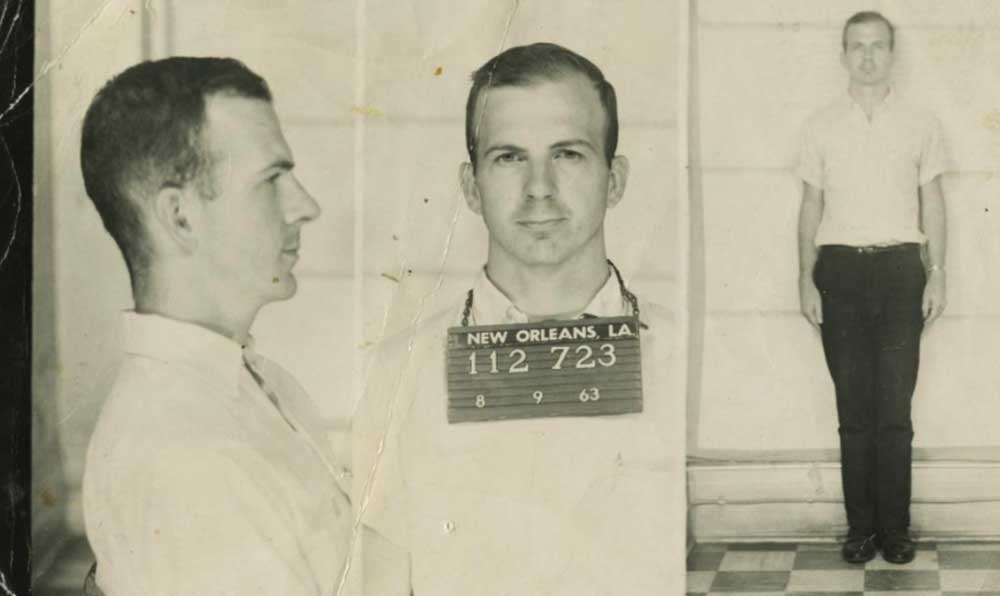
The record shows an employee of the Depository, Lee Harvey Oswald, was arrested later that afternoon.
The record does not show how the rifle got from the sixth floor to the man in handcuffs.
That gap is where the story begins.
It is also where the story ends, because Oswald was never tried.
He was killed two days after the assassination, before any trial could take place.
So the rifle remains a fixed point.
A physical object.
A fact that anchors everything else, even as the questions around it multiply.
What happened between the rifle being found and the man being arrested?
That would require evidence.
That would require a trial.
That would require a verdict.
None of those things exist.
12:30 P.M. — DEALEY PLAZA
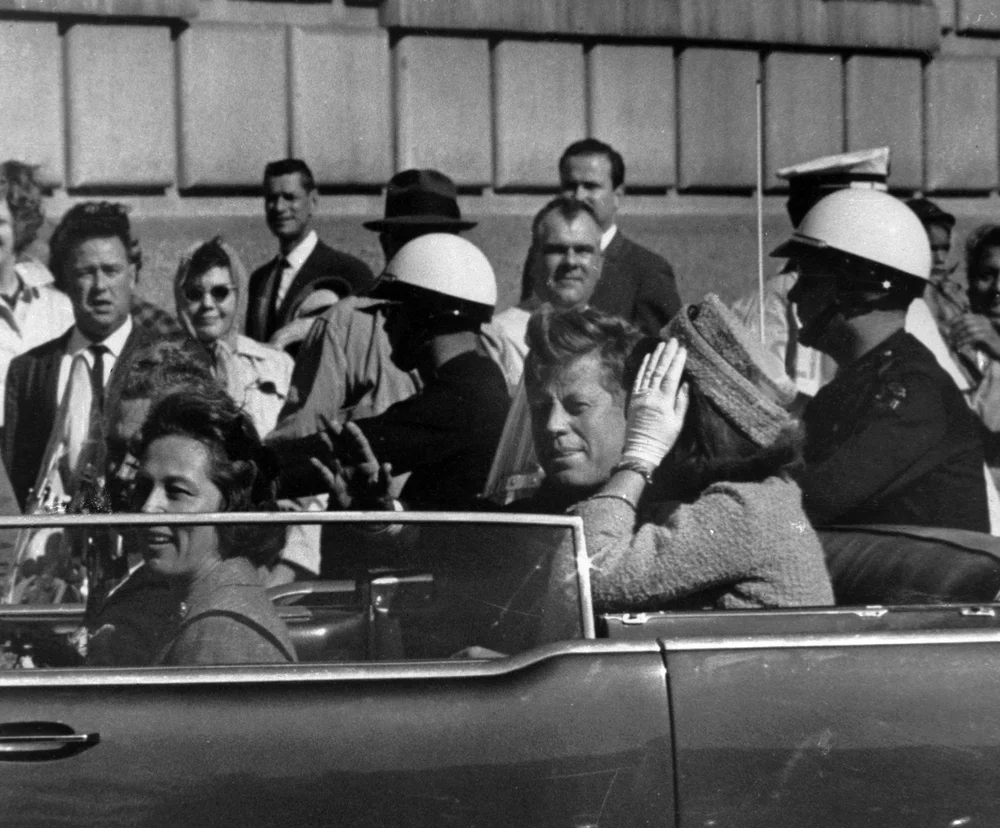
Shots were fired at approximately 12:30 p.m. as the motorcade passed the Texas School Book Depository.
Kennedy was struck in the head and throat.
Texas Governor John Connally, riding in the same vehicle, was seriously wounded but survived.
First Lady Jacqueline Kennedy was present in the limousine.
The exact number of shots fired is not established in the record.
The precise trajectory of each bullet is not established in the record.
That would require evidence the record does not contain.
The president was pronounced dead at Parkland Memorial Hospital at 1:00 p.m.
The motorcade had left Dealey Plaza minutes earlier.
An eyewitness reported seeing a man in the Depository window.
The Depository's superintendent helped identify Oswald as an employee missing during a headcount.
Oswald was an employee of the Texas School Book Depository.
He was arrested later that afternoon.
The rifle found on the sixth floor was a 6.5mm Mannlicher-Carcano.
Ballistics tests linked it to the shooting.
The shots were fired.
The vehicle kept moving.
The president was dead by 1:00 p.m.
The questions came later.
How many shots?
From where?
From whom?
The record holds the rifle, the window, the headcount.
It does not hold the answer to every question.
THE ARREST AND THE 12 HOURS
He was arrested within hours.
The Dallas Police took Lee Harvey Oswald into custody later that afternoon, an employee of the Texas School Book Depository.
He was interrogated for approximately 12 hours over two days.
No formal charges were filed before his death.
What was said during those 12 hours is not in the record.
No transcript, no complete summary, no account that both sides ever agreed on.
The record holds the arrest. The record holds the hours. The record does not hold the conversation.
The FBI, under J. Edgar Hoover, conducted its own investigation alongside the city police.
The Dallas Police Chief oversaw the investigation and Oswald's custody.
Two investigations ran at once. Two agencies held pieces of the same man's time.
What did Oswald say when they asked about the rifle?
What did he say when they asked about the sixth floor?
What did he say when they asked about the motorcade?
That would require evidence.
Oswald was never tried. He was killed two days after the assassination, in the basement of the police headquarters, while being transferred between jails.
The interrogation ended the way the case ended: without a verdict.
Twelve hours of questions, and none of them ever reached a courtroom.
It is a documented fact that the hours happened. It is not a documented fact what happened inside them.
THE BASEMENT AND THE VERDICT
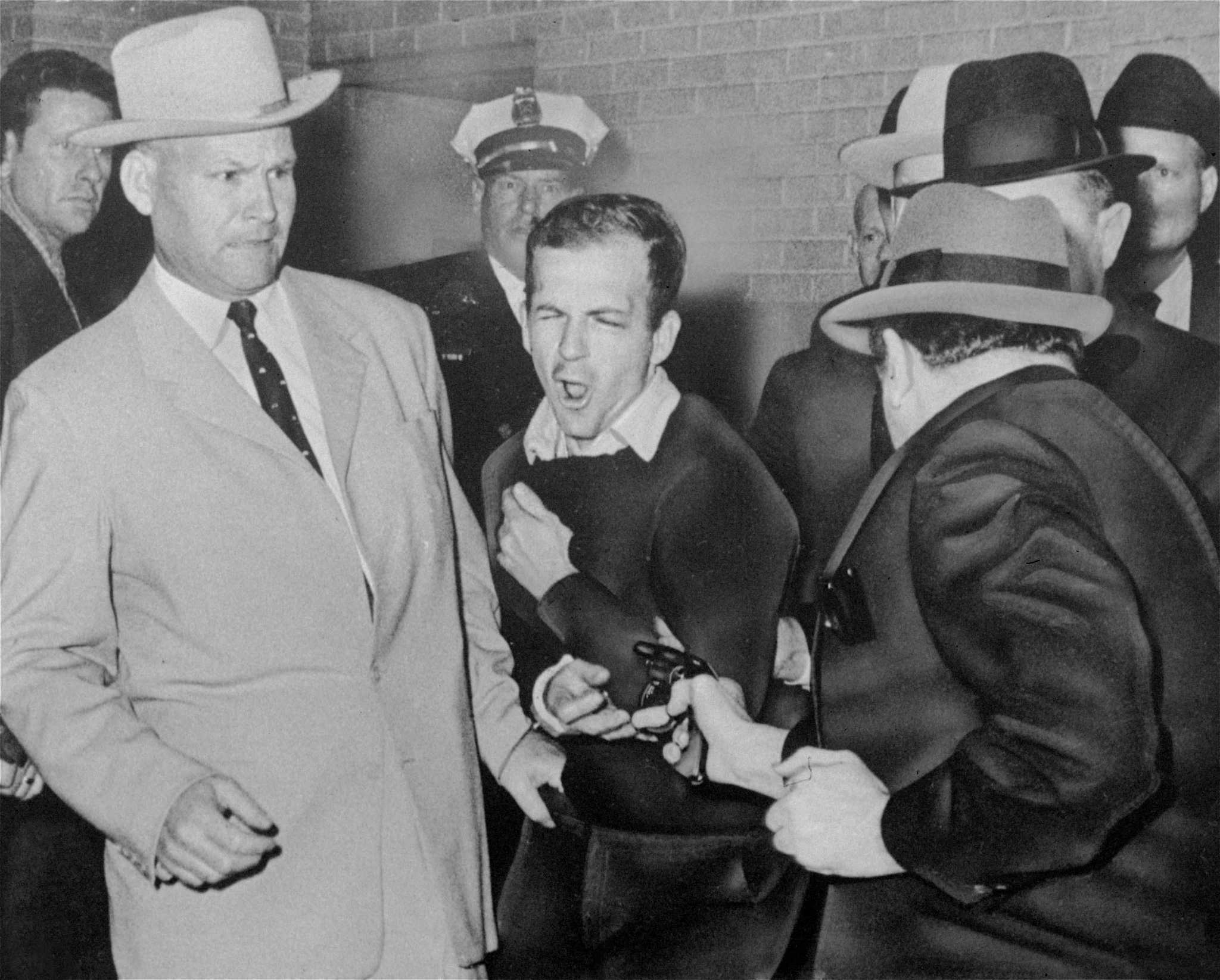
Two days after the assassination, Lee Harvey Oswald was shot in the basement of Dallas Police Headquarters.
The man who shot him was Jack Ruby, a Dallas nightclub owner.
Oswald was being transferred between jails at the time.
The murder was broadcast live on national television.

So the only trial this case ever produced was not for the assassination of a president.
It was for the murder of the accused assassin.
Jack Ruby was tried for the murder of Oswald in Dallas in 1964.
The district attorney who prosecuted him was Henry Wade.
Ruby was found guilty of murder with malice and sentenced to death.
The conviction was overturned on appeal in 1966.
The grounds were pretrial publicity — the trial had been improperly held in Dallas.
A new trial was ordered.
Ruby died of a pulmonary embolism on January 3, 1967, before a retrial could occur.
No retrial. No verdict on appeal.
The irony is not subtle: the only verdict in this case was about the man who killed the accused, not about the assassination itself.
Whether Oswald acted alone in killing Kennedy is not established by a trial verdict.
He was never tried.
The interrogation ended without a verdict. The trial for the assassination never began.
What remains is a conviction, overturned. A death, before retrial.
And a question the record does not answer.
AND THE STORY STILL ISN'T OVER
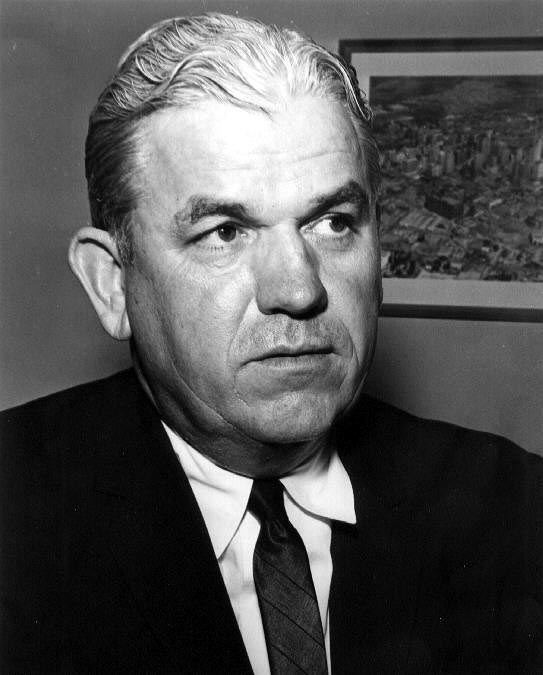
The Warren Commission concluded in September 1964 that Oswald acted alone in killing Kennedy.
It also concluded that Ruby acted alone in killing Oswald.
That finding remains the official government account.
A subsequent House Select Committee on Assassinations concluded in 1979 that Kennedy was "probably assassinated as a result of a conspiracy."
The committee did not identify specific conspirators.
The identity of any conspirator, if one existed, is not established in the record.
The President John F. Kennedy Assassination Records Collection Act of 1992 mandated the release of assassination-related records.
Most documents are now public.
Oswald was buried in Fort Worth, Texas, on November 25, 1963.
His grave has been repeatedly vandalized.
Marina Oswald remarried and has spoken publicly about the assassination.
Ruby died in 1967 while awaiting retrial.
The conviction was overturned. The retrial never came.
What the record establishes is a rifle, an arrest, twelve hours of interrogation.
What it does not establish is a closed case.
The documents keep coming out. The argument keeps going.
A question remains, and the record does not answer it.
Advertisement
You may also like
The cellmate confession that cracked the Manson murders
The cellmate was in jail on a charge of her own. Susan Atkins was there too, held on something unrelated to Cielo Drive. The…
The psychologist's mistress who heard a confession and changed a murder case
The tape recorder was running. Erik Menendez was in a therapy session with Dr. Jerome Oziel, his psychologist, when he confessed to the murders…
The cotton gin fan tied to Emmett Till's neck — and the evidence that didn't convict
The Tallahatchie River gave up its weight on August 31, 1955. Emmett Till's body surfaced with a cotton gin fan tied to his neck…
A Splash in the Chattahoochee — the Fiber Evidence That Tied Wayne Williams to Two Murders
The bridge over the Chattahoochee was quiet that night in May 1981. Police had staked it out after a tip, waiting on the dark…
The slumber party interrupted: Polly Klaas's last night before the intruder came
The party was a sleepover. Three girls, twelve years old, in the bedroom of a house in Petaluma, California. It was October 1, 1993.…
The .40-caliber pistol traced to New Jersey that linked Andrew Cunanan to Versace's killing
A .40-caliber pistol ended Gianni Versace’s life on the steps of his Miami Beach mansion. That same pistol had been stolen from a prior…