She was found at the bottom of the stairs — her daughter still wants the whole story

🚨 THE BLOWPOKE BY THE STAIRS…
The blowpoke sat by the stairs for hours before anyone thought to measure it.
On December 9, 2001, Kathleen Peterson was found dead at the bottom of a staircase in her home in Durham, North Carolina.
Her husband, novelist Michael Peterson, called emergency services, reporting that she had fallen down the stairs.
Paramedics and police found her lying in a pool of blood at the base of the staircase.
She was pronounced dead at the scene.
A fireplace blowpoke was found near the stairs.
The prosecution would later suggest it as the weapon.
It was never conclusively identified as the weapon.
That is what the record establishes.
The blowpoke was an object in a house where a woman died.
It was an object with a hook and a point, the kind of thing that sits beside a hearth and is rarely touched.
Police photographed it.
Investigators bagged it.
The jury would hear about it.
But no one could say, with certainty, that it struck Kathleen Peterson.
The blood at the base of the stairs was the thing investigators could not explain.
Too much blood.
Blood in patterns that did not match a simple fall.
Blood that made the initial assumption of an accident give way to a homicide investigation.
And still the blowpoke remained a suggestion.
A theory.
A prop in a story that had not yet been told.
Why does one object matter so much?
Because the weapon was never definitively identified.
Because a woman was dead at the bottom of her own stairs.
Because her daughter would spend years asking how.
Caitlin Atwater would sit through the trial and watch the blowpoke carried into the courtroom.
She would hear experts describe what it could have done.
She would hear the defence say it did nothing.
The blowpoke would not answer her.
Nothing in the record says it did.
WHO KATHLEEN WAS
Kathleen Peterson was 48 years old, a telecommunications executive at Nortel Networks.
She was the mother of two daughters from a previous marriage.
She had two stepchildren from Michael Peterson's first marriage.
Her daughter, Caitlin Atwater, would be prominent in the courtroom.
She would be prominent in public statements throughout the legal proceedings.
Kathleen was the only other person in the home at the time of her death.
That is what the record establishes about her.
No further details about Kathleen's personal life are in the record.
Her career is in the record.
Her family is in the record.
Her place in the house that night is in the record.
What she was like at dinner, what she said that evening, what she thought — that is not in the record.
The record holds her job title and her family roles.
It holds the fact that she was there.
It does not hold the rest.
Caitlin Atwater would carry her mother's name into the courtroom.
She would testify.
She would speak when the proceedings were over.
The woman at the bottom of the stairs was someone before she was a case.
She was a mother who had daughters.
She was a stepmother who had stepchildren.

She was an executive who worked in telecommunications.
She was 48.
She was the only other person in the home.
The record says who she was in relation to others.
It says where she worked.
It says how old she was.
It does not say more.
THE 911 CALL AND THE POOL OF BLOOD
The 911 call came from inside the house.
Michael Peterson told the dispatcher that his wife had fallen down the stairs.
The exact content of that call is not in the record.
Paramedics and police arrived to find Kathleen Peterson lying in a pool of blood at the base of the staircase.
She was pronounced dead at the scene.
The initial assumption was an accidental fall.
That assumption did not last long.
Investigators looked at the volume of blood on the floor.
They looked at the pattern of blood on the walls.
They looked at the way it had pooled around her body.
The blood was the problem.
A simple fall, they said, does not produce that much blood, in that pattern, in that place.
The scene did not look like an accident to them.
It looked like something else.
So the investigation shifted.
The fall became a question.
The blood became the answer they thought they had found.
How could a fall produce that much blood?
That is the question the scene asked.
The record does not answer it.
THE BLOOD SPATTER AND THE BLOWPOKE
Police treated the staircase as the evidence.
Blood spatter on the walls and floor became the prosecution's centrepiece.
Prosecution experts testified the pattern came from a violent beating with a blunt object.
They pointed to a fireplace blowpoke found near the stairs as the likely weapon.
It was a long iron rod, the kind used to tend a fire.
The defence answered with the body itself.
Kathleen's injuries, defence experts testified, were consistent with an accidental fall.
They noted the alcohol and prescription medication found in her system.
A fall, impaired, could produce this scene, they argued.
Two readings of the same blood.
The same stairs.
The same woman on the ground below.
The prosecution called it a beating.
The defence called it an accident.
The blowpoke was never proven to be the weapon.
Not because it was ruled out.
Because the record does not establish it.
No weapon was ever conclusively identified.
That remained true through the trial, through the appeal, through every telling of the story since.
The blood said violence to one set of experts.
It said gravity to another.
The staircase kept both versions.
A SECOND STAIRCASE IN GERMANY
The staircase in Durham was not the first one.
Investigators learned that Michael Peterson had been a person of interest in another death, sixteen years earlier, in Germany.
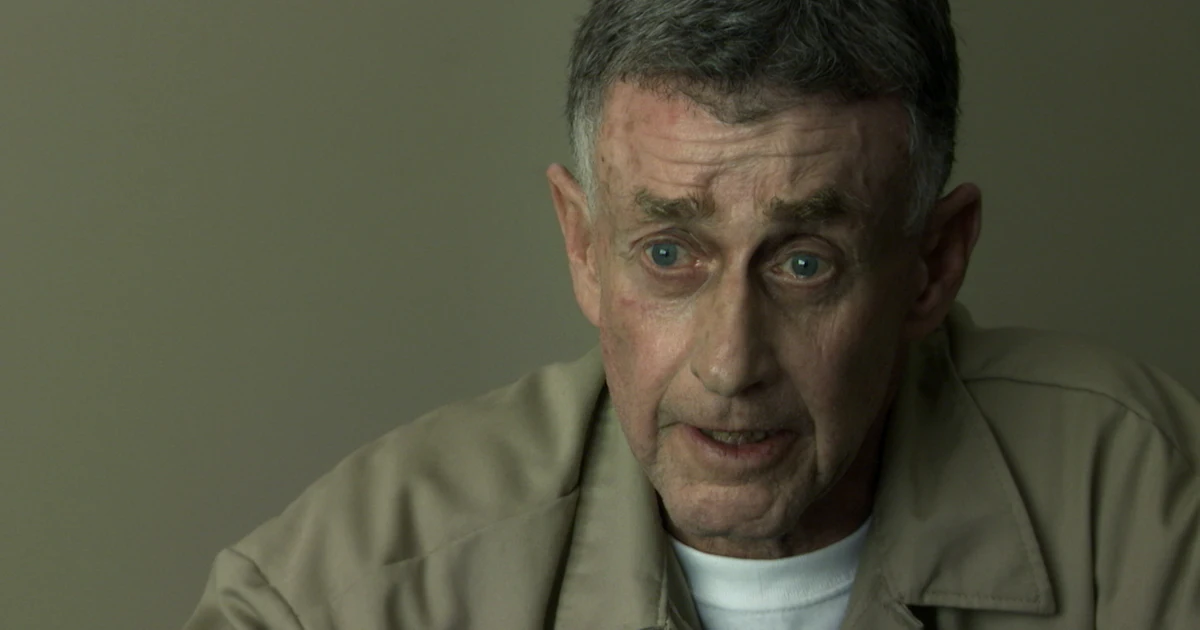
The dead woman was Elizabeth Ratliff, a friend and neighbor.
Ratliff had been found at the bottom of her own staircase in 1985.
Her death was initially ruled accidental.
Then the connection surfaced, and her body was exhumed in 2003.
A medical examiner concluded her injuries were homicidal.
No charges were ever filed in Ratliff's death.
That is the record: an exhumation, a conclusion, and no prosecution.
The prosecution wanted the jury to hear about the German staircase anyway.
They suggested a pattern: two women, two falls, two deaths.
The judge limited how much of that evidence the jury could hear.
So the pattern was suggested in court, not established there.
It remains a suggestion, not a finding.
The defence pointed out that Peterson was never charged in Ratliff's death.
That is also the record.
Two staircases stood in the same story.
One had a conviction attached to it.
The other had only a question mark.
THE TRIAL AND THE VERDICT
The trial opened in Durham in the summer of 2003.
Michael Peterson sat charged with first-degree murder.
The prosecution argued he beat Kathleen to death with a blunt object.
The defence argued she fell.
Her daughter, Caitlin Atwater, took the stand.
She testified about her mother, about the house, about the phone call that told her something was wrong.
The courtroom heard two versions of the same staircase.
One version ended in a beating.
The other ended in a fall.
The jury listened for weeks.
In October 2003, they came back with a verdict.
They convicted Michael Peterson of second-degree murder.
He was sentenced to life in prison without the possibility of parole.
The weight of that conviction settled over the courtroom.
Kathleen’s family had their answer.
But the jury’s reasoning is not in the record.
No one can say which witness they believed, which argument carried.
Only the verdict itself is documented.
Second-degree murder, not first.
A beating, but not a premeditated one.
A conviction, but one built on blood spatter.
And blood spatter, as the record would later show, can be built on lies.
THE EXPERT WHO LIED
The blood-spatter analyst was the prosecution’s foundation.
He testified that the pattern of blood on the stairs meant Kathleen was beaten, not fallen.
The jury heard him, and they believed him.
But the analyst had misrepresented his credentials.
That misrepresentation became the centre of the appeal.
In 2011, a judge ruled the analyst had given false testimony about his qualifications.
The conviction was overturned.
The case went back to the starting line.
Rather than face a retrial, Michael Peterson entered an Alford plea in 2017.
In an Alford plea, a defendant does not admit guilt.
He acknowledges only that prosecutors have enough evidence to convict.
Peterson maintained his innocence as he entered it.
He was sentenced to time served — roughly 86 months.

In December 2017, he walked out of prison.
The record does not establish that he was factually innocent.
It establishes only that the system that convicted him was built on a lie.
Kathleen’s daughter, Caitlin Atwater, had testified at the trial.
She had watched the expert take the stand.
She had watched the conviction fall apart on his falsehoods.
The plea, she later said, denied the family closure.
A conviction, overturned.
A plea, without guilt.
A family, still waiting for the whole story.
TWO STORIES, ONE STAIRCASE
One version begins with a weapon: a fireplace blowpoke found near the stairs.
Prosecution experts read the blood spatter and saw a beating, a blunt object swung again and again.
The blowpoke was the likely instrument, they argued, and the pattern of blood proved intent.
The defence read the same room differently.
Kathleen fell, they said, possibly impaired by alcohol and prescription medication found in her system.
Her injuries, their experts testified, were consistent with an accidental fall down those stairs.
The same blood, the same stairs, the same blowpoke — read in completely opposite ways by experts on each side.
It is a vertigo built into the evidence itself.
Neither reading can be dismissed outright, and neither can be confirmed.
The prosecution’s story required a weapon that was never definitively identified.
The defence’s story required a fall that left a pattern of blood investigators called unusual.
The judge limited how much of the Ratliff evidence the jury could hear.
So the pattern argument — a second woman, a second staircase, a second death — was only partially placed before them.
What remains is a question the record does not answer.
Was Kathleen beaten, or did she fall?
The jury chose one version in 2003.
The overturned conviction, and the Alford plea that followed, left the other version standing.
An Alford plea is not an admission.
It is an acknowledgment that the evidence could convict, while the accused maintains innocence.
That is not proof of either story.
That is a door left open.
WHAT THE RECORD DOES AND DOESN'T SAY
The blowpoke is often cited online as the murder weapon.
The record does not say that.
The record says the weapon was never definitively identified, and that the blowpoke's role was "not conclusively established."
The owl theory — that Kathleen was attacked by an owl — is not mentioned in the source material at all.
It is not part of the documented record.
It is a theory, and only a theory.
The source confirms that Michael Peterson had an affair with a man.
That fact is in the record.
What is not in the record is any link between that affair and a motive for murder.
The record does not establish that connection.
The source confirms that Elizabeth Ratliff's death was ruled homicidal after her body was exhumed in 2003.
No charges were ever filed in that case.
That is also in the record.
So what remains documented is narrow: a woman found at the bottom of the stairs, a conviction, an overturned conviction, a plea.
What remains viral is broad: the blowpoke, the owl, the affair, the pattern.
The line between them is the line between what a jury heard and what the internet repeats.
Caitlin Atwater, Kathleen's daughter, sat through the trial and heard the evidence presented.
She heard the prosecution call the blowpoke the likely weapon.
She heard the defence call the fall an accident.
She did not hear the record resolve it.
That would require evidence the record does not contain.
She was on the ground below.
THE DAUGHTER'S QUESTION
She testified in the courtroom where her mother’s blood was described in detail.
She was Kathleen’s daughter, Caitlin Atwater, and she sat through the prosecution’s story and the defence’s story.
She heard the blowpoke described as a weapon.
She heard the fall described as an accident.
She heard the jury convict Michael Peterson of second-degree murder.
She heard the conviction overturned in 2011.
She heard the Alford plea in 2017, the deal that set him free.
She told reporters the family had been denied closure.
That is what the record shows she said.
What exactly Atwater believes happened is not fully in the record.
Her full statements are not quoted.
The record does not contain her complete account of that night.
It contains her presence, her testimony, her frustration.
It does not contain her whole story.
The case drew cameras for years, including the 2022 HBO documentary series *The Staircase*.
The series followed the trial, the appeal, the plea.
It showed the staircase, the blood, the lawyers.
It showed the daughter in the gallery.
It did not show her answers.
She was on the ground below, in the sense that matters here.
Her mother was found at the bottom of the stairs on December 9, 2001.
Caitlin was in the courtroom after that.
She was vocal after that.
She was denied closure, she said.
The search for the whole story continues.
The record does not resolve it.
That would require evidence the record does not contain.
AND THE STORY STILL ISN'T OVER
He was released from prison in December 2017, after entering the Alford plea.
He has continued to live in North Carolina.
He has maintained his innocence, and he has spoken publicly about the case, including in a documentary series.
The documentary followed the case for years.
It ended, and the case did not.
Elizabeth Ratliff’s death in Germany has never been prosecuted.
Her family has spoken publicly about their belief that her death was connected to Peterson.
That connection is a belief.
The record does not establish it.
Kathleen’s family, particularly Caitlin Atwater, remains vocal.
She testified at the trial.
She later expressed frustration with the plea deal.
She said she believed the family had been denied closure.
That was her word: denied.
The closure has not come.
The case remains a subject of public fascination and debate.
It is a story told and retold.
It is a story with no final resolution in the court of public opinion.
What would a final resolution look like?
A confession?
A weapon definitively identified?
A new legal proceeding?
The record does not mention any new legal proceedings.
The next concrete step is not specified.
That would require evidence the record does not contain.
The whole story is still being asked for.
It has not been given.
Advertisement
You may also like
The DNA under her fingernails that cracked a 17-year cold case — but left one question open
🚨 THE NEIGHBOR'S CALL THAT OPENED A 17-YEAR WAIT… A neighbor in Bellaire, Texas, called police about a break-in at a home on June…
The 4-day gap between a 5-year-old's abduction and a suspect's arrest in her murder
🚨 THE 4-DAY GAP July 15, 2002, in Stanton, California: a man asks a five-year-old for help finding a lost dog. The friend runs…
The grandmother's 911 call that started it all — and the family story that never fit
🚨 THE 911 CALL THAT DIDN'T MATCH THE FAMILY'S STORY The 911 call came on July 15, 2008, from a grandmother named Cindy Anthony.…
The missing boy's ring found in a crawl space — 27 bodies later
🚨 THE RING IN THE CRAWL SPACE The ring was small, gold, and it belonged to a missing 15-year-old boy. Police found it on…
The 2005 Aruba nightclub exit that left three men with stories that never matched
🚨 THE EXIT THAT STARTED EVERYTHING The club was called Carlos'n Charlie's, a bar and nightclub in Oranjestad, Aruba. Natalee Holloway, 18, from Mountain…

The tarot card message that turned a random killing spree into a hunt for 'God'
🚨 THE TAROT CARD THAT READ 'CALL ME GOD' The card was a piece of evidence, found at a crime scene during the investigation…