The street preacher who took Elizabeth Smart from her bedroom — and the 9-month search that followed
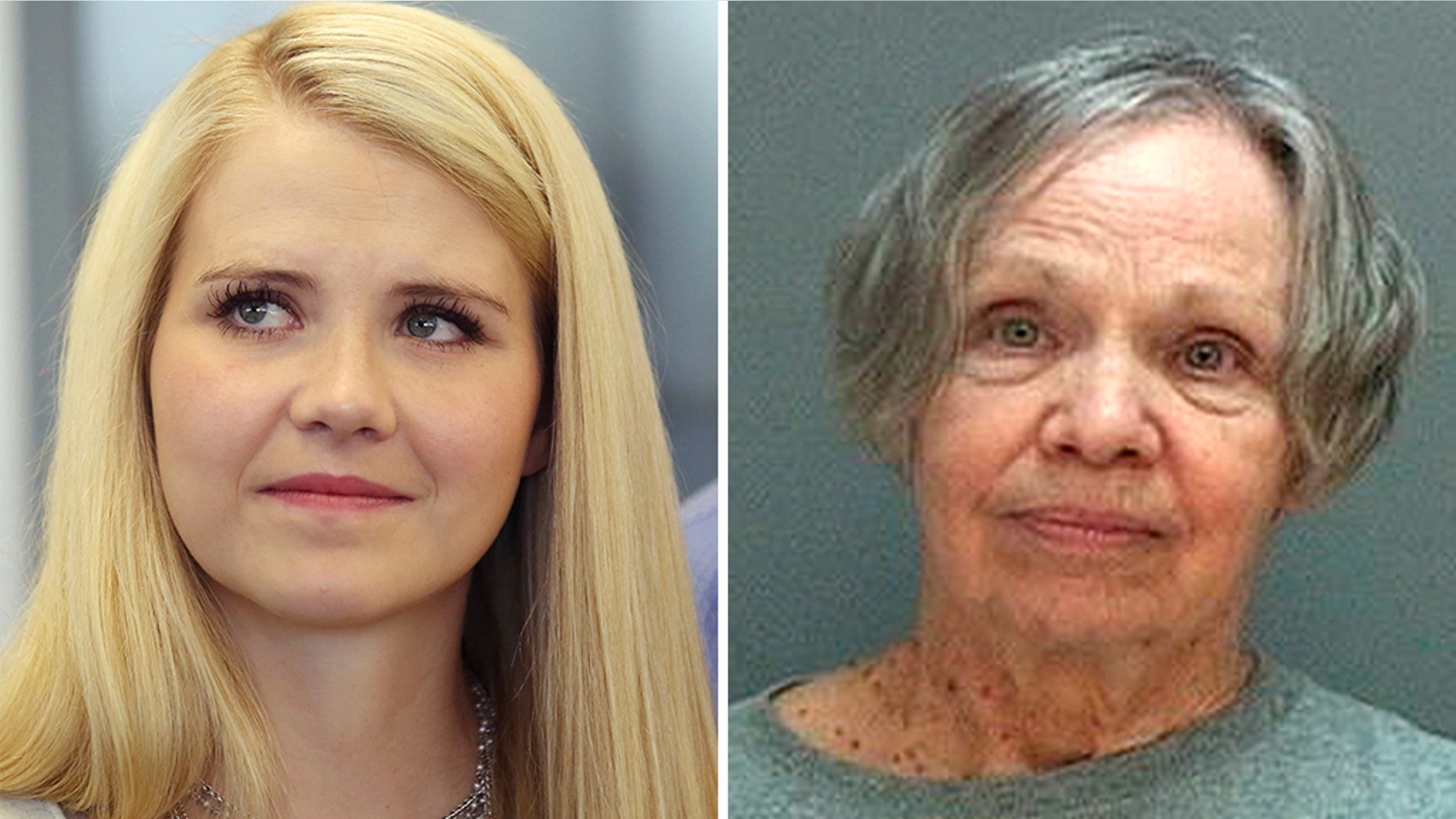
A voice woke the younger sister first.
The voice was a man's, and it came from the dark of the room she shared with Elizabeth Smart, then 14.
The threat was plain: make noise, and the family would be harmed.
That is how the source's account records the abduction of June 5, 2002, in the Federal Heights neighborhood of Salt Lake City, Utah.
The man took Elizabeth into the night from her own bedroom.
Her parents found her missing the next morning and called police.
The room was quiet until it wasn't.
The sister heard a threat, not a struggle.
There is a question the record leaves open: how did he get in?
The source does not state whether the abductor entered through a door or a window, or whether either was forced.
That detail is not established.
What is established is the silence of the taking.
A girl gone before anyone could scream.
A family asleep one floor away, or one wall away.
The man was not a stranger to the night.
He was a voice in the dark, and then he was gone with her.
Who was he?
That would require evidence.
In June 2002, there was none yet.
There was only the missing girl, the cold bed, and a sister who had heard a man threaten her family.
NINE MONTHS OF LEADS AND DEAD ENDS
The case drew intense national media attention within days.
Reporters camped outside the Smart home.
The story was on every channel, every front page.
The investigation initially focused on Richard Ricci, a known transient who had done odd jobs at the Smart home.
Ricci was arrested on an unrelated parole violation.
He became the suspect.
For months, the search circled around one man.
The lead detective was Salt Lake City Police Detective Tom Smart.
He was also Elizabeth's uncle.
He sorted through tips, checked alibis, watched the days pass.
For months, the family and police had no confirmed sighting of Elizabeth.
No witness placed her anywhere.
No ransom note came.
No body was found.
Ricci died in October 2002.
After his death, his alibi was confirmed.
He was cleared.
The prime suspect was innocent.
The investigation went quiet again.
The source does not specify what other leads were pursued during those nine months beyond the Ricci investigation.
What remains is the record of a dead end.
What remains is the fact that Ricci was not the man.
What remains is a family waiting.
The cameras left.
The story cooled.
Elizabeth Smart was still missing.
THE STREET SIGHTING
The witnesses were in Sandy, a suburb south of Salt Lake City.
They saw a street preacher, his wife, and a young girl walking together in daylight.
They recognized the man from a television broadcast of "America's Most Wanted."
They contacted police.
On March 12, 2003, officers stopped the trio on the street.
Elizabeth Smart was identified.
She was alive, approximately nine months after she was taken from her bedroom.
Brian David Mitchell was a self-styled street preacher.
Wanda Barzee was his wife.
Both were taken into custody.
The case broke open not from a forensic lead.
Not from a confession.
Not from a tip about a hideout.
It broke from a TV show and two people who looked twice.
The source does not state what Elizabeth was doing or saying at the moment officers stopped the trio.
It states only that she was identified.
The cameras had left.
The story had cooled.
Elizabeth Smart was still missing.
Now she was found, walking on a street in broad daylight with the two adults who had taken her.
The relief was real.
The strangeness was real too.
TWO STORIES, ONE VERDICT
Mitchell was charged with kidnapping and sexual assault.
Barzee was charged as a co-defendant.
The legal process did not move quickly.
Mitchell was initially found incompetent to stand trial.
He was committed to a mental hospital for treatment.
The source does not specify the nature of that incompetency.
It does not specify the evidence presented at trial beyond the charges and the insanity defense.
Barzee pleaded guilty in 2009 to federal charges of kidnapping and unlawful transportation of a minor across state lines.
Mitchell's defense argued he was insane.
The jury rejected that claim.
Flatly.
After years of competency proceedings, he was found competent in 2010.
On December 10, 2010, he was convicted in federal court of kidnapping and transporting a minor across state lines for illegal sexual activity.
He was sentenced to life in prison without parole.
It is a verdict that took eight years to reach.
It is a verdict that took a jury moments to deliver.
Was the delay about his mind?
Was it about the law's caution?
Was it about the weight of the case itself?
That would require evidence the record does not provide.
The conviction was upheld on appeal.
Barzee was released from prison in September 2018 after serving her sentence.
Mitchell remains in a federal prison, serving life without parole.
Two stories ran side by side through the years: the defense of madness, and the jury's flat rejection of it.
One verdict settled them.
AND THE STORY STILL ISN'T OVER
Brian David Mitchell is serving a life sentence without parole at a federal prison.
Wanda Barzee was released from prison in September 2018 after serving her sentence.
The legal case is closed. The human story is not.
Elizabeth Smart has become an advocate for missing persons and child safety, founding the Elizabeth Smart Foundation.
She has spoken publicly about her ordeal.
She has written a memoir.
Her father, Ed Smart, has also been active in advocacy.
The Smart family has remained in the public eye through their work on behalf of abduction victims.
The record does not state whether Mitchell has any pending appeals or motions after his conviction was upheld on appeal.
That question is not answered here.
Nor is it answered what a life sentence contains beyond the fact of it.
What remains is documented: a family rebuilt a life in public, on behalf of other families.
The nine months ended on a Sandy street. The years after are their own story.
Advertisement
You may also like
The cell tower records that placed Adnan Syed near Leakin Park — and the defense that tore them apart
The note was found in Hae Min Lee's car, and it read "I'm going to kill." Prosecutors argued Adnan Syed wrote it. The defense…
The 2002 fishing trip that Scott Peterson said explained everything — and the boat anchor that didn't match
December 24, 2002, and Scott Peterson reports his eight-months-pregnant wife Laci missing from their Modesto home. He says he spent that morning fishing at…
The 3:15 a.m. attack that 38 neighbors reportedly heard — but the timeline has a hole
She was almost home. Catherine "Kitty" Genovese, 28, had walked from her job at Ev's 11th Hour Bar to her apartment building at 82-70…
The white Cadillac witness said he was inside — 27 years later, one man faces trial
A white Cadillac pulled alongside a BMW sedan on the Las Vegas Strip. It was September 7, 1996, and gunfire erupted. The BMW carried…
The phone call that made a friend dial police — and the interview that followed
The missed appointment was a doctor’s appointment, and the phone went unanswered. On August 13, 2018, in Frederick, Colorado, a friend called police to…
The smiley-face confession that made a sister call the police
The note was found in March 1995, near a woman's body in Oregon. It was handwritten, a confession. It was signed with a smiley…