The surveillance clip that made police reverse course on a person of interest
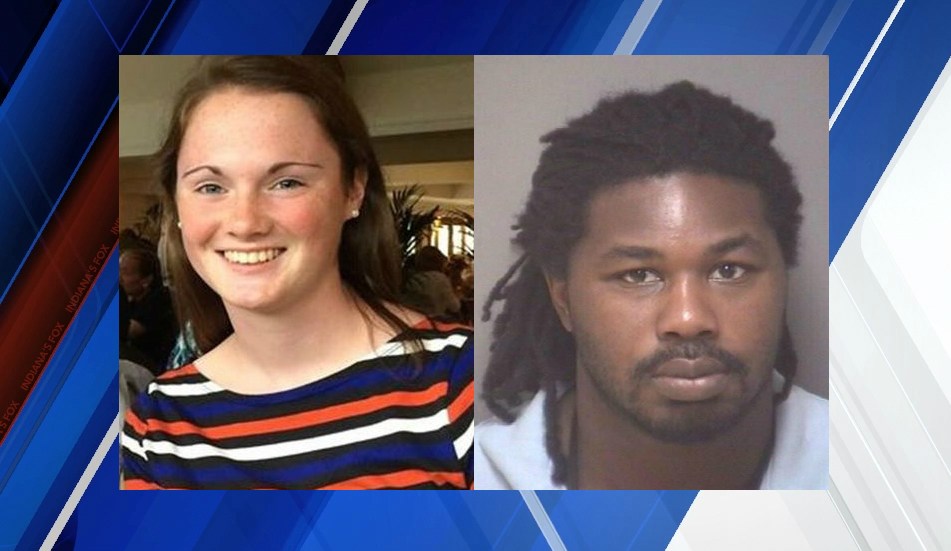
🚨 THE CLIP THAT CHANGED EVERYTHING…
The first clip showed Hannah Graham walking alone.
The second clip showed her with a man.
Not a blur, not a shadow — a man, walking beside her, in the frame.
Charlottesville police released the second clip days after the first.
They had already told the public the man in the clip was not a suspect.
They cleared him as a person of interest.
Then they watched more footage.
They talked to witnesses.
They reversed course.
The man was later identified as Jesse Matthew, a 32-year-old hospital orderly.
The clip is the hinge.
It turned a missing-person case into a manhunt.
Before the clip, the story was a question: where did Hannah go?
After the clip, the story was a different question: who was she with?
The record does not detail the clip's content beyond showing Graham with a man.
What the clip shows, exactly, is not established.
But the effect is on the record.
Police Chief Timothy Longo stood before cameras and changed the story.
He said the man was no longer cleared.
He asked the public for help finding him.
Matthew had already been seen with Graham at a bar that evening.
He had already denied being with her when police first contacted him.
He had already changed his story.
He fled before he could be formally interviewed.
The clip made him the focus.
The clip made him the target.
The manhunt went nationwide.
A single piece of footage flipped the investigation.
What happened next would depend on what else the footage — and the man — could reveal.
SEPTEMBER 13 — THE NIGHT OUT
She was eighteen, a second-year student at the University of Virginia, home for the year in Charlottesville.
She was from Fairfax County.
On the night of September 13, 2014, she went out with friends.
It was an ordinary beginning.
She was seen at a bar earlier that evening with a man.
That man was later identified as Jesse Matthew, a 32-year-old hospital orderly.
Then the night ended differently.
Surveillance video caught her walking alone along a downtown street.
That was the last time she was seen.
The exact route she took after leaving the bar is not in the record.
The exact timeline of her movements that night is not in the record.
What is known is the footage: a young woman walking, alone, into the dark.
Her friends reported her missing the next day, September 14, 2014.
A missing-person report was filed.
Police released the first clip showing her walking alone.
The release of the footage triggered a massive search.
A single piece of footage flipped the investigation.
What happened next would depend on what else the footage — and the man — could reveal.
SEPTEMBER 14 — THE MISSING PERSON REPORT
The missing-person report was filed on September 14, 2014.
Who filed it is not specified in the record.
The exact time is not specified either.
What is known is that an 18-year-old second-year student from Fairfax County had not come home.
Her name was Hannah Graham.
Police released the first surveillance clip that day.
It showed Graham walking alone along a downtown street.
The clip was grainy. It was short. It was the last known image of her moving freely.
The release of the footage triggered a massive search.
Volunteers fanned out across Charlottesville. Officers checked alleys and parking lots. Students joined the hunt.
Charlottesville police chief Timothy Longo gave frequent public updates.
He stood before cameras and asked for help.
He described the search as urgent. He described the footage as a lead. He described the community's response as essential.
The clip was everywhere — on local news, on national broadcasts, on social media.
People studied her walk. They studied the street behind her. They studied the time stamp.
What they could not see was what happened after the frame ended.
That would require evidence the clip did not contain.
The search grew. The days passed. The updates continued.
Each one carried the same weight: a missing student, a city watching, a chief speaking.
The clip did not show where she went.
It only showed where she was last seen alone.
THE SECOND CLIP — A MAN APPEARS
The second clip showed Hannah Graham with a man.
Police released it, and the man's face became the focus of the search.
He was not named at first.
Police called him a person of interest.
Then they cleared him.
Chief Timothy Longo stood before the cameras and said the man was not a suspect.
That clearance did not last.
Police reversed course after reviewing additional surveillance footage and witness statements.
The man was later identified as Jesse Matthew.
He was 32 years old, a hospital orderly who had once attended the University of Virginia.
He had been seen with Graham at a bar earlier that evening.
The first clip showed her alone.
The second clip showed her not alone.
How could police clear him?
What did the additional footage show?
What did the witnesses say?
The record does not detail the specific reasons for the initial clearance.
The exact new evidence in the additional footage is not established.
What is established is the sequence: a clip, a clearance, a reversal.
A person of interest became a man who was not a suspect.
Then a suspect again.

The clip did not show where she went.
It only showed that she was not last seen alone.
THE INTERVIEW THAT FELL APART
Police contacted Jesse Matthew on September 18, 2014.
He initially denied being with Hannah Graham that night.
Then he changed his story.
The exact content of that changed story is not in the record.
Police wanted a formal interview.
They never got one.
Matthew fled before he could be questioned.
The flight turned suspicion into something harder.
A nationwide manhunt began.
It is one thing to be a person of interest.
It is another to run.
Police had cleared him, then reversed course.
Now they were hunting him.
The clip showed a man walking with Hannah Graham.
That man was Matthew.
He said he had not been with her.
Then he said something else.
Then he was gone.
The shift was the story.
Not because the record explains what he told them.
But because the record shows what he did next.
He ran.
That would require evidence to call it guilt.
It is fair to call it flight.
The manhunt spread across state lines.
Tips came in from across the country.
He was not found in Virginia.
He was not found in a neighboring state.
He was found on a beach in Galveston, Texas, on October 2, 2014.
A local resident tipped off police.
The interview that fell apart had ended in a capture.
The case was no longer about a missing student.
It was about a man who fled.
OCTOBER 2 — CAPTURE IN GALVESTON
The tip came from a local resident in Galveston, Texas.
Matthew was captured on October 2, 2014, on a beach there.
The manhunt had been nationwide.
It ended with a man in handcuffs on sand.
The arrest ended the search for Matthew.
It did not end the search for Hannah.
She was still missing.
Her name was still on flyers.
Her case was still open.
The man who fled was now in custody.
The question of where she was remained.
Police had not said.
The circumstances of the tip are not further detailed.
The circumstances of the arrest are not further detailed.
What is known is the date.
What is known is the place.
What is known is that a local resident called it in.
He was taken without incident, according to reports at the time.
He was returned to Virginia to face charges.
The charges were abduction with intent to defile.
The charges were first-degree murder.
She was not found that day.
She was not found that week.
She was found on October 18, 2014.
That was sixteen days later.
That was in an abandoned property in Albemarle County.
That was about twelve miles from Charlottesville.
The cause of death was later determined to be homicide.
But on October 2, the beach was the story.
The capture was the relief.
The relief did not last.
OCTOBER 18 — THE REMAINS
On October 18, 2014, Hannah Graham’s remains were found.
The property was abandoned, set in Albemarle County.
It sat about 12 miles from Charlottesville.
The search had lasted thirty-five days.
The hope had lasted longer.
The cause of death was later determined to be homicide.
That is what the record states: homicide.
The specific mechanism was not widely detailed in initial reports.
The exact cause and manner of death beyond that word is not specified in the record.
It is a word that closes a search.
It is a word that opens a grief.
Police chief Timothy Longo had given frequent public updates.
He had stood before cameras as the days passed.
He had spoken of a community that wanted a different outcome.
They did not get one.
She was on the ground below.
The remains were found, and the search became a recovery.
The recovery became a charge.
The charge would come later, in the form of DNA and a man already in custody.
But on October 18, the story was the ground.
The story was the abandoned property.
The story was what was not said about how she died.
That would require evidence.
That would require a trial.

That would require a plea.
None of it was known on that day.
What was known was that an eighteen-year-old from Fairfax County was gone.
What was known was that her parents had waited.
What was known was that the waiting had ended in Albemarle County.
The relief did not last.
It turned into something else.
THE DNA CONNECTION
Forensic evidence linked Matthew to Hannah's remains.
The specific forensic evidence in Graham's case was not described in detail in the record.
It was enough.
The same DNA matched evidence in the Morgan Harrington case, which had remained unsolved since 2009.
Morgan Harrington had disappeared in 2009. Her remains were found in 2010.
Her case had gone cold.
Then the DNA spoke.
The connection led to charges in both cases — abduction with intent to defile and first-degree murder in Graham's case, murder and abduction in Harrington's.
Prosecutors built their case on DNA.
They built it on surveillance footage.
They built it on Matthew's erratic behavior after Graham's disappearance — the denial, the changed story, the flight.
The evidence was not the only evidence. It was the evidence that held.
The defense argued the case was circumstantial.
That would require a jury. It would require a trial.
There was no trial.
In February 2016, Matthew pleaded guilty to the abduction and murder of Hannah Graham.
In March 2016, he pleaded guilty to the murder of Morgan Harrington.
Two cases. Two life sentences. One man.
The cold case had been closed by a match.
THE TWO STORIES — PROSECUTION AND DEFENCE
Denise Lunsford, the Albemarle County Commonwealth’s Attorney, led the prosecution.
She argued the evidence pointed to Matthew’s guilt: the DNA, the surveillance clips, the erratic behavior after Graham vanished.
The DNA was a match.
The surveillance showed him with her.
The erratic behavior was his flight.
Doug Ramseur, the public defender, led the defense.
He argued the evidence was circumstantial.
Not because it was weak.
Because it was indirect.
A clip shows a man walking with a woman.
It does not show what happened next.
DNA links a person to remains.
It does not explain the moment of death.
Flight suggests fear.
Fear suggests many things.
The specific arguments the defense made beyond “circumstantial” are not in the record.
That is where the record stops.
Matthew was charged with abduction with intent to defile and first-degree murder in Graham’s case.
He was also charged separately with murder and abduction in the Harrington case.
Two charges.
Two cases.
One set of facts, read two ways.
One lens saw certainty.
The other saw doubt.
The record holds both.
The verdict would come later.
FEBRUARY 2016 — THE PLEA
In February 2016, Matthew stood before a judge and pleaded guilty to the abduction and murder of Hannah Graham.
It was not a verdict. It was an admission.
The plea agreement carried a sentence of life in prison without the possibility of parole.
He waived his right to appeal.
A month later, in March 2016, he pleaded guilty to the murder of Morgan Harrington.
That plea brought an additional life sentence.
The trials were avoided.
Prosecutors had been seeking the death penalty in the Harrington case; Matthew did not receive it.
The specific terms of the plea agreement beyond the sentence are not detailed in the record.
What is known is the shape of the ending: no jury, no courtroom reckoning, no public airing of the evidence.
The defense had argued the evidence was circumstantial. The prosecution had built its case on DNA, surveillance, and behavior.
Neither side got to finish.
The families got sentences instead of trials.
Two life terms, served consecutively, without parole.
He waived his right to appeal in both cases.
That would require a trial to appeal from.
There was none.
The record holds the pleas. It does not hold the full story of how they came to be.
Some questions will remain open. That is the nature of a plea.
AND THE STORY STILL ISN'T OVER
Jesse Matthew is serving two consecutive life sentences without parole in a Virginia state prison.
He has not been granted parole, and he is not eligible.
The pleas closed the trials. They did not close the questions.
Hannah Graham's parents have established a foundation in her memory.
Morgan Harrington's family and Hannah's family have spoken publicly, advocating for changes in how missing-person cases are handled.
They asked for better communication. They asked for faster alerts. They asked for a system that treats a missing adult as urgent from the first hour.
The case led to broader scrutiny of how the University of Virginia and local police communicated during the search.
That scrutiny produced reviews. It produced recommendations. It produced no widely reported legal consequence.
No further legal developments have been widely reported since his sentencing.
Are there pending motions? Are there appeals? Are there new filings?
That would require evidence.
The record holds the pleas. It does not hold the full story of how they came to be.
Some questions will remain open. That is the nature of a plea.
The next concrete step is not specified in the record.
What remains is the foundation. What remains is the advocacy. What remains is the sentence.
She was an 18-year-old who went out for a night and did not come home.
The man who took her is in prison for life.
The story, in the legal sense, is over.
In every other sense, it is not.
Advertisement
You may also like

The DNA under her fingernails that cracked a 17-year cold case — but left one question open
🚨 THE NEIGHBOR'S CALL THAT OPENED A 17-YEAR WAIT… A neighbor in Bellaire, Texas, called police about a break-in at a home on June…
The 4-day gap between a 5-year-old's abduction and a suspect's arrest in her murder
🚨 THE 4-DAY GAP July 15, 2002, in Stanton, California: a man asks a five-year-old for help finding a lost dog. The friend runs…
The grandmother's 911 call that started it all — and the family story that never fit
🚨 THE 911 CALL THAT DIDN'T MATCH THE FAMILY'S STORY The 911 call came on July 15, 2008, from a grandmother named Cindy Anthony.…
The missing boy's ring found in a crawl space — 27 bodies later
🚨 THE RING IN THE CRAWL SPACE The ring was small, gold, and it belonged to a missing 15-year-old boy. Police found it on…
The 2005 Aruba nightclub exit that left three men with stories that never matched
🚨 THE EXIT THAT STARTED EVERYTHING The club was called Carlos'n Charlie's, a bar and nightclub in Oranjestad, Aruba. Natalee Holloway, 18, from Mountain…
The tarot card message that turned a random killing spree into a hunt for 'God'
🚨 THE TAROT CARD THAT READ 'CALL ME GOD' The card was a piece of evidence, found at a crime scene during the investigation…