A tarot card, a tip about Alabama, and the trail to a blue Chevrolet Caprice
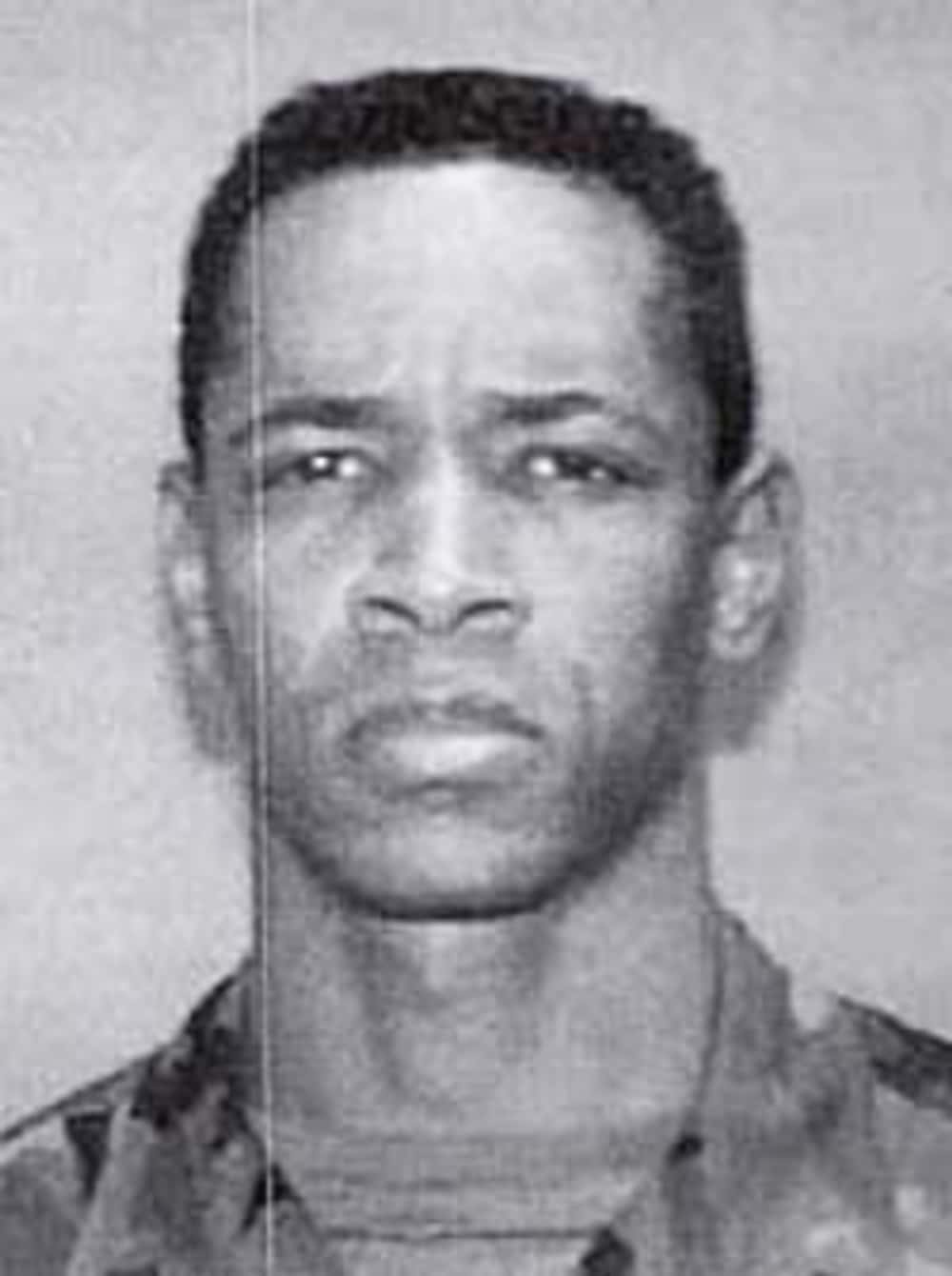
🚨 THE TAROT CARD THAT TAUNTED A REGION…
October 7, 2002.
A shooting scene in Virginia, and on the ground, a tarot card.
The card carried a message that police read as a taunt.
The investigation summary calls the card a key turning point.
It was the first sign that the shooter wanted to speak.
Not to confess. To mock.
The card is not described in detail in the source.
Its exact wording is not in the record.
That is not established: the precise message, the chosen card, the reason it was left.
The source does not state who found it at the scene.
It does not say how the card was preserved, bagged, or logged.
It only says it was there, at a shooting scene in Virginia, on October 7, 2002.
A tarot card among the debris of an ordinary day.
By then, the region was already paralyzed.
Ten people would be killed, three wounded, across Maryland, Virginia, and the District.
Schools kept children indoors. Adults zigzagged through parking lots.
And somewhere in that fear, a card was left behind.
What did it say?
Who chose it?
Why leave a message at all?
The record does not answer.
It only marks the moment the investigation turned.
Before the card, police chased a white van that was never linked to the shootings.
After the card, they knew they were hunting someone who wanted to be heard.
The taunt was personal.
It was also cryptic.
And for the people of the region, it was the first proof that the shooter was watching, waiting, and leaving signs.
The card was a turning point.
The message itself remains unread in the record.
OCTOBER 2 — THE FIRST SHOT
The first shot came on October 2, 2002.
A man was shot and killed in a parking lot in Wheaton, Maryland.
That is where the case summary begins.
The victim was a man.
His name is not in the source.
The shooting was initially not connected to the others.
There was no reason to connect it.
A parking lot in Wheaton is an ordinary place.
Loading groceries, walking to a car, a Tuesday afternoon.
The police had no weapon recovered at the scene.
The source is silent on that point.
No shell casing matched to anything.
No pattern yet.
The victim's identity is not established.
Any initial police response details are not in the record.
What remains is the fact of the shot.
One man, one parking lot, one day.
It would take more shootings before the region understood what it was seeing.
That first killing stood alone.
Not because it was isolated.
Because no one yet knew to look for a pattern.
THE WHITE VAN — A DOCUMENTED DEAD END
The white van was everywhere.
It was on the news. It was in the tips. It was the shape every driver feared in the rearview mirror.
Early reports of a white van proved misleading, according to the investigation summary.
Police were flooded with tips, and the white van focus wasted time and resources, the investigation narrative states.
The white van was never linked to the shootings in the source.
No specific sighting is named. No witness is named. The origin of the white van tip is not in the record.
What is in the record is the flood.
Tip lines rang. Schools stayed locked. People zigzagged in parking lots.
And every call described the same phantom: a white van that was never there.
Why did it stick?
It looked right. It sounded right. It fit the shape of a fear that had no shape yet.
That would require evidence.
The evidence pointed elsewhere, to a blue Chevrolet Caprice with a hole in the trunk.
But that came later. On those October days, the white van was the story.
It was a documented dead end. It is also the part of the case that shows how a region hunts when it has nothing to hold.
Not because the van was real. Because the fear was.
OCTOBER 7 — THE TAROT CARD AT THE SCENE
October 7 changed the shape of the hunt.
A tarot card was found at a shooting scene in Virginia, according to the investigation summary.
Police read its message as a taunt, the investigation narrative states.
It was the first sign that the shooter wanted to speak.
Not to confess. To play.
The card was a key turning point, per the source.
It turned random violence into a message.
It turned a manhunt into a conversation the killer had started.
What the card said is not in the record.
Who found it is not in the record either.
The source does not describe the card's imagery or its exact wording.
That is not established.
What is established is the shift: from chasing a van to reading a card.
The region had been looking for a vehicle.
The killer was leaving a signature.
The white van was a dead end.
The tarot card was a clue with a voice.
Police did not say it out loud in the early reports, but the card suggested a single mind behind the shots.
A mind that wanted an audience.
The card did not name anyone.
It did not point to Alabama.
It did not point to a blue Caprice.
It pointed to a game, and the game had rules only the shooter knew.
The investigation summary does not say how long police held the card's details back.
It does not say whether the card was left deliberately at the scene.
It says only that it was found, and that police read it as a taunt.
That was enough.
For the first time, the shooter was not just a shadow with a rifle.
He was a writer.
The record does not establish his intent.
It establishes the card, the date, and the interpretation.
Three facts, and a region holding its breath.
THE ALABAMA TIP — A TRUCK DRIVER'S LEAD
The break did not come from a profile, a confession, or a lucky glance at a dashboard camera.
It came from Alabama.
The investigation summary states that the break came from a tip connected to a previous shooting in Alabama.
That shooting is not described in detail in the source.
No date is given for it. No victim is named. No location beyond the state.
What the record does establish is the chain: Alabama, a tip, a truck driver.
The truck driver had heard about the Alabama connection, according to the investigation narrative.
He is not named in the source.
His identity is not established. The exact nature of his tip is not established.
Two facts remain in the record: he drove a truck, and he heard something.
That something pointed investigators toward a blue Chevrolet Caprice.
Not because of a white van. Because of a truck driver's overheard information.
The randomness is the point.
A region had been paralyzed for weeks, with schools kept indoors and people zigzagging in parking lots.
Ten people were dead. Three others were wounded.
And the trail to the shooters ran through a man whose name the record does not contain.
He did not testify in the source. He did not appear in the narrative.
He simply heard, and he told.
The investigation summary credits the tip with breaking the case.
The investigation narrative credits the truck driver with delivering it.
What the Alabama shooting was, who it involved, and how the truck driver learned of it—that would require evidence.
The record offers none.
It offers the chain: Alabama, a tip, a truck driver, a Caprice.
Four links, and the last one was parked at a rest stop near Myersville, Maryland, on October 24, 2002.
OCTOBER 24 — THE BLUE CAPRICE AT THE REST STOP
They were asleep in the car.
The blue 1990 Chevrolet Caprice was parked at a rest stop near Myersville, Maryland, on October 24, 2002.
Police arrested Muhammad and Malvo there, according to the investigation summary.
The arrest came after the tip from the truck driver, the chain of four links finally closing.
Inside the car, investigators found a Bushmaster .223-caliber rifle.
Ballistic testing linked that rifle to several of the shootings, the summary states.
Then came the detail that reframed everything.
The car had been modified with a hole in the trunk.
A shooter could fire from inside without being seen, according to the investigation narrative.
The trunk hole was not a rumor. It was documented.
It was the mechanical answer to the question the region had asked for three weeks: how did the shots keep coming from nowhere?
The exact name of the rest stop is not in the record.
The arrest procedure is not in the record either.
What is in the record is the car, the rifle, the hole, and the two men sleeping beside them.
The relief was real. The shock was real.
The region had been told to zigzag in parking lots, to keep children indoors, to look for a white van.
The white van was a documented dead end.
The Caprice was the documented fact.
It was a 1990 sedan with a hole cut in its trunk, and it had carried the terror for three weeks.
Now it sat at a rest stop, surrounded by police, its occupants in custody.
The rifle was inside. The evidence was inside.
The ordinary moment of capture had arrived, and it looked like a man asleep in a car.
TWO MEN, TWO STORIES — PROSECUTION AND DEFENCE
Prosecutors argued that Muhammad was the mastermind of the attacks.
That was the story they put to the jury in Virginia in 2003.
Muhammad was a former U.S. Army veteran.
Malvo was a teenager at the time.
Two men, one car, one rifle.
The prosecution's case drew a line between them: the planner and the weapon.
The source does not provide the defence's specific arguments.
It does not state whether Malvo acted under duress or influence.
The defence's legal strategy is not in the record.
Any claim of coercion is not in the record.
Who was the shooter?
Who was the planner?
How did a teenager end up in that car?
The record answers the first two questions with a conviction.
It leaves the third open.
Muhammad was convicted and sentenced to death.
Malvo was convicted and sentenced to life without parole.
The mastermind argument carried.
The teenager's story, as the defence told it, was never documented here.
That would require evidence.
The source offers none.
THE VIRGINIA TRIAL — ONE CONVICTION, ONE SENTENCE
Muhammad was tried first, in Virginia, in 2003.
He was charged with capital murder for one of the killings.
Prosecutors argued he was the mastermind, the source says.
He was convicted.
He was sentenced to death.
The specific victim for which Muhammad was convicted is not named in the source.
That is not established in the record.
Malvo was tried separately, also in Virginia.
He was convicted of capital murder as well.
His sentence was life in prison without parole.
Muhammad’s appeals failed.
He was executed by lethal injection on November 10, 2009.
The legal process reached its end for Muhammad.
It is a closed chapter.
It is also a finality the source records without detail.
Malvo’s conviction was upheld on appeal.
His sentence stood.
The weight falls differently on each man.
One case ended in death.
The other continues in prison.
That is what the trial outcome documents.
Nothing more.
THE ORDINARY MOMENT — THE TRUNK HOLE
The blue 1990 Chevrolet Caprice had a hole cut in its trunk.
The investigation narrative describes it plainly: a hole allowing a shooter to fire from inside without being seen.
That is the detail the record documents.
It is the detail that reframes what happened, according to the case file.
A victim shot while loading groceries.
A victim shot while mowing a lawn.
A victim shot while pumping gas.
Each of those moments, the source explains, happened while a hidden gunman could have been behind a trunk lid.
It is a chill that arrives late.
Not because the shooting was random.
But because the ordinariness was the point.
The record does not describe how the hole was made.
The record does not say when it was made.
The record does not state whether the shooter was always in the trunk or sometimes in the back seat.
Those questions remain open.
That would require evidence the source does not provide.
The Caprice was found at the rest stop on October 24.
The rifle was found inside.
The trunk hole was found with it.
A mundane car, modified for a purpose the record states.
The victims were doing mundane things.
The source connects those two facts.
The rest is not established.
AND THE STORY STILL ISN'T OVER
Muhammad is gone. Malvo is not.
Malvo remains in prison, serving life without parole, according to the source on where things stand.
His sentence was reviewed after a U.S. Supreme Court ruling on juvenile sentencing, and he was resentenced to life without parole, the trial outcome records.
Malvo has filed legal motions over the years, but his sentence has stood, the source states.
The specific motions he has filed and their outcomes are not detailed in the source.
That remains open.
So does the system he ran through.
The case led to changes in how police handle multi-jurisdictional investigations, including the creation of regional task forces, the source notes.
Not because the white van was a mistake. Because the mistake was structural.
The region's schools went back to normal. The parking lots filled again. The story did not end at the rest stop.
The victims' families have continued to advocate for victims' rights, and the memory of the attacks remains a significant part of the region's history, the source says.
The schoolboy who was wounded survived and has spoken about the attack as an adult.
What was built in the aftermath still operates. What was lost is not recoverable.
The tarot card was a taunt. The truck driver's tip was the break. The blue Caprice was found with the rifle inside.
The hole in the trunk was a fact. The white van was not.
That is the line.
The case is closed in the legal sense. The legal sense is not the only sense.
Malvo remains in prison, serving life without parole.
That is where the record leaves him.
Advertisement
You may also like
The DNA under her fingernails that cracked a 17-year cold case — but left one question open
🚨 THE NEIGHBOR'S CALL THAT OPENED A 17-YEAR WAIT… A neighbor in Bellaire, Texas, called police about a break-in at a home on June…
The 4-day gap between a 5-year-old's abduction and a suspect's arrest in her murder
🚨 THE 4-DAY GAP July 15, 2002, in Stanton, California: a man asks a five-year-old for help finding a lost dog. The friend runs…
The grandmother's 911 call that started it all — and the family story that never fit
🚨 THE 911 CALL THAT DIDN'T MATCH THE FAMILY'S STORY The 911 call came on July 15, 2008, from a grandmother named Cindy Anthony.…
The missing boy's ring found in a crawl space — 27 bodies later
🚨 THE RING IN THE CRAWL SPACE The ring was small, gold, and it belonged to a missing 15-year-old boy. Police found it on…
The 2005 Aruba nightclub exit that left three men with stories that never matched
🚨 THE EXIT THAT STARTED EVERYTHING The club was called Carlos'n Charlie's, a bar and nightclub in Oranjestad, Aruba. Natalee Holloway, 18, from Mountain…
The tarot card message that turned a random killing spree into a hunt for 'God'
🚨 THE TAROT CARD THAT READ 'CALL ME GOD' The card was a piece of evidence, found at a crime scene during the investigation…