The tarot card left at a D.C. sniper crime scene that read 'Call me God'
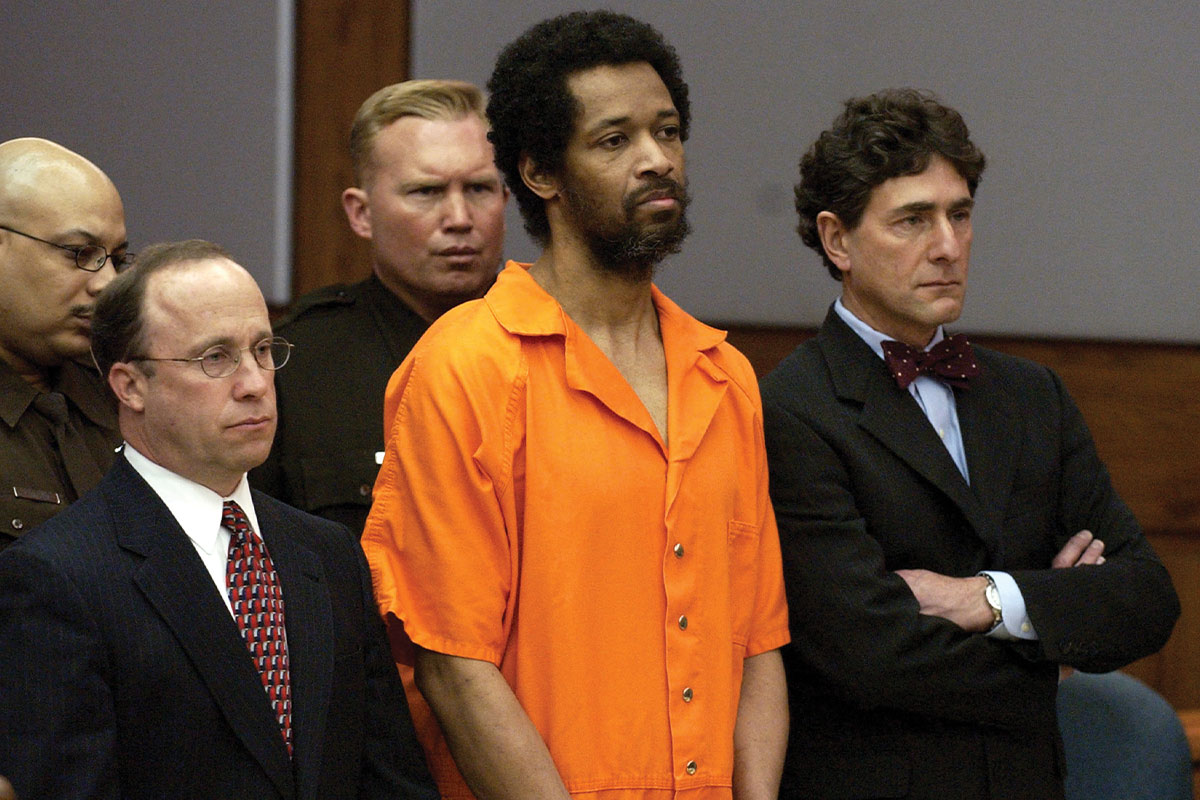
The card was found at one of the crime scenes.
It was a tarot card, and it read "Call me God."
That much is in the investigation record.
The card was one piece of evidence among many.
There was ballistics. There was a witness-reported vehicle. There was a Bushmaster .223-caliber rifle found in a blue Chevrolet Caprice.
The card sat alongside those things, a small paper object in a case full of lead and glass.
What the card meant is not explained in the source.
It is a clue. It is not a confession.
Did the shooter write it? Did someone else leave it? Did it mean anything at all, or was it a taunt thrown into the chaos?
That would require evidence.
The record establishes the card existed.
It establishes the words on it.
It does not establish the message behind them.
So the card stays where it was found, in the file, unexplained.
A clue without an interpretation.
A claim to divinity without a signature.
She was on the ground below.
THE SHOTS
Between October 2 and October 24, 2002, a series of shootings killed ten people and wounded three others across Maryland, Virginia, and Washington, D.C.
A man loading a car. A man mowing a lawn. A woman pumping gas. A man sitting on a bench.
Ordinary activities, interrupted.
The attacks began in Montgomery County, Maryland, and spread to the D.C. area, into Virginia, and as far south as Fredericksburg.
No pattern to the places. No pattern to the people.
The final shooting occurred on October 22, when a bus driver in Aspen Hill, Maryland, was killed.
He was at work.
The lead investigator was Montgomery County Police Chief Charles Moose, who became the public face of the investigation.
He read statements to the media, appealing for help, addressing the suspects directly.
What was there to say to a card that read "Call me God"?
A clue without an interpretation.
A claim to divinity without a signature.
The randomness was the terror.
Anyone could be next.
The victims' names are in the record, but the record does not explain why them, why then.
It does not establish that.
It establishes only the acts: the shots, the falling, the ordinary places.
A bus driver, killed on his route.
A man loading a car, never finished loading.
These were not targets in any strategic sense.
They were people in the wrong place at the wrong time.
Chief Moose stood before cameras and asked the public to stay vigilant.
Stay indoors. Watch the parking lots. Watch the gas stations.
Dread and empathy — that is what the record asks of you.
Not because the card explained anything.
But because the card was never meant to explain.
THE HUNT
Police initially focused on a white van seen near several shootings.
That van led nowhere.
The break came when a witness reported a blue Chevrolet Caprice at the scene of one shooting.
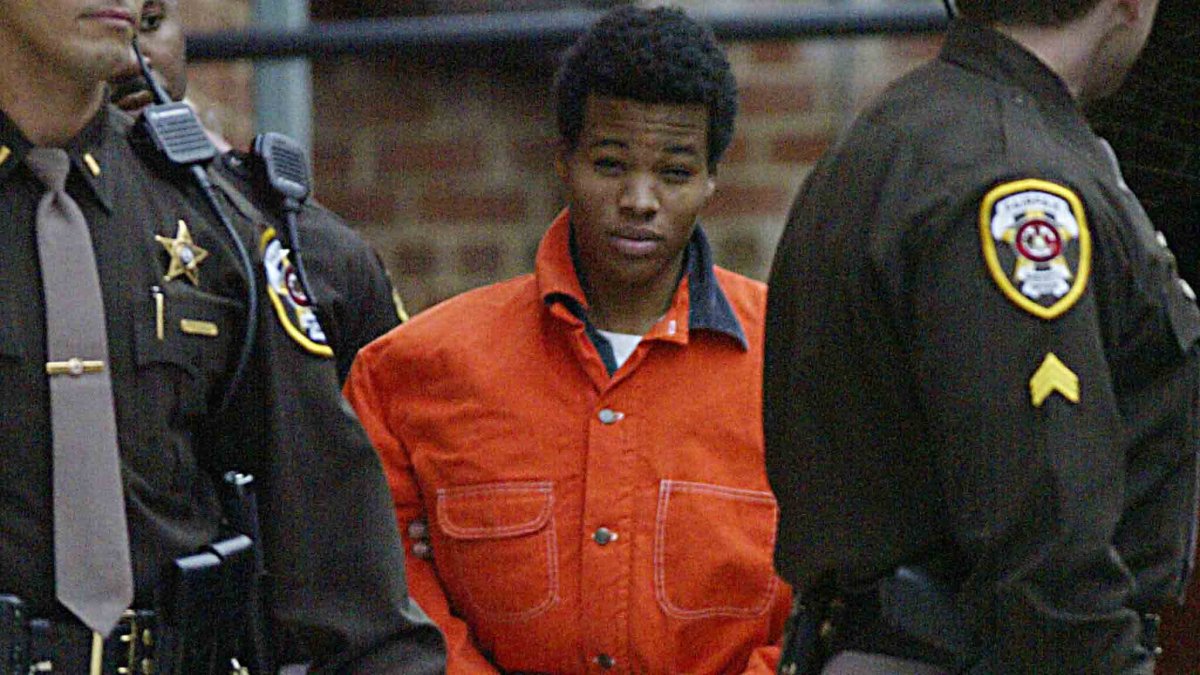
The car was traced to John Allen Muhammad.
Ballistics evidence linked the shootings to a Bushmaster .223-caliber rifle found in the car.
One rifle, one car, two suspects.
Chief Charles Moose read statements to the media throughout the investigation.
He appealed for public help.
He addressed the suspects directly.
The exact sequence of events leading to the arrest is not detailed beyond the tip.
The tip came from a truck driver.
He spotted them sleeping in a car at a rest stop near Myersville, Maryland.
They were arrested on October 24, 2002.
Not because the card explained anything.
But because the card was never meant to explain.
That was October 24.
The shootings had begun October 2.
Twenty-two days between the first shot and the arrest.
Twenty-two days of ordinary acts turned deadly.
Loading a car, mowing a lawn, pumping gas, sitting on a bench.
The hunt was long.
The break came from a witness who saw a car.
The arrest came from a driver who saw two men sleeping.
The relief is real.
The tension is real, too.
What the record establishes is the rifle, the car, the tip, the arrest.
What it does not establish is the full sequence between the tip and the handcuffs.
That would require evidence.
The record gives us the rest stop, the sleeping men, the truck driver.
It gives us the Caprice and the Bushmaster.
It gives us Chief Moose, reading statements into cameras, asking for eyes.
And then it gives us October 24.
THE TRIALS
It was October 24 that gave the case its shape, but the trials came after.
John Allen Muhammad was tried first, in Virginia, in 2003.
He stood trial for the murder of a man shot on October 9.
Prosecutors presented evidence that Muhammad planned and directed the attacks.
The defense argued he was not the shooter, that Malvo acted alone.
The jury did not accept that.
Muhammad was convicted of capital murder and sentenced to death.
Lee Boyd Malvo was tried separately, also in Virginia, in 2003.

He stood trial for the murder of a woman shot on October 14.
He was convicted and sentenced to life without parole.
Later, in Maryland, Malvo pleaded guilty to additional charges.
He received multiple life sentences.
The trials were separate, but the record binds them to the same rifle and the same car.
What the record does not establish is the specific evidence laid out in court.
The source gives the prosecution's argument, not the exhibits, not the testimony.
It does not say what ballistics were shown, what witnesses took the stand, what the tarot card meant to the jury.
That remains a theory.
The card read "Call me God."
It was a clue, not a confession.
Muhammad's defense said the teenager pulled the trigger.
The prosecution said the older man aimed the whole thing.
The record says both men were convicted.
It says Muhammad was executed by lethal injection on November 10, 2009, in Virginia.
It says Malvo remains in prison.
Two trials.
Two verdicts.
One card left behind, still unexplained.
AND THE STORY STILL ISN'T OVER
John Allen Muhammad was executed in 2009.
Lee Boyd Malvo remains in prison, serving multiple life sentences without the possibility of parole.
In 2017, Malvo's lawyers filed appeals arguing that his life sentences were unconstitutional in light of a U.S. Supreme Court ruling on juvenile offenders.
The appeals were unsuccessful.
The specific outcomes of those 2017 appeals are not detailed in the record beyond that single word: unsuccessful.
The victims' families have spoken publicly over the years about their loss.
Some have advocated for changes in how juvenile offenders are sentenced.
Others have focused on preserving the memory of their loved ones.
The wife of one victim testified about the man she lost.
The mother of another spoke about her child.
They named the ordinary moments — loading a car, mowing a lawn, pumping gas, sitting on a bench.
They asked what those moments deserved.
They asked what the law should do with a teenager who helped end them.
They asked what memory is worth when the courts have finished.
That would require evidence.
The case remains one of the most studied examples of a serial sniper attack in American criminal history.
It is studied for the ballistics.
It is studied for the tip from a truck driver.
It is studied for the tarot card left behind, still unexplained.
The card read "Call me God."
No one has explained it.
The record does not establish what it meant.
It is a clue, not a confession.
It is a piece of paper, not a verdict.
It is still there, in the file, unanswered.
Advertisement
You may also like
The anonymous call that sent police to Adnan Syed — and the cell tower data that wouldn't hold
January 13, 1999, was a school day, and Hae Min Lee left Woodlawn High School at the end of it. She was 18, a…
The 2007 deal that let Epstein plead to two counts — and the 2019 charge that followed
In 2005, a mother in Palm Beach, Florida, walked into a police station with a report about her 14-year-old stepdaughter. She named the man…
The mother who watched her daughter's killer walk free — and still says he did it
She was 18 years old. Hae Min Lee was a senior at Woodlawn High School, a popular student and an athlete. She was the…
The slumber party that turned into a nightmare: What one mother found when she came home
The pillowcases were on the floor when Eve Nichol walked in. One was on the bed. One was on the carpet. The girls were…
How a sister and brother-in-law torn apart by Menendez killings still disagree
The den was a room in a Beverly Hills home, and on August 20, 1989, it held two bodies. José and Kitty Menendez were…
The pizza crust that cracked a decade-long Gilgo Beach murder case
A pizza crust, discarded in a Manhattan trash can, ended a decade of silence. In July 2023, DNA from that crust was matched to…