The tip that cracked the Elizabeth Smart case: a former acquaintance's call about a couple's talk
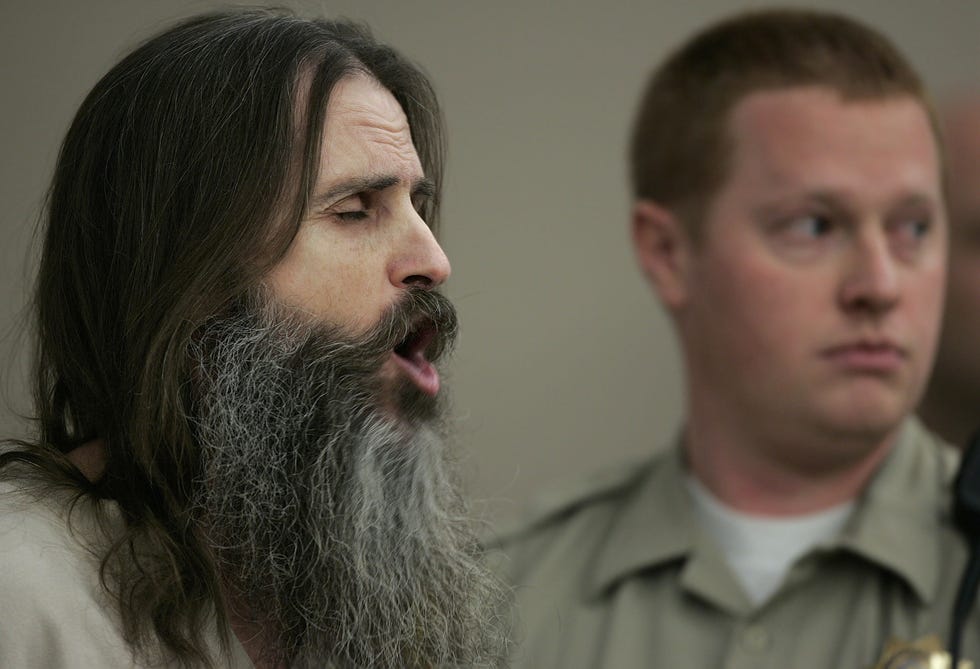
🚨 THE CALL THAT CAME NINE MONTHS LATER
October 2002, and a phone call comes in.
A former acquaintance of Brian David Mitchell and Wanda Ileen Barzee contacts police.
The acquaintance says the couple had talked about taking a young girl.
That is the call.
The call came more than four months after Elizabeth Smart was abducted from her bedroom in Salt Lake City, Utah, on June 5, 2002.
She was 14.
The acquaintance's name is not in the record.
The exact content of the call, beyond the talk about taking a young girl, is not specified.
The record does not say why they called, or what prompted them to finally speak.
It is a documented turning point.
It is not a psychic's vision, not a dream, not a supernatural flash.
That would require evidence.
What exists is one ordinary call, placed by someone who knew the couple.
That call led to the creation of composite sketches of the couple.
Sketches that would later be recognized on a street in Sandy, Utah.
The caller remains unnamed.
The wait remains unexplained.
The weight of a single phone call, nine months after a bedroom was emptied.
Who was this person?
Why did they wait?
What did they hear, and when?
The record holds the call, not the caller's story.
JUNE 5, 2002 — THE BEDROOM
She was 14, asleep in her own bed.
The room she shared with her younger sister was inside the family’s home in Salt Lake City, Utah.
In the early hours of June 5, 2002, a man entered that room.
Her sister reported being awakened by the man, who threatened her.
Then he took Elizabeth.
The exact time of the abduction is not in the record.
The sister’s age is not given either.
What is known is the next morning: the family discovered the bed empty.
Elizabeth was gone.
The abduction triggered a massive search.
It became one of the most heavily covered missing-person cases in the United States.
Reporters camped outside the house.
Volunteers handed out flyers with her face.
The family waited for word that did not come.
According to Elizabeth Smart’s testimony, Mitchell used a knife that night.
She would describe being taken at knifepoint.
That testimony came later, in court, after she was found.
But on June 5, there was only the empty room.
The threat the sister heard.
The silence of the morning.
A family waking to a space where a child should have been.
The search began before the sun was fully up.
It would stretch for nine months.
No one knew then how the story would turn.
They only knew a girl was missing.
A knife had been involved.
And the house on the quiet street was no longer safe.
THE FIRST MISTAKES
The investigation initially focused on a possible intruder.
That made sense.
A stranger in the night, a knife, a girl taken from her bed.
The police set to work on that theory.
They made mistakes while they worked.
The family's home was not immediately secured as a crime scene.
Some evidence was handled improperly.
What was handled improperly is not detailed in the record.
A ransom note was found.
It was later determined to be a hoax.
It had been written by a family member.
Which family member is not named in the record.
The note sent officers chasing a motive that did not exist.
They chased other false leads as well.
A sighting of Elizabeth with a drifter in California proved to be a case of mistaken identity.
The drifter was not the man.
Elizabeth was not with him.

The real trail was growing cold while the false ones were followed.
Frustration builds in a case like this.
Why was the house not sealed?
Why was the evidence not protected?
Why was the note believed?
The record does not answer those questions.
Elizabeth Smart has criticized the handling of the case.
She has spoken publicly about the initial police response.
She has said what she saw that night.
She has said what she lived through in the months after.
The criticism is hers to make.
The mistakes are documented in the record.
The home was not secured.
The evidence was mishandled.
The leads went nowhere.
The family waited.
OCTOBER 2002 — THE TIP
The turning point came in October 2002, when a former acquaintance of Mitchell and Barzee contacted police.
The acquaintance said the couple had talked about taking a young girl.
That was the tip.
The record does not specify the acquaintance's relationship to the couple beyond that phrase, "former acquaintance."
The exact wording of the tip is not in the record.
What is in the record is what happened next.
Police created composite sketches of Mitchell and Barzee.
Mitchell was a self-styled preacher with a history of erratic behavior.
Barzee was his wife.
The sketches were widely circulated.
They went to news outlets.
They went to the public.
They were posted and broadcast across the region.
The case had been chaos.
The evidence was mishandled.
The leads went nowhere.
The family waited.
Now there were two faces.
Not because the investigation had found a witness to the abduction.
But because a conversation, overheard and repeated, had given the case a shape.
It is a small thing.
It is also the hinge.
A vague conversation became the key.
That key was printed, shared, and looked at.
The sketches did not solve the case by themselves.
They made recognition possible.
That would come later, on a street in Sandy.
But in October 2002, the fog began to lift.
The tip did not name Elizabeth.
It named the couple and their talk.
That was enough.
MARCH 12, 2003 — THE STREET IN SANDY
On March 12, 2003, two people in Sandy, Utah, looked at a group on the street and saw the faces from the composite sketches.
They called police.
Elizabeth Smart was alive, approximately nine months after her abduction, walking on a street with two adults.
Sandy, Utah, is about 18 miles from Elizabeth's home.
Officers approached the group.
Elizabeth was identified.
Mitchell and Barzee were arrested at the scene.
The record does not name the two people who called.
The record does not give the exact time of the sighting.
That is not established.
What is established is the recognition, the call, the approach.
The nine-month ordeal ended on an ordinary street, in daylight, because two strangers matched faces to sketches.
She was on the ground below no longer; she was walking, found.
THE EVIDENCE AND THE TESTIMONY
Elizabeth Smart testified that she was taken at knifepoint.
That testimony carried the weight of the survivor herself, describing the moment her bedroom became the start of a nine-month ordeal.
Physical evidence linked Mitchell and Barzee to the abduction site.
The specific physical evidence is not detailed in the record; what is established is that it connected the couple to the scene.
Mitchell was initially charged in state court with aggravated kidnapping, sexual assault, and burglary.
Barzee was also charged.
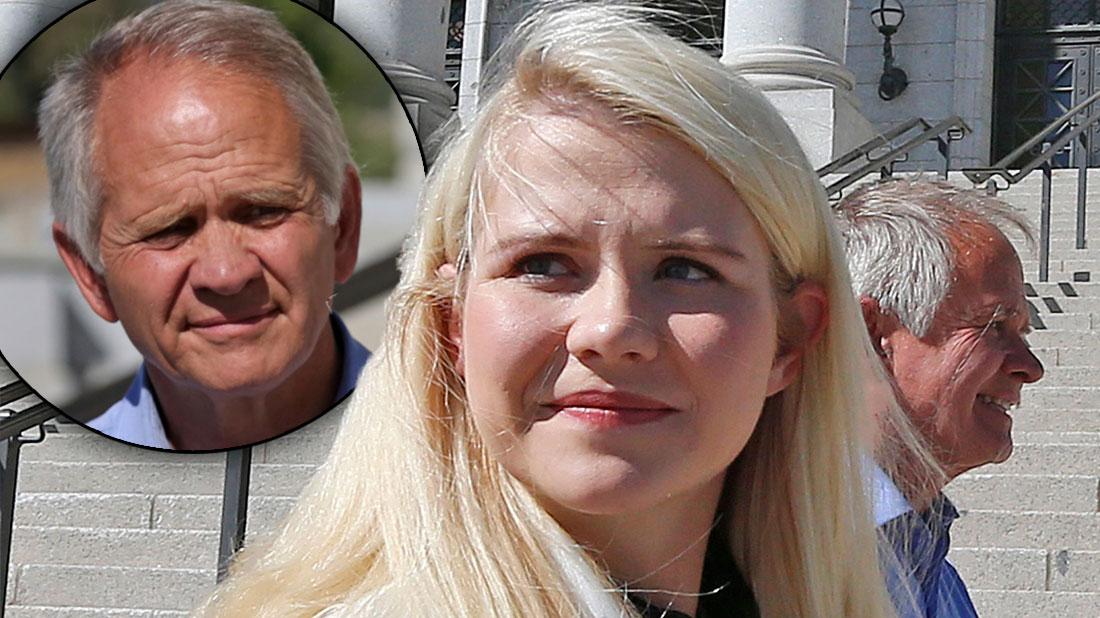
The lead detective was widely reported to be Salt Lake City Police Detective Tom McLachlan, though other officers were also involved.
The full extent of McLachlan's role is not definitively established.
It is a case built on testimony and traces.
It is a case where the forensic links held, even after months of false leads and a hoax ransom note.
The sketches made the recognition possible; the testimony made the charges stick.
What did the physical evidence show?
What did the knife mean to the jury?
What did the survivor's words do that no object could?
That would require the trial record, and the record does not detail the physical evidence further.
Mitchell faced aggravated kidnapping, sexual assault, and burglary in state court.
Barzee faced her own charges alongside him.
The investigation had stumbled early, mishandled the crime scene, chased a drifter in California who was not the man.
But the evidence that mattered survived the mistakes.
The testimony was direct.
The links were physical.
The case moved forward on what could be proven, not what was theorized.
THE LEGAL MAZE: INCOMPETENCE AND FEDERAL CHARGES
Mitchell was found incompetent to stand trial.
He spent years in a state psychiatric hospital.
The state case stalled there.
In 2008, federal charges were filed against him.
The federal prosecutor was U.S. Attorney for Utah Brett Tolman.
Mitchell was ruled competent for federal trial.
The case moved out of the psychiatric ward and into a courtroom.
Barzee pleaded guilty in federal court in 2009 to aiding and abetting the kidnapping.
Mitchell’s defense attorney was W. Clark Aposhian.
Reports vary on the full extent of his role.
That is not established.
The reason for the initial incompetence finding is not specified either.
It is a gap in the record.
What the record does show is a system that stalled, then shifted tracks.
The state proceedings stopped.
The federal proceedings began.
The charge was federal now: kidnapping and transporting a minor across state lines for illegal sexual activity.
The frustration of the delay is in the timeline.
The movement forward is in the switch of jurisdiction.
Not because the facts changed.
Because the forum did.
THE VERDICTS AND SENTENCES
In 2010, a federal jury convicted Brian David Mitchell of kidnapping and transporting a minor across state lines for illegal sexual activity.
He was sentenced to life in prison without the possibility of parole.
Wanda Ileen Barzee, who pleaded guilty in federal court in 2009 to aiding and abetting the kidnapping, was sentenced to 15 years in federal prison.
She was released in September 2018 after receiving credit for time served.
Mitchell's conviction was upheld on appeal.
Barzee did not appeal her sentence.
The verdicts closed the legal chapter that had opened in a Salt Lake City bedroom eight years earlier.
The years between were not empty.
They were filled with competency hearings, psychiatric hospital stays, and the switch from state to federal jurisdiction.
The record does not detail the specific grounds for Mitchell's appeal.
It does not break down the exact calculation of Barzee's release date.
What the record shows is the outcome: Mitchell remains in a federal prison in Arizona.
Barzee returned to Utah in 2018.
Elizabeth Smart testified at trial about being taken at knifepoint.
The jury believed her.
The sentence was life.
The sentence was 15 years.
One was permanent.
One was not.
The unease is not in the sentences themselves.
The unease is in the time before them.
Mitchell spent years in a state psychiatric hospital before the federal charges were filed.
Barzee waited too.
The verdicts came in 2010.
The abduction was in 2002.
Eight years is a long time for a family to wait for a word like "convicted."
The word came.
It is in the record now.
THE VIRAL THEORY VS. THE RECORD
There is a theory that circulates online.

It says the case was solved by a psychic, or by a dream.
The record does not establish that.
The source material mentions no psychic, no dream, no supernatural element.
It mentions no viral image or theory by name.
What the record does show is a sequence of documented events.
The turning point was a phone call.
It came in October 2002.
A former acquaintance of Brian David Mitchell and Wanda Ileen Barzee contacted police.
The acquaintance said the couple had talked about taking a young girl.
That call led to composite sketches of the couple.
Those sketches were widely circulated.
On March 12, 2003, two people in Sandy, Utah, recognized Elizabeth and her captors from those sketches.
They called police.
Officers approached the group, and Elizabeth was identified.
Mitchell and Barzee were arrested at the scene.
That is the documented sequence.
It is a chain of an acquaintance's decision, a sketch artist's work, and a recognition on a street.
It is not a story of a vision.
The theory is easy to repeat.
It is harder to verify.
That would require evidence.
The record offers a different satisfaction: the ordinary mechanics of a case breaking open.
A call.
A drawing.
A witness who looked twice.
THE ORDINARY MOMENT: THE ACQUAINTANCE'S DECISION
The former acquaintance picked up the phone in October 2002 and called police.
The record does not say why they called.
It does not say what prompted them to finally speak, or how long they had held the information.
Their name is not in the record.
Their relationship to Mitchell and Barzee is not in the record.
What is in the record is this: the acquaintance said the couple had talked about taking a young girl.
That call led to composite sketches.
Those sketches were circulated widely.
On March 12, 2003, two people in Sandy, Utah, recognized Elizabeth and her captors from those sketches.
They called police.
Officers approached the group.
Elizabeth was identified.
Mitchell and Barzee were arrested at the scene.
Nine months of a national manhunt ended because someone remembered a conversation.
A mundane conversation.
A couple talking about taking a young girl.
The motive for the call is not established.
The timing of the decision is not established.
The identity of the caller is not established.
That would require evidence the record does not contain.
What the record does contain is the hinge: a former acquaintance, a phone call, a decision.
One call led to the drawings that led to the witness who looked twice.
A call.
A drawing.
A witness who looked twice.
AND THE STORY STILL ISN'T OVER
Mitchell is serving his life sentence at a federal prison in Arizona.
Barzee was released from federal custody in 2018 and returned to Utah.
Elizabeth Smart has become a public speaker, author, and advocate for missing and exploited children.
She married in 2012 and has children.
No further criminal proceedings are pending in this case.
The legal case is closed.
The human story is not.
The Smart family has remained active in child-safety advocacy.
Elizabeth has spoken publicly about her experience and has criticized the initial police response.
The record does not say what happened to the former acquaintance who made the October 2002 call.
Their current status is unknown.
Any future legal actions or pending motions are not in the record.
That would require evidence.
The acquaintance called.
A sketch was drawn.
A witness looked twice.
A girl came home.
The story continues in advocacy, in memory, and in the unanswered questions about that call.
Advertisement
You may also like
The DNA under her fingernails that cracked a 17-year cold case — but left one question open
🚨 THE NEIGHBOR'S CALL THAT OPENED A 17-YEAR WAIT… A neighbor in Bellaire, Texas, called police about a break-in at a home on June…
The 4-day gap between a 5-year-old's abduction and a suspect's arrest in her murder
🚨 THE 4-DAY GAP July 15, 2002, in Stanton, California: a man asks a five-year-old for help finding a lost dog. The friend runs…
The grandmother's 911 call that started it all — and the family story that never fit
🚨 THE 911 CALL THAT DIDN'T MATCH THE FAMILY'S STORY The 911 call came on July 15, 2008, from a grandmother named Cindy Anthony.…
The missing boy's ring found in a crawl space — 27 bodies later
🚨 THE RING IN THE CRAWL SPACE The ring was small, gold, and it belonged to a missing 15-year-old boy. Police found it on…
The 2005 Aruba nightclub exit that left three men with stories that never matched
🚨 THE EXIT THAT STARTED EVERYTHING The club was called Carlos'n Charlie's, a bar and nightclub in Oranjestad, Aruba. Natalee Holloway, 18, from Mountain…
The tarot card message that turned a random killing spree into a hunt for 'God'
🚨 THE TAROT CARD THAT READ 'CALL ME GOD' The card was a piece of evidence, found at a crime scene during the investigation…