Two shotguns bought days before the Menendez parents were found dead in their den
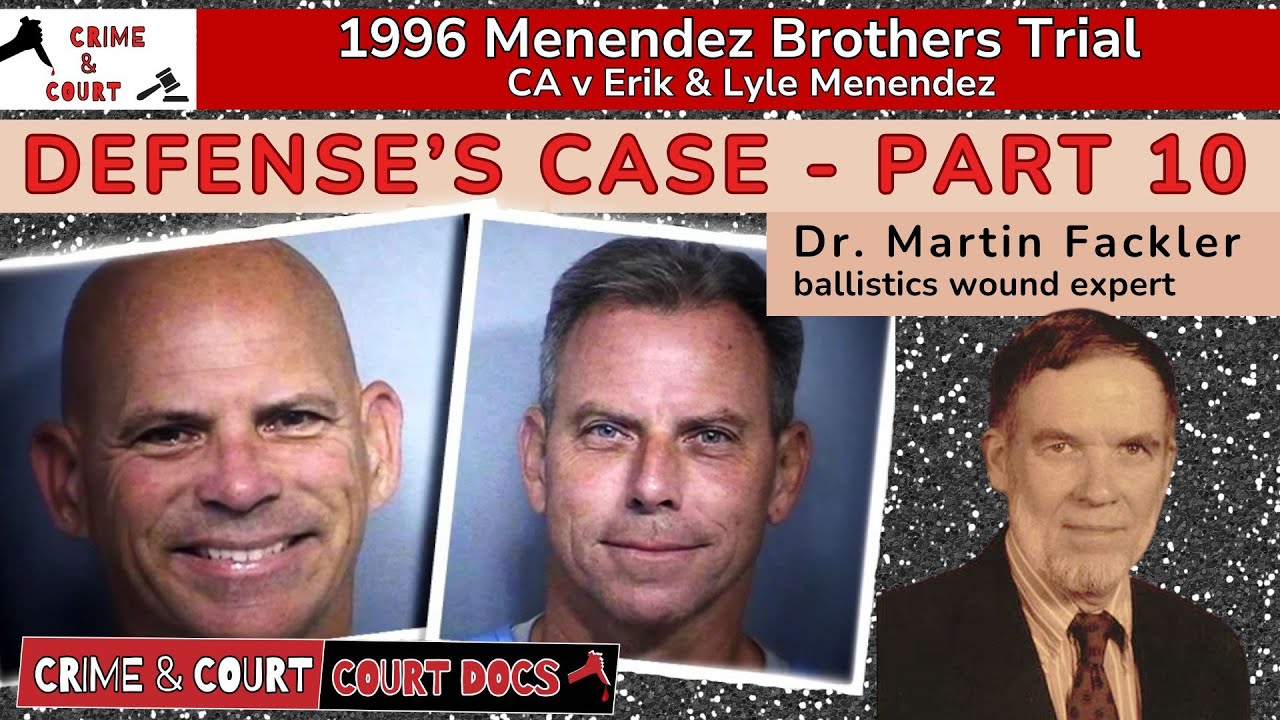
Two Mossberg 12-gauge shotguns, purchased by Lyle Menendez days before the murders, according to the case file.
On August 20, 1989, José and Kitty Menendez were shot multiple times with shotguns in the den of their Beverly Hills home.
The guns were bought before the date was set.
The date was set before the 911 call.
That evening, the sons, Lyle and Erik, called 911 and told dispatchers they had discovered the bodies after returning from a movie.
Police initially treated the case as a possible mob hit or burglary gone wrong.
Not because of the shotguns.
Because José Menendez had business dealings with organized crime figures, the case file shows.
The sons said they had been out of the house at the time of the killings.
The record documents the purchase.
The record documents the date.
The record documents the call.
It does not establish who pulled the triggers.
It does not establish a motive.
The shotguns were bought days before.
The parents were dead that night.
The sons were the ones who called.
That is where the documented record stops, and the questions begin.
THE 911 CALL AND THE FIRST THEORY
They were found by their sons, who called 911 that evening.
The sons told dispatchers they had come home from a movie and discovered the bodies.
That was their initial claim, recorded in the case file.
It is not established that they were lying in that call.
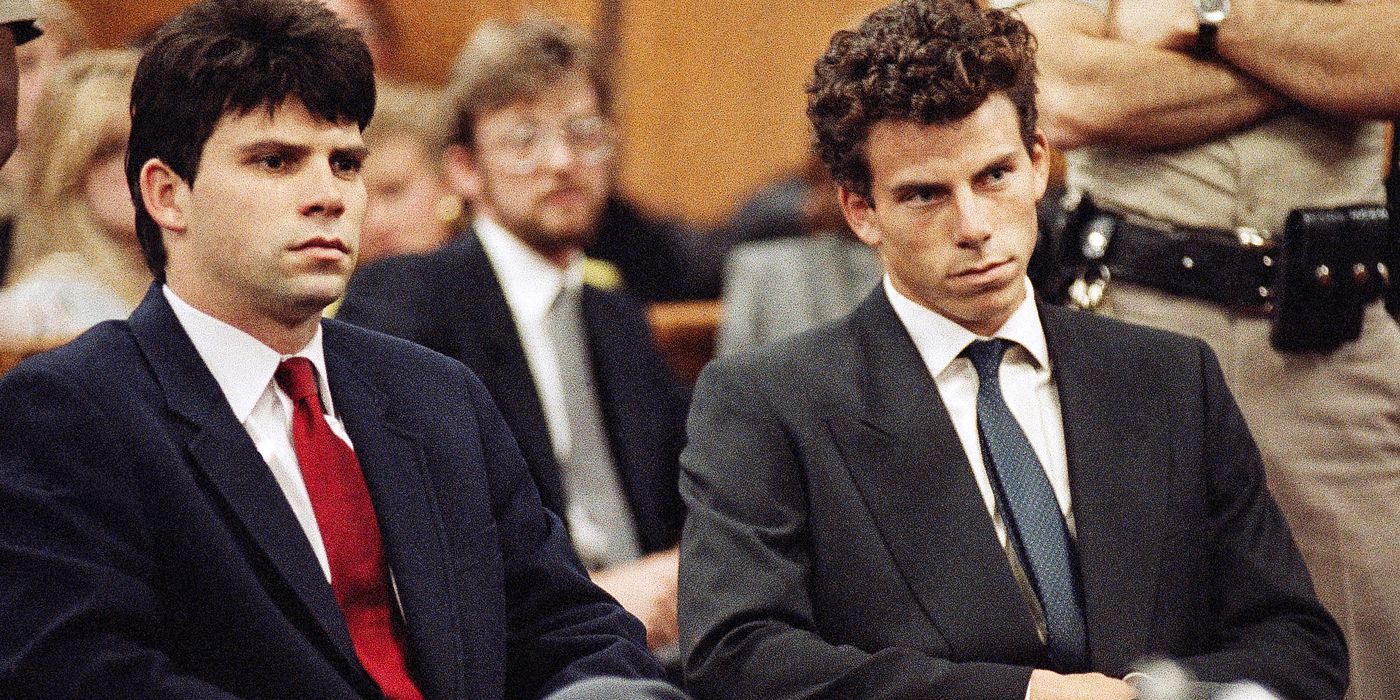
The truth of the claim is not yet determined by the record.
The parents had been shot multiple times with shotguns.
Two Mossberg 12-gauge shotguns, purchased days earlier, were the weapons.
The sons said they had been out of the house when the killings happened.
Police did not start with the sons.
They started with José Menendez's business.
José had dealings with organized crime figures, according to the case file.
So the working theory was a mob hit.
Or a burglary gone wrong.
The den was the scene.
The bodies were there.
The sons' story was calm, the police's theory was professional, and the gap between them was the whole investigation.
What did the sons see when they walked in?
What did the dispatcher hear in their voices?
The record holds the call, but it does not hold the answer.
That would require evidence.
For now, the case file shows a couple shot dead, two sons who said they found them, and a police force looking at mobsters.
The parents were dead that night.
The sons were the ones who called.
That is where the documented record stops, and the questions begin.
THE THERAPIST'S CLAIM
The case shifted when Dr. Jerome Oziel, a psychologist who treated both brothers, came forward.
Oziel claimed that Lyle and Erik had confessed to him during therapy sessions, according to the case file.

That is a claim, not a proven fact.
The brothers had reportedly threatened Oziel, and his testimony became a central piece of evidence.
That, too, is reported.
The prosecution argued that the brothers killed their parents for their inheritance.
The defense argued that the brothers had been sexually abused by their father for years and killed in fear for their lives.
The defense presented testimony from family members, including the victim's brother, who corroborated claims of abuse.
That testimony is defense testimony, not established by the record.
The prosecution countered with evidence of the brothers' lavish spending sprees after the murders.
Rolex watches.
Cars.
A restaurant.
Not a fear-driven act, the prosecution said. A payout.
Two stories of motive now stood against each other.
One rested on a therapist's word. The other on receipts.
Neither was yet a fact. Both were arguments.
The record holds the purchase of the shotguns. It holds the 911 call. It holds the spending.
It does not hold the confession to Oziel as proven.
It does not hold the abuse as established.
That would require evidence the record does not settle.
THE TWO STORIES AT TRIAL
The first trial began in 1993.
The jury deadlocked on whether the killings were premeditated murder or manslaughter.
It was a hung jury, and the case was retried.

The retrial began in 1995, and this time the judge ruled that much of the abuse evidence was inadmissible.
That ruling changed the shape of the defense.
The defense again included Leslie Abramson for Erik, and a defense attorney for Lyle.
The prosecution was led by David Conn.
The victim's sister, Joan Vander Molen, testified for the prosecution.
The victim's brother testified for the defense.
Two versions of the family stood in the same courtroom.
One version said the brothers killed for money.
One version said they killed in fear.
The record does not establish that the abuse actually occurred.
The retrial judge ruled much of that evidence inadmissible, and the conviction stands on the prosecution's theory.
In 1996, Lyle and Erik Menendez were both convicted of first-degree murder and conspiracy to commit murder.
They were sentenced to life in prison without the possibility of parole.
The legal machinery chose one story.
It is not established that the abuse happened.
It is established that the conviction happened.
The jury that mattered heard what the judge allowed.
AND THE STORY STILL ISN'T OVER
Lyle and Erik Menendez are serving life sentences without parole at separate California prisons.
There have been no successful appeals or changes to their sentences.
The family remains divided.
Kitty's sister, Joan Vander Molen, testified for the prosecution and has supported its version of events.
The victim's brother testified for the defense and has continued to speak about the abuse he says occurred.
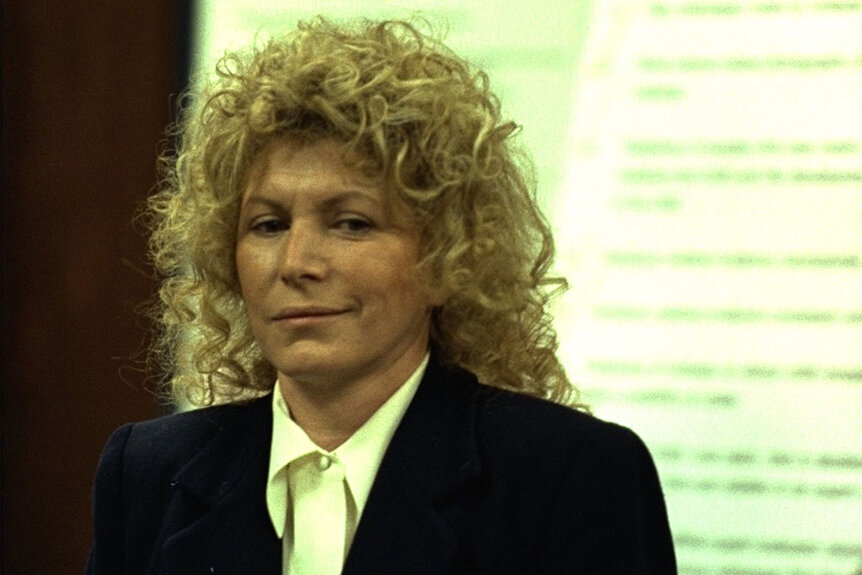
Both testified in court.
Both spoke publicly.
The record holds their words, and the words do not agree.
In recent years, the case has been revisited in documentaries and true-crime media.
It is not established that any new evidence has emerged.
The documentaries are media revisits, not legal developments.
The brothers are still in prison.
The family is still split.
The public is still arguing over what the record does and does not prove.
A documentary can replay the 911 call.
A documentary can replay the testimony.
A documentary cannot settle what the jury that mattered heard.
The ache is quiet.
The questions remain open.
What did the brothers say to the therapist?
What did the therapist say they said?
What did the father's brother say he endured?
What did the mother's sister say she saw?
That would require evidence.
The evidence was ruled on.
The conviction stands.
The brothers remain.
The family remains.
The story remains.
Advertisement
You may also like
The duct tape on Laci Peterson's body that split a jury's theory
The duct tape was on Laci Peterson's body when she was found. That single object carried the weight of two opposing stories. The prosecution…
The open letter from the Richards that urged the government to seek the death penalty
Bill Richard and Denise Richard lost their 8-year-old son, Martin, to the bombs near the finish line. Their daughter, Jane, lost a leg in…
The flight attendant who took the note — and what she said about the man who vanished
She took the note without opening it. He told her to look at it, and she looked. The man at seat 18C called himself…
The uncle who found six shot in their beds — and the confession that followed
The door at 112 Ocean Avenue was an ordinary Dutch Colonial, the kind of house a family might call home for a decade. On…
The 15-year-old who vanished after one phone call about a job — his mother's final words
December 11, 1978. A 15-year-old boy told his mother he was going to meet a contractor about a job. Her final words to him…
The 95 million who watched O.J. Simpson's Bronco chase and what they saw
The white Ford Bronco moved at 35 miles an hour, and the whole country watched. On June 17, 1994, an estimated 95 million viewers…