Two teens questioned after Skylar Neese slips out her window — then a friend confesses
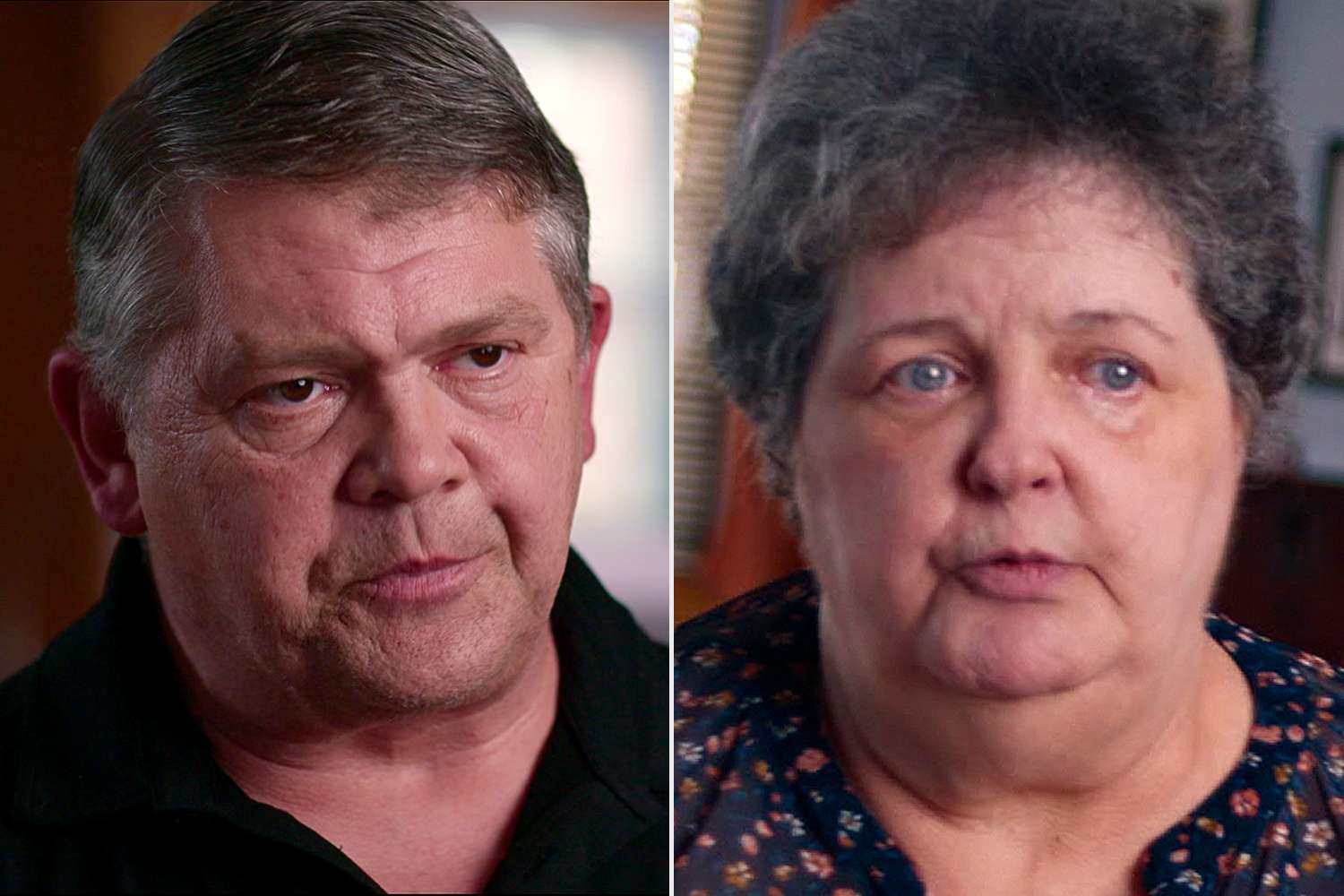
The window was open.
On the night of July 5, 2012, 16-year-old Skylar Neese slipped out of her bedroom window in Star City, West Virginia.
She never returned.
Her parents reported her missing on July 6, 2012.
A missing-person investigation began.
Months passed.
Then, in January 2013, police questioned two of Skylar's friends.
Both were 16 at the time.
One of them eventually confessed to participating in the murder.
That confession is the hinge.
It is the line between what is viral and what is documented.
The case became known as the "Halloween Mask murder."
The killers reportedly wore Halloween masks during the attack.
That detail has circulated widely.
It is a reported claim, not a fact established by physical evidence.
The masks were never recovered.
Their existence rests on the confession, not on proof.
A teenager vanished from her own bedroom.
The only clue was a window left open.
What happened after she climbed out?
Who was waiting on the other side?
That would require evidence.
The confession is the only piece of evidence that turned a missing-person case into a murder case.
It is a confession. It is also a story.
THE SEARCH
Her parents reported her missing on July 6, 2012.
The police began a missing-person investigation.
The lead detective was a sergeant with the Monongalia County Sheriff's Department.
He testified that the case started as a search for a runaway.
Then investigators found her cell phone and purse in a ditch near her home.
That shifted the case.
Not because the items were valuable. But because they were hers, and she would not have left them.
The discovery suggested foul play.
The search stretched for months.
No sign of Skylar.
No witnesses. No clear direction.
The detective and her parents went over the same ground, the same names, the same nights.
It is not established who placed the phone and purse in the ditch, or when.
That remains open.
What the record shows is a trail that went cold.
A missing-person case with no body, no suspects, and no answers.
The family waited.
The investigators kept looking.
The ditch held the only clue, and the clue held nothing else.
Months passed.
Then, in January 2013, two of her friends were questioned.
One of them confessed.
That confession turned the case.
It is the only piece of evidence that did.
THE CONFESSION
In January 2013, police questioned two of Skylar's friends, both 16 at the time.
One of them confessed to participating in the murder.
The confession detailed how the two girls lured Skylar from her home, drove her to a remote area in Pennsylvania, and stabbed her to death.
That confession led to the arrest of both girls.
It was the pivotal piece of evidence.
There was no physical evidence linking the girls to the crime scene.
The murder weapon, a knife, was never recovered.
The confession turned a missing-person case into a murder case.
One friend's words did that.
The exact location of the murder is not independently verified beyond the confession.
The route taken is not independently verified beyond the confession.
What remains is her own admission.
What remains is the word of a friend who was there.
What remains is the absence of everything else.
The knife is gone.
The masks are gone.
The confession is the only thing that holds.
It is the only piece of evidence that does.
THE REMAINS
In April 2013, Skylar’s remains were found in a wooded area near the Pennsylvania border in Wayne Township, Greene County.
The discovery came from information in the confession.
It was the first confirmation that the missing-person case was a murder case.
The two friends were charged with first-degree murder.
Both were tried as adults despite being juveniles at the time.
One pleaded guilty to second-degree murder in May 2013.
She was sentenced to 30 years in prison.
The other initially pleaded not guilty.
She later changed her plea to guilty of second-degree murder in November 2013.
She was sentenced to life in prison with mercy, eligible for parole after 15 years.
The pleas avoided trials.
The murder weapon was never recovered.
The Halloween masks were never recovered either.
What was found was a body.
What was not found was a reason.
Prosecutors and investigators described the killing as senseless.
No established motive has ever been documented.
Not jealousy.
Not a fight.
Not a secret.
That would require evidence.
The confession detailed how the two girls lured Skylar from her home, drove her to a remote area, and stabbed her.
It did not explain why.
The remains gave Skylar’s parents a grave to visit.
It gave the investigation a close.
It gave the case a verdict.
But the motive remains a void.
AND THE STORY STILL ISN'T OVER
The legal case closed with two guilty pleas, both entered before any trial.
One defendant is serving a 30-year sentence.
The other is serving life with the possibility of parole.
Skylar’s parents, Dave and Mary Neese, still speak publicly about their daughter.
They have continued to advocate for her memory.
The case has become the subject of books, documentaries, and podcasts.
The author covered it in a book and in a podcast series about the killing.
The telling goes on, long after the verdicts.
What does not go on is the physical record.
The Halloween masks worn during the attack were never recovered.
The knife was never recovered.
Not because they were found and lost.
Because they were never found at all.
That is what the record establishes: no masks, no weapon.
What the record does not establish is the motive.
Prosecutors and investigators called the killing senseless.
The confession gave the sequence of events.
It did not give a reason.
Why two friends lured a third from her window, drove her across a state line, and stabbed her — that remains a void.
The case remains a notable example of juvenile crime.
It is also an example of how hard motive can be to understand in such cases.
The sentences are served in years and decades.
The questions are served indefinitely.
A book can be written.
A podcast can be recorded.
A memorial can be kept.
The masks stay missing.
The knife stays missing.
The motive stays unexplained.
That is not a theory.
That is what is documented.
Advertisement
You may also like
The severed head in the canal, the confessed killer who was never charged, and the file police closed twice
The drainage canal ran along the Florida Turnpike near Vero Beach, 120 miles from where the boy had vanished. The head was found on…
The trucker's anonymous letters that named his own victims
The letters arrived unsigned, except for a circle with two dots and a curve. A smiley face. They were sent to the Oregonian and…

The Green River Killer’s confession count is 71. Why are only 48 convictions official?
Gary Leon Ridgway was a truck painter from Auburn, Washington. In November 2001, DNA evidence linked him to several victims, and he was arrested.…
The doctor with a scalpel and a secret that haunted Eliot Ness
The first body was found on September 5, 1934, in Kingsbury Run, a ravine that cut through Cleveland. He was a man, and no…
The slow-motion Bronco chase that began after O.J. Simpson was charged with murder
The Bronco drifted down the freeway at 35 miles an hour, a white speck trailed by a line of police cars. Al Cowlings was…
The Zodiac cipher that took 51 years to crack — and still gave no name
In December 2020, a team of private codebreakers solved the Zodiac's "340 cipher" — a cryptogram mailed to the *San Francisco Chronicle* in 1969.…