Two Thompson guns and a dog named Highball: the clue that broke the 1929 massacre case
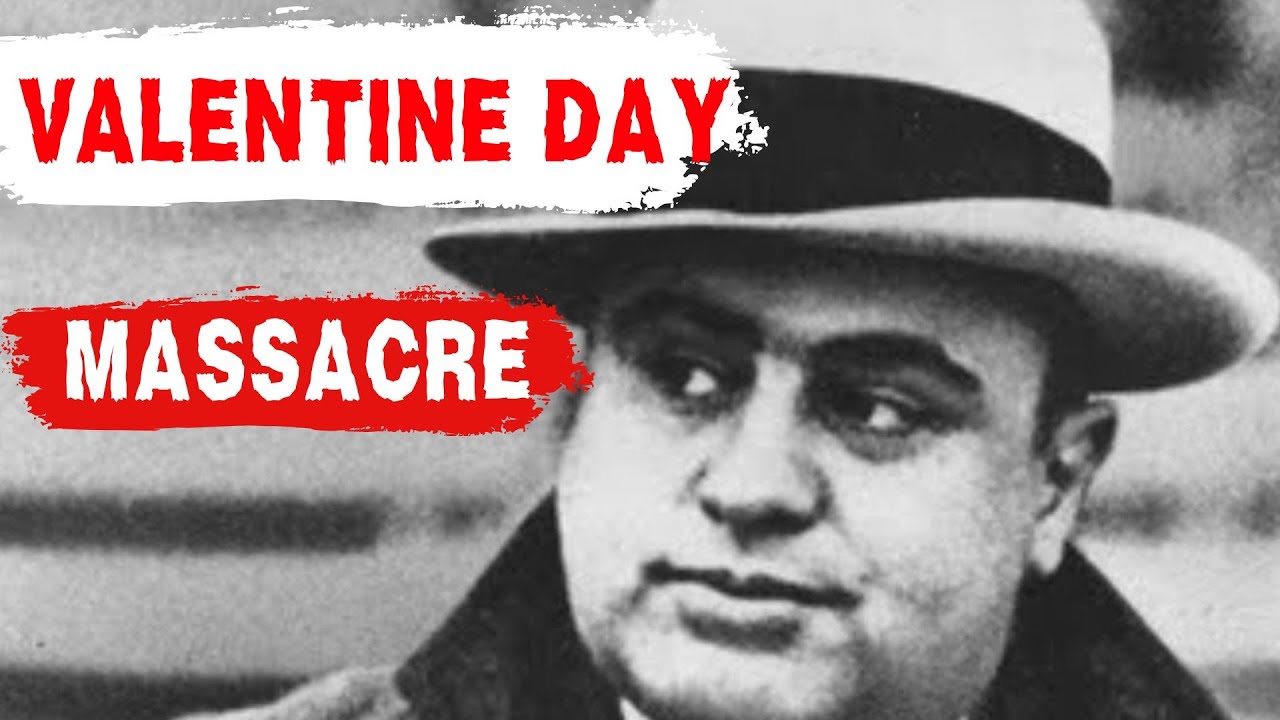
The dog was named Highball.
He led police to a house where a suspect had been staying.
Inside, officers found two Thompson submachine guns later linked to the massacre.
The guns were not found at the garage.
At the scene itself, police recovered only two shell casings and a spent shotgun shell.
The garage was the SMC Cartage Company building at 2122 North Clark Street in Chicago.
It was February 14, 1929, at approximately 10:30 a.m., when seven men were shot to death inside.
They were lined up against a brick wall.
The weapons that killed them were found elsewhere, days later, because of a dog.
That is the pull of the case.
A dog leads to a house.
A house leads to guns.
The guns lead to a massacre.
The massacre leads to no one.
Who fired those two Thompson guns?
Who stood in the garage that morning?
Who walked out?
That would require evidence.
The record does not establish the identity of the gunmen.
An online theory names a known hitman.
He was never charged for the massacre.
Highball's trail ends where the case ends: in a room full of guns and no one to hold them accountable.
10:30 A.M. — THE GARAGE
February 14, 1929, at approximately 10:30 a.m., seven men were shot to death inside the SMC Cartage Company garage at 2122 North Clark Street.
A routine morning in a brick building on the North Side of Chicago.
The victims were lined up against a brick wall and executed with Thompson submachine guns and a shotgun.
The crime became known as the St. Valentine's Day Massacre.
A resident who heard the gunfire called police.
The bodies were discovered shortly after.
The exact sequence inside the garage is not in the record.
The number of gunmen is not established.
It is a scene the case file describes in a single, flat sentence: seven dead, a wall, automatic fire.
The massacre was widely attributed to a gang war between the North Side Irish gang and the South Side Italian gang led by Al Capone.
Not because Capone was there.
He was in Florida at the time of the murders and provided an alibi.
But because the violence fit a pattern: territory, beer, and the elimination of rivals.
The garage belonged to a cartage company, a front for the North Side's operations.
The men inside were members or associates of that gang.
One was a dentist, not a gangster, but a hanger-on.
His presence at the garage is noted in the record without explanation.
What happened in those minutes before 10:30?
Who walked in, who gave the order, who fired?
The record does not say.
What the record does say: two shell casings and a spent shotgun shell were found at the scene.
The weapons were not there.
They were found later, in a room where a dog named Highball led police.
That is the next part of the story.
THE SEVEN VICTIMS
Seven men died in that garage.
Six were members or associates of the North Side gang, according to the case file.
The seventh was a dentist.
He was not a gangster.
He was a hanger-on, the record states, a man who liked the company of criminals.
His presence at the garage is noted in the file without explanation.
Why he was there is not established.
The record does not say.
The six gangsters were lined up against the wall with him.
The gunmen did not spare the one man who was not part of the war.
The massacre is generally believed to have been ordered by Al Capone, head of the Chicago Outfit.
That is a belief, not a charge.
Capone was never charged.
He was in Florida at the time of the murders, and the case file records his alibi.
Seven lives ended in a few minutes.
Six of them belonged to men who had chosen the gang war.
One of them belonged to a man who had only chosen to be nearby.
That is the detail that stays.
A dentist, shot dead beside gangsters.
The file notes his presence.
The file does not explain it.
THE INVESTIGATION AND THE GUNS
The investigation stalled almost immediately.
Witnesses refused to talk.
The gangland code of silence held, according to the case file.
Police found two shell casings and a spent shotgun shell at the scene.
The weapons were not there.
They were not recovered at the garage at all.
Then a dog named Highball led police to a house where a suspect had been staying.
Inside, officers found two Thompson submachine guns.
The case file links those guns to the massacre.
The record does not establish that the suspect fired them.
He was never charged for the massacre.
He was arrested in 1931 in Michigan for a separate murder.
That case went forward; the massacre case did not.
The coroner's inquest produced no indictments.
The grand jury heard testimony from numerous witnesses, including survivors' relatives.
No one was charged.
Why?
The guns existed. The shell casings existed. The scene had been measured and photographed.
What was missing was a voice willing to name the gunmen.
What was missing was a chain the law could hold.
A suspect's connection to the massacre is not established beyond the guns being found where he had stayed.
That is what the record shows.
That is where the record stops.
AND THE STORY STILL ISN'T OVER
No one was ever tried for the St. Valentine's Day Massacre.
The case file is plain on that point: no trial, no verdict, no named gunman.
The case was officially closed without any arrests.
Closed, but not solved.
The suspect whose connection rested on the guns was convicted of a different murder in Michigan.
He died in prison in 1940.
That is the nearest the record comes to a conclusion, and it is not a conclusion about the massacre.
Al Capone was later convicted of federal income tax evasion in 1931.
He served time at Alcatraz.
Not for the seven men against the brick wall.
The garage at 2122 North Clark Street was demolished in 1967.
Brick by brick, the scene itself came down.
The case has been the subject of numerous books, films, and documentaries.
No new evidence has emerged to identify the gunmen definitively.
Not in the archives.
Not in the retellings.
Not in the decades since Highball led police to those two Thompson guns.
The gunmen's identities remain not established.
The case remains officially unsolved.
That is the quiet finality of it.
That, and the nagging absence of a name.
Who fired the guns?
Who gave the order?
Who walked out of that garage and into the morning?
That would require evidence.
The record does not have it.
Advertisement
You may also like
The severed head in the canal, the confessed killer who was never charged, and the file police closed twice
The drainage canal ran along the Florida Turnpike near Vero Beach, 120 miles from where the boy had vanished. The head was found on…
The trucker's anonymous letters that named his own victims
The letters arrived unsigned, except for a circle with two dots and a curve. A smiley face. They were sent to the Oregonian and…
The Green River Killer’s confession count is 71. Why are only 48 convictions official?
Gary Leon Ridgway was a truck painter from Auburn, Washington. In November 2001, DNA evidence linked him to several victims, and he was arrested.…
The doctor with a scalpel and a secret that haunted Eliot Ness
The first body was found on September 5, 1934, in Kingsbury Run, a ravine that cut through Cleveland. He was a man, and no…
The slow-motion Bronco chase that began after O.J. Simpson was charged with murder
The Bronco drifted down the freeway at 35 miles an hour, a white speck trailed by a line of police cars. Al Cowlings was…
The Zodiac cipher that took 51 years to crack — and still gave no name
In December 2020, a team of private codebreakers solved the Zodiac's "340 cipher" — a cryptogram mailed to the *San Francisco Chronicle* in 1969.…