Two wives dead or gone — the 38-year gap between her bath and the truth

🚨 THE LOCKED DOOR AND THE THREE-YEAR ECHO
The bathroom door was locked from the inside when Kathleen Savio, third wife of Bolingbrook police sergeant Drew Peterson, was found dead in her bathtub on October 29, 2004.
The initial investigation ruled it an accidental drowning.
The case closed. It stayed closed for more than two years.
Almost exactly three years later, on October 28, 2007, Peterson's fourth wife, Stacy Peterson, disappeared.
She was 23 years old. Police found the circumstances suspicious.
The disappearance forced a second look at the first death. Authorities reopened the Savio case, and her body was exhumed in November 2007.
A second autopsy determined her death was a homicide, caused by drowning, with evidence of blunt force trauma.
So there is the locked door. There is the missing wife. There is the three-year echo between them.
A theory circulating online links both events to one man. That theory is not a fact established by the record. The documented case against Drew Peterson involves only Kathleen Savio's death.
That he was involved in Stacy Peterson's disappearance remains a theory. No body has been recovered. No charges have been filed in her case.
What the record does establish begins with that bathtub on a Friday morning in October 2004. What it establishes next depends on how long the silence lasted — and what finally broke it.
OCTOBER 29, 2004 — THE BATH
She was on the ground floor of a locked house.
Kathleen Savio, third wife of Bolingbrook police sergeant Drew Peterson, was found dead in her bathtub on the morning of October 29, 2004.
Her home was locked from the inside.
The bathtub was full.
A small cut marked her head, and the setting suggested a fall.
The initial investigation concluded accidental drowning.
That conclusion rested on the cut, the water, and the closed door.
The exact circumstances of that cut were not established in the initial investigation.
It was enough to close the case.
Savio and Peterson had divorced in 2003.
A financial settlement was still pending at the time of her death.
No specific weapon was identified in court.
The death was by drowning.
The water was the weapon, or the water was the scene.
The record does not say which.
It says she was found in the tub, that the door was locked, that the cut was small.
It says the investigation stopped there.
A bath turned fatal.
A death ruled an accident.
A file closed.
The ordinary horror is that it stayed closed for two years.
Not because the evidence was conclusive.
Because nothing pushed it further.
She was 40 years old.
She was a mother.
She was found in her own bathroom on a Friday.
The door was locked from the inside.
That was enough.
THE CLOSED CASE — TWO YEARS OF SILENCE
The case remained closed for more than two years.
Two years of silence, two years of a file sitting untouched.
Savio had told friends and family she feared Peterson would kill her and make it look like an accident.
Those statements were later documented.
They were documented after her body was exhumed, after a second autopsy, after a fourth wife vanished.
In 2004, the small cut on her head and the bathtub setting were enough.
The door was locked from the inside.

That was still enough.
No charges were filed.
No further investigation was conducted during that period.
Peterson continued as a sergeant with the Bolingbrook Police Department.
He wore the badge, carried the authority, lived the ordinary days.
What Peterson did or didn't do during those two years is not in the record.
The record holds only what was examined, what was ruled, what was closed.
She told people she was afraid.
They heard her.
The system accepted the surface and ignored the fear she voiced.
Not because the fear was hidden.
But because a locked door and a small cut answered every question asked.
Two years of silence.
Then Stacy Peterson disappeared, and the silence broke.
OCTOBER 28, 2007 — STACY DISAPPEARS
October 28, 2007, and Stacy Peterson is gone.
She was 23 years old, the fourth wife of Drew Peterson.
She was last seen that day, and police found the circumstances suspicious.
Almost exactly three years after Kathleen Savio was found in her bathtub.
The gap is not a coincidence the record proves.
It is a gap the record leaves open.
Stacy has never been found.
She is presumed dead, but no body has been recovered.
No charges have been filed in her case.
What happened to Stacy Peterson is not established.
Not because no one looked.
Because the looking turned elsewhere.
Her disappearance forced a look back.
A locked door and a small cut no longer answered every question.
The silence broke, and the exhumation followed.
But that is the next section.
For now, the question is the date.
Three years, one day apart.
Two wives, one dead and one gone.
The record documents the disappearance.
The record does not document what happened after.
NOVEMBER 2007 — THE EXHUMATION
Two wives, one dead and one gone.
The disappearance opened the old file.
Authorities reopened the Savio case in late 2007.
Savio’s body was exhumed in November 2007.
The ground gave back what the bathtub had taken.
A second autopsy followed.
That autopsy determined her death was a homicide.
The cause was drowning.
The evidence included blunt force trauma.
The accident was gone.
The closed case was open again.
The lead investigator in the reopened case was a detective with the Illinois State Police.
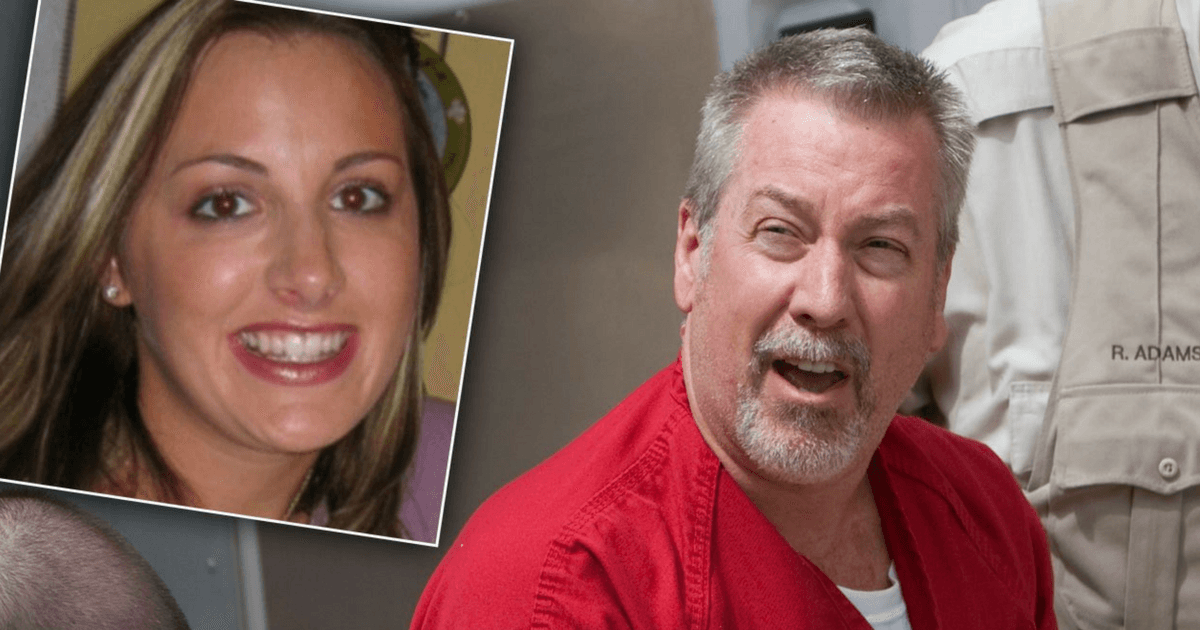
His name was widely reported as Sergeant Pat Brown.
Reports vary on the exact spelling and role.
The record does not establish precisely who ran the investigation.
It establishes the result.
A body pulled from the ground changed the classification.
Not because new witnesses came forward.
Not because new confessions surfaced.
But because the physical evidence said something else.
The small cut on her head was no longer a detail of an accident.
It was a detail of a crime.
The bathtub was no longer the scene of a fall.
It was the scene of a drowning with force.
What the first autopsy called an accident, the second autopsy called homicide.
The shift took three years and a disappearance to happen.
It took an exhumation to make it real.
Savio had told friends and family she feared Peterson would kill her and make it look like an accident.
That fear was on the record before the exhumation.
After the exhumation, it had a different weight.
The body was the evidence.
The ground was the archive.
The file was no longer closed.
THE PASTOR'S STATEMENT AND THE HEARSAY RULING
She told the pastor she feared her husband.
She told him her husband had been involved in Savio's death.
That was before she disappeared.
The pastor later testified about the conversation.
It was a reported claim. Its truth was not independently established.
The record held the telling, not the proof.
The law was the gamble. Illinois had a rule for cases where a defendant is accused of killing the witness to prevent testimony.
A judge ruled the hearsay could come in.
Both women's words could be heard. Savio's fears. Stacy's fears.
The women were not there to say them.
The law presumed a reason they were not.
Prosecutors could now place those words before a jury. Words spoken in fear, years apart, both pointing at the same man.
It was a legal risk. It was also a door.
The defense called it improper. The judge called it admissible.
The courtroom would decide what the words were worth.
No one could ask the women what they meant.
They were dead, or gone.
MAY 2009 — ARREST AND CHARGE
He was arrested in May 2009.
Peterson was charged with first-degree murder in the death of Kathleen Savio.
He was not charged in connection with Stacy Peterson's disappearance.
That case remains open.
Prosecutors also presented evidence that Peterson had tried to hire someone to kill Savio before her death.
That alleged plot was not directly tied to the drowning in the record.
It was a separate allegation, presented alongside the charge.
The charge was for one wife.
Not two.

The courtroom would decide what the words were worth, and now it would decide what the evidence meant.
Peterson, a police sergeant, stood accused of killing the third wife.
The fourth wife was gone, not charged.
Not yet.
The record does not establish that the alleged plot led to the drowning.
It establishes only that the allegation was made.
The arrest came almost five years after Savio's body was found in the bathtub.
It came roughly nineteen months after Stacy disappeared.
Justice moved, but it moved for one death.
The other remained a disappearance, a question without a charge.
Prosecutors said Peterson killed Savio to avoid paying her a divorce settlement.
That was the theory for the trial.
The defense said the death was an accident and that Peterson was being framed.
Both sides would present their cases.
But the charge itself was narrow.
First-degree murder in the death of Kathleen Savio.
Nothing more.
JULY–SEPTEMBER 2012 — THE TRIAL
The trial began in July 2012.
The prosecution argued Peterson killed Savio to avoid paying her a divorce settlement.
The defense argued Savio's death was an accident and that Peterson was being framed.
The courtroom clash was direct.
Prosecutors pointed to the pending settlement, the reopened investigation, the second autopsy.
The defense pointed to the locked door, the bathtub, the original accidental-drowning ruling.
Then the defense made its own misstep.
Peterson had given media appearances.
He had given inconsistent accounts of his whereabouts on the night of Savio's death.
The exact nature of those inconsistencies is not detailed in the source.
But the jury heard about them.
A defendant who couldn't stop talking.
Not because the law required him to speak.
But because he kept appearing, kept answering, kept shifting.
The state used his own words against him.
The defense called it a frame.
The jury called it something else.
In September 2012, a jury found Peterson guilty of first-degree murder.
The charge was narrow.
The verdict was not.
38 YEARS — THE SENTENCE AND THE APPEALS
He was sentenced to 38 years in prison.
The sentence came down in 2012, after the jury's verdict.
He appealed, arguing the hearsay evidence was improperly admitted.
The hearsay rule had been the hinge of the trial.
It let prosecutors bring in the words Kathleen Savio and Stacy Peterson spoke before they were gone.
Words about fear.
Words about him.
The Illinois Appellate Court upheld the conviction in 2016.
The Illinois Supreme Court declined to hear a further appeal.
In 2018, a federal judge rejected a habeas corpus petition challenging the conviction.

The specific grounds of that petition are not detailed in the source.
Not because they were secret.
But because the record does not say.
The appeals ground on, one court after another.
Each one looked at the same trial.
Each one found the same verdict.
The conviction held.
The sentence held.
The door did not open.
Drew Peterson remains in prison.
He is eligible for parole in 2056.
He would be in his early 100s then.
The appeals are exhausted, and they are not exhausted.
A habeas petition can be filed again.
A new issue can be raised.
The finality keeps slipping away.
It is final.
It is also not final.
That is the long, grinding road.
That is the weight of 38 years.
AND THE STORY STILL ISN'T OVER
Drew Peterson remains in prison, serving his 38-year sentence.
He is eligible for parole in 2056, when he would be in his early 100s.
Stacy Peterson has never been found.
She is presumed dead, but no body has been recovered.
No charges have been filed in her case.
What happened to Stacy Peterson remains unknown.
That is not established by the record.
Peterson has continued to maintain his innocence.
He said it in court.
He said it in media appearances.
He has said it across the years.
Kathleen Savio's family has spoken publicly about the case.
Her sister and brother have advocated for her memory.
They have attended the proceedings.
They have given statements.
They have carried the case forward.
The case led to changes in Illinois law regarding hearsay evidence in cases where a witness is unavailable.
A law shaped by two women's words.
Words spoken before they were gone.
Words admitted because the accused was charged with making the witness unavailable.
It is a legal legacy.
It is also a reminder.
One wife is buried.
One wife is gone.
A story that refuses to close.
The prison holds one man.
The record holds one conviction.
The questions hold the rest.
That is the lingering unease.
That is where the case stands.
That is the long, grinding road.
That is the weight of 38 years.
Advertisement
You may also like

The DNA under her fingernails that cracked a 17-year cold case — but left one question open
🚨 THE NEIGHBOR'S CALL THAT OPENED A 17-YEAR WAIT… A neighbor in Bellaire, Texas, called police about a break-in at a home on June…

The 4-day gap between a 5-year-old's abduction and a suspect's arrest in her murder
🚨 THE 4-DAY GAP July 15, 2002, in Stanton, California: a man asks a five-year-old for help finding a lost dog. The friend runs…
The grandmother's 911 call that started it all — and the family story that never fit
🚨 THE 911 CALL THAT DIDN'T MATCH THE FAMILY'S STORY The 911 call came on July 15, 2008, from a grandmother named Cindy Anthony.…
The missing boy's ring found in a crawl space — 27 bodies later
🚨 THE RING IN THE CRAWL SPACE The ring was small, gold, and it belonged to a missing 15-year-old boy. Police found it on…
The 2005 Aruba nightclub exit that left three men with stories that never matched
🚨 THE EXIT THAT STARTED EVERYTHING The club was called Carlos'n Charlie's, a bar and nightclub in Oranjestad, Aruba. Natalee Holloway, 18, from Mountain…

The tarot card message that turned a random killing spree into a hunt for 'God'
🚨 THE TAROT CARD THAT READ 'CALL ME GOD' The card was a piece of evidence, found at a crime scene during the investigation…