The uncle who named the Tsarnaev brothers before the FBI did
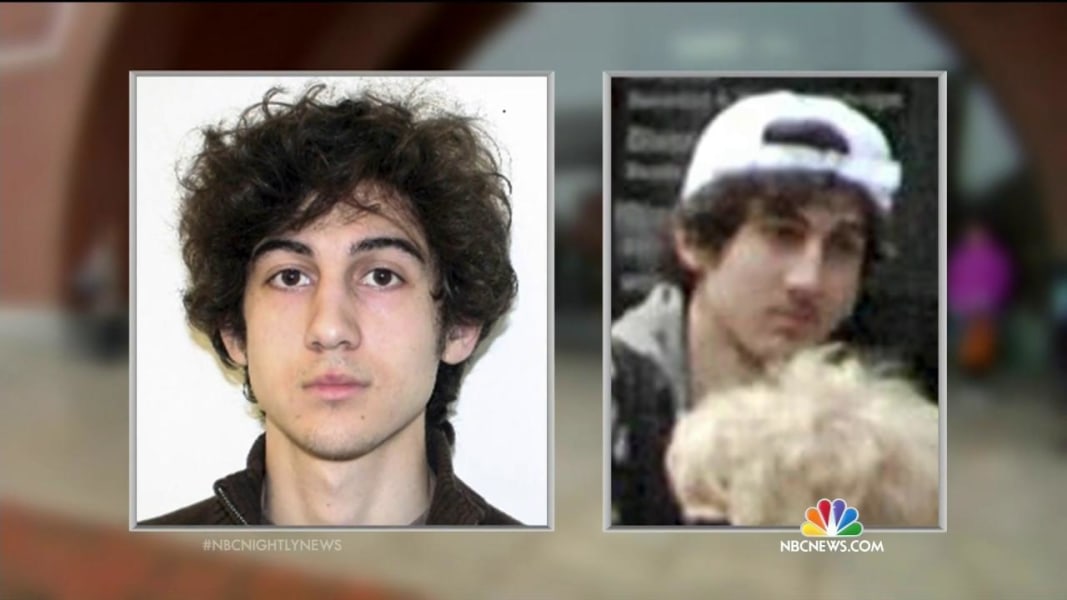
The phone rang at Ruslan Tsarni's home in Maryland, and the man on the other end asked if he had seen the news.
The FBI had released surveillance images of two suspects in the Boston Marathon bombing just hours earlier.
Tsarni looked at the pictures.
He recognized the faces.
They were his nephews, Tamerlan Tsarnaev, 26, and Dzhokhar Tsarnaev, 19.
He called the police.
Then he called the media.
"You have to understand, I'm an American," he told reporters that day, according to coverage of his statements.
"I'm a citizen of this country."
He condemned his own blood.
He named them, out loud, before the FBI did.
The exact timing of Tsarni's identification relative to the FBI's internal identification is not specified in the record.
What is documented is this: he spoke to journalists before the FBI publicly named the brothers.
How did he know?
What made him say it?
That would require evidence.
The brothers were still at large that day, and the city of Boston was on edge.
Tsarni's words were a jolt, a family member pointing a finger before the authorities did.
He said he was ashamed.
He said they had brought shame on the family.
He said, "If I see them, I will turn them in."
The record does not establish what he knew or when he knew it.
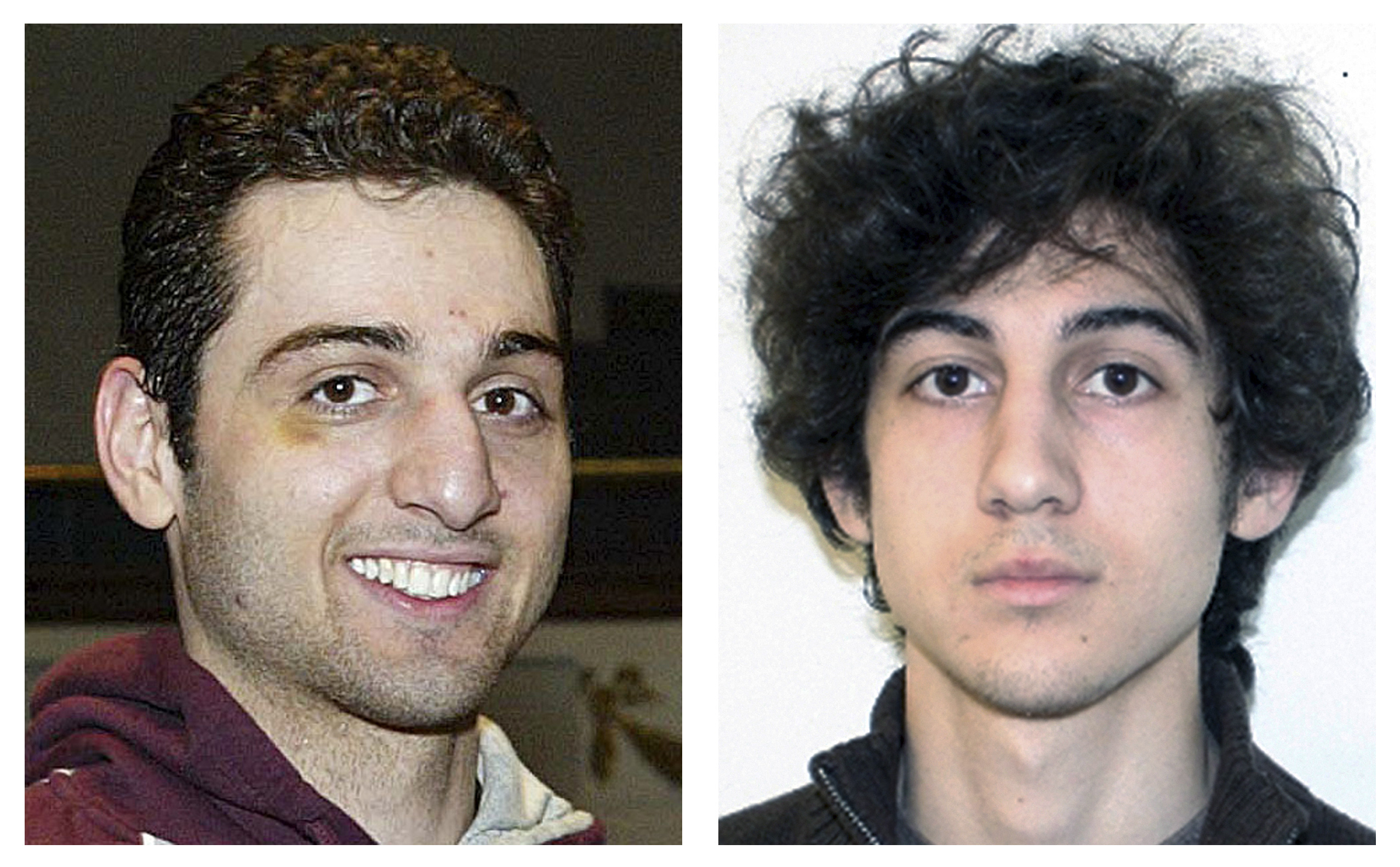
It only establishes that he spoke first, and the FBI followed.
THE BOMBS AND THE AFTERMATH
The bombs were in backpacks.
Two pressure-cooker bombs, packed with shrapnel, detonated remotely near the finish line on Boylston Street.
It was April 15, 2013, Patriots' Day in Boston.
The first explosion came at 2:49 p.m.
The second came twelve seconds later.
Three people were killed: Krystle Campbell, 29, of Medford; Lingzi Lu, 23, a graduate student at Boston University; and an 8-year-old child from Dorchester.
More than 260 others were injured.
The official reports document the explosions.
The investigation findings document the backpacks and the remote detonation.
What the record does not establish is the specific role of each brother in constructing or planting the bombs.
That division of labor was argued in court, not settled by the physical evidence.
Three days passed.
On April 18, the FBI released surveillance images of two suspects.
Richard DesLauriers, the FBI's special agent in charge of the Boston field office, stood before the cameras.
The images were grainy, the faces unclear.
The city studied them.
The manhunt had not yet begun, but the urgency had.
Two bombs, three dead, 260 wounded.
The images were the only lead the public had.
THE MANHUNT AND CAPTURE

The manhunt began in the dark.
In the early hours of April 19, the two suspects killed MIT police officer Sean Collier, according to police reports.
They then carjacked a vehicle; the victim escaped, and news reports did not name him.
A massive manhunt ensued.
The city of Boston and surrounding communities were locked down, according to official announcements.
Streets emptied. Trains stopped. The silence was the point.
The suspects were cornered in Watertown.
During a shootout there, police and FBI reports state that Tamerlan Tsarnaev was killed.
Dzhokhar Tsarnaev was found later that day, hiding in a boat in a backyard.
He was alive.
The capture came with a cost: Collier dead, a city terrified, a neighborhood turned into a battlefield.
The exact sequence of events during the shootout is not detailed in the source.
What is established: one brother killed, the other captured.
Not because the manhunt was clean. But because the record is partial.
What did the shootout look like? How did the brothers react? Who fired first?
That would require evidence the reports do not provide.
The lockdown lifted. The city exhaled.
One suspect was in custody. The other was gone.
The relief was real. So was the violence that bought it.
THE TRIAL AND THE TWO STORIES
The trial opened in federal court in Boston with the prosecution's case laid out by U.S. Attorney Carmen Ortiz.
Surveillance video placed Dzhokhar near the finish line.
Cellphone data tracked his movements.
The carjacking victim testified, describing the night the brothers took his vehicle.
The evidence was physical and direct: pressure-cooker bomb fragments, a piece of a lid found on a rooftop, DNA, and digital records from Dzhokhar's social media accounts.
The specific content of that social media evidence is not described in the source.
The defense, led by Judy Clarke, did not dispute that Dzhokhar participated.
The defense argued that Tamerlan was the mastermind.
The older brother dominated, the defense said.
The younger brother followed.
The prosecution argued joint responsibility, two men acting together.
Not because the brothers were equal in every act.
But because the bombs were built together, placed together, and the getaway was shared.
On April 8, 2015, the jury found Dzhokhar Tsarnaev guilty on all 30 counts.
The verdict was complete.
The story the jury accepted was the prosecution's.
The defense's story of an overbearing older brother did not persuade them.
The legal battle moved to the penalty phase.
That would require evidence of its own.
The weight of the case rested on what the brothers did, not on what one brother felt.
AND THE STORY STILL ISN'T OVER
The sentence was imposed on June 24, 2015.
Judge O'Toole handed down the death penalty.
The appeals court overturned it in 2020.

The court cited insufficient juror screening.
The Supreme Court reinstated it in 2022.
The sentence remains in place.
Dzhokhar Tsarnaev is held at the U.S. Penitentiary, Administrative Maximum Facility in Florence, Colorado.
He sits on federal death row.
His appeals have continued.
Court filings keep the case moving.
Not because the facts are in dispute.
But because the law keeps shifting.
What comes next is not established.
No specific hearing date appears in the record.
The uncle's words, spoken in April 2013, still echo as a footnote.
He named his nephews before the FBI did.
That identification was real.
The FBI's own process was independent.
The two things are not the same.
A viral moment is not a documented one.
The record shows what the brothers did.
It shows what the evidence proved.
It does not show what one uncle felt.
The legal saga is far from closed.
A death sentence overturned.
A death sentence reinstated.
A man held in a Colorado cell.
A city that holds an annual memorial.
The story still isn't over.
Advertisement
You may also like
The severed head in the canal, the confessed killer who was never charged, and the file police closed twice
The drainage canal ran along the Florida Turnpike near Vero Beach, 120 miles from where the boy had vanished. The head was found on…
The trucker's anonymous letters that named his own victims
The letters arrived unsigned, except for a circle with two dots and a curve. A smiley face. They were sent to the Oregonian and…
The Green River Killer’s confession count is 71. Why are only 48 convictions official?
Gary Leon Ridgway was a truck painter from Auburn, Washington. In November 2001, DNA evidence linked him to several victims, and he was arrested.…
The doctor with a scalpel and a secret that haunted Eliot Ness
The first body was found on September 5, 1934, in Kingsbury Run, a ravine that cut through Cleveland. He was a man, and no…
The slow-motion Bronco chase that began after O.J. Simpson was charged with murder
The Bronco drifted down the freeway at 35 miles an hour, a white speck trailed by a line of police cars. Al Cowlings was…
The Zodiac cipher that took 51 years to crack — and still gave no name
In December 2020, a team of private codebreakers solved the Zodiac's "340 cipher" — a cryptogram mailed to the *San Francisco Chronicle* in 1969.…