The validation report that raised doubts about a blood-testing device before the scandal broke
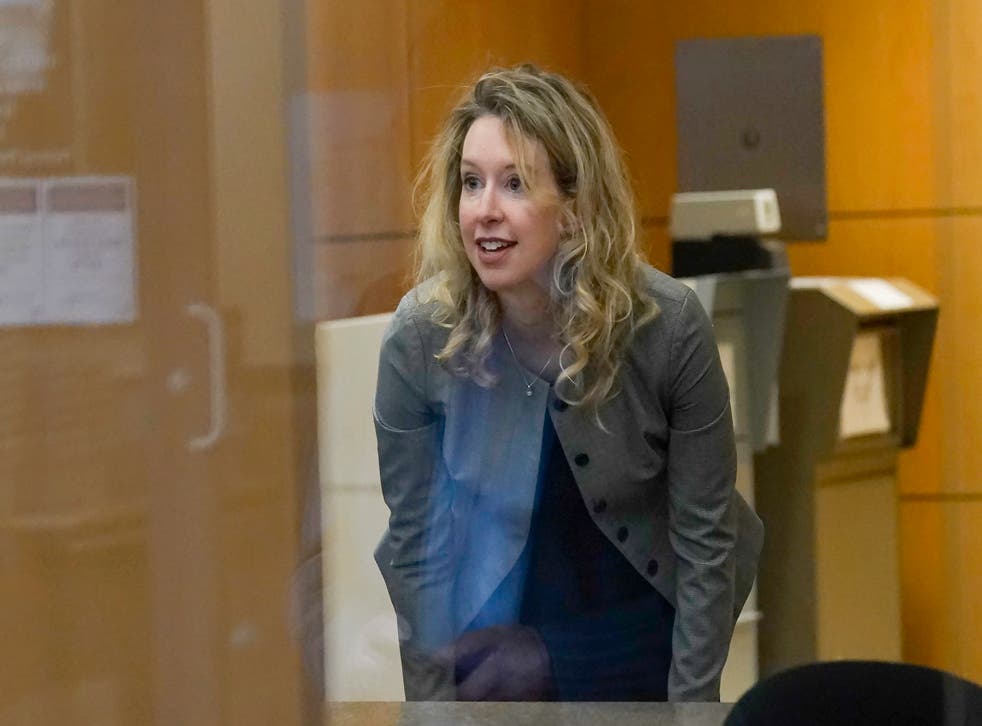
🚨 THE 2013 REPORT THAT SAID THE DEVICE WAS WRONG
In 2013, a Theranos employee produced a validation report.
The report concluded the Edison device produced inaccurate results.
That report later became key evidence in the federal prosecution of Elizabeth Holmes.
It was an internal document.
It did not surface publicly until after the Wall Street Journal's October 2015 article by John Carreyrou.
For two years, the report sat inside the company.
The report is a documented fact from the source material.
It is not a viral claim.
The source does not name the employee who wrote it.
That identity is not established in the record.
What did the report test?
What did it say, exactly?
Who read it and did nothing?
That would require evidence the record does not provide.
What the record does provide is a sequence: a written finding of failure, then silence, then a scandal.
The report predates the public reckoning by two years.
It is the first concrete object in a timeline that ends in a federal courtroom.
No one outside Theranos knew it existed in 2013.
The company kept claiming its device worked.
The report said otherwise.
It is a fact, and it is also a question.
2003 — THE COMPANY AND THE PROMISE
Theranos was founded in 2003 in Palo Alto, California.
Its founder and CEO was Elizabeth Holmes, then a Stanford dropout in her early twenties.
She claimed the company’s proprietary technology could run dozens of diagnostic tests on a few drops of blood from a finger prick.
The device had a name: the Edison.
The promise was large, and it was also simple.
One drop of blood, dozens of answers, no big needles, no long waits.
That promise attracted a board of prominent figures.
Former Secretaries of State Henry Kissinger and George Shultz sat on it.
So did former Secretary of Defense James Mattis.
None of them were charged.
The source does not detail the company’s early funding or valuation.
Specific investor names are not in the record.
What is in the record is the scale of the claim.
The company kept saying the device worked.
The report said otherwise.
That gap — between the promise and the validation — is where the story begins.
How did a device that an internal report said produced inaccurate results get so far?
How did a board of statesmen and generals sign on?
How did investors hand over hundreds of millions?
That would require evidence.
The record does not yet provide it.
2013 — THE VALIDATION REPORT
In 2013, a Theranos employee produced a validation report concluding the Edison device produced inaccurate results.
The report was internal.
It was not public at the time.
It did not surface until after the Wall Street Journal's reporting.
This report later became a key piece of evidence in the federal prosecution.
Prosecutors would present it as a documented warning from inside the company.
The source does not say who commissioned the report.
The source does not say what specific tests it covered.
The report's author is not in the record.
The report's exact contents are not in the record.
Who saw it in 2013 is not in the record.
That would require evidence.
The record does not provide it.
A warning was written.
It was buried.
It stayed buried for years.
OCTOBER 2015 — THE WALL STREET JOURNAL ARTICLE
In October 2015, investigative reporter John Carreyrou published an article in the *Wall Street Journal*.
The article cited former employees who said the technology was unreliable and often inaccurate.
It was the first major report questioning Theranos's claims.
The names of those former employees are not in the record.
The source does not identify who they were, what roles they held, or how long they had worked at the company.
That is not established.
What is established is the article itself, and the doubts it carried into public view.
The report landed.
It triggered regulatory scrutiny.
It triggered media investigations.
It triggered the machinery of the federal government.
None of that had happened before October 2015.
The warning that was written and buried in 2013 had finally reached the surface.
Not because the company confessed.
Not because a regulator blew the whistle.
Because a reporter printed what former employees said.
The story was no longer internal.
It was public.

It was a turning point.
But it was only the beginning.
THE INVESTIGATIONS — SEC AND DOJ
The machinery of justice started moving.
After the *Wall Street Journal* articles, the U.S. Securities and Exchange Commission opened an inquiry.
The U.S. Department of Justice did the same.
Federal prosecutors built their case on internal Theranos documents, emails, and testimony from former employees.
The specific timeline of those inquiries is not detailed in the source.
What the record does show is what the evidence revealed.
Evidence showed the company used commercially available machines from other manufacturers for most tests.
It did so while claiming its own device worked.
Prosecutors presented evidence of false statements to investors.
They said Holmes and Balwani claimed the U.S. military used Theranos on battlefields.
They said the pair claimed pharmaceutical companies had validated the devices.
The record does not establish that the U.S. military used the technology.
It does not establish that any pharmaceutical company validated it.
The claims were presented as what they were: false statements.
Former employees described how the company's own device was not doing the work.
The commercially available machines were doing the work.
The validation report from 2013 said the Edison produced inaccurate results.
That report was internal.
It did not surface publicly until after the *Wall Street Journal* articles.
Now it sat inside the prosecutors' case.
The investigation was slow.
It was methodical.
It was built on paper trails and people who had been inside the company.
The momentum was real, but it moved at the pace of subpoenas and depositions.
The questions were no longer about what the device could do.
They were about what the company said it could do.
THE LAB DIRECTOR'S WARNING
A turning point came when Theranos's lab director testified that he had warned Holmes about the technology's failures.
The testimony was part of the criminal trial.
It was not new.
It was not a leak.
It was a man in the room, on the record, saying he told her.
The source does not name the lab director.
The record does not establish his name.
The record does not establish the specific timing of his warning.
Not because the detail is hidden.
Because the record stops where it stops.
He warned her about the failures.
She kept going.
The warning is separate from the 2013 validation report.
Two documents, two moments, one company.
The report concluded the device produced inaccurate results.
The lab director said he told her.
The report stayed internal.
The warning stayed internal.
Both surfaced only after the Journal's reporting.
Someone in the room knew.
Someone said so.
Someone was ignored.
That would require evidence to prove, and the evidence is what the witness gave.
The jury heard it.
The defense answered it.
The questions were no longer about what the device could do.
They were about who was told, and when, and what they did with the telling.
THE INDICTMENT AND THE TRIAL
The indictment landed in 2018.
Nine counts of wire fraud. Two counts of conspiracy to commit wire fraud.
The charges were against Elizabeth Holmes, the founder, and they were specific: she had misled investors, patients, and partners about what her device could do.
Her trial began in September 2021 in federal court in San Jose, California.
The courtroom was the stage for a founder's fate.
The defense argued a simple story.
Holmes was a visionary who believed in her technology.
She was misled by others, including Ramesh "Sunny" Balwani, her former partner and the company's president.
The argument was that she had been naive, not criminal.
Then came the risky decision.
Holmes testified in her own trial.
It was a gamble, and the prosecution was ready.
They confronted her with emails and documents that appeared to contradict her claims of ignorance.
The specific emails and documents used in that cross-examination are not detailed in the source.
What is documented is the confrontation itself.
The questions came fast.
The answers were measured.
The jury watched.
The balance of a life was in the air.
She was on the stand, defending the story she had told for years.
The prosecution's exhibits were the counter-argument.
The defense had called her a believer.

The prosecutors called her a liar.
The record, as it stands, shows the testimony happened.
It does not show every exhibit, every email, every line of the exchange.
That would require evidence the source does not provide.
THE VERDICT AND SENTENCE
The verdict came in January 2022.
The jury found Elizabeth Holmes guilty on four counts of wire fraud — one related to investors, three related to patients.
They found her not guilty on three other counts.
They deadlocked on three remaining counts.
The source does not itemize which counts those were.
She was acquitted of conspiracy to defraud patients.
The mixed verdict was a shock.
It was also a closure, of a kind.
In November 2022, the judge sentenced her to 11 years and three months in federal prison.
The sentence was severe.
It matched the scale of the deception, prosecutors argued.
Ramesh "Sunny" Balwani was tried separately.
He was convicted on all counts.
He was sentenced to nearly 13 years.
The two cases ran parallel, then split.
Holmes’s conviction stood on four counts.
It did not stand on the conspiracy charge involving patients.
The jury’s deadlock remained unresolved in the record.
That would require a detail the source does not provide.
The courtroom in San Jose emptied.
The sentence was pronounced.
The story moved to the next phase.
THE APPEAL AND THE PRISON CAMP
The paperwork went to the Ninth Circuit.
Holmes argued the judge had wrongly kept out evidence about Balwani’s alleged abuse, evidence she said shaped her mental state.
The argument was about what the jury never heard.
The appeal was pending as of the latest reports.
That is all the record shows: pending.
No ruling, no decision, no date.
Holmes reported to a federal prison camp in Bryan, Texas, in May 2023.
The camp is low-security.
It is a long way from Palo Alto.
She has two children.
The first was born during the trial.
The second came after the conviction.

Balwani reported to prison in early 2023.
Two former executives, two prison campuses.
Not together.
The ordinary decisions that led here are the ones the trial laid bare: the emails, the claims, the demo that was not the device.
The road ahead is measured in years.
Her legal team continued to argue for a new trial.
The family stayed out of the public eye.
Her parents attended court proceedings.
The courtroom in San Jose emptied, and the story moved to a prison camp in Texas.
It is a quiet phase.
It is also a long one.
AND THE STORY STILL ISN'T OVER
She was on the ground floor of a building that no longer exists.
Theranos dissolved in 2018.
The company is gone.
The questions it raised are not.
Holmes’s appeal remained unresolved as of the most recent reporting.
Her legal team continued to argue for a new trial.
They argued the judge had improperly excluded evidence about Balwani’s alleged abuse.
The outcome of the appeal is not in the record.
Neither is any future legal proceeding.
That would require evidence.
The case has become a symbol of Silicon Valley’s “fake it till you make it” culture.
It is a symbol.
It is also a story about what happens when a promise outruns a machine.
Holmes’s downfall has been the subject of documentaries, books, and a television series.
The story is told again and again.
Each telling sharpens a detail.
Each telling leaves the same gap.
Her family has largely stayed out of the public eye.
Her mother and father attended court proceedings.
They sat in the gallery.
They watched.
The courtroom in San Jose emptied.
The story moved to a prison camp in Texas.
It is a quiet phase.
It is also a long one.
The appeal waits.
The legacy waits.
The final chapter is unwritten.
Advertisement
You may also like
The DNA under her fingernails that cracked a 17-year cold case — but left one question open
🚨 THE NEIGHBOR'S CALL THAT OPENED A 17-YEAR WAIT… A neighbor in Bellaire, Texas, called police about a break-in at a home on June…
The 4-day gap between a 5-year-old's abduction and a suspect's arrest in her murder
🚨 THE 4-DAY GAP July 15, 2002, in Stanton, California: a man asks a five-year-old for help finding a lost dog. The friend runs…
The grandmother's 911 call that started it all — and the family story that never fit
🚨 THE 911 CALL THAT DIDN'T MATCH THE FAMILY'S STORY The 911 call came on July 15, 2008, from a grandmother named Cindy Anthony.…
The missing boy's ring found in a crawl space — 27 bodies later
🚨 THE RING IN THE CRAWL SPACE The ring was small, gold, and it belonged to a missing 15-year-old boy. Police found it on…
The 2005 Aruba nightclub exit that left three men with stories that never matched
🚨 THE EXIT THAT STARTED EVERYTHING The club was called Carlos'n Charlie's, a bar and nightclub in Oranjestad, Aruba. Natalee Holloway, 18, from Mountain…
The tarot card message that turned a random killing spree into a hunt for 'God'
🚨 THE TAROT CARD THAT READ 'CALL ME GOD' The card was a piece of evidence, found at a crime scene during the investigation…