The water-feature businessman who vanished with his wife and sons — the family's last known sighting
The dogs were in the backyard.
The vehicles were still in the driveway.
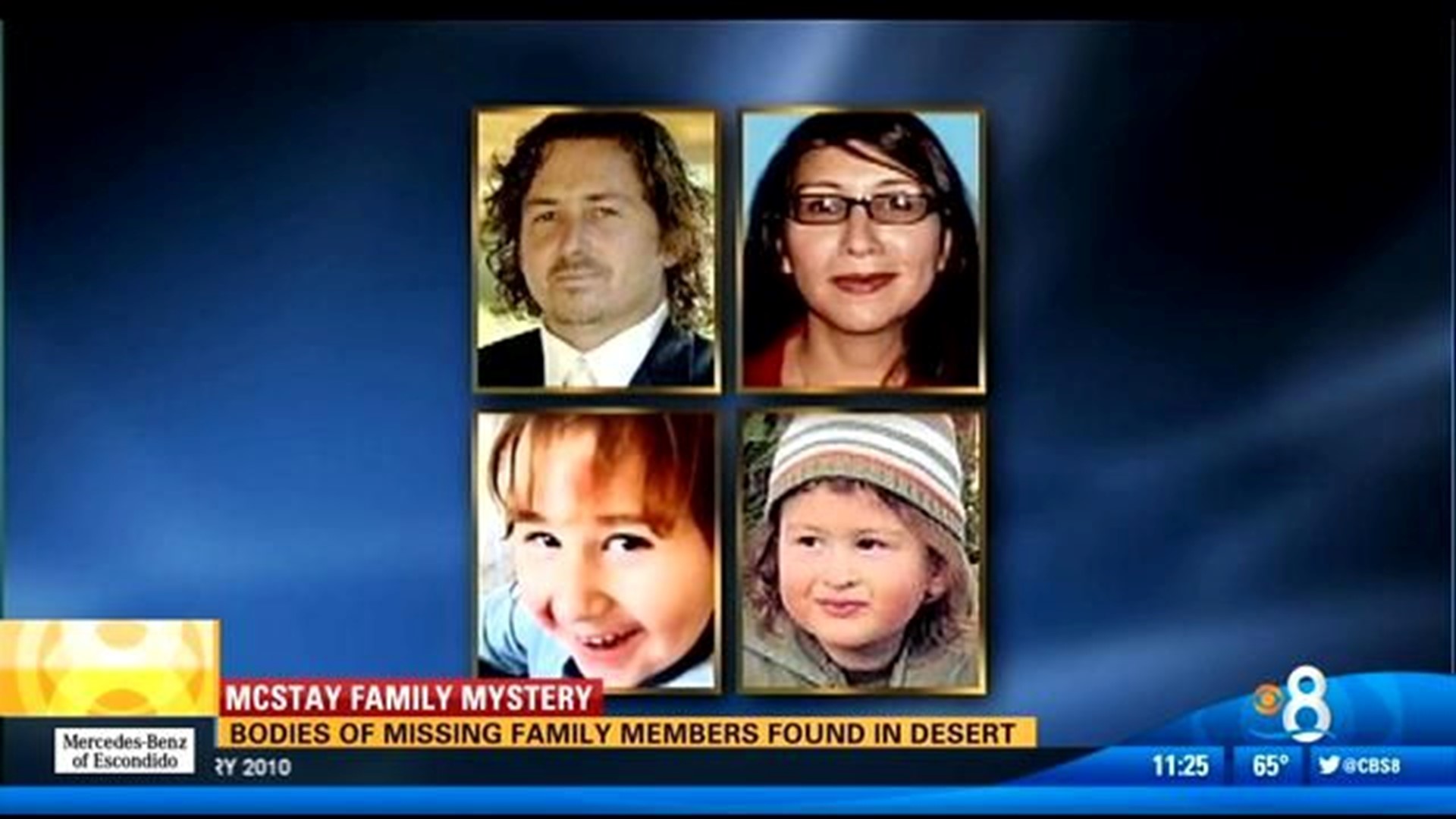
On February 4, 2010, Joseph McStay, his wife Summer, and their two sons — 4-year-old Gianni and 3-year-old Joseph Jr. — were reported missing from their home in Fallbrook, California.
Joseph McStay was 40 years old.
He ran a company that made decorative water features.
The home was left mid-life: dogs outside, cars in place, no signs of a struggle inside.
No signs of a struggle were found in the home.
What happened inside that house on February 4, 2010, is not established by the record.
The family was last seen alive that same day — the day they were reported missing.
A family of four does not simply walk away from that scene.
Not with the dogs waiting.
Not with the cars still there.
Not with the dinner dishes possibly still in the sink — though that detail, too, is not in the record.
What the record does show is stillness.
The dogs were in the backyard.
The vehicles remained at the residence.
The family was gone.
It is a scene that asks a question the record cannot answer.
What could make a father, a mother, and two small boys vanish from a home that looked like they would return any minute?
That would require evidence.
The home offered none.
THREE YEARS IN THE DESERT
The house sat quiet for three years.
The dogs stayed. The cars stayed. The family did not.
For more than three years, the disappearance of Joseph and Summer McStay and their two young sons remained a mystery with no answers.
Then, in November 2013, a motorcyclist riding off-road in the Mojave Desert near Victorville, California, found something in the dirt.
Two shallow graves.
The remains inside were identified as the four McStay family members.
The exact date and circumstances of their deaths are not in the record.
What the discovery did was turn a cold case hot again.
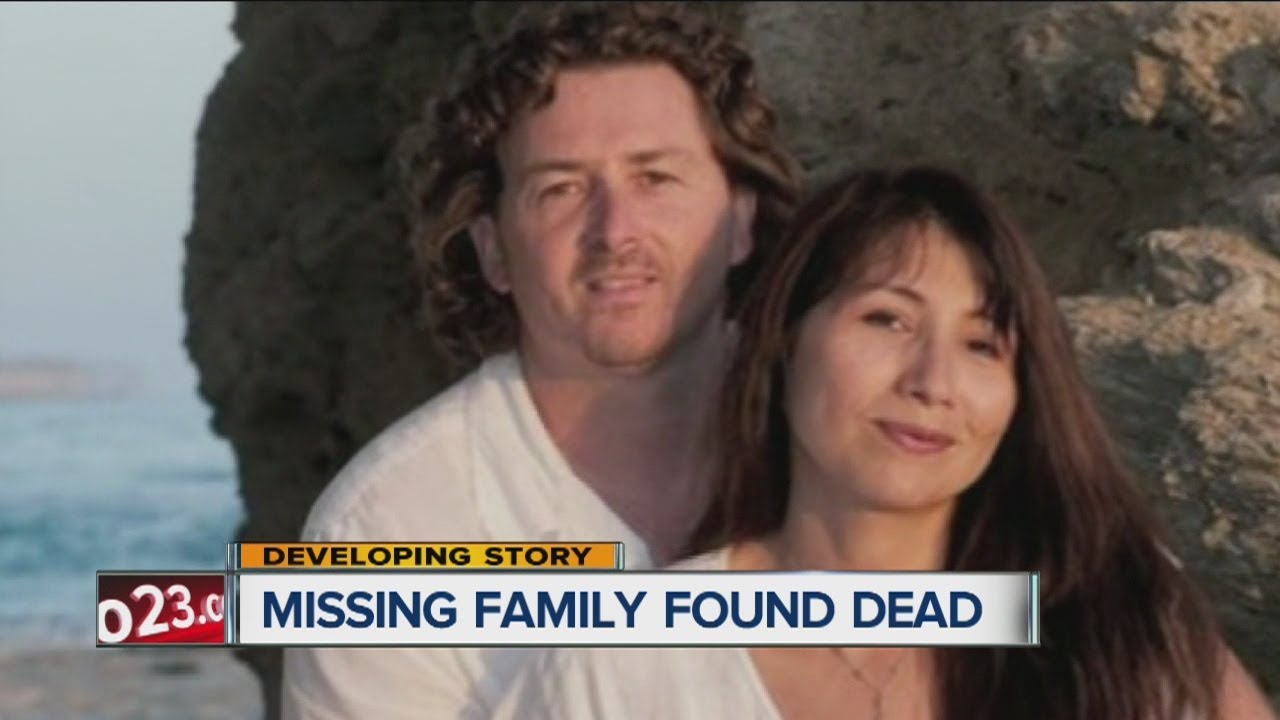
Attention swung back to a familiar name: Charles "Chase" Merritt, a business associate who had worked with Joseph McStay on water-feature projects.
Merritt had been a person of interest early in the investigation.
He was questioned. He was not arrested.
The case went cold anyway.
But in the days after the family disappeared, surveillance video showed Merritt using his own ATM card.
Another security camera, at a bank near the McStay home, recorded him too.
None of that was proof of what happened in the desert.
It was a thread, pulled after years of silence.
The motorcyclist did not find a motive in those shallow graves.
He found the family.
And that was enough to start asking questions again.
THE ACCOUNTING SOFTWARE
The QuickBooks file was the prosecution’s pivot.
Prosecutors presented evidence that Merritt had used Joseph McStay’s accounting software to alter records after the family vanished.
The digital trail did not stop there.
Cell phone data placed Merritt near the grave site around the time of the disappearance.
Merritt was arrested in November 2014 and charged with four counts of first-degree murder.
The prosecution argued that Merritt killed the family over a financial dispute related to unpaid work on water-feature projects.
Not because of a sudden rage. Because of money owed on water features.
The defense argued that the evidence was circumstantial and that other people had motive to harm McStay.
Other business partners. Other debts. Other grudges.
The defense also pointed out that no DNA or physical evidence linked Merritt to the crime scene.
No blood. No fiber. No fingerprint.
The case was built on timing and software.
The specific financial dispute amount is not detailed in the record.
The exact nature of the QuickBooks alterations is not detailed in the record.
What was documented was the arrest. What was documented was the charge.
What the defense called speculation, the prosecution called a pattern.
A pattern of records edited, a pattern of a phone near graves.
The jury would have to weigh a digital ghost against the absence of a physical one.
THE VERDICT AND THE GRIEF
The trial began in January 2019.
For nine years, the McStay family had waited.
Patrick McStay, Joseph's father, had spoken publicly about the disappearance.
Summer's mother had spoken too.
Their specific words are not quoted in the record.
What is known is that they were there.
They sat through the testimony about QuickBooks records.
They sat through the cell phone data that placed the accused near the graves.
They sat through the defense's argument that it was all circumstantial.
In June 2019, the jury found Charles Merritt guilty on all four counts of first-degree murder.
Guilty of killing Joseph.
Guilty of killing Summer.
Guilty of killing Gianni.
Guilty of killing Joseph Jr.
The relief came after the grief.
In August 2019, the jury recommended the death penalty.
The judge sentenced Merritt to death.
Merritt remains on death row at San Quentin State Prison.
The family's relatives spoke publicly about their grief.
They spoke about their relief at the conviction.
It is a resolution.
It is also a sentence that may never be carried out.
California has not executed anyone in over a decade.
The state's death penalty is tied up in legal challenges.
The conviction stands.
The punishment waits.
The family got their answer in a courtroom.
The graves gave them that much.
What happened in those final hours remains a matter of prosecution theory.

That would require evidence.
The jury believed the pattern.
The family had to live with the absence.
AND THE STORY STILL ISN'T OVER
Charles Merritt is on death row in California.
The state has not carried out an execution in over a decade, held back by legal challenges to the death penalty itself.
No further legal developments have been reported.
The case has been the subject of documentaries and news coverage.
The coverage returns to the same ordinary scene.
The dogs were in the backyard.
The vehicles remained at the residence.
No signs of a struggle were found inside the home.
That scene still haunts the case because it is so quiet.
It is the image of a family who simply stepped away.
It is also the image of a family who never came back.
The graves were found by a motorcyclist riding off-road in November 2013.
The rider was not looking for anything.
He found two shallow graves in the Mojave Desert near Victorville.
The remains were identified as the four family members.
That is the documented fact.
Whether any appeal is pending is not in the record.
The weapon or the vehicle used is not widely reported.
Those details remain outside what has been established.
The relatives spoke publicly about their grief.
They spoke about their relief at the conviction.
They spoke about who the family was before the absence.
A businessman who made decorative water features.
A wife and mother.
Two boys, aged four and three.
The ordinary life is the hard part.
The dogs in the backyard.
The cars still there.
The silence where a family should have been.
Advertisement
You may also like
The cellmate confession that cracked the Manson murders
The cellmate was in jail on a charge of her own. Susan Atkins was there too, held on something unrelated to Cielo Drive. The…
The psychologist's mistress who heard a confession and changed a murder case
The tape recorder was running. Erik Menendez was in a therapy session with Dr. Jerome Oziel, his psychologist, when he confessed to the murders…
The cotton gin fan tied to Emmett Till's neck — and the evidence that didn't convict
The Tallahatchie River gave up its weight on August 31, 1955. Emmett Till's body surfaced with a cotton gin fan tied to his neck…
A Splash in the Chattahoochee — the Fiber Evidence That Tied Wayne Williams to Two Murders
The bridge over the Chattahoochee was quiet that night in May 1981. Police had staked it out after a tip, waiting on the dark…
The slumber party interrupted: Polly Klaas's last night before the intruder came
The party was a sleepover. Three girls, twelve years old, in the bedroom of a house in Petaluma, California. It was October 1, 1993.…
The .40-caliber pistol traced to New Jersey that linked Andrew Cunanan to Versace's killing
A .40-caliber pistol ended Gianni Versace’s life on the steps of his Miami Beach mansion. That same pistol had been stolen from a prior…