Why 23-year-old Ronald DeFeo Jr. confessed to killing his six relatives in one night
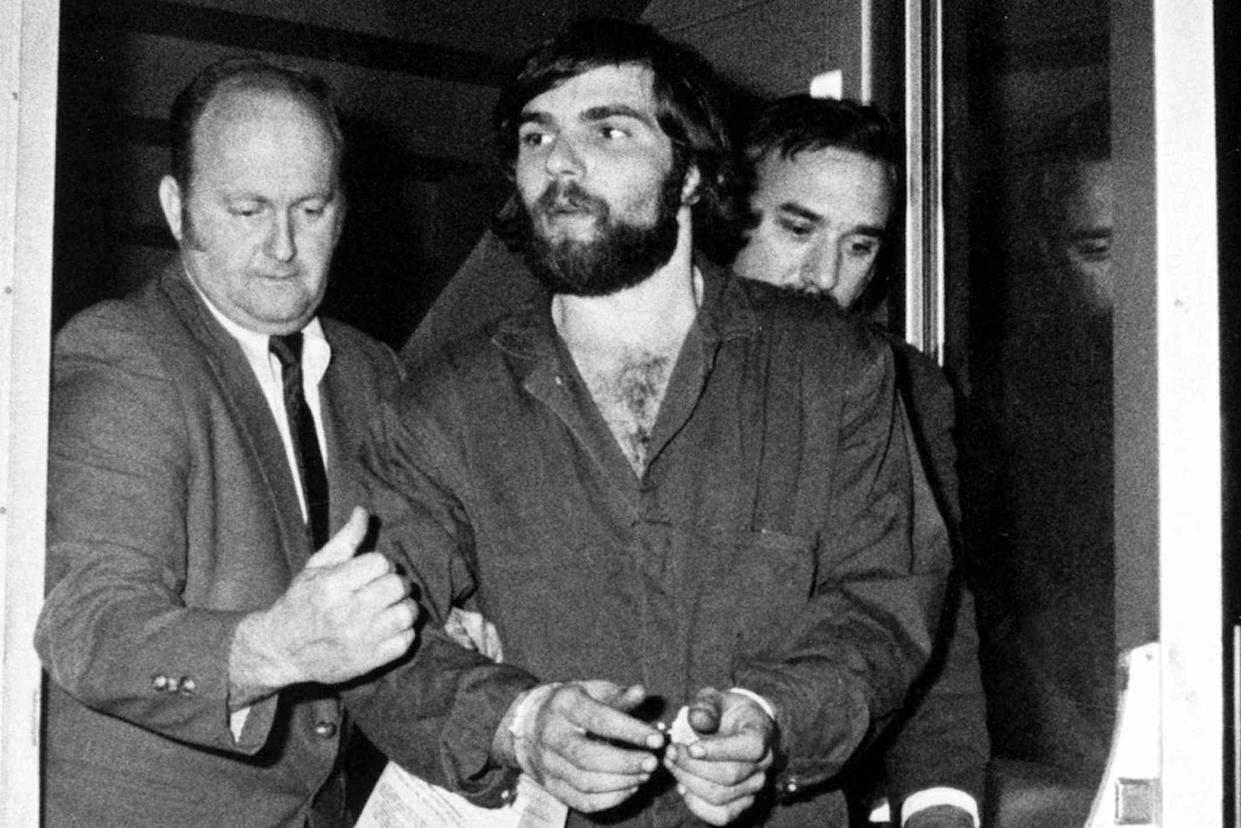
The bar was called The Wreck, and the man who walked in was 23 years old.
It was November 13, 1974, a Wednesday morning in Amityville, New York.
Ronald DeFeo Jr. told the patrons his family had been shot.
What exactly he said inside that bar is not in the record beyond that.
He was the eldest son, and he had just reported six people dead.
Police went to 112 Ocean Avenue and found six victims face-down in their beds.
Each had been shot with a .35-caliber Marlin rifle.
The victims were his father, his mother, his two brothers, and his two sisters.
They had been shot while sleeping.
There was no evidence of forced entry.
DeFeo Jr. first said the killings were the work of mob hitmen.
That was his initial statement to police.
Then he changed it.
He confessed.
The lead detective took the confession, and in it DeFeo Jr. described the shootings in detail.
He said his father was abusive and the household was dysfunctional.
He said he had done it himself.
One man, six relatives, one rifle.
Why did he walk into that bar first?
Why report the crime before admitting it?
Why change the story from hitmen to himself?
The record does not answer that.
It only shows the shift.
A man reporting a crime became a man confessing to it.
THE HOUSE ON OCEAN AVENUE
Six people were dead in their beds.
The victims were his father, his mother, his two brothers, and his two sisters.
Six relatives in total, in one house, on one night.
DeFeo Jr. was the eldest son.
He was 23 years old at the time.
Police arrived at 112 Ocean Avenue after DeFeo Jr. reported the shootings.
They found the bodies face-down, each shot with a .35-caliber Marlin rifle.
Investigators found no evidence of forced entry.
The victims had been shot while sleeping.
No sign of a struggle, no sign of a break-in, no sign of anyone else.
The murder weapon was later recovered from a nearby river.
A .35-caliber Marlin rifle, pulled from the water.
The exact order of the shootings is not in the record.
The record shows the bodies. It shows the beds. It shows the rifle.
It does not show the sequence.
One man in a house with six sleeping relatives.
That is the cold precision of it.
Six people, each shot multiple times, none of them able to get up.
The house was not breached.
The door was not forced.
Whoever did this was already inside.
THE CONFESSION
He first said he had been away from the house and returned to find the bodies.
That was his initial statement to police.
Soon he changed the story.
He said he had killed his family himself, because his father was abusive and the household was dysfunctional.
That was his later statement.
The lead detective took the confession.
In it, DeFeo Jr. described the shootings in detail, according to the detective's account.
He named the rooms.
He named the order.
He named the rifle.
Then he added two other men.
He claimed they were involved, a claim police dismissed and never substantiated.
So there were three versions of that night.
The man who came home to bodies.
The son who pulled the trigger.
The man who said he had help.
Which version, if any, was true?
The record holds the confession, but it does not settle the question of why it changed.
Whether the confession was coerced is not established.
DeFeo Jr. later claimed it was, but the claim was dismissed.
What the police had was the detailed statement, and it matched the scene.
The victims were face-down in their beds.
The rifle was recovered from a nearby river.
No forced entry, no accomplices, no mob.
The confession stood.
It was the center of the case, and it was enough.
THE TWO STORIES
Two stories ran through the courtroom in 1975.
The prosecution, led by the Suffolk County District Attorney, argued that DeFeo Jr. was legally sane.
He acted deliberately, the prosecutor said.
He knew what he was doing when he fired the rifle six times.
The defense, led by his attorney, argued the opposite.
DeFeo Jr. was insane at the time, the attorney said.
He heard voices, the attorney claimed.
He suffered from a personality disorder that stripped him of control.

The trial took place before a judge that year.
The jury heard the confession.
They heard the claim of voices.
They heard the claim of a dysfunctional home.
They rejected the insanity defense.
The jury found DeFeo Jr. guilty on all six counts of second-degree murder.
The judge sentenced him to six concurrent terms of 25 years to life.
He would serve them in prison.
The criminal case was closed on that verdict.
What the record does not establish is the defense attorney's later claim that the house was haunted.
That claim came after the trial, in the telling of the Amityville legend.
It is not part of the criminal case record.
It is a story told about the house, not a fact proven in court.
The conviction stood on the confession and the evidence.
The supernatural explanation was never a legal one.
The jury heard the two stories that mattered: sane or insane.
They chose sane.
AND THE STORY STILL ISN'T OVER
He appealed, and the conviction was upheld.
He later claimed his confession was coerced.
He later claimed his sister had actually committed the murders.
The record does not support either claim, and both were dismissed.
He was denied parole in 1999.
He was denied parole in 2005.
He was denied parole in 2010.
He was denied parole in 2015.
Each time, the answer was no.
He died in prison on March 12, 2021, at age 69.
The death came at a correctional facility in Fallsburg, New York.
Decades passed between the confession and the death.
The house at 112 Ocean Avenue was sold and renovated.
The address was changed to 108 Ocean Avenue to discourage curiosity seekers.
The legend outlived the man.
The book came, and the films came, and the tours came.
Whether the supernatural claims about the house have any basis is not established in the criminal record.
That was never a legal question.
The legal question was answered in 1975: guilty on all six counts.
The flat aftermath is the rest of the story.
A life measured in parole denials.
A death behind bars.
A house with a new number.
A legend that keeps asking the same question.
The record keeps giving the same answer.
Advertisement
You may also like
The severed head in the canal, the confessed killer who was never charged, and the file police closed twice
The drainage canal ran along the Florida Turnpike near Vero Beach, 120 miles from where the boy had vanished. The head was found on…

The trucker's anonymous letters that named his own victims
The letters arrived unsigned, except for a circle with two dots and a curve. A smiley face. They were sent to the Oregonian and…

The Green River Killer’s confession count is 71. Why are only 48 convictions official?
Gary Leon Ridgway was a truck painter from Auburn, Washington. In November 2001, DNA evidence linked him to several victims, and he was arrested.…
The doctor with a scalpel and a secret that haunted Eliot Ness
The first body was found on September 5, 1934, in Kingsbury Run, a ravine that cut through Cleveland. He was a man, and no…
The slow-motion Bronco chase that began after O.J. Simpson was charged with murder
The Bronco drifted down the freeway at 35 miles an hour, a white speck trailed by a line of police cars. Al Cowlings was…
The Zodiac cipher that took 51 years to crack — and still gave no name
In December 2020, a team of private codebreakers solved the Zodiac's "340 cipher" — a cryptogram mailed to the *San Francisco Chronicle* in 1969.…